The BioGeek Memoirs: Rose

My mother was a great lover of roses. One of my earliest memories was of an ongoing battle she had with the family dog and a newly planted rose bush. My mom planted the rose bush in a garden along one side of the house. The dog dug it up. My mom replanted the rose bush, and the dog, a boxer mix, dug it up again.

My mother, not one to give up easily, spanked the dog with the rose bush and replanted it.

Not my mom’s roses, but they were bright red like these.

That bush did really well and was covered with blooms every year. I can’t remember the color for sure, but I think that they were red. Our dog was so well behaved in the garden for the rest of her life that the story of the rose bush battle took on the stuff of legend. Look at that rose bush, my sister would say. Mom once spanked the dog with that bush!!

Later in her life my mom grew tea roses in her garden that were also the stuff of legend. These shrubs were huge; at least 4 feet high and the producers of really showy blooms; people occasionally knocked on my mom’s door to ask what type of rose they were. I once asked my mom what she did to get her roses to grow and bloom so well. I expected to hear some complicated formula to produce fabulous blooms that featured bone meal, wood ashes, and who knows what else… Nope. It was a really, really easy routine. Feed the roses Miracle Gro fertilizer every week, prune them once a month, and if they didn’t respond satisfactorily rip the shrub out and go buy another one. My mom, an agent of evolution in her rose garden. Who knew her success was partly due to ruthless natural selection? That earlier incident with the dog should have tipped us off!

Now I grow roses. I feed them Miracle Gro, prune them after each blooming, protect them from early frosts, mulch them with care. They are doing well, but not as well as my mom’s did. I tell myself that is because I live in a different climate from the one where she grew her show-stopping roses, but the truth is she had quite a gift for rose growing. Anyway, here are my favorites.

The pink rose on the left is Princess Alexandra of Kent, the yellow rose is Charles Darwin, and the one on the right is Hot Cocoa. I just love the English roses for their shape and scent, but they don’t do that well in my climate. The Hot Cocoa rose is hardier and handles the heat and low humidity better. Anyway, don’t they look nice?

Wait. I have more roses!
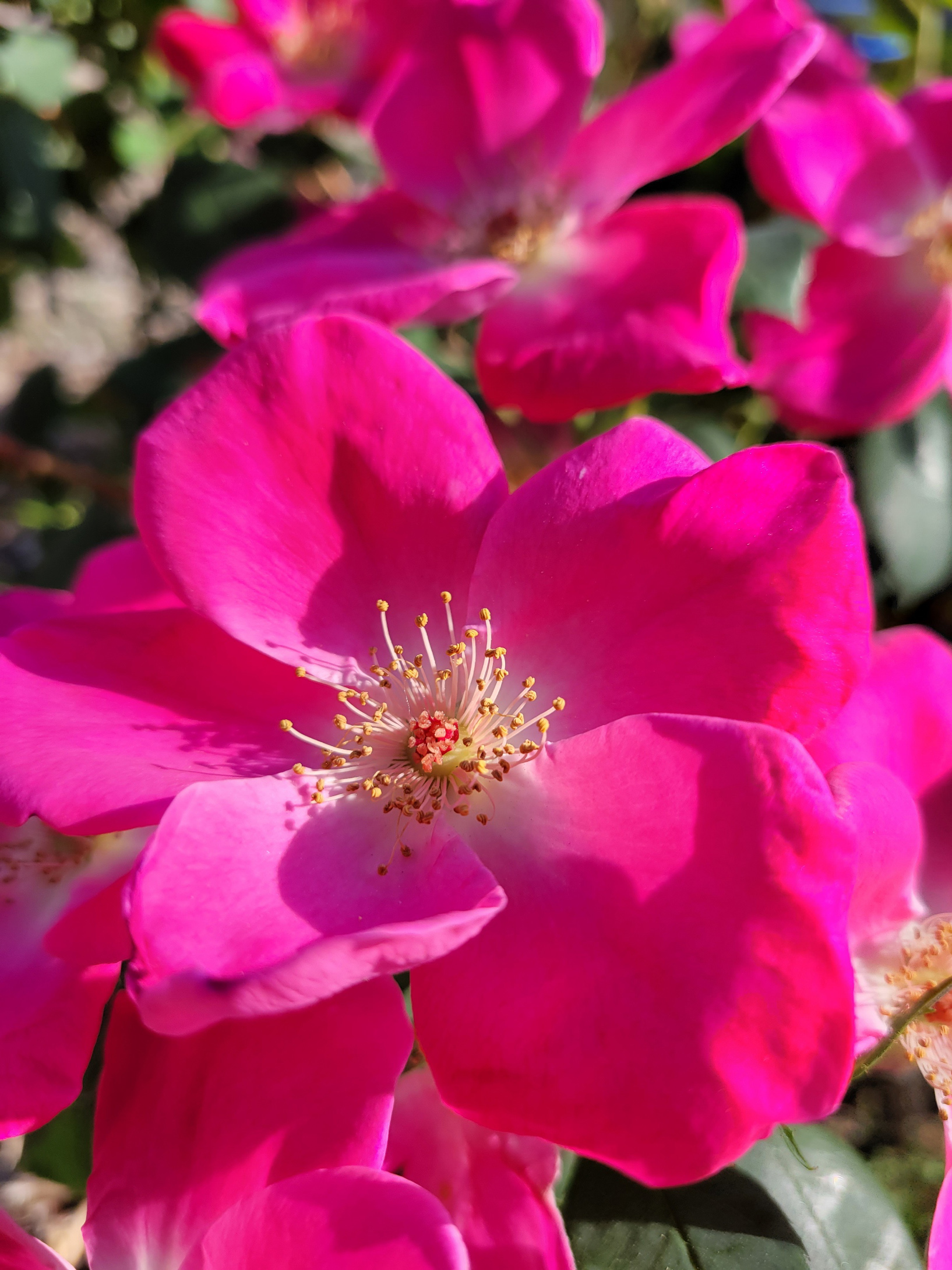
These roses are more like the wild ones that grow in our mountains. The one on the left is a Home Run, and the one on the right is a Cinco de Mayo rose. I love these guys; simple, hard-working and favorites with the bees. They handle the climate here well and flourish in the long dry summers.

I do have more roses, but you get the idea. There are rose bushes along the driveway, at the front of the house, in all the flower beds in the back yard, and even in pots in the house. You can never have too many roses is kind of a motto of mine.

I grow the roses for myself, but I also grow them for my mom and the other rose growers in my family. My aunt grew roses too and had a huge climber that I envy to this day. For all I know rose growing has been going on for generations in my family. Every single rose shrub, each rose bloom, is a link to the past and a promise of beauty in the future. You can never go wrong with a rose.

My mom died one year early in May after a long battle with cancer. A few days after the funeral was Mother’s Day, and in her memory I planted six red floribunda roses in my front flower bed. Those roses, bright red Showbiz roses, bloomed like my mom herself was taking care of them.

One day someone knocked on my door to ask what they were.

My mom would have been so proud!!

The Scleroderma Chronicles: Rare Disease Day, 2022

Well, this is a hard topic to write about. Quite frankly, I have been getting my butt kicked lately by my (wait for it) rare diseases. Still, I am trying to respond to the calls for publicity about rare diseases along with other members of the scleroderma and pulmonary hypertension communities.

You know, I feel like I should represent.

People with rare diseases are referred to as “zebras” in the medical community.

So, what’s a rare disease? A rare disease is classified as one that impacts a small percentage of the total population. Here in the United States that means fewer than 200,000 people diagnosed with the condition/disease. Perversely, there are a lot of people with rare diseases as there are almost 7,000 different rare diseases!  Some of these diseases are common enough that you may be familiar with them: albinism, achondroplasia (a type of dwarfism), and autoimmune hepatitis are examples. Others are very rare. Most are genetic in origin, and half of them impact children. More than 90% of rare conditions have no drug treatment.

The type of scleroderma that I have, limited systemic sclerosis, is considered rare as there are about 100,000 people in the US with this diagnosis. The latest diagnosis added to my medical history is of pulmonary arterial hypertension, another rare disease, and one that is a consequence of my scleroderma. Well, I am really rare now! I have struggled to explain my scleroderma to people when they ask; how can I explain in just a few sentences something that is just frankly causing horrific damage to my body and generating an ever-growing list of diagnosed conditions. Here’s my best answer at the moment:

Scleroderma is a chronic, progressive, uncurable, and often fatal autoimmune disease that causes scaring and damage to blood vessels, skin, internal organs, and muscles/joints. It is controlled and treated through the use of immunosuppressants and drugs that address symptoms. It is a life-altering diagnosis. It is my life.

So, I have blogged about Rare Disease Day several times in the past. Here’s what I wrote a couple of years ago, and what I wrote in 2018. In the past I have written about my symptoms and the struggle of living with a rare disease. It is pretty isolating. It is hard to get diagnosed and treated. I have also written about the difficulties to get funding for research for rare diseases and conditions, and the lack of treatments and cures because the patient population is so small.

This year I thought I would share some of the things that doctors have said to me since my scleroderma diagnosis. I’ve tried to organize these into chronological order to better reflect my journey.

  • My internist: It’s good to have a diagnosis, even if it is a shame.
  • My rheumatologist when I asked him what my life would be like in 5 years: Let me run some more tests, and then we can talk.
  • My ophthalmologist: Do you have a will?
  • The physician at the regional acute diagnostic center: This is a diagnosis like cancer. Of course, some cancers can be cured.
  • A physician speaker at a scleroderma support group presentation: this drug [the immunosuppressant that I take] can really give you a chance, as long as you don’t contract an infection.
  • My old rheumatologist: All you do is complain. Maybe I should order a sleep apnea test or prescribe antidepressants.
  • My internist, as I begged for an anti-inflammatory drug: I’m sorry. There isn’t anything that I can give you that won’t hurt your kidneys.
  • My dermatologist, as she prescribed an anti-inflammatory topical gel: This is unacceptable, and I am putting a stop to it now.
  • My new rheumatologist as she orders more testing on my painful joints: Why has no one followed up on this?
  • My rheumatologist two days later: You need to get a steroid injection in your hip joint as soon as possible.
  • The hip specialist: There is nothing more that I can do for you because your scleroderma is attacking all of your tendons and ligaments. You need a hip replacement, but it will fail.
  • The physician at urgent care: I don’t think they understood how complicated your medical status is when you were referred here. You need to be hospitalized because we can’t do the testing that you need here.
  • My pulmonologist as he walked me back to the waiting room: I really admire your attitude.
  • My cardiologist as I was being sedated for a right heart cath: Don’t worry. I’ll take good care of you.
  • My cardiologist as he started me on medication for pulmonary arterial hypertension: This is challenging, and we will need to be comfortable with “out of the box” thinking.
  • My rheumatologist last week, referring to herself, the cardiologist and the pulmonologist: We are your team!
  • My rheumatologist, also last week: We need to add a gastroenterologist to the team.

You can see how rocky the start was. There is a lesson here, I think. To be rare, to be a zebra in a medical community that is designed to identify the most likely cause of symptoms in a herd of horses, is hard. It is really challenging to secure the care that you need when, no matter how hard doctors try, you do not respond to the usual treatments, and you never fit the usual profile. It is easy to be seen as a problem. It is hard to keep insisting that there is something wrong when all the test results say you are okay.

Even when you are blue-lipped and panting it can be hard to convince doctors that there is a problem.

And yet, it is possible to get there. Over time, with great determination and persistence, I have A TEAM of doctors who view themselves as active collaborators in my care. They message each other to discuss test results and possible drug interactions, and they loop me into their discussions. It is only now, newly diagnosed with a terminal condition, that I feel confident and hopeful about my care.

Today I went in for a blood draw and a little jaunt through the local bookstore. The sun was shining, I bought a Starbucks coffee, and it was a good day.

****************************************

My scleroderma-related diagnoses:

  • GI tract: difficulty swallowing, hiatal hernia, GERD, gastroparesis, chronic gastritis.
  • Kidney: stage 3 chronic kidney disease.
  • Lungs: pulmonary arterial hypertension, interstitial lung disease, asthma, partial lung collapse.
  • Heart and circulatory system: grade 2 diastolic dysfunction (a type of heart failure), Raynaud’s phenomenon, telangiectasia.
  • Muscle/Skeletal: fibromyalgia and severe joint damage.

This is scleroderma. I’m a zebra, and these are my stripes.

Happy Rare Disease Day, everyone!

The colors associated with my diseases are teal (scleroderma), purple (Sjogren’s), and periwinkle (PAH). It sounds like the start of a great sweater, huh. 🙂

The BioGeek Memoirs: Sand Dollar

I grew up in Southern California in the US not too far from beach towns. My parents would rent a cabin each summer and we spent weeks playing on the beach and in the surf. I spent many a morning playing with small animals along the beach like crabs and sea anemones and had a pretty good shell collection by the end of each summer. One of my very favorite early morning gleanings was the rare, perfect sand dollar.

Three perfect little sand dollars.

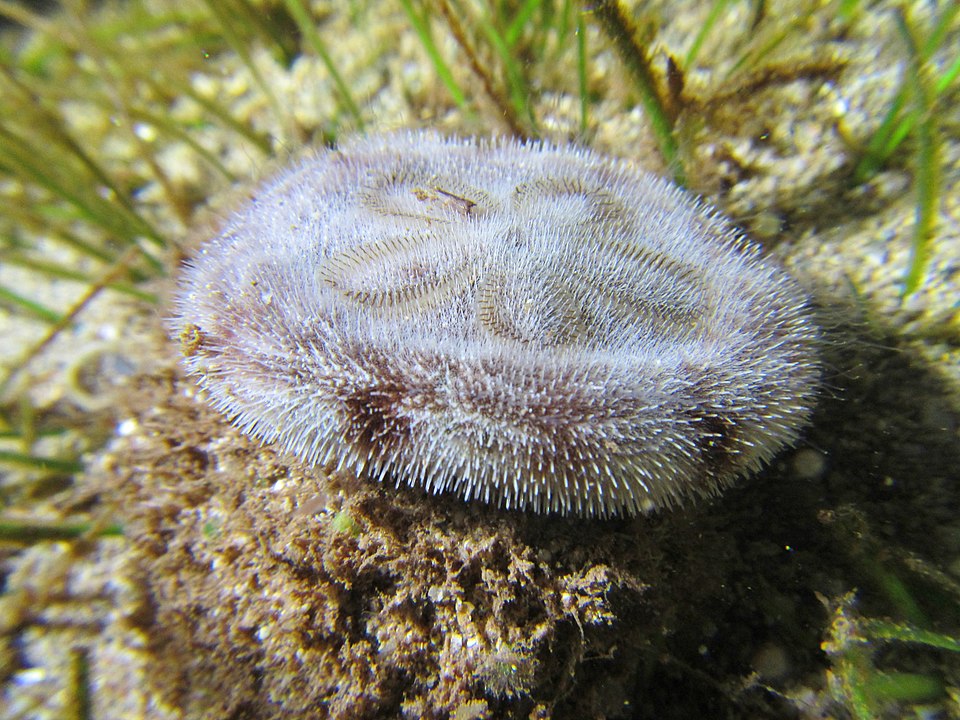
What I didn’t know as a child is that the sand dollars that I collected during early morning walks on the beach were just the skeletons of what was once a living animal that looked like this:

A living sand dollar. Credit: Frédéric Ducarme, CC BY-SA 4.0 https://creativecommons.org/licenses/by-sa/4.0, via Wikimedia Commons

I collected many, many seashells each summer; these shells were created by the animals that lived in them when they secreted and deposited calcium carbonate outside their bodies. In the case of sand dollars, the animal deposits little calcium carbonate plates internally to create the inside skeleton made of the same material as shells are. Cool, right? I never suspected that the living sand dollar was covered with all of those short fuzzy spines that helped it bury itself in the sand where it can move around. Those little guys used to live off the shore of Southern California where I lived, moving though the sand, eating little bits of algae and whatever else they could find in the sand of the ocean bottom. Preyed upon by fish, the skeletons of the dead animals washed up on the shore where I found them.

In my high school years my family moved to a beach town. Woohoo! Beachcombing for sand dollars continued year-round! I dated (and later married) a guy who loved to surf; I poked around in tide pools while he was out catching waves. My love affair with all the living things in the shoreline ecosystem continued during those years; my collection of shells and sand dollars grew.

Imperial Beach, California. Best town ever for the BioGeek high schooler.

I continued to love sand dollars when I grew up. I learned in college that they, like all echinoderms, have bodies that are organized in a 5-part radial symmetry. Strange, right?! But true. All sea urchins, sand dollars (AKA sea biscuits), sea stars, and sea cucumbers have a clear 5-part body organized around a central point (that gives them their radial designation).

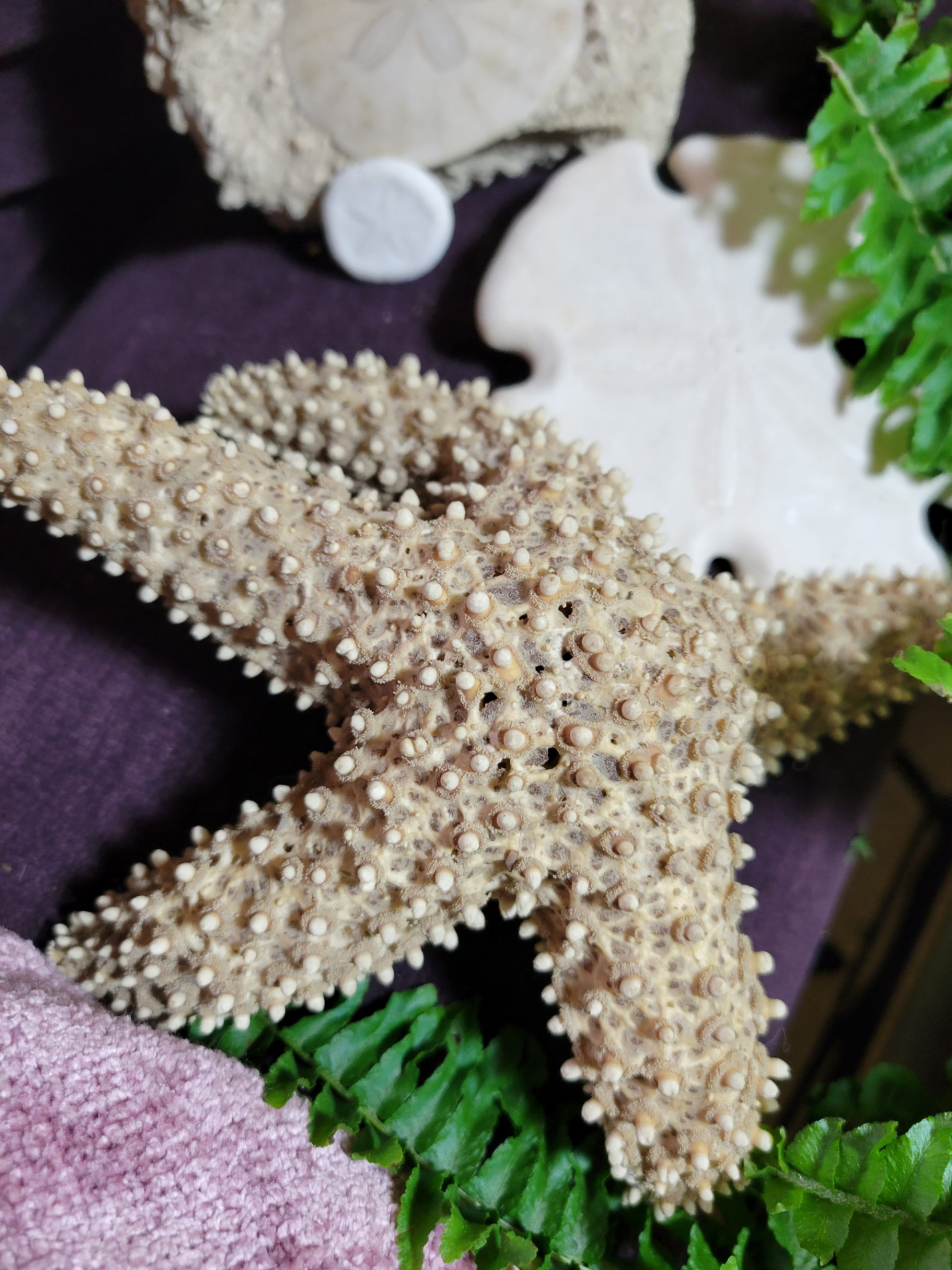
See the 5 arms of this sea star? When the animal was alive it looked the same no matter which arm was “down”: radial symmetry.

I have continued to accumulate sand dollars as an adult. One day I discovered 3 wonderful sand dollars in my mailbox at work: an anonymous gift from a student, I think. There was a silver and gold sand dollar necklace at a store I passed one day on a trip to San Fransisco: of course I bought it!! Then there was my trip to the Smithsonian in Washington, D.C. I saw a sand dollar fossil for sale in the gift shop.

Look at that! A fossil that is millions of years old that looks just like the sand dollars that I used to pick up on the beach as a child.

I am often struck with amazement at how this simple, simple creature has so successfully survived in its little niche over the millennia. Mostly defenseless, relying on guile, concealment, and luck, the species continues to this day.

Today my fossil sand dollar and one that I was gifted (upper right in the picture) hang out on a tray on my coffee table. I may no longer live in the beach town of my childhood, but the beach, and the animals that I loved as a child, remain with me.

Hannah and the CoalBear: Mateo does Caturday

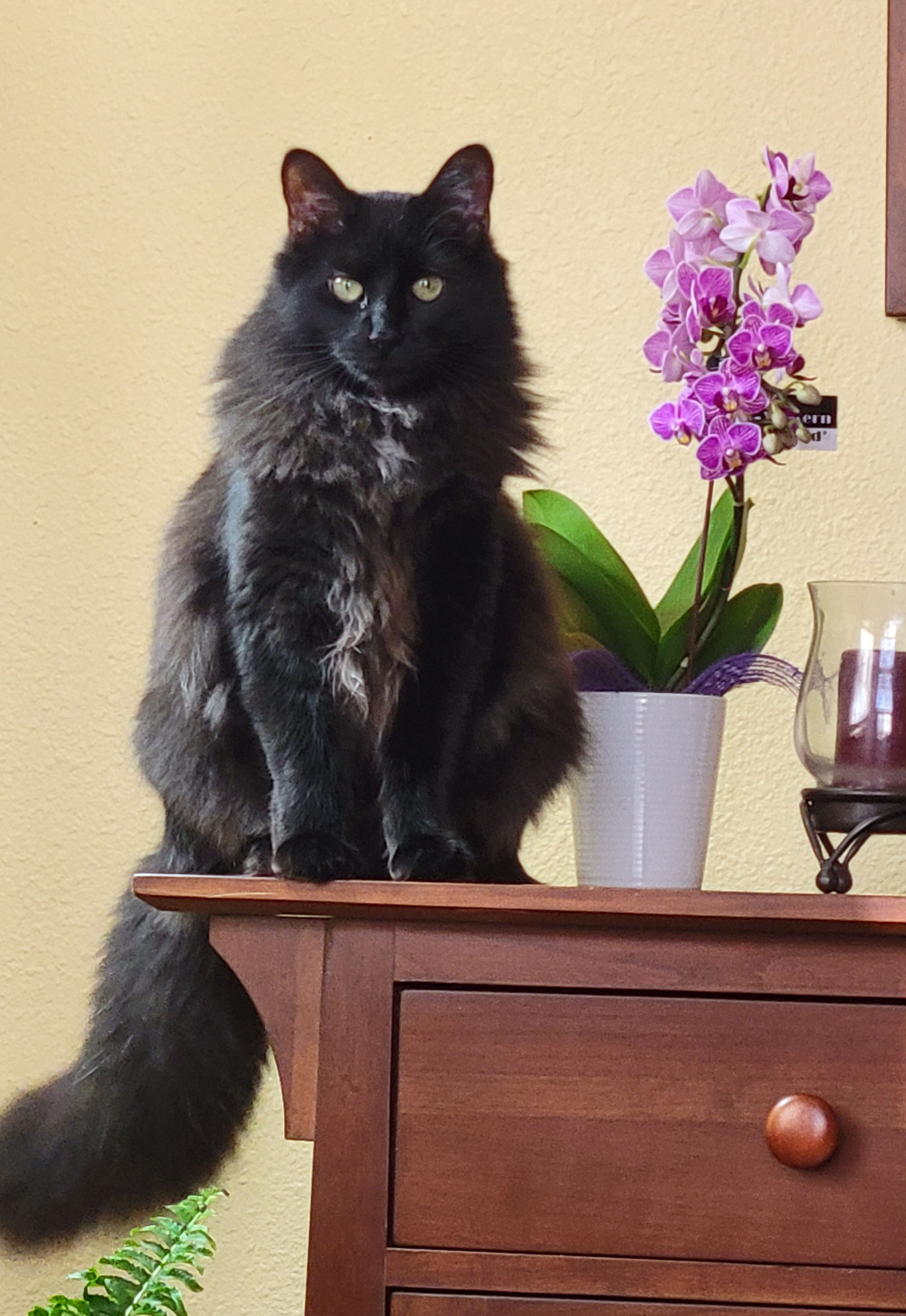
Hi. I’m Mateo.

Today I am on bug watch!

See that new orchid that the Mother of Cats brought home from the store? It has some little flying bugs in it. Yay!

The bugs are in the bedroom, too!!

The Mother of Cats isn’t as excited about the bugs as we are, but we are on the hunt and before she knows it we will have taken care of the problem. Aren’t we the best kitties ever?

I’ve also been helping the Mother of Cats with her new hat.

Don’t you like the color of that yarn? The color is called “Midnight Orchid” which is pretty cool because the Mother of Cats was knitting on the hat at midnight last night.

The yarn kind of matches the orchid that just started blooming last week.

I try to help the Mother of Cats in the garden but she won’t let me play with the plants. I am a really good digger and I think that she should be more open minded about it, right? Nope. She put up more chicken wire to keep me out of the orchids.

Well, I guess that is all. I have to go play with my new toy that the Mother of Cats got me last week and then maybe I can spend some time pulling down the clothes in the closet. In the evening I plan to watch the bunny in the backyard for a while and then I think that I will chase my sister Hannah around the house. She really likes to play chase-chase! Doesn’t that sound like an excellent Caturday to you?

I hope that your Catuday was good, too!!

The BioGeek Memoirs: June Bug

In 2010 my school district sent me to Baltimore, Maryland for a couple of weeks to get the training for an upcoming course that the district was offering. It was great! I met a lot of new friends, got the training that I needed, ate yummy food, and went to Washington, D.C. for the weekend. Okay, the National Mall is a little overwhelming. I only had the one day to visit as many sites as I could. The Vietnam Memorial. The World War II Memorial. The Lincoln Memorial. The Washington Monument (hey… the White House is right over to the right…). The National Archives. The Smithsonian Museum. THE SMITHSONIAN MUSEUM!!!

You know that I had to go into the Smithsonian.

I didn’t have a lot of time once I got into the museum, but they had an exhibit about Charles Darwin and the Evolution of Evolution. Wow. There was no way this little BioGeek and teacher of biology was going to miss that! We only had an hour but of course I raced through the exhibit getting what I could out of it and then into the giftshop for a couple of mementos.

I bought a fossil, this book, and the funny little necklace that you see on the book. The dark blob at the top of the photo is Mateo (AKA the CoalBear) coming in to grab the necklace.

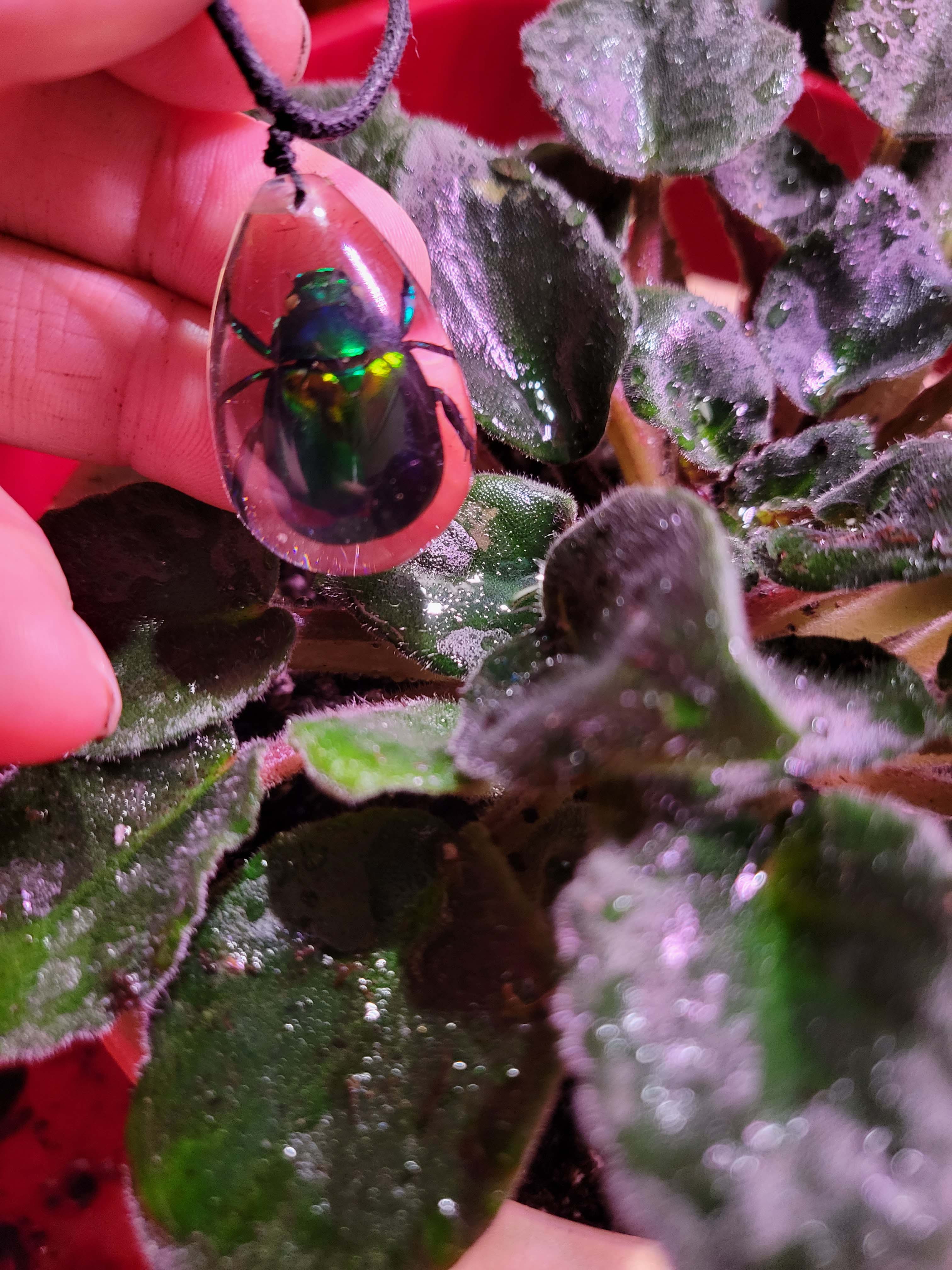
Let’s take a closer look at the necklace that I had to buy as soon as I saw it.

It was a June bug!!

Oh, my goodness. I just loved June bugs when I was a kid. We would find them clinging to the side of the big elm tree in the backyard. Bright, iridescent green, big and slow moving, they were easy for us to catch and haul around. We used to tie a thread around their bodies and let them fly in a circle around us. You could sport them on your shirt as shiny and unique jewelry. They were quite the find when I was a little kid.

I don’t think that my parents were as excited about the June bugs as we were. The larvae are major pests as they mature in the ground, chomping down on any roots or organic materials that they can get their little mouthparts onto and damaging the lawn. Then there were the adult beetles. Um… my mother grew this big patch of boysenberry bushes that we harvested fruit from all summer. She would send us out with little pails to pick (and eat) the berries that she turned into endless jars of jam and countless cobblers. She loved her berries. So did the June bugs. I kind of think that’s why we could always find one in our yard on hot June days.

Mateo: June bugs are good for kitties to play with, too!

In her later years my mom grew a big patch of berries along the fence of her yard. Instead of June beetles she battled gophers in her yard; the gophers tunneled through the yard and build a minor mountain under the spreading canes of the berry plants. My eldest son became a berry picker himself and took glee in chasing the gophers with my mom, wielding a garden hose in battle as the gophers practically laughed at them. She still managed to produce several cases of berry jam each summer, but I’m pretty sure that she would have swapped the gophers for June bugs in a heartbeat.

Today I live in Colorado and there isn’t a June bug in sight. It gets too cold here in the winter to grow boysenberries and I have to resort to buying blackberries at the summer fruit stands. I still have that cobbler recipe that my mom used (it came from a flour bag in the 50’s), and every year I make blackberry cobbler and think that maybe I should make some jam, too.

Why did I have to buy the June bug necklace? After all, it has been never worn, but is still treasured.

Because the second I saw it that hot June day in Washington, D.C. I was instantly transported back to my childhood, picking boysenberries, covered in scratches and berry juice, playing with June bugs in the summer heat of a Southern California day.

Good times!

p.s. Do you feel the urge to make your own berry cobbler? I blogged about it here.

The BioGeek Memoirs: Yarrow

Hi. I bet you were looking for another animal, weren’t you? Plants need some love too, you know.

Yarrow from my garden.

Yarrow is a plant that does really well in the climate where I live; actually, it is a plant that is native to Colorado and can be found in many other biomes. It has kind of lacy leaves and produces large flat blooming clusters filled with tiny white (or colored) flowers. The plants that I have in my garden have been produced for the popular market and are nice and showy. The flowers are large, last most of the summer, and draw a lot of pollinators like bees, moths and butterflies. They mostly play nice with the other plants (okay, they have a habit over overgrowing the smaller perennials, so I have to ruthlessly weed out the plants that are out of bounds), and I like the lacy green plant as much as the flowers.

The first yarrow I ever noticed was a bunch that was planted along the curb in a busy intersection. This plant received no care, didn’t seem to get additional water beyond precipitation and splashes from the street, and looks fantastic. It was covered in huge yellow blooms that kept their color for most of the summer. Every single summer the plant put out more blooms and got bigger over the years: a perennial for sure. Hmm… what a great plant, I thought. Of course, I put some yellow yarrow in the garden.

Then I bought a spinning wheel. Then I found someone who had a flock of sheep and beautiful fleeces for sale. In just a few months I had spun my way through that first white fleece (a sheep named Bob) and had all of that yarn to dye. I took a natural dye workshop from Maggie Casey at Shuttles, Spindles & Skeins in Boulder, Colorado. What a fun (but smelly) day that was!

We made several dyes and learned how to get them to “bite” onto the yarn with mordants (think of mordants as linking chemicals that attach the dye molecule to the protein of the wool) like alum and iron. I loved the indigo dye vat that I made that day and got lots of blue yarns from it. There was a nice golden yellow from onion skins, a raspberry from brazilwood, and a sage green dye extracted from yarrow using iron nails for the mordant.

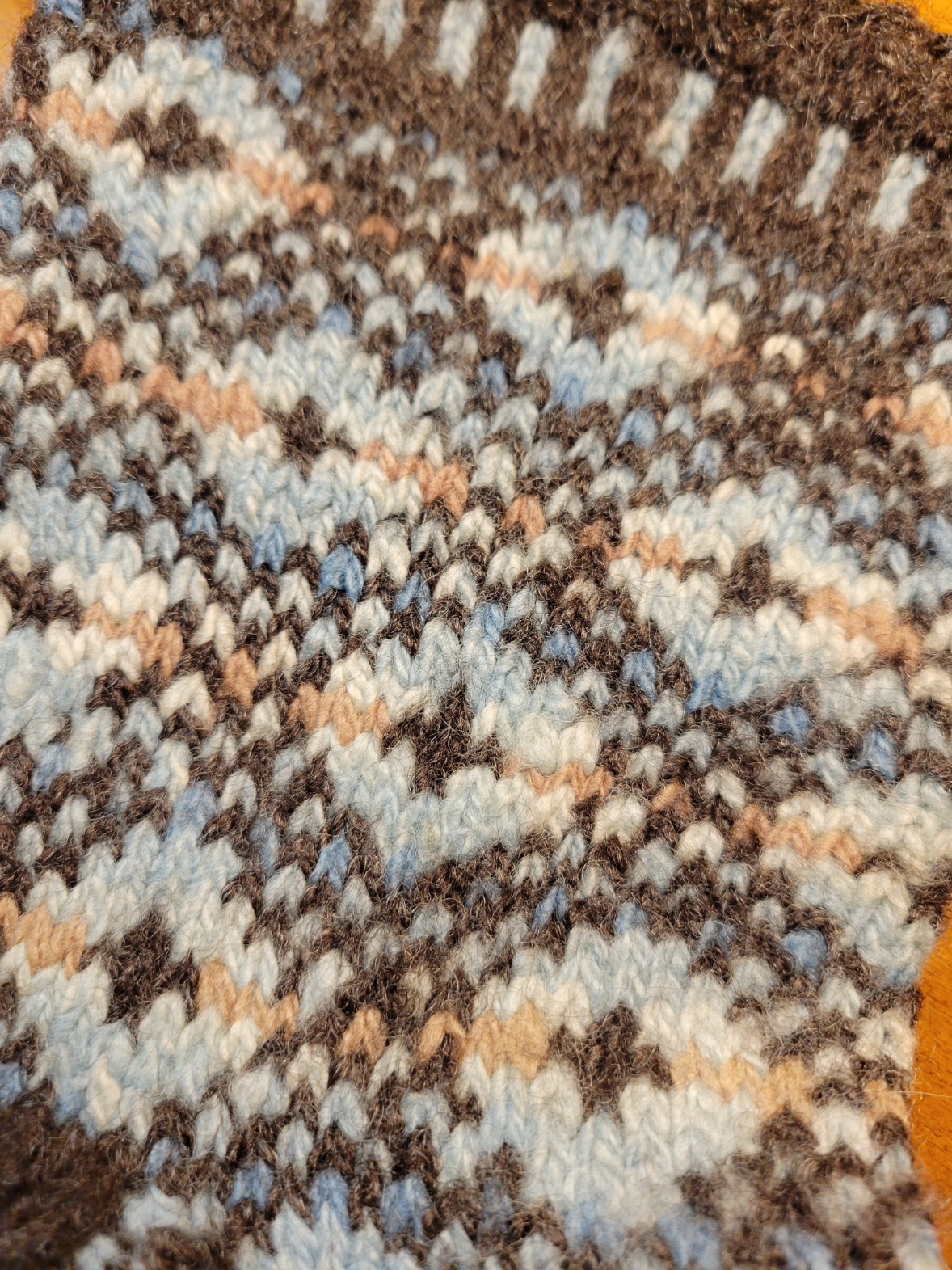
Close-up of the sock I knitted from the indigo and brazilwood dyed yarn. This sock, now more than 20 years old, was made using three shades of indigo, the raspberry (now kind of clay colored) contrast stripe is the brazilwood, and the dark grey is the natural color of another sheep named Silverheels, because of course he was. Everything is now faded, but you get the idea.

That sock, a genuine homespun, naturally dyed, hand knit item, has been my go-to boot sock for a couple of decades and was for a time my “interview” sock when asked to show a sample of my work to clients that I knitted for. Faded, but still going, it has been living in my car as part of the winter travel kit.

Back to the dyeing! Oh, boy. That yarrow was a smelly mess as we boiled the stems, leaves and flowers on the stove out on the porch. Seriously, this stuff could be medicine. Oh, wait. It can be medicine! Yarrow was known by early healers as a plant that could be used to stop bleeding and has lots of different names, some of which refer to this ability to staunch blood like nosebleed plant or woundwort. Luckily none of us were bleeding that day; we strained the vegetable matter (and nails) out of the boiled yarrow mess pot, added back in our skeins of yarn, and simmered gently until we had a nice sage green color.

That yarn became socks that I gave away to a coworker. The love for yarrow remained and I added white yarrow to my garden years later, and a couple of summers after that a wonderful purplish-pink yarrow joined the party.

This plant hangs out with my lavender.

The pink is my favorite. The plant is spreading out and taking over the whole garden that I planted it in (hang in there, lavender, you can stand up for yourself!). It blooms like crazy all summer and I keep thinking that I should cut the flowers to preserve them. I never have used the plants for dye, but I still have a lot of white yarn that would love to get some color going.

Lavender holding its own with the yarrow.

Beautiful yarrow, evoking forever the memory of that great Saturday dyeing yarn from a sheep named Bob in Maggie’s driveway. What could be better?

Month’s End Report: January 2022

January is gone and we are 1/12th of the way through the new year. Outside it is very cold and snowing: perfect flat snowflake crystals are drifting down and creating a sparkling landscape.

Can you see the sparkles on the bear?

It will continue to snow all night and most of the day tomorrow, and when it clears we will have subzero temperature over the next night. That’s subzero Fahrenheit temperatures. It is eerily silent outside and there isn’t an animal track or footprint in the snow anywhere. I have a big pot of green chili started and lots of knitting plans for the coming couple of days.

I set myself a lot of goals for the year and I thought that I would check in at the end of every month with an update about how I’m doing.

Knitting:

I had this idea that I would reduce the stash by at least 50 skeins of yarn this year. (For the purpose of computing skeins 100g of yarn equals one skein.) I’m knitting hats and PICC line covers for the Kaiser infusion centers in the Denver metro area through a group of community knitters (Kaiser employees, all) that I serendipitously encountered last year. It is still early days but this seems to be a good strategy to use up lots of unloved skeins and left over yarn.

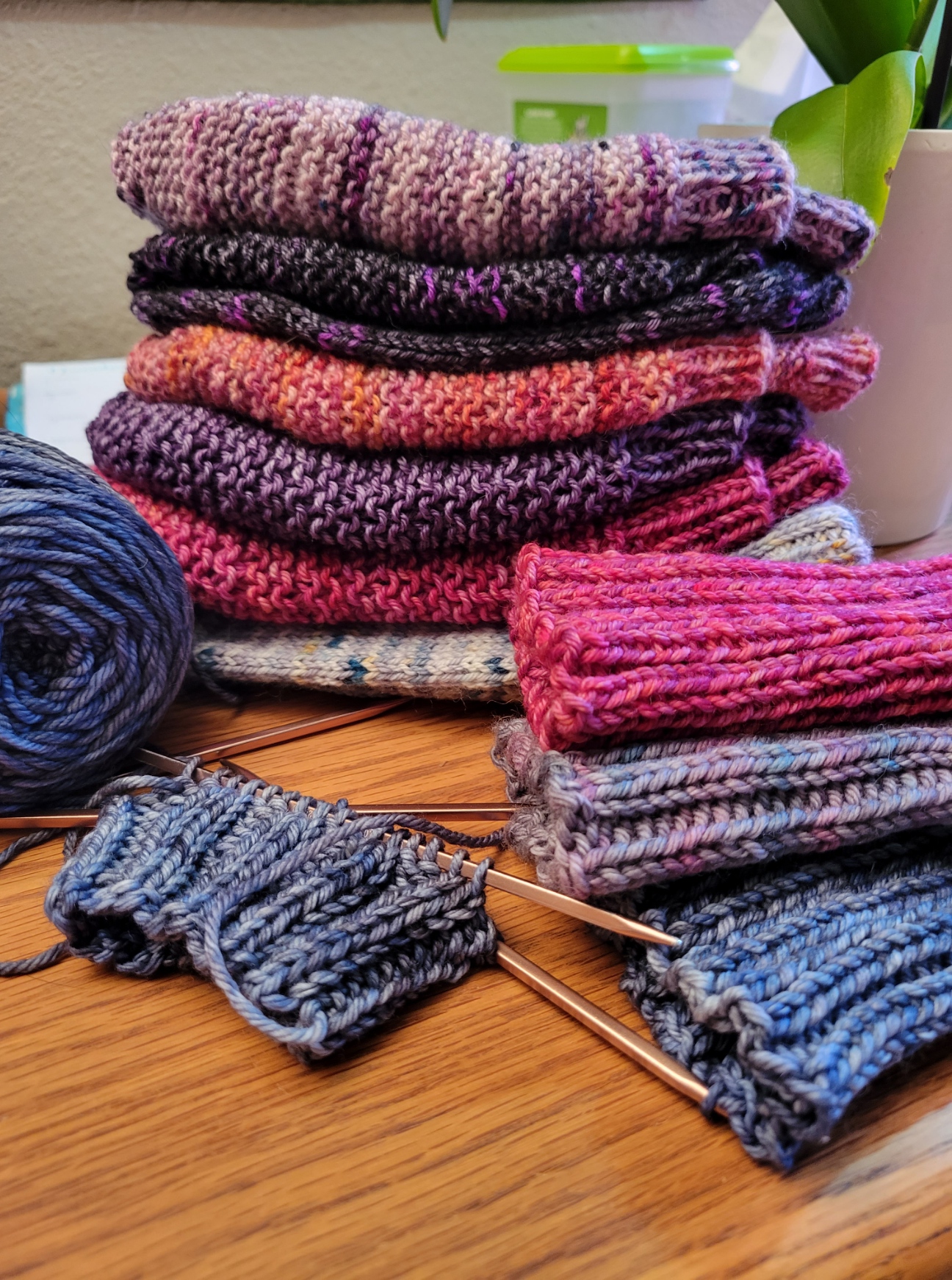
This month I produced 9 hats and 9 Picc line covers. The hats are all Barley and Barley Light by Tin Can Knits, and the PICC line pattern is here.

I have a loose goal of producing 50 hats and 50 PICC line covers this year, so I am definitely on pace.

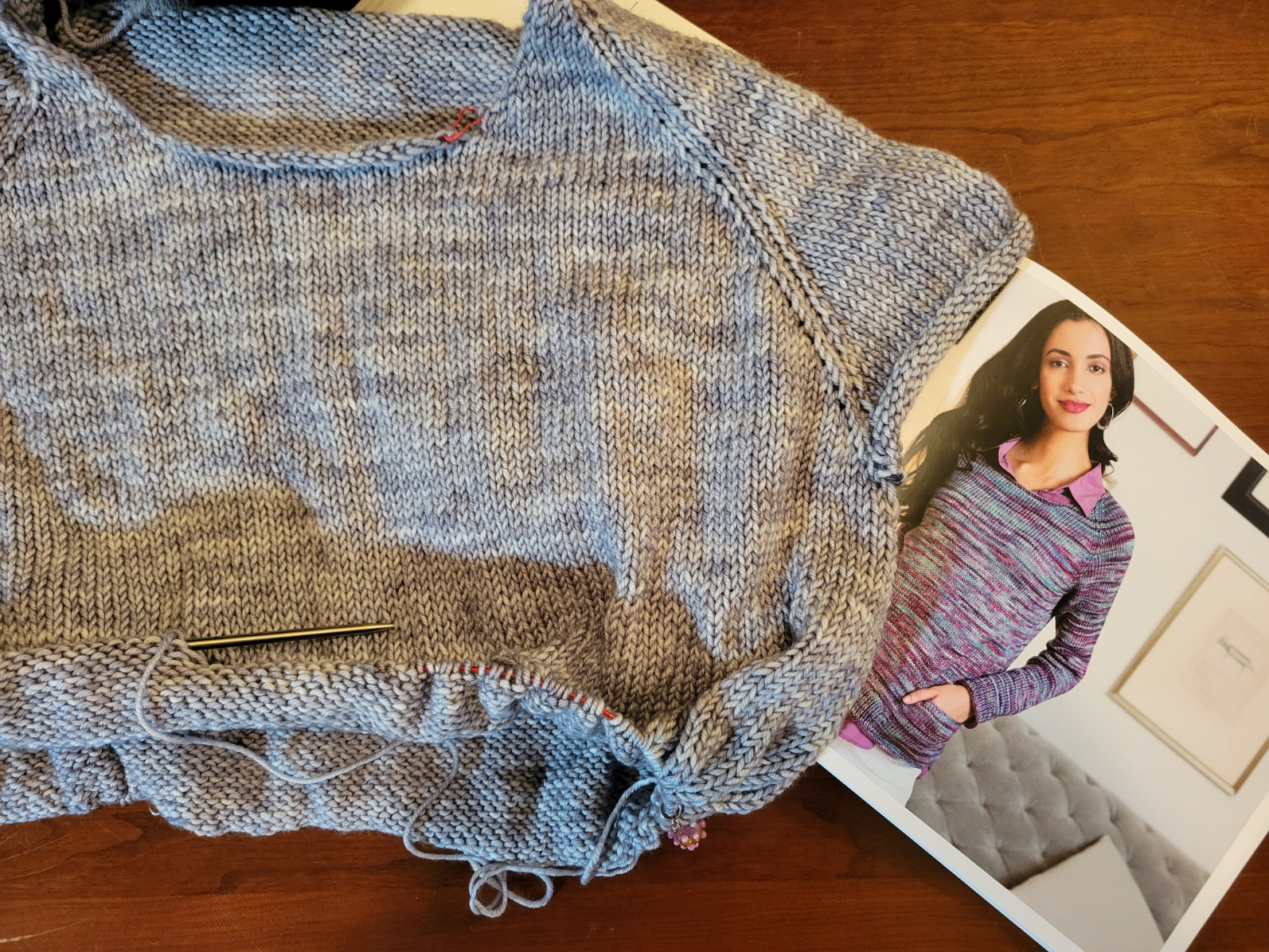
I also started a new sweater this month. This yarn is Lush Worsted by The Uncommon Thread in the colorway Chrome. The sweater is Cushman by Isabel Kraemer.

All together I used up almost 950 grams of yarn this month, which translates to almost 10 skeins of yarn if I use 100 g/skein to calculate how much I’m reducing from the stash. So far it has been a great start to the destash!

Garden

It’s winter. Three of my orchids are going to bloom and they have been slowly, slowly growing out the stems and now the buds are really starting to look good.

I think that this plant will be giving me purple blooms.

All of the orchids are putting out new roots and I am gratified that they are looking so healthy. Hmm… did I mention that I threw away two plants last fall that were whimpy and failing to thrive? Yep. It’s not that I’m such a great gardener, but that I know when to banish a sickly-looking plant to the garage. All the plants that are under the lights are really looking good and I’m glad that I heartlessly removed the ones that looked sick.

Books:

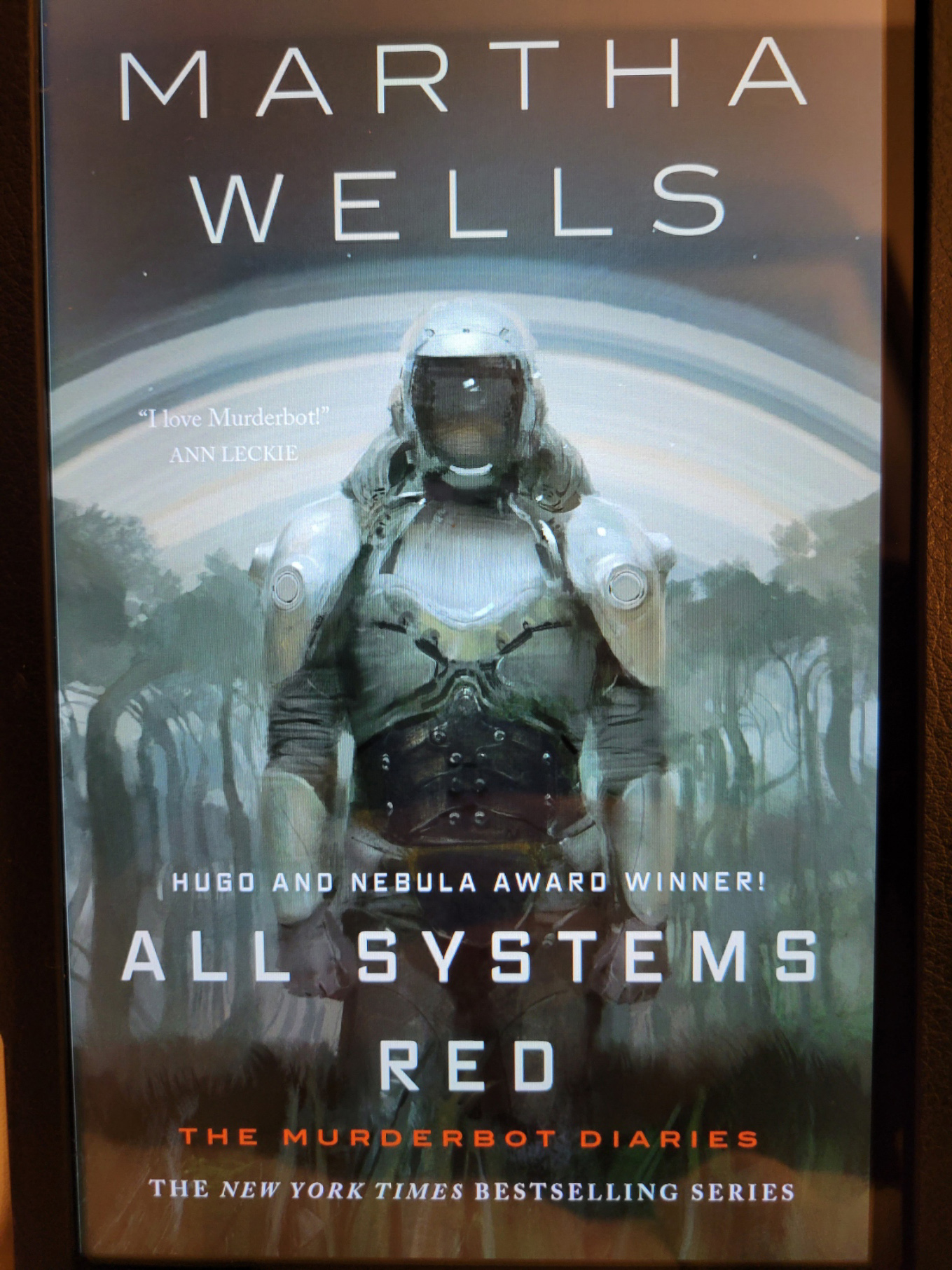
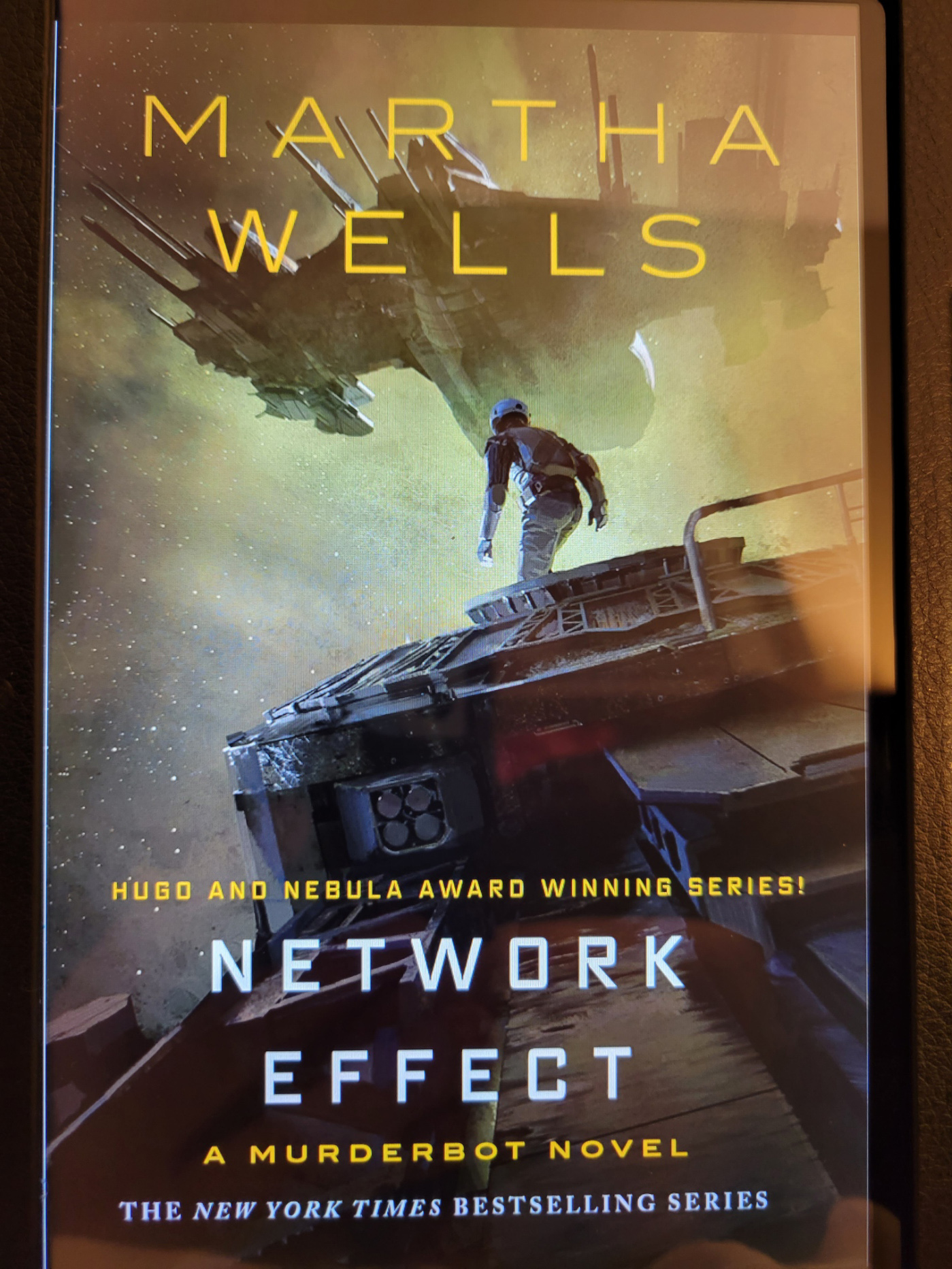
Okay, the reason there was so much knitting going on last month has to do with me struggling with the weather and annoying symptoms associated with my pulmonary hypertension. I also pulled out The Murderbot Diaries and read/listened to all of the books in the series again.

There are actually 6 books and a short story in this series, and I just can’t seem to get enough of Murderbot. I’ve spent some time thinking about what draws me to the character and the series so much. The books are well written, interesting, extremely well balanced, and the audible books are excellent. Let me unpack the story a little for you.

Murderbot is an intelligent construct created from organic and robotic parts. It is a security unit (SecUnit) designed to handle all security/protection for human clients that contract with the owning company. SecUnits are horrifically dangerous due to their features (energy weapons in its arms, for example) and their ability to manipulate digital networks. To control them they have a governor module that punishes/kills them if they fail to follow directions or screw up in any way. The popular media presents rogue SecUnits as the ultimate threat to humans; “very dangerous, kill on sight” type stuff.

Okay, let’s be clear here. Murderbot is a slave to the corporation that created/owns it. Rogue SecUnits are the equivalent of escaped, extremely dangerous slaves.

Murderbot figured out how to hack its governor module and is now a rogue unit. It doesn’t really know what to do with itself so it conceals its rogue status, continues to work its job, and watches digital media as much as it can. Through luck it works for clients who appreciate how very special it is; they buy its contract and free it. Murderbot isn’t sure what it wants, but it is sure that it doesn’t want to be a “pet”, so it leaves. Slowly, through interactions with others and lots of episodes of The Rise and Fall of Sanctuary Moon, Murderbot comes into its own. It makes its own security contracts with clients and begins to control its own situation. Always in danger of being captured and destroyed, he learns how to “pass” for human. He makes friends, learns how to handle emotions, faces down his demons, and slowly finds his purpose in life.

On bad days I crawl under the covers again and listen to Murderbot. Murderbot binge watches serials with his friend ART (which stands for Asshole Research Transport) and I binge watch Netflix. Murderbot faces down his fears and learns to move around in unfamiliar situations; I face down Covid and take myself into a crowded grocery store to get my booster shot. I definitely channel Murderbot when I shoot someone side eye for not wearing their mask! Murderbot finds its voice and learns to speak for itself, and I learn to ask the hard questions of my medical team.

Murderbot as a role model. I can do worse.

These books are short so I polished off 10 books this month. Wow. My goal is 50 books for the year so I am in good shape.

Hannah: Have a great February, everyone!

The BioGeek Memoirs: Garter Snake

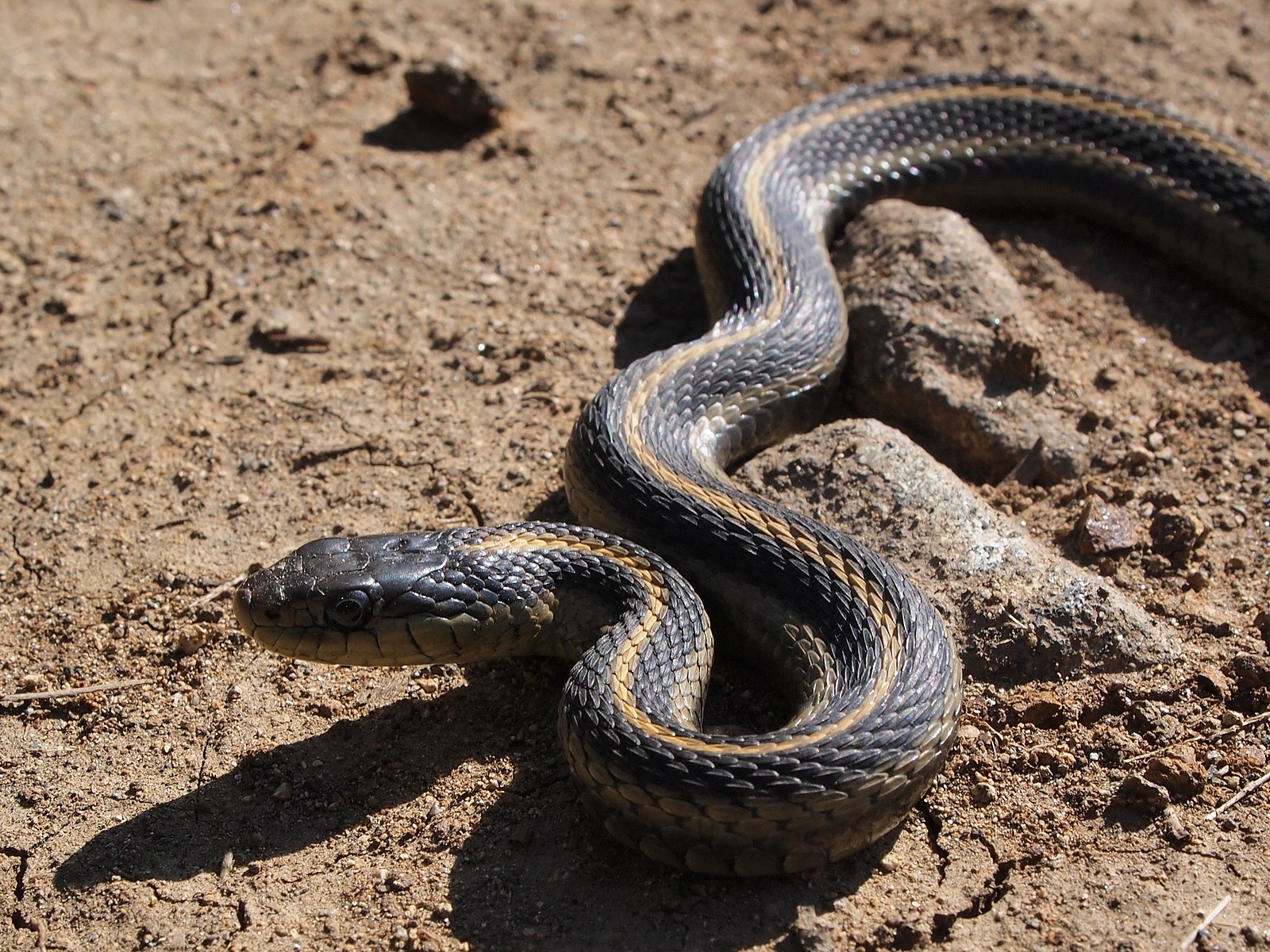
Last summer, while walking through the garage on my way to the front, I came across a little garter snake moving across the concrete floor towards me. “Oh, no you don’t!” I told him. “Back out the door you go!”

That little guy flipped right around and speedily snaked his way right back out the way he came. “Out, out…” I told him as I continued to herd him until he was safely back out front.

Photo Credit: Inklein, downloaded from Creative Commons

I’ve had many, many encounters with garter snakes over the years. They are common in the yard where they sun themselves in the mornings. They will even climb up into shrubs as they try to catch those early morning rays: during an early morning stop at a creek getting water to use in a biology lab I accidently chose a path through a group of draped and sunning garter snakes. The students through it was just hysterical when I arrived in class that morning somewhat rumpled and covered in burrs after I had leapt around like a crazy person trying to avoid the snakes. I was picking burrs out of my fleece vest all day…

I live on the edge of the Great Plains region of the United States; fields and residential areas broken by open spaces with small waterways moving through them. These snakes are relatively small and hang out on the land and in the water catching whatever they can to eat. What do they eat? Whatever they can catch, evidently! I spent some time online trying to nail this down as I do wonder what that little snake in my yard is going to munch on (not my baby bunny… no!) and discovered that they eat earthworms, slugs (yay!), small rodents (another yay!), fish, and other small animals in the riparian area where they live.

My little snake appeared in the garage late in the summer. I seem to see a lot of them at that time of year; the babies are born alive (the mother holds onto the eggs internally until it is time for the baby snakes to emerge) and then there are little snakes (pencil thin and less than a foot long) whipping along across the sidewalk and through the lawn. These baby snakes are prime targets for the adventurous cat looking for the best cat toy ever as they frantically race back and forth through the garden and hiding along the landscaping timber.

There were few things that my cat Morgan loved more than a great garter snake chase!

I, of course, was more worried about the snake. Okay, I’m also not a fan of the cats dragging the snake around and maybe even into the house. Once I had a snake loose in an upstairs bedroom; it had been brought in by my beautiful Siamese cat. Luckily the cat’s behavior helped me locate it (it had slithered up the front of a dresser and was hiding along the edge of one of the drawers with the cat’s nose right on it…) and it was captured and returned to a safe cat-free area outdoors.

I used to have a garter snake in my 6th grade science classroom. It had a large screen-covered aquarium with a big dish of water, branches to climb on, and plants and bark to hide in on the bottom. It took me a while to figure out what to feed it… crickets just sat on its back and rode it around; the snake looked kind of sad to have its cage invaded by insects. The students and I dropped in earthworms. Nope. Lunchmeat was completely ignored. I refused to try baby mice. Finally, I bought it some feeder goldfish and dumped then into the water dish. Bingo! Obviously, this snake was pretty aquatic in its orientation, and it happily chased down and snacked on four little feeder goldfish once a month. Who knew they eat fish? Obviously, they do!

That little snake was a happy camper in its inner-city classroom for a couple years. It had a nice heat lamp that it basked under in the mornings, draped across the wooden branches in its cage. On hot afternoons it spent its time in the water dish staying cool. Overnight it burrowed down into the wood chips in the bottom of its cage. Since snakes can’t regulate their own internal temperatures like we do it moved around in its environment to keep its internal temperature in a comfortable range.

One day the cage was empty: my snake had pushed open the screen cover and escaped. Oops. Umm… of course the students noticed that he was gone. Two days later my principal crept in during class and told me that my snake was sunning itself on a windowsill in a classroom upstairs. Yep. There he was, looking exceeding pleased with himself. The students had recognized him right away. I had to buy that teacher a Starbucks gift card…

When I left that job the snake was released back into the same riparian area where he had been caught two years earlier. Hope you had a happy life, little guy! I wonder what he told the other snakes about his years in a 6th grade classroom where he learned all about the life cycle of stars, the space shuttle, ecology, weather, and some simple chemistry?

He was a well-educated snake!

P.S. My neighbors don’t enjoy the garter snakes as much as I do, but I view them as an essential part of the local backyard ecosystem. My neighbors struggle with mice that invade their garages and homes each fall, and something keeps munching on their flowers. Somehow, I don’t have the same problems. Go get those slugs, garter snakes!!

You can learn more about the snakes of Colorado here.

The Scleroderma Chronicles: And Do You Exercise Regularly?

It has been an eventful week in big and small ways. I had been mostly in bed for most of a week as I struggled my way through two snowstorms with significant air pressure drops. Ugh. I had chest pain, coughing, heart palpitations, and more sleep than I want to admit to. Towards the middle of the week, I went off my immunosuppressant drug and the flare of my disease(s) arrived over the next two days. Ugh. So predictable, but still discouraging. I dragged myself together on Monday, double masked, and made it to the pharmacy where I had an appointment for a Covid-19 booster that afternoon.

Mateo: Do I need a booster too? Here’s my arm…

I have this really wacky sense of humor. The entire experience just kind of cracked me up. You see, I got the appointment at my local grocery store’s pharmacy. Here are some of the highlights:

  • I have had so many shots at this point that they had to use the back of my vaccine card. At this rate I will need an accordion-like pullout for the vaccine information in a few months.
    • Why so many shots? I’m immunosuppressed. I went off my drugs this time to give my immune system a better chance of responding to the vaccine.
  • The staging area for the shot was at the Fritos display across from the pharmacy. Seriously, the pharmacist said, “Go stand with the Fritos and wait your turn.”
  • The shot was easy, peasy. I think that the syringe was spring loaded it was so fast. “Go walk around the store for 10 minutes before you leave,” I was told.
  • So I waved goodbye to the Fritos and walked around the store. Mostly I just looked at the empty aisles for the 10 minutes feeling sorry for myself. No milk. No Snapple. No cat food. No guacamole. NO GUACAMOLE!!!! Oh, yeah. Genius me scheduled the booster shot during a grocery store strike by the competing chain’s employees and this store was basically stripped of essentials by the descending horde of shoppers who didn’t want to cross the picket line. As they shouldn’t. But they could have left me a little guacamole, don’t you think?
I was able to get the cats a Boston fern to replace the palm that was chomped to death by… I wonder who could have done that? Hmmm…

I also got a Starbucks. Not the worst trip out of the house. I ended up with a sore arm and was so exhausted that I slept for 12 hours.

Today, 48 hours after the booster shot, I feel great!! The flare is gone. I haven’t felt this good in weeks. This happened to me the last time I got a Covid booster. I think that it must be the increase in antibodies or something; I’m so immunosuppressed that my gamma globulins are way too low (a medical condition that my doctors are just ignoring because I do have enough white blood cells). Maybe the boost in antibodies following the shot actually makes me feel better somehow. Maybe my white cell count goes up. It’s a mystery. I’ll take the win!

And in that winning mood I went to see my cardiologist for the first time since my trip to the cath lab last fall. I was a little short of breath but was walking okay when I got to the office. I received an EKG test and the nurse checked me in:

Nurse: “And do you exercise regularly?” (in a judgmental tone of voice…)

Me: “Oh, please. Let’s not even pretend that I am able to exercise!”

Nurse: “Oh. I’m so sorry that I asked you that…” We both started laughing, but I meant it! I am so over feeling defensive about being unable to exercise. In fact, trying to exercise with my condition was damaging my heart.

I also think that I had my snark on under my mask.

Then the doctor came in!

My cardiologist is freaking awesome. He asked lots of questions about how I was doing. (Face now mostly not blue. Yay! Some panting and chest pain, but so much better. I went up a couple of flights of stairs with no problem.) We discussed the fact that I don’t fit the usual diagnostic model for pulmonary hypertension but based on physiological changes consistent with PH and my dramatic response to treatment with a PH drug, he made the call and entered the diagnosis. The matter is now settled until new data comes along.

Exercise-induced pulmonary hypertension. As in, you look perfectly normal when you are on the table getting your lung/heart tests, but the minute you exercise all hell breaks loose in the blood vessels of your lungs. Fabulous. There is a really invasive testing protocol that I could be subjected to, but there is enough evidence now to establish the diagnosis without it. The diagnosis became part of my medical record today. At last.

It has been a long time coming!!

It has been almost exactly 5 years since the BLZ began her journey to find help and answers. This has been really, really hard, but I made it.

We discussed the pros/cons of more testing. We talked about the risks and benefits of adding a second drug to the one I’m already on. We talked about who will take over management of my PH (he will) and how he will integrate with my rheumatologist. We talked about how important it is to be comfortable with “out of the box” thinking when dealing with a patient who is basically at the far end of the bell curve… in other words, a zebra. Oh, I like this guy!!

I agreed to start the additional medication which will be added to the one that I’m already taking. There will be more side effects as this second drug kicks in and I will be getting several phone calls to check on me as I start it. The plan is to try to slow down my progression before I develop full blown PH.

Next up: more testing to hunt for that dang hole in my heart. It’s like a snipe hunt, but so much less fun. As in, heart surgery anyone?

Hannah: Don’t worry mom: you’re got this!

Hannah and the CoalBear: Mateo does Caturday.

Hi. I’m Mateo (AKA the CoalBear).

I’m almost 10 months old now. What do you think of my ruff?

The Mother of Cats isn’t feeling well today so I am hanging around with her on her bed. I’m helping her write on her computer right now! I’m such a good boy!

I’ve been bringing toys onto the bed so she can watch me play with them.
I chewed on the palm plant downstairs to keep up my energy.
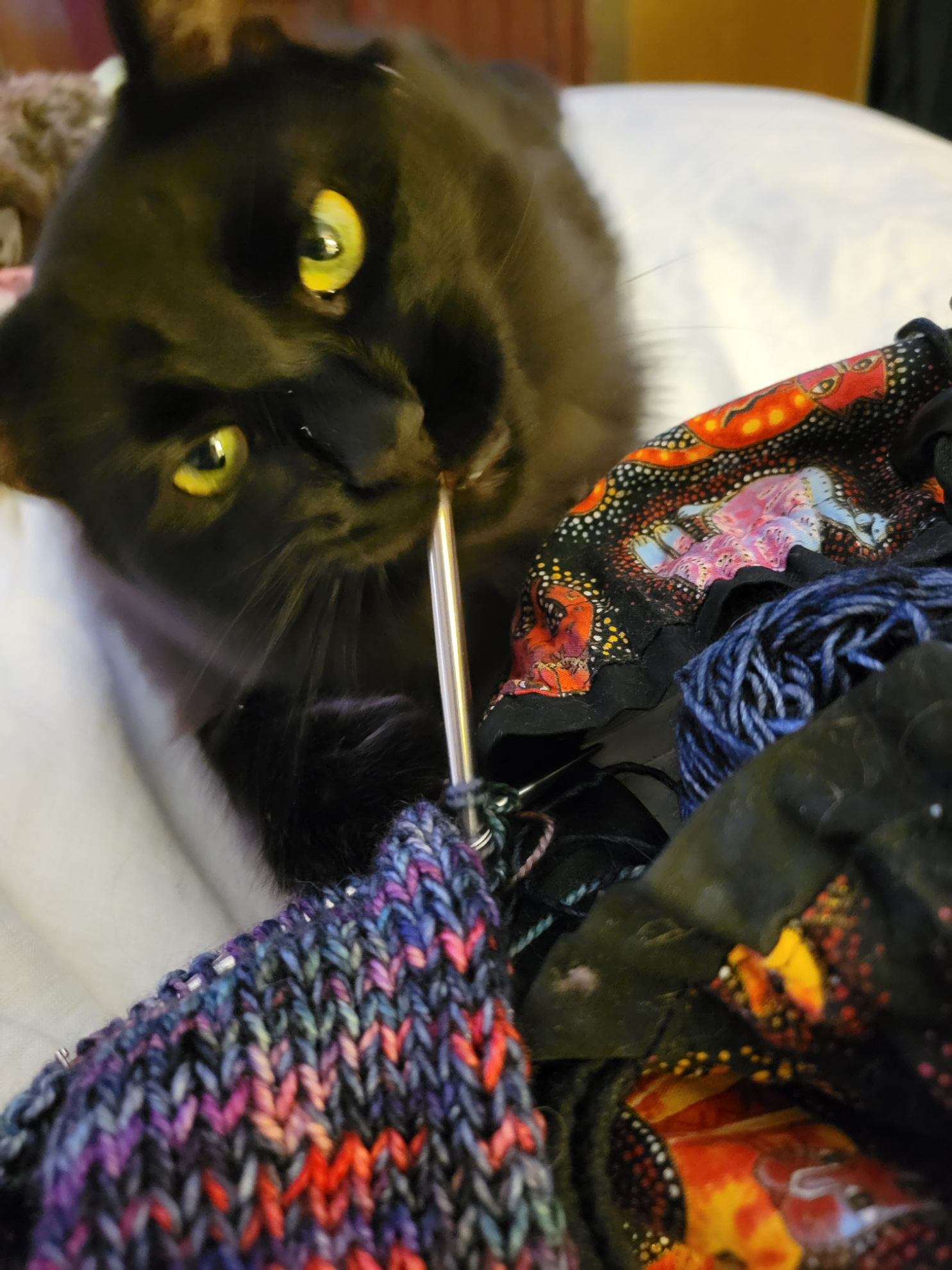
I then helped the Mother of Cats with her knitting. I’m such a great helper!!
I groomed my sister so she would let me sleep on the cat tree with her.
I’m the best CoalBear ever!!

Happy Caturday everyone!!

May you all have an excellent day!

Notes from the Mother of Cats:

I’ve gone off my immunosuppressant drug so that I can get my Covid booster on Monday. Sigh. There was a big pressure change yesterday with a cold front that triggered some symptoms along with the predictable flare of my disease that has me back in bed for the weekend.

I’ve been in lockdown for two years and I desperately want the booster because my next round of medical appointments starts in another week. I also want to start knitting with my new-found groups, too. I want some of my life back!!

Please think of me and the other people in a situation like my own (high risk, immunosuppressed or immunocompromised, and struggling with chronic conditions that complicates their lives on the best of days) when you are out in public.

And wear your mask!

ps: I threw out the palm last night. It wasn’t a match for the CoalBear and I was afraid it would make him sick. Next up: a Boston fern.