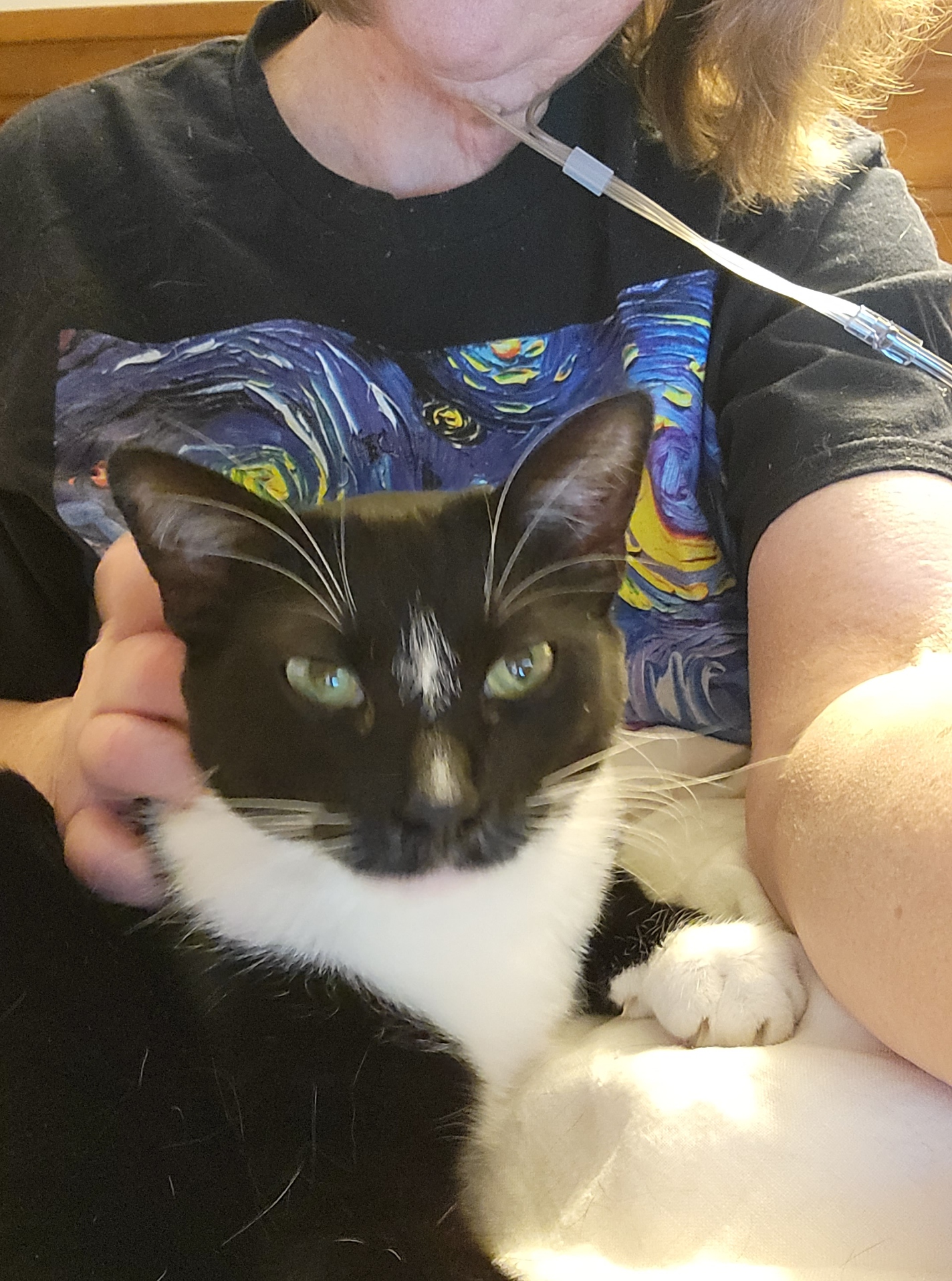
We have been hanging out for hours at a time with the Mother of Cats while she knits and knits and knits on her new sweater. Sigh. She isn’t very frisky at all and she should get up and play with me more… instead she just reads and knits all day. Hannah is cool with that because she like to snuggle with the Mother of Cats, but I am still a kitten and I need to play!!!
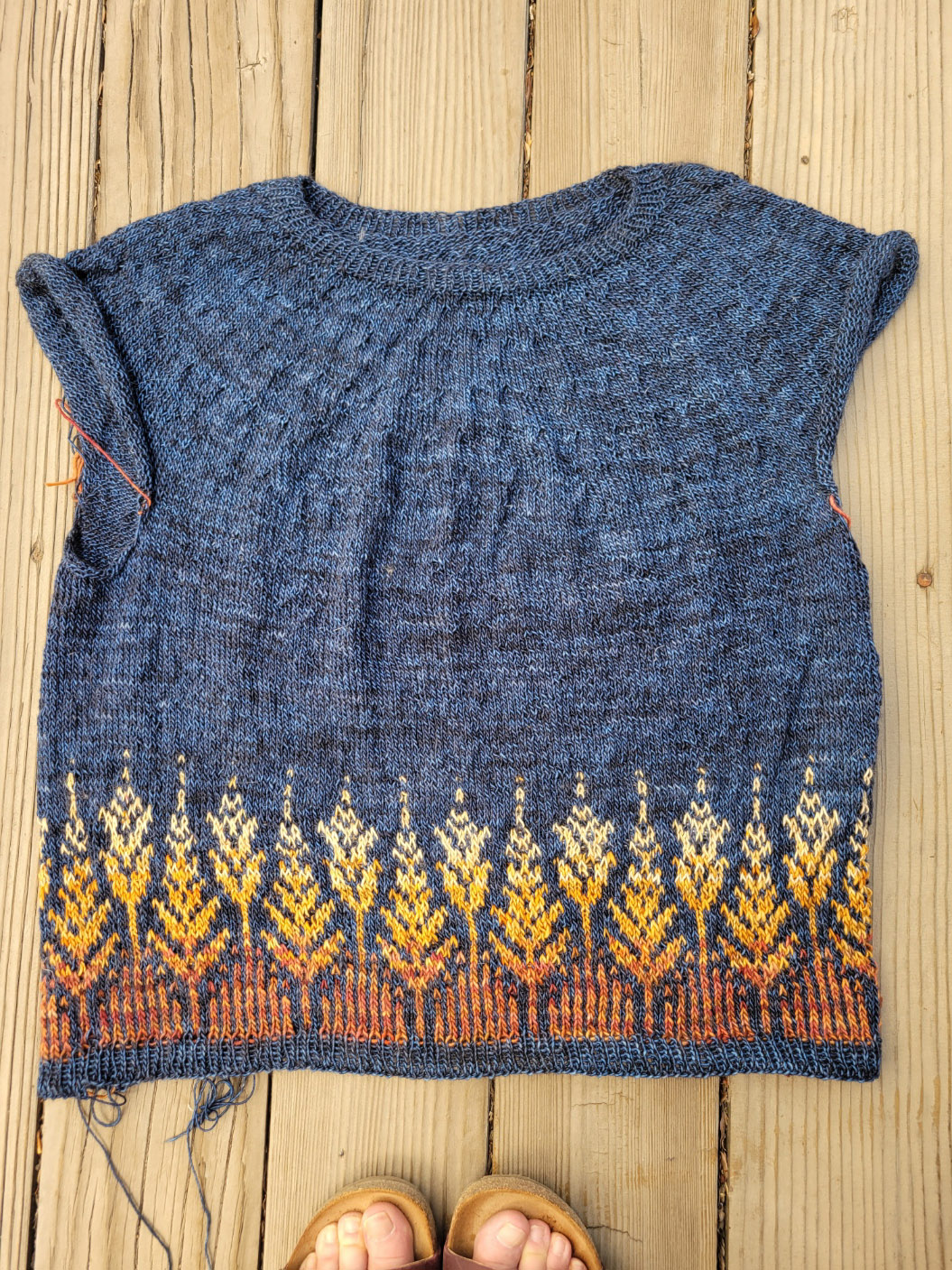
You can see that she has made some good progress with our help. Yesterday she knitted all day trying to get to the end of the body of the sweater, and around midnight she finally cast off the sweater.
My sister and I were watching out the window when she finished. There is some great wildlife in our yard around midnight!!
Overnight Hannah and I knocked over a container of kitty treats, got the lid off and polished off all of the cookies. I thought that the Mother of Cats would be grumpy with us, but since we let her sleep in until late in the morning she kind of forgave us. Kind of. I did notice that she put all the rest of the kitty treats into a cupboard. Hannah knows how to open cupboards…
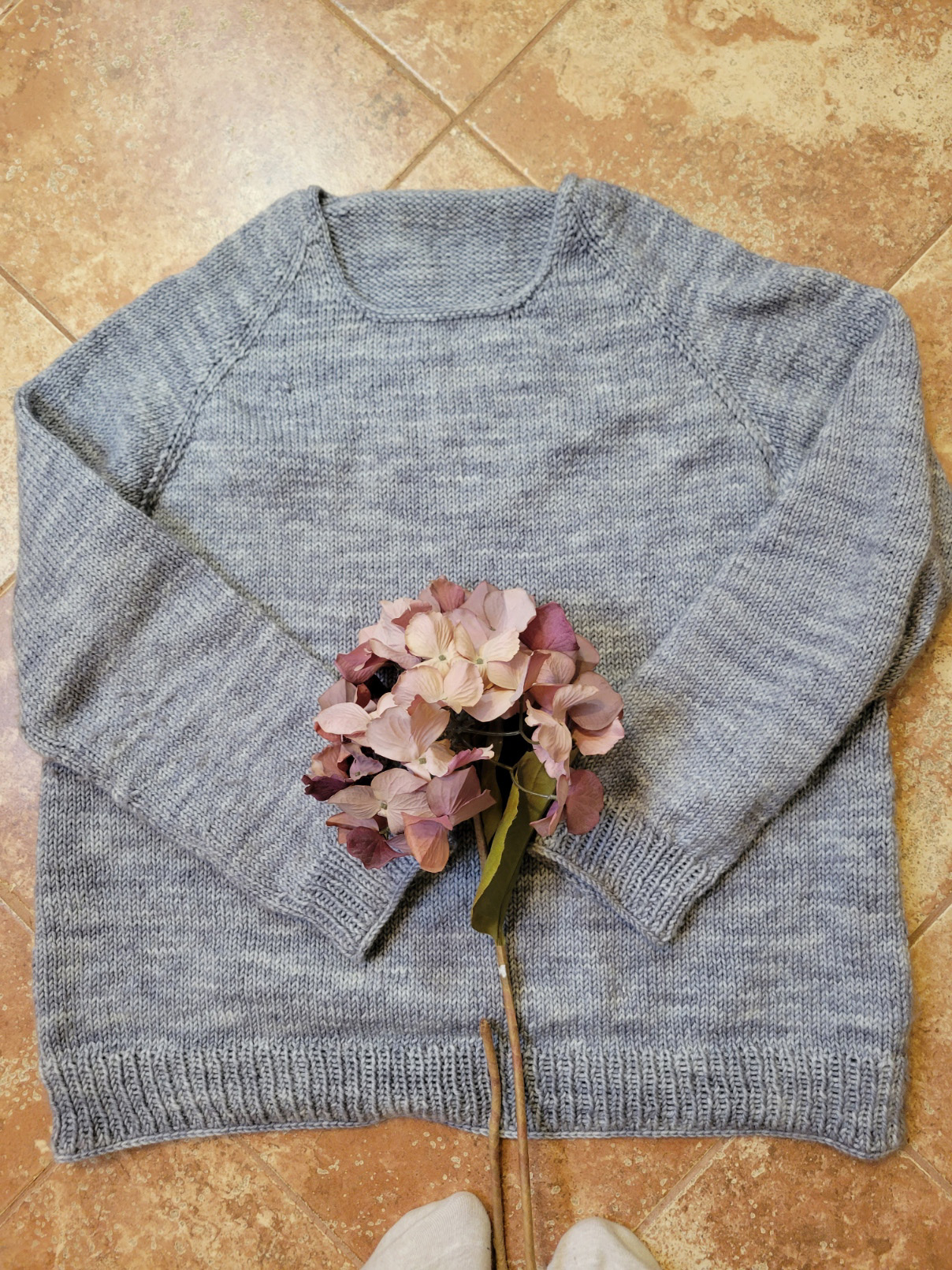
This morning she tried on the sweater, and it fit perfect! Well, of course it did. We aren’t exactly amateurs in knit support, after all. This afternoon she headed outside to take pictures of her sweater and I gave Hannah’s ears a washing.
Hannah: the CoalBear is the best little buddy ever.
Now it is almost night again and I’m pretty sure that the Mother of cats is going to make some supper and we will get some more kitty cookies. Yay!!
Hannah: Happy Caturday, everyone!!
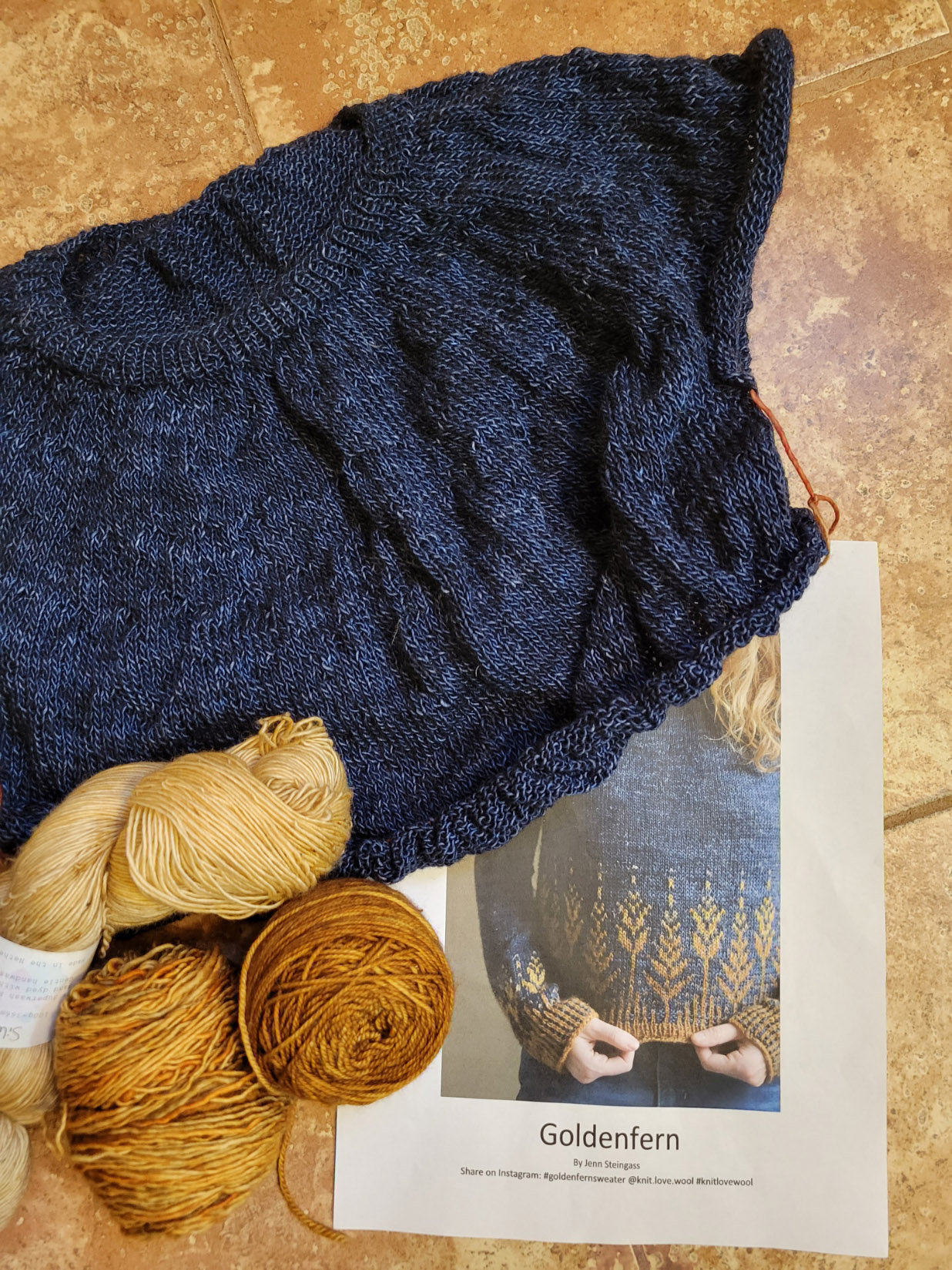
Notes from the Mother of Cats: The sweater is Goldenfern by Jennifer Steingass. My Ravelry notes are here.
What have I been reading this week? Here it is (please observe that the cover matches my knitting :-)). I would talk about the book, but I really can’t without giving out spoilers. Just let me say that I enjoyed this book and it was the perfect one for a surgery-recovering BioGeek.
Last Monday, May 2nd, was the date of my lung biopsy procedure. My pulmonologist had diagnosed me with interstitial lung disease a couple of months ago and the biopsy was required to definitively diagnose the type of ILD I had. This is kind of complicated, but the simple reason for the biopsy is that I don’t really fit the profile of the usual scleroderma ILD patient, and the treatment is expensive and somewhat risky. Biopsy time.
At 4:30am Monday morning my son drove me through the rainy dark to the hospital where I was going to be admitted for the surgery. I had on my new raspberry clogs for good luck, and I was exhausted after being up most of the night completing pre-op tasks at home. I was fighting off a sense of impending disaster…
The day I met with the surgeon he drew a funky little drawing on his white board to explain what he was going to do. Check out the diagram above: your right lung is actually different from the left with more tissue and three lobes. My surgeon planned to use special instruments guided by a tiny video camera (VATS) to go through my chest wall and get the tissue samples. This is a minimally invasive procedure that will only take a few minutes. The catch: the right lung will be deflated before he takes the samples.
Atelectasis is the medical term for a collapsed lung. Both of my lungs were experiencing incomplete atelectasis at the time of my last CT scan, and I’d been getting steadily worse all April. I was a little concerned, but I trusted that all would work out fine in the end. I was prepped, bundled up, and rolled off to surgery. There was the most fantastical robotic surgery machine in there, but before I even got a great look at it, I was on the table, a mask was put over my face and I was gone…
… and I emerged from unconsciousness at the bottom of a rugby scrum with all these faces looking down at me. I was in pain, a lot of pain, and I couldn’t breathe at all. The muscles on the right side of my back were seized up and cramped in what felt like Charlie horses, and I was thrashing around as I tried to get someone to rub on my back muscles. The rugby players in masks (I was later told that there were 8 of them) were attempting to hold me down as they put hot packs under my back, removed my oxygen cannula, and placed a larger oxygen mask over my face. “Do you remember the Xray?” one of them asked. Oh. That’s what set off the muscle cramps. My oxygen was below 75% even on highest oxygen flow available in the recovery room. I got transferred to the ICU.
That right lung refused to reinflate. I couldn’t be given any pain medications or fluids until my oxygen levels came up. New doctors began to arrive and talked to me. To be clear, talking set off coughing and was very painful. I just wanted someone to help me, not talk to me! A pulmonologist arrived to doctorsplain my disease to me and informed me that he was changing some of the drugs used to treat my lung and heart conditions. I told him that I didn’t know him, he couldn’t make any changes to my treatment plan without talking to my doctors, and that I needed him to do something right away to handle my immediate situation (I was in acute respiratory failure). He argued about contacting my doctors. I insisted.
I think that I deserve a huge gold star for standing up for myself while in extremis.
I was placed onto a high flow oxygen therapy machine within minutes and my oxygen levels came up.
I kind of look like I was underneath a rugby scrum, huh. That machine delivers heated water vapor and oxygen at the unbelievable rate of 60 liters/minutes. My oxygen came up into the low 90s on the machine and I finally received oxycodone. Yay!!! The last oxygen number on the monitor before I fell asleep was 94%.
The next day they got me up into a chair (more oxycodone!) and I started respiratory therapy to get the lung working again. On Wednesday my chest tube came out and during the day the flow rate on the machine was reduced until I could come off it.
Day three in the ICU. I am off the high flow machine and finally using a normal cannula. I’m still on 15 liters/minute of oxygen at this point.
That annoying pulmonologist came by every single day that I was in the ICU; my doctors had called him back! After talking to them he made some med changes (and told me that it a shared decision) and his manner completely transformed. The physician’s assistant who removed my chest tube told me that she had also read the care notes with all the data, email traffic, and decision-making by my rheumatologist/pulmonologist/cardiologist team. She was struck by the interdisciplinary care that I was receiving and seemed a little wistful and envious.
Another gold star for the team!!
Over the next two days I was slowly titrated down on my oxygen while doing my lung expanding exercises without fail. Late in the morning on Friday I finally escaped.
I put on my raspberry clogs, black leggings, a little black top, and my raspberry-colored down vest. “How cute you are!” exclaimed the nurse. My son drove me home through the late morning light along streets lined with newly leafed trees. While I was in the ICU the world had turned green.
No matter how lifeless and barren things seem over the winter, spring always comes with the promise of fresh starts and new life. I still trust that all will work out fine in the end.
April went by in a blur for me. I entered the month feeling pretty sick. I had just had an appointment with my pulmonologist, and he had referred me to a surgeon for a lung biopsy. Well, not what I was looking for, but necessary to definitively diagnose what type of interstitial lung disease I had. There are several types, and the treatment plans for each are different. The surgery was set for May 2nd, an entire month away. Annoyed, upset by the wait, pretty darn sick, it was hard to wait all through April.
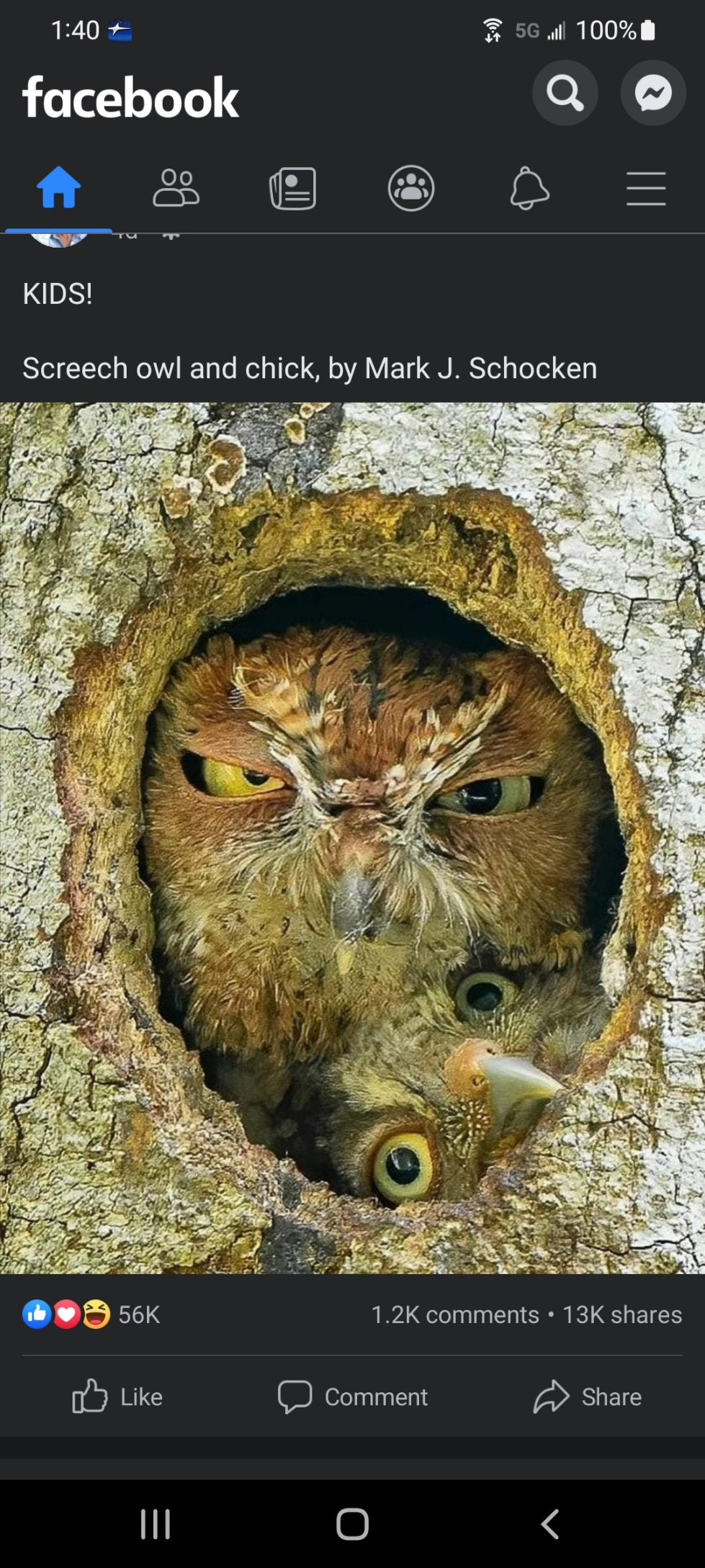
April rose to the challenge. Never was there such an ill-behaved month. For some bizarre reason my Amazon account reset to Spanish. Do you know how hard it is track orders and make changes to your account settings in a language that you don’t read well? Then email in Italian began arriving. Someone tried to hack into my PayPal account, setting off a flurry of new password and security settings on my part. Then my Facebook feed was flooded with pictures of… owls.
Umm… the universe wants me to learn a new language? Maybe the next BioGeek post should be about owls? This is really strange. April was getting off to a rocky start…
I kept struggling with my health as the month advanced, taking care of essential items in preparation for months of difficulty ahead if I was moved into a 6-month course of chemo. I filed my taxes. I took Matao in for his vaccinations. I filed the paperwork to be excused from jury duty. I got the last vaccine I needed (shingles) before the surgery. A neighbor installed the new outdoor lighting that I had purchased before Christmas, and another neighbor will arrange with her grandkids to take care of my lawn. I ordered more oxygen cannulas, and in keeping with April craziness, 4 cases of tubing arrived instead. I made arrangements to be tested for a portable oxygen unit… first appointment is in June. April, you are killing me here! One of the side windows of the car shattered without warning. I continued to get sicker. I was sick and tired of April, too!
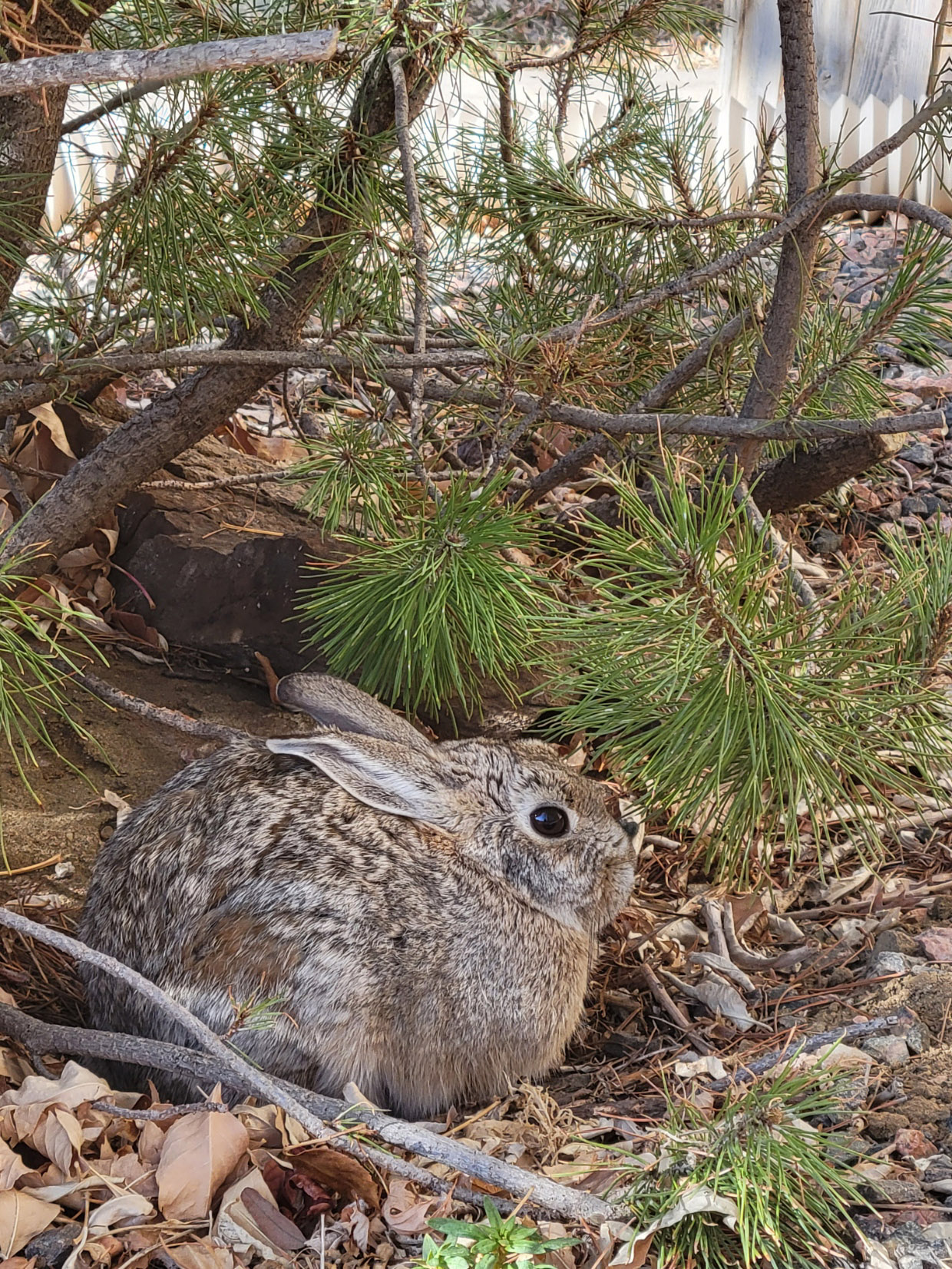
My wild bunny moved into the front yard where I could see it each time I went out of the garage. Very used to me now, it never runs away when I go outside. Bunny support on sad days.
As the month wore on, I began to sleep a lot. Like 10-12 hours a night. I had to use oxygen during the daytime. I was losing weight. I wrote my doctors an email towards the middle of the month telling them that I felt that I was declining, and that I was worried it was taking too long to begin treatment. I was scheduled for a series of additional tests and had appointments with the pulmonologist and the cardiologist. Oh, good, April. Now I have to drive all over town without portable oxygen.
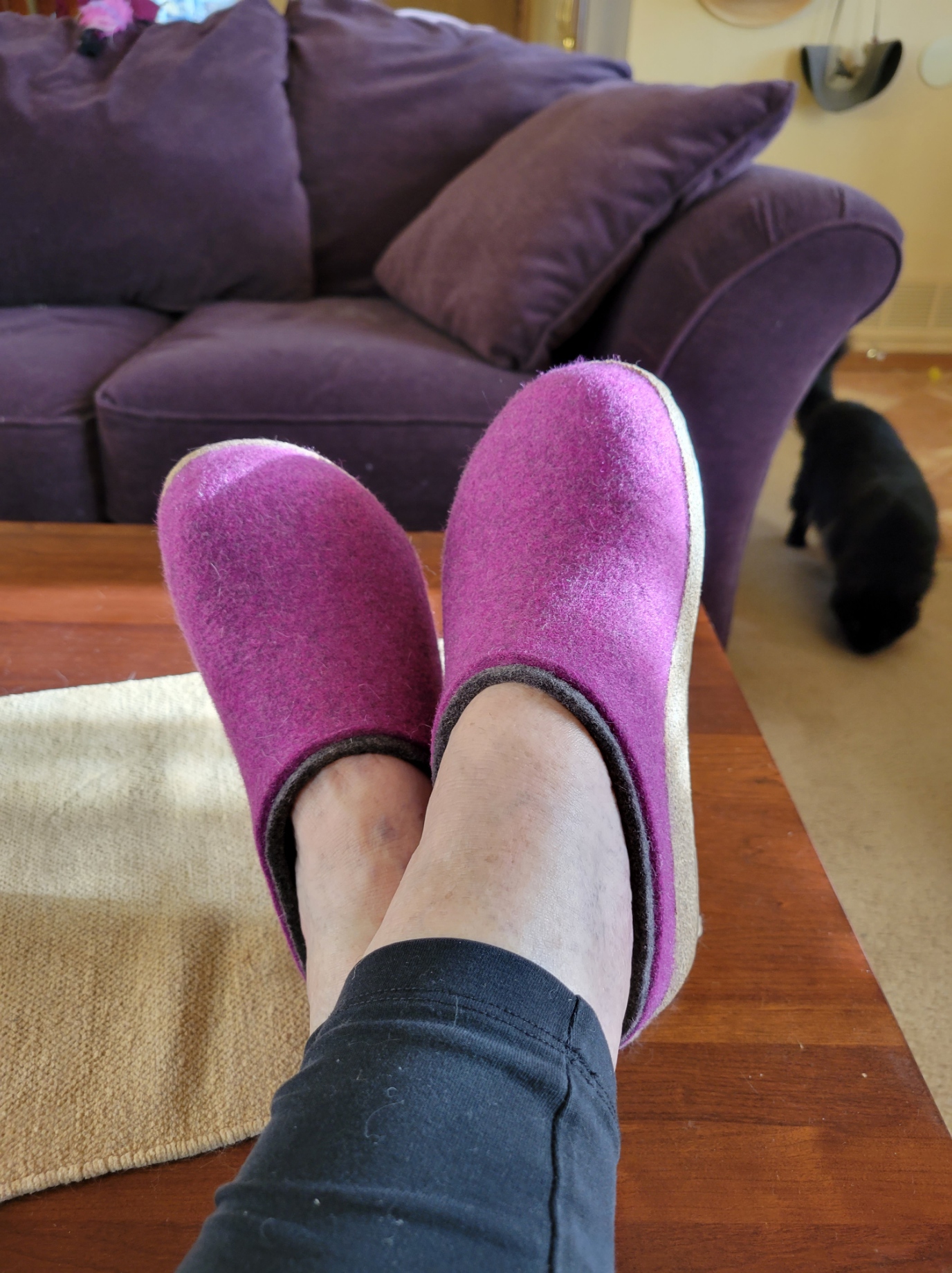
How to respond to a worsening situation that I have no control over? I bought happy new shoes in an outrageous color.
These are the shoes that are going to walk me into the hospital!!
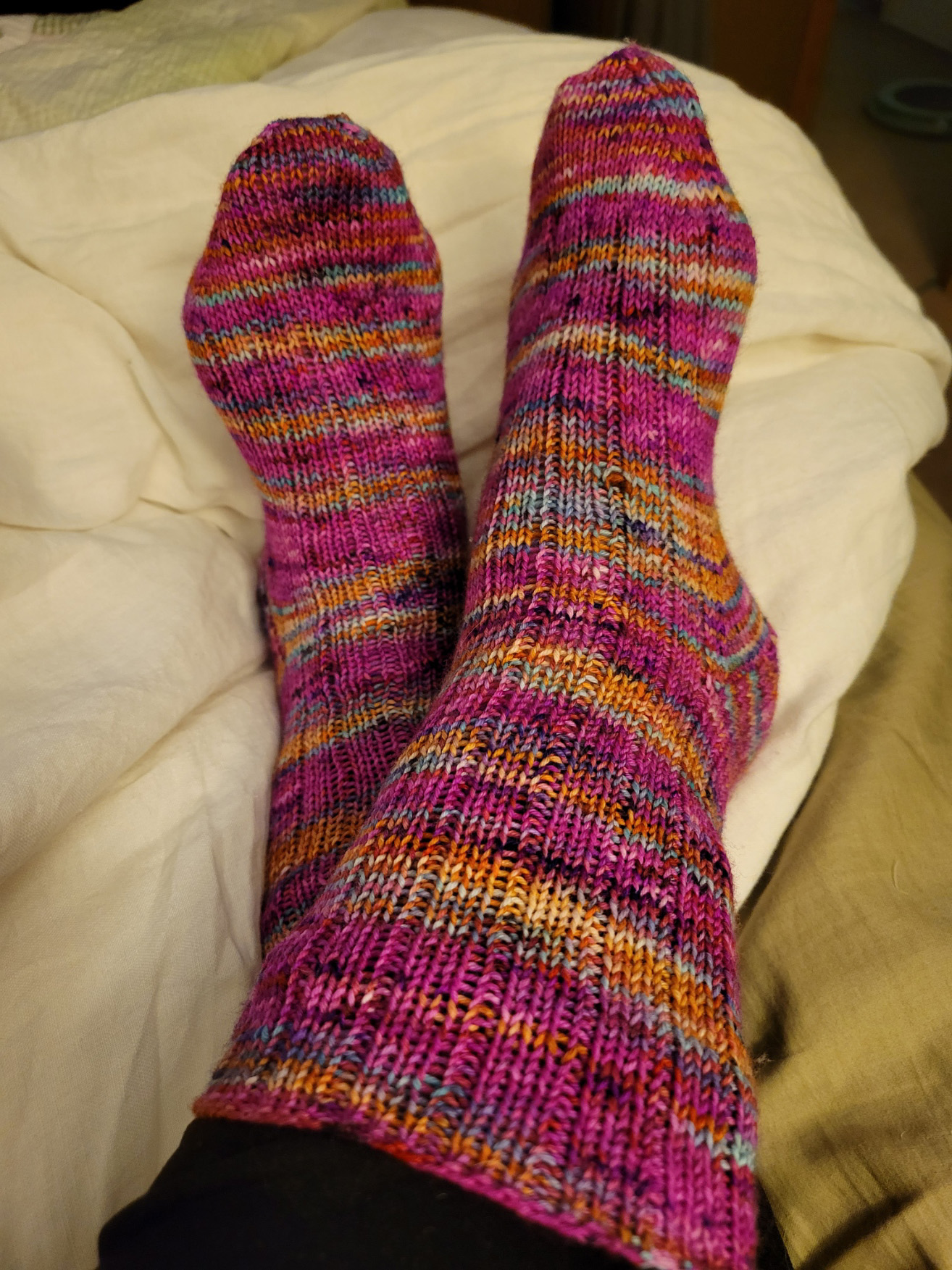
And then I cast on new socks that would do the shoes proud.
This yarn’s name is “Squad Goals” and dyed by Hue Loco.
The results from the heart, lung, and kidney testing came back and they all showed that… I was getting worse. My doctors conferenced back and forth, debated different treatment modifications, and came to the consensus opinion that I should have the biopsy done May 2nd. I got that email late on Friday before the surgery. Checking the physician notes attached to my last appointment I found the full text of all the test results and the email chain of discussion between my doctors. I felt very lucky: what a great team! How good I feel that the decisions about drugs and treatment is being arrived at through this interdisciplinary collaboration by my doctors, who have chosen to make this all visible to me. Knowing that, however, did not change the fact that the upcoming surgery is now a little risky.
So, I cleaned the house, did laundry, paid the bills, and got in groceries. I planted flowers in the front tubs and along the walk. I also cast on some baby booties for my next-door neighbor who just brought home a new little one. This pattern, extremely versatile, is our family recipe passed down through three generations over almost three quarters of a century. It is the same as this one posted on Ravelry.
And just like that, the month was done. I had made 2 hats, 4 PICC line covers, 2 pairs of socks, and used up 3.38 skeins of yarn. I read 6 books. I did work on a sweater, but since I’m now in the colorwork portion of the knitting I put it on hiatus to await better days.
Goodbye April, you crazy, bad-boy of a month! I want you to stand in the corner and think about what you have done!! I expect a whole new attitude when I see you next year.
Conifers. Oh, my goodness, who doesn’t love conifers? As in wonderful smells, pinecones, Christmas trees, snowy days, and fun trips to the mountains. I grew up in southern California and the conifer that I loved as a child was the ponderosa pine. It had bark that pulled apart into jigsaw shaped pieces. The bark smelled like butterscotch (or maybe vanilla), and the long needles grew in little bundles of three… perfect for braiding!! The cones are perfect for dabbing with white paint, sprinkling with glitter, and then using for holiday decorating. Perfect tree, the ponderosa pine. It is beautiful and kind of feathery with clumps of needles near the ends of branches.
Then I moved to Colorado.
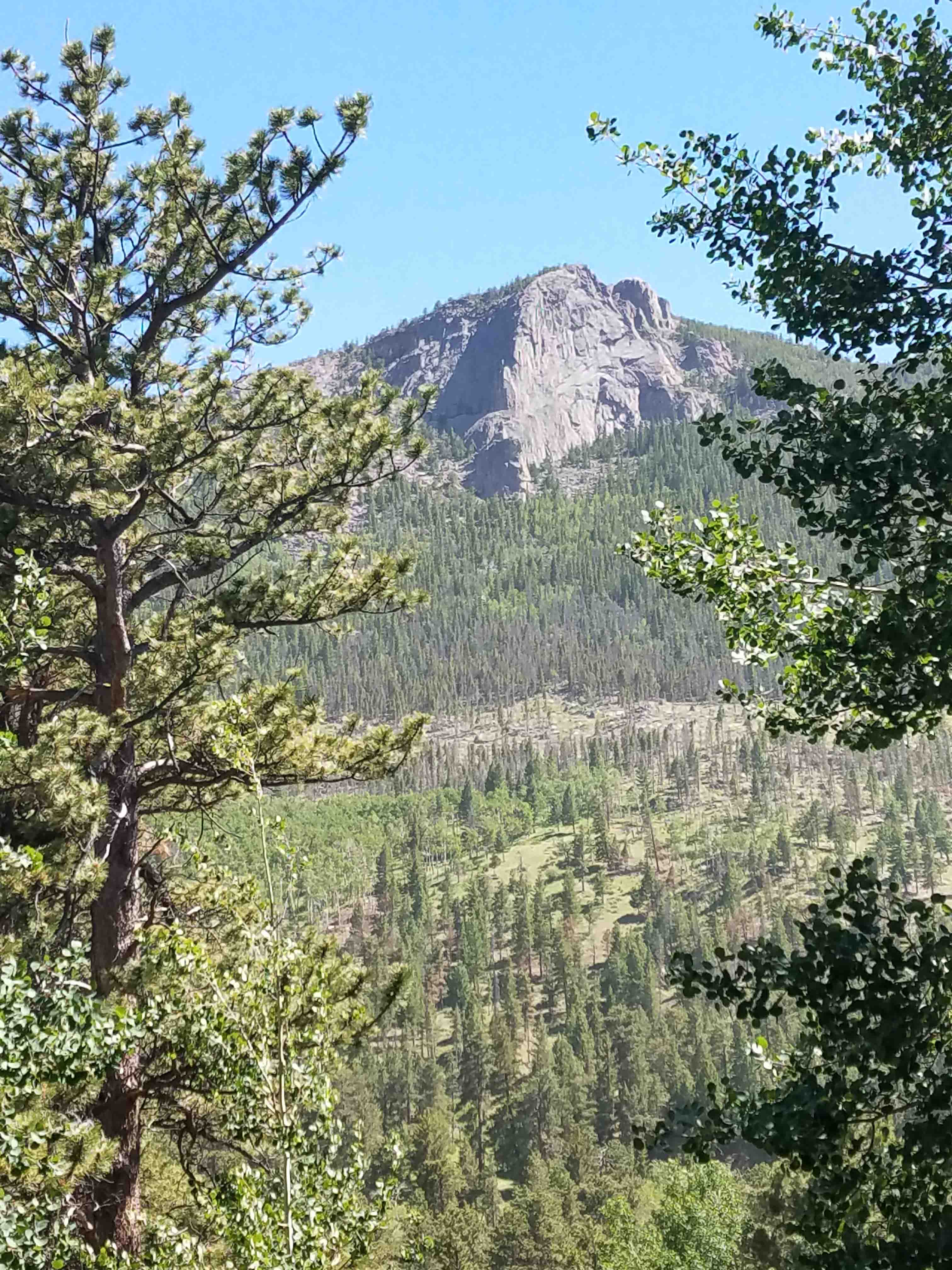
Trees in Rocky Mountain National Park. The large tree on the left is a ponderosa pine.
Oh, boy, did I need to learn a lot more about these trees. There are a lot of conifers in Colorado, and they grow in different environments and elevations as you drive up into our mountains. The ponderosa pines are found at lower elevations (5,000 – 7,000 feet) and then as you drive up into higher elevations different trees start to show up as the ponderosas disappear. In high elevations they are nowhere to be found, and the trees that are around 10,000 feet are specialized and designed to live in challenging environments. One tree has branches that are so flexible you can tie them in knots (limber pine), and another is just dripping in anti-freeze sap (bristlecone pine).
One summer I took a forestry class and spent a couple of weeks coring trees and recording their elevation and growth into a large data base maintained by the U.S. Forest Service. I learned to shield my coring activity from casual hikers (Yeah. People in the Boulder, Colorado might take extreme exception to your activities if they suspect that you are harming a tree… tree huggers are alive and well here!) and developed an appreciation for the impact of local environmental conditions on trees.
As a biology teacher I struggled to teach plants (yawn) and taxonomy (super-yawn) to my students. I searched for hands-on activities that could be used to teach these units, and finally remembered that the teachers in the high school where I did my student teaching ran a big lab where students used keys to identify Colorado’s conifers. Another teacher had keys that we could adapt to use with the activity and off I went on a road trip to collect conifer samples in the Rocky Mountains west of the town where I live.
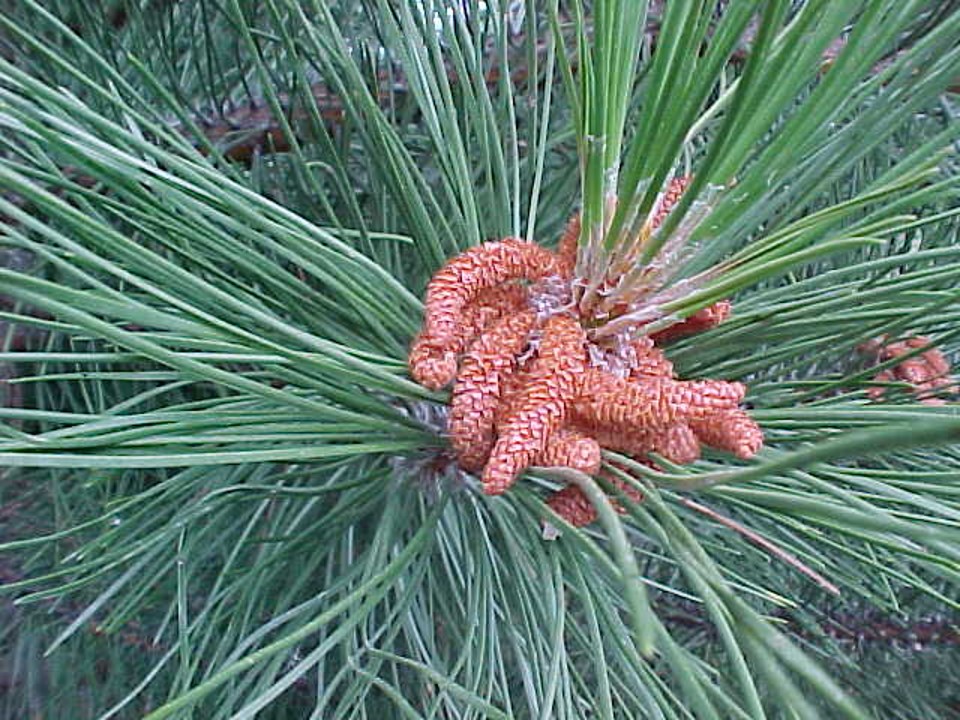
Why use conifers? Well, they are pretty darn interesting if you think about it. The plants produce two different types of cones (seed, on the left, and pollen, on the right) and have leaves that are needle like. They are older than flowering plants in evolutionary terms and have some cool adaptations. They use wind to reproduce and have turpentine and other organic compounds that allow them to stay alive in cold climates. Cut branches are hardy enough to survive handling by hundreds of students as they worked the activity. Yeah. Conifers were the ticket!!
So, how did this work? The students picked up bins with samples of branches and cones from the plants and, using the keys, figured out what conifer they had. The key took the students through a decision tree using needle and cone characteristics that became more and more detailed as they moved down the decision tree.
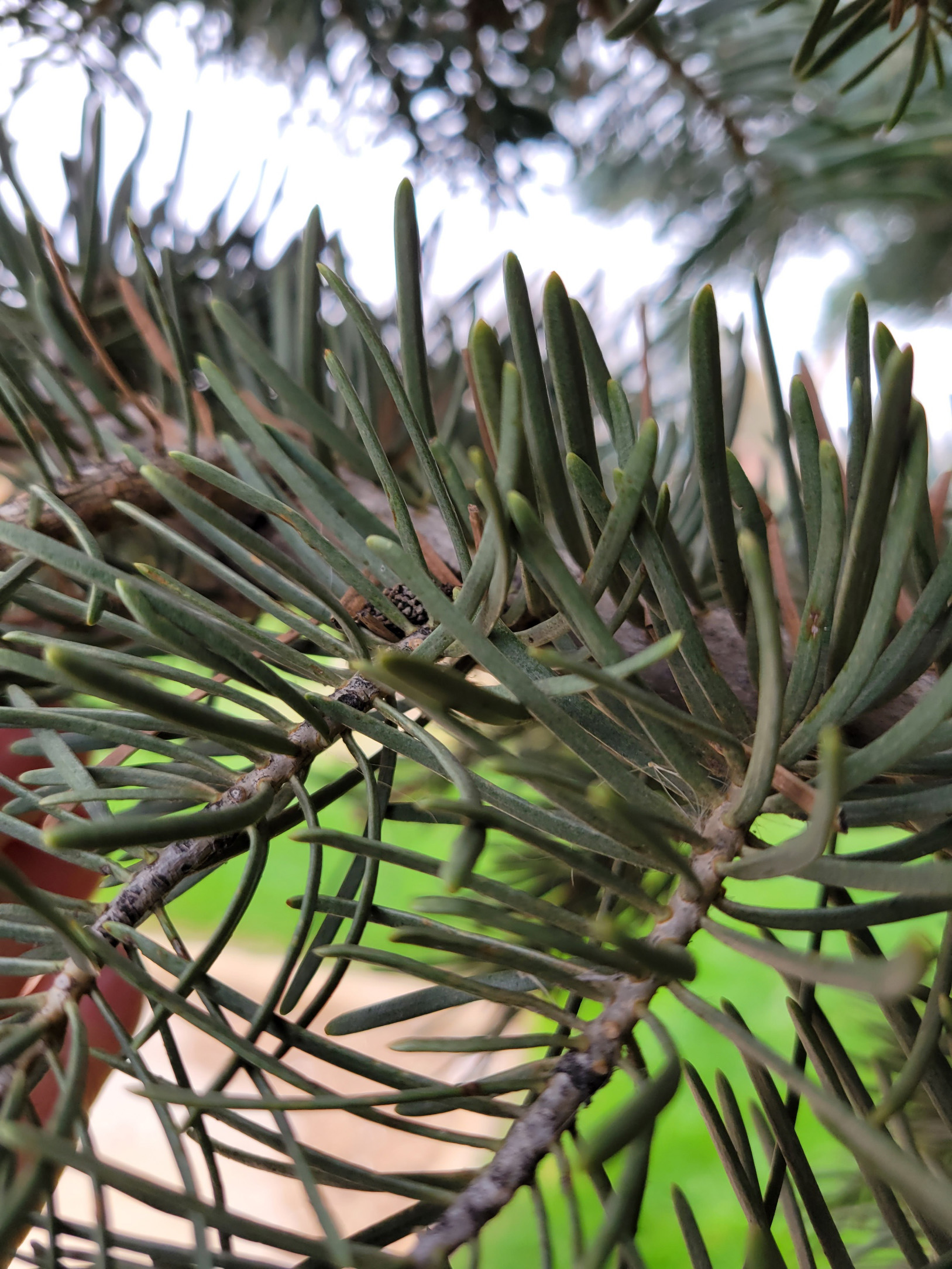
For instance, were needles single or in clusters? Were they round or flat? Were they sharp or soft to the touch? (Left to right, these three are the blue spruce, the bristlecone pine, and the white fir. Spruce needles are round and sharp, pine needles grow in clusters, and firs are flat needled and soft to the touch.)
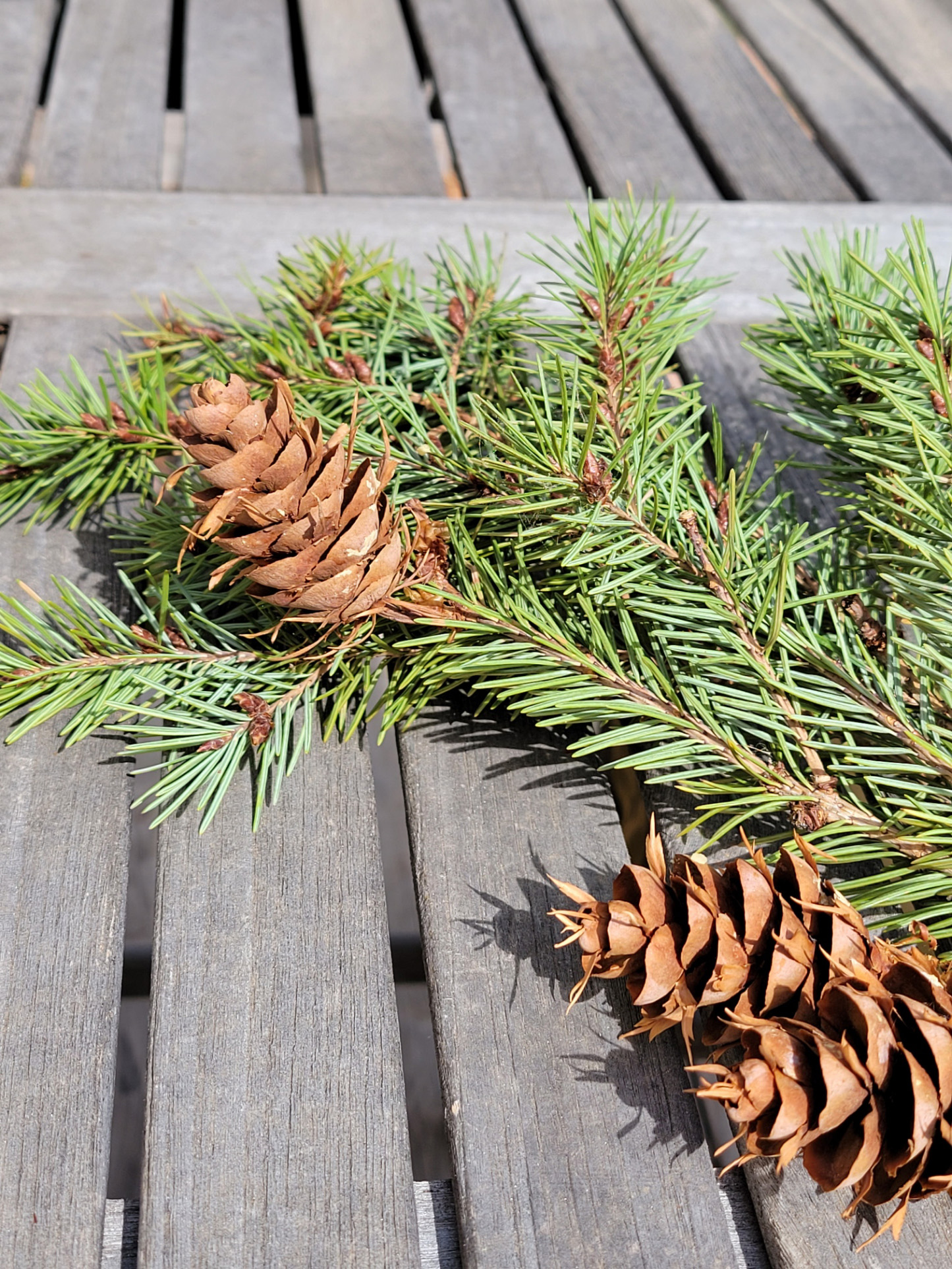
Differences in cones can be extremely helpful in identifying the species. Left is the seed cone from a Douglas-Fir and to the right the seed cone from an Engelmann spruce.
The end result of the activity: this student has colored conifers in each genus a different color. See what happened?
I bet you can see it without me saying anything. Conifers that are closely related have very similar characteristics; closely related species are very difficult to tell apart and the differences are subtle. In the real world the final sorting is sometimes done by differences in DNA. It was easy after this activity to move into the more abstract topics of classification (Kingdom, Phylum, Class, Order, Family, Genus, Species) and then link back to evolution with the tree observations: some closely related species actually grow at different elevations on the mountain. Living in different environments, these trees don’t reproduce with each other and have gradually grown apart into different species.
I struggled to key out conifer samples as a new biology teacher. Nowadays I can identify the tree while driving by on the road and I didn’t bother to drive up into the mountains anymore at the end of my teaching days. I would just pull the car over and clip off a little branch and grab some cones if I could: gone in 60 seconds was my motto! There are some great trees in my local park and the high school where I used to teach had 5 different Colorado conifers on the property. I have a Douglas-Fir in my back yard. I can get at least 11 different conifer samples in a one-hour drive around town. I haven’t taught this activity in years and yet I still look for great trees while out on errands.
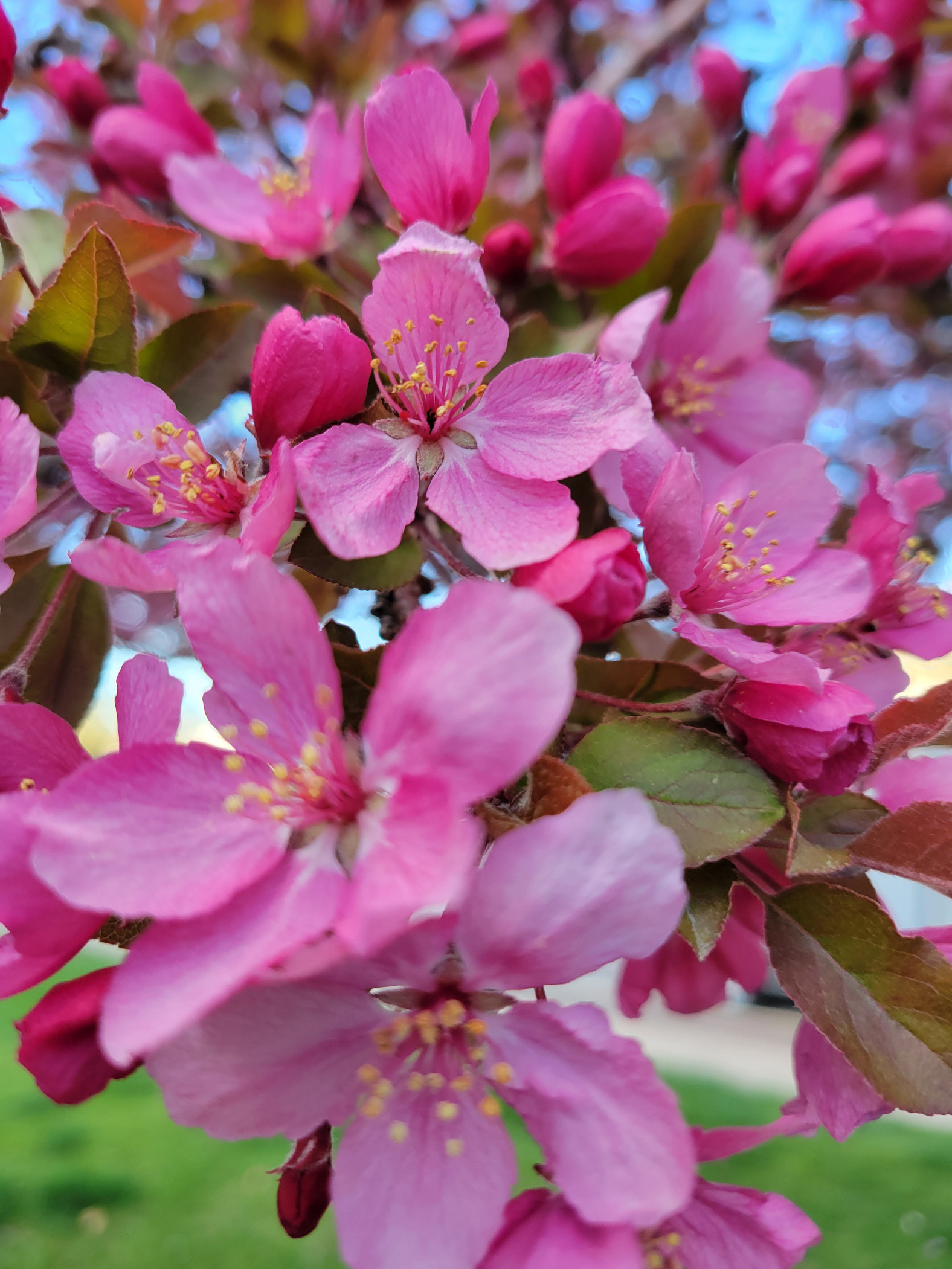
Wow, things are really looking up around town this week. The trees are all blooming and I can see that some are getting ready for their leaves to burst out.
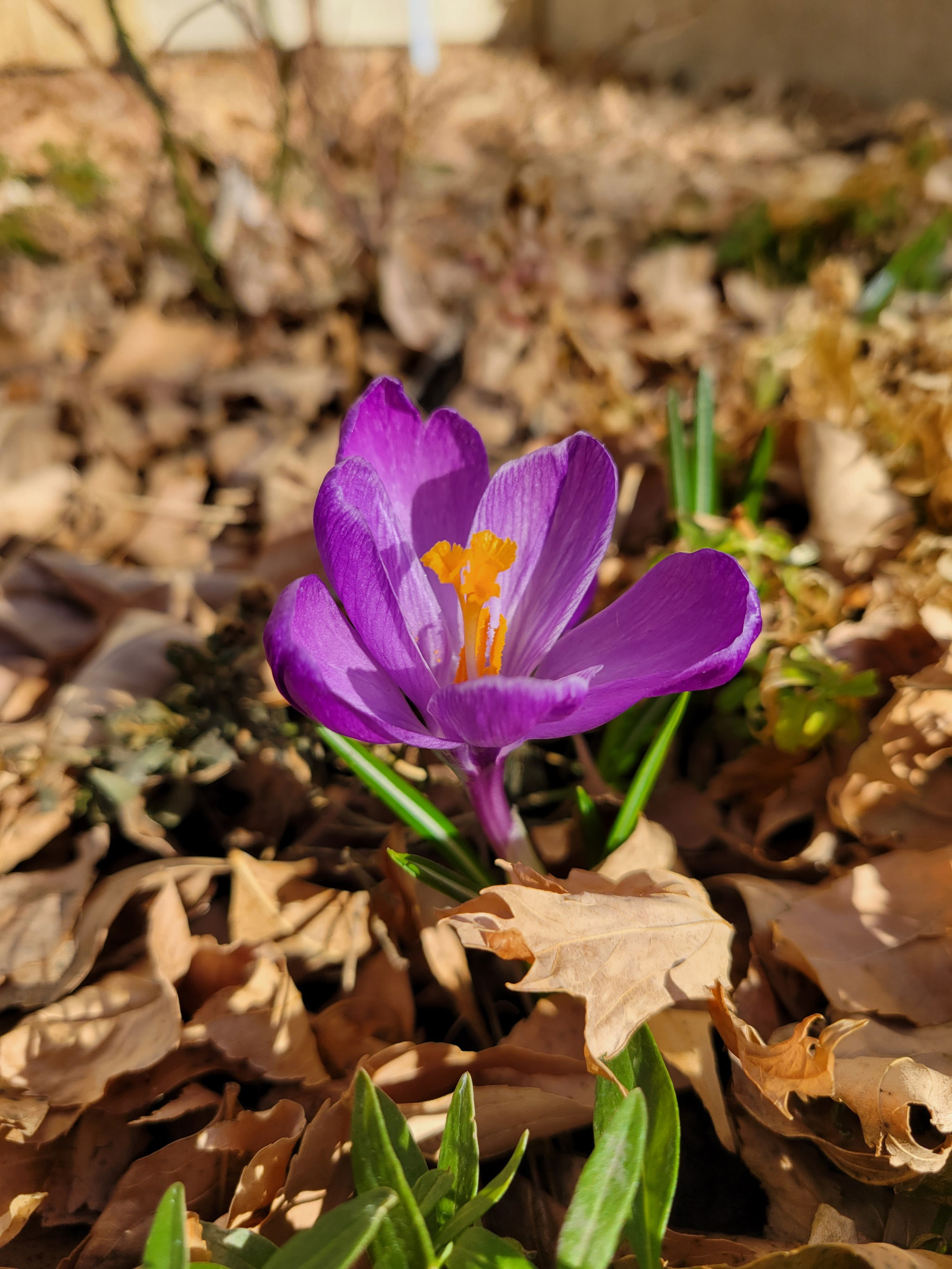
My first spring crocus p0pped up through the winter blanket of leaves last week.
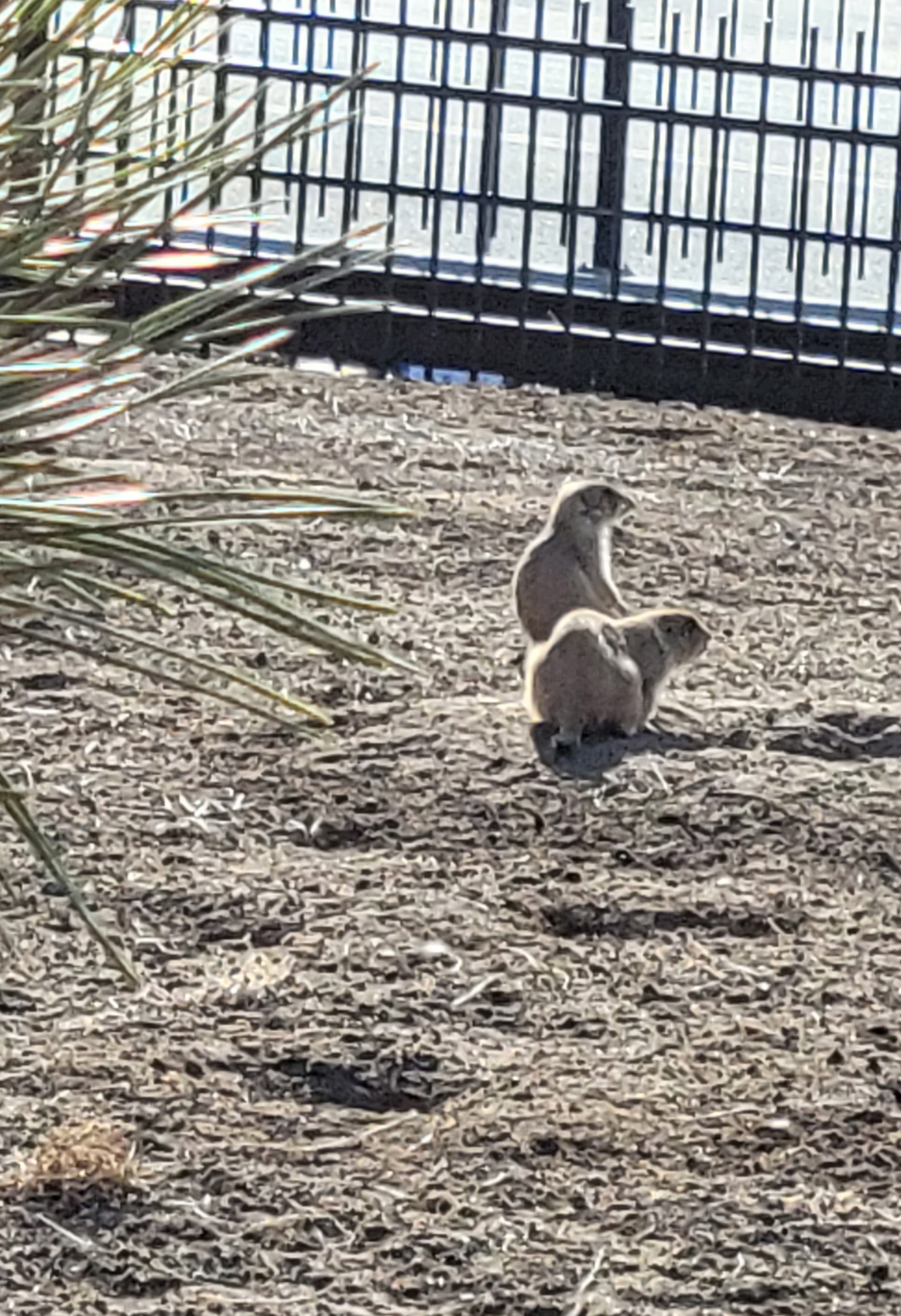
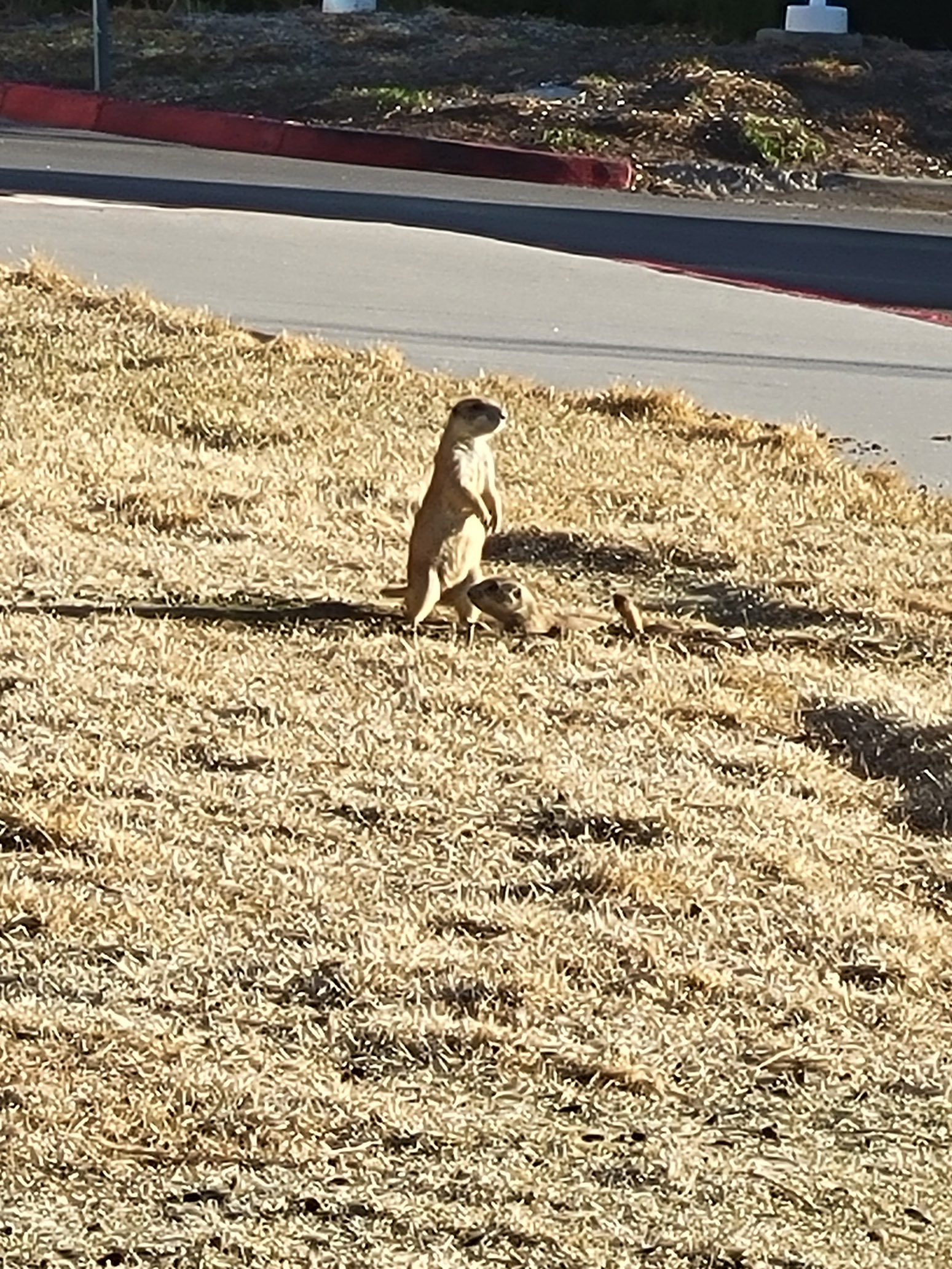
We may still get some snow this spring, so the leaves are staying in the flower beds for a few more weeks, but it definitely feels like the tide has turned and we are now well into the new season. Suddenly there are green strips along all of the roads and the fields are flashing green as I drive by… except where there are prairie dogs. Those areas are now bare, and the dogs are leaving their mounds to hunt for food. There are a lot of hungry prairie dogs right now grazing in the fields and along the roads.
These prairie dogs are living between a parking lot and the tracks of a light rail line in the heart of the city where I live.
I love prairie dogs!! There was a colony on display at the San Diego Zoo that was a big hit with visitors, and I certainly thought that they were the cutest things ever when I was a little girl. Seriously, they have those cute little black-tipped tails! They are a riot as they run along the ground. They bark! They are social and very aware of each other while out grazing: a few prairie dogs will stand watch and whistle warnings and all-clears as needed. The prairie dogs living in my city have become nonchalant about moving cars, but if you get out of the car to grab a picture there will be a whistle, the scurry of little prairie dog feet and then the rapid dive down holes. Believe me, I know this well.
See the little head peeking out of the hole? I took this picture through the car window.
I once was sitting in stopped traffic at a light next to a prairie dog colony when there was an abrupt whistle, scramble, and hole dive by all the dogs who had been happily munching on plants a few seconds earlier. Looking to see what had spooked them I was amazed to see a bald eagle soaring through the intersection at the height of the traffic light poles. Wow. That was close, little prairie dogs, but the early warning system worked with seconds to spare.
Um… bald eagles, the symbol of the United States, eat prairie dogs? Yup! Bald eagles arrive every winter here in my state of Colorado to nest and raise their eaglets. The eggs are laid around the middle of February into March, and then the eggs hatch in a little more than a month. Right now, as all the prairie dogs are out and about scrambling for food, the eagles are starting to feed the eaglets. It is a big deal as the nests are enormous and often are in trees that are blocked from the public so that the eagles will be undisturbed; a nest was lost recently and made the news. Those hungry little eaglets are being fed a lot of prairie dogs, to be honest. The parent eagles soar over my city in loops as they search for a meal, and more than once I’ve seen the eagle on the ground with the prairie dog catch. You can access an eagle cam videos here.
Prairie dogs yesterday in the lawn of my Kaiser clinic. If they aren’t chased off this lawn is pretty much doomed.
Yep, that lawn is toast for sure. They are already digging holes into the ground and moving in to stay. So, prairie dogs can be huge pests, but they are tolerated in fields and along roadways all along town because they are essential to the prairie wildlife ecosystem; remember the soaring eagles overhead? Years ago, I acquired a mentor from the U.S. Fish and Wildlife Service who was a great photographer. He worked with a group of my 6th grade students to produce a slideshow about prairie dogs that the students presented to the public at an open house at the Rocky Mountain Arsenal National Wildlife Refuge. While working with my students and the mentor we learned that prairie dogs are a keystone species that is important to many other forms of life in the prairie ecosystem. Some animals, like the black-footed ferret, are almost completely dependent on prairie dogs, while they are important to others like bison, coyotes, eagles, pronghorn antelope, and other types of life such as plants and insects. As it turns out, if a prairie colony disappears for some reason, it may be reestablished later because they are important sources of food for so many other species in our area and have such a positive impact on the environment.
Prairie dog in a field by my library.
Humm… why would a prairie dog colony suddenly disappear? Well, as it turns out, prairie dogs can become infected with fleas carrying plague. Yep. That plague, as in the black death plague. Sometime warning signs appear in fields alerting people to a plague outbreak in my area and we all know not to handle prairie dogs or to walk through fields with colonies. It’s important to treat pets for fleas and to not let students bring sick animals (like squirrels) into your classroom!!!!! Plague cases happen here in Colorado and warnings are common. That’s the downside of living along with prairie life in a state such as mine.
So, this all sounds a little grim for the poor little prairie dogs, right? Towards the bottom of the food chain. Outbreaks of plague. Yikes!
Did I mention that prairie dogs are EVERYWHERE right now? Thriving in an urban environment? Living successfully in fields everywhere? And, I want to add, the baby prairie dogs aren’t even out yet. If you think that prairie dogs are cute, you should see the little guys once the parents bring them out. 🙂
The truth is prairie dogs colonies are monitored and protected when they can be. Outbreaks of plague in colonies are taken seriously and the area is treated to halt the spread of the insects carrying the bacteria that causes plague; efforts are made to help the colony recover. Prairie dogs are flourishing, and because they are, they have contributed to the success of other species that are coming back from the edge of extinction or endangerment. The bald eagle, the bison, and especially the black-footed ferret are benefiting from the return of healthy prairie dog colonies.
Yesterday I went to pick up a form from my doctor and there was this little herd of dogs on the side lawn. They had come in from a nearby field and were running amok in the grass. It made me so happy to see them! As soon as I drove over near them there was a bark, a scramble back across the road to the field, and little heads watching me from new holes in the lawn.
The last few days have been warm and sunny, and the perennial shrubs are starting to green up out in the garden. My patch of catmint is already coming back to life and the return of bees to the garden is right around the corner.
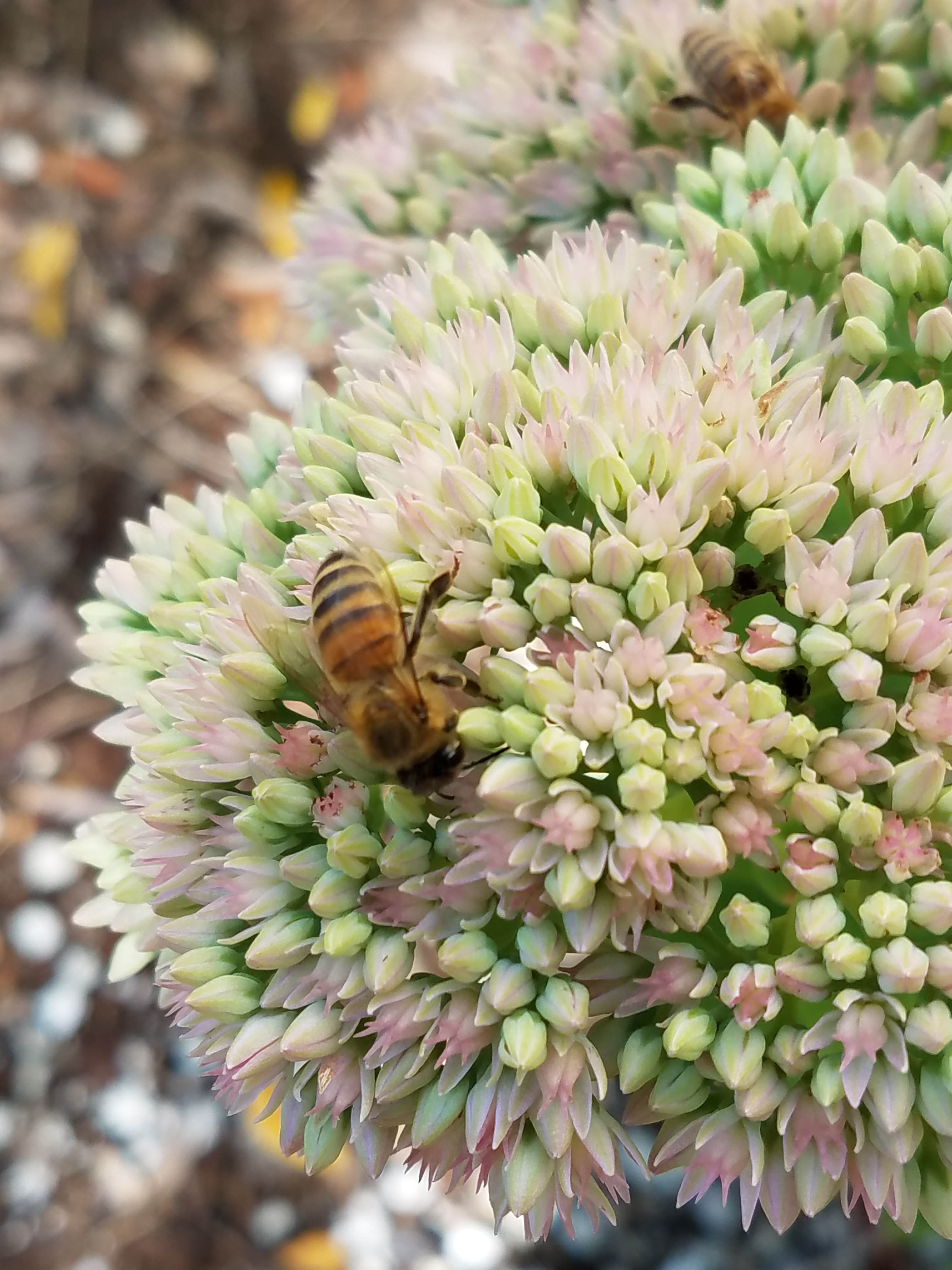
Honeybee in my catmint last year.
I just love bees! I used to be afraid of them as a child (I mean, who wouldn’t be? They are kind of scary and they sting!) until I learned the difference between bees and wasps. Now I get a little thrill seeing the bees buzzing around plants in the garden and set boundaries with the paper wasps whenever they build a hive in my yard. (Here’s the boundary… if the wasps leave me alone, they are safe. If I get harassed or stung that nest is history!)
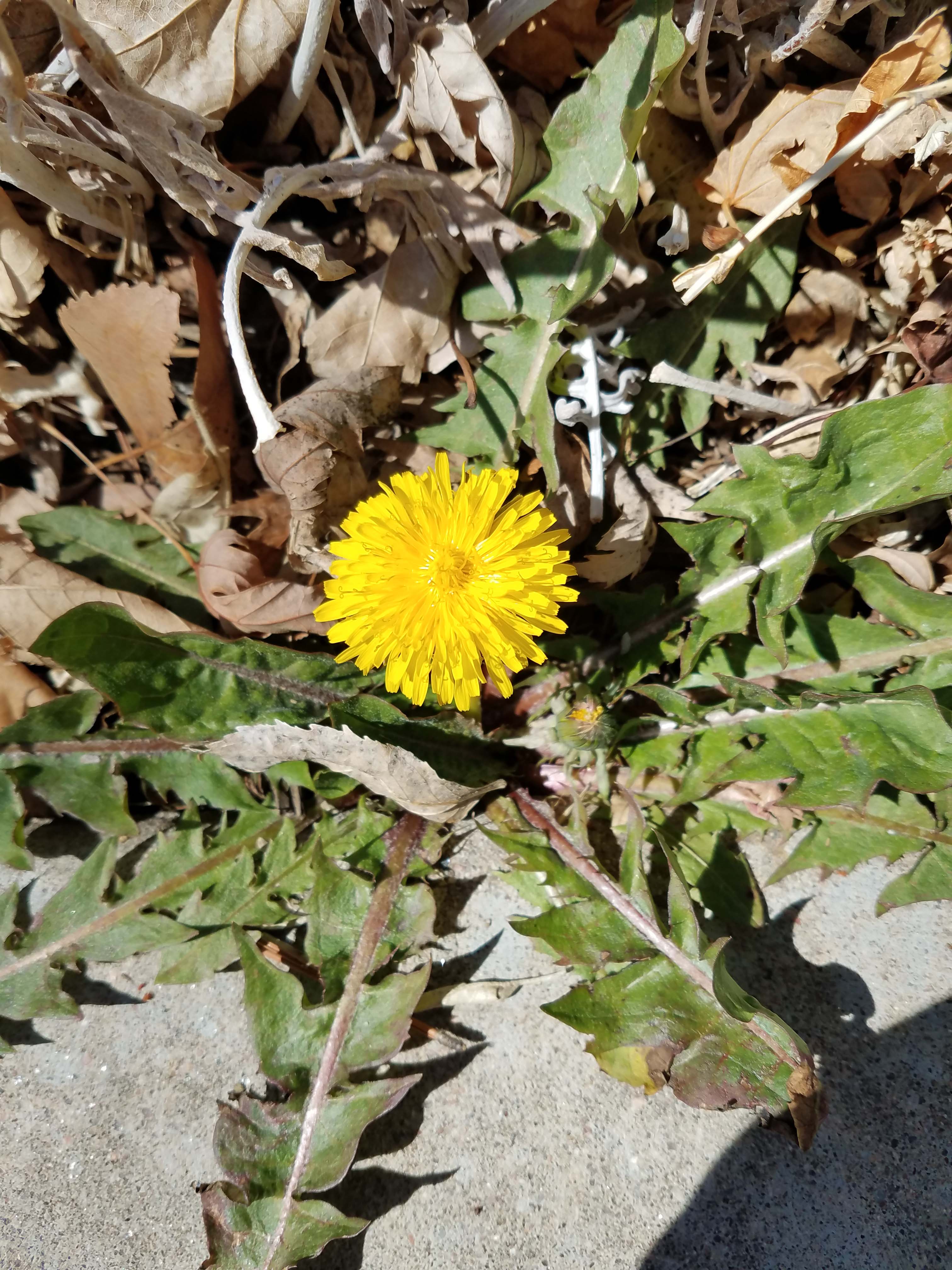
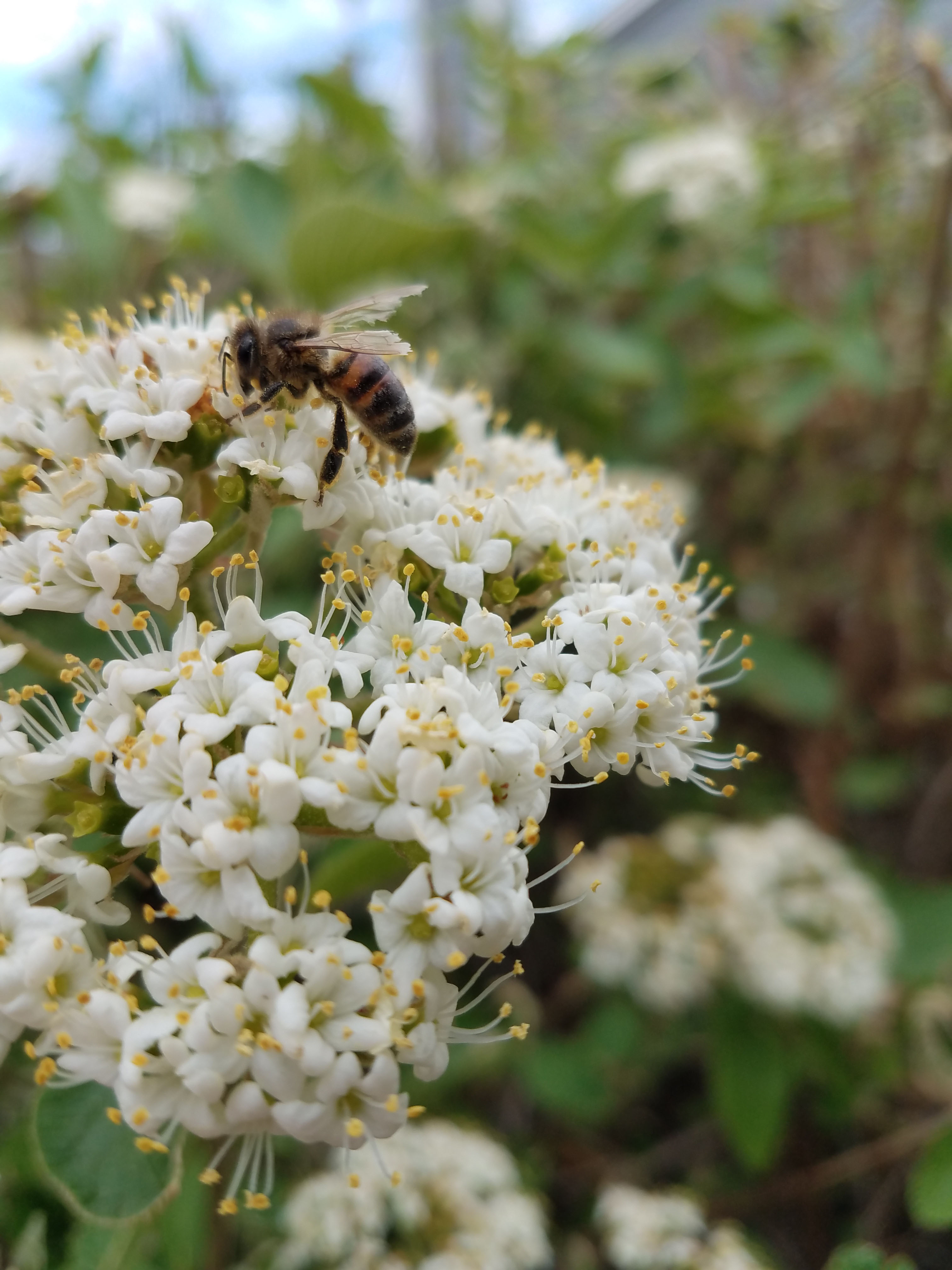
Of course, I am planting things that the bees like in my yard! They just love my sedum and viburnum along with the catmint, but they also spend some time with the dandelions. They absolutely love the neighborhood flowering trees. Just as I have established some boundaries with the wasps in my yard, I have negotiated some boundaries with the (male) neighbors over dandelions. They tend to get a little worked up if I don’t eradicate every single dandelion in the front yard, so I do stay on top of them out front… (sigh)… but in the back I have some carefully maintained dandelion plants that are now the size of romaine lettuces. Bees love dandelions!! Since dandelions bloom really early in the spring they are an important source of pollen for bees so I let them bloom and then cut off the seed globes before the seeds fly. Later in the year the leaves on those dandelion plants are food for my wild bunny. Shhhh… the dandelions are a secret that my favorite neighbor, Alton, doesn’t know about. He mows the front lawn for me every week in the summer, and wonders why I won’t let him do the back yard… 🙂
Bunnies eat dandelions!
Long ago I had a bumblebee nest in my back yard. These bees (they are kind of fuzzy instead of smooth, are larger than honeybees, and mine had a red band at the top of their abdomen) live in things like woodpiles or holes in the ground. In my yard the bees were living in a hive in the ground, so I built a little shelter over the nest with flagstones. The hive survived year after year, and we came to love these gentle little bees.
Bumblebee at my catmint. See the fuzz?
The bees flew exact flight paths every afternoon coming home with pollen, and if you accidently walked into the flight path, they would bounce off you (repeatedly) and hover in the air waiting for the path to reopen. It was so cute! These bees were so gentle that no one in our family was ever stung except for a cat who took a nap on top of the opening to the hive… sad boy, we found the bee clinging to his belly once we calmed him down.
Morgan: that bee was a nightmare!!!
Every year as a biology teacher my students and I learned about bees as we watched a NOVA program together called Tales from the Hive. The students loved, loved, loved this show. I attended a workshop on bees at the University of Colorado and put my name in to win a beehive for my classroom and sadly lost to another teacher who absolutely, positively did not deserve that hive as much as I did (!!!) but I’m over it now. Sniff. The students and I were all crushed at the news that I had lost…
Why learn about bees? Well, bees are especially important in our ecology as pollinators. Basically, flowers are all about reproduction, and if the pollen on the flower (the male part) isn’t carried to the female part of the flower there won’t be any seeds or baby plants in the future. Plants get pollinated by lots of different means, but many plants rely on bees. The flowers are specifically designed to attract bees, and bees rely on the flowers to survive. We benefit from this relationship between bees and plants as the resulting process produces a lot of our food. Some crops are 90% dependent on bees for reproduction, and altogether about one third of our food is dependent on bees. Believe it or not, as the blooming season moves north up the planet there are mobile beehives that travel north as well, traveling to orchards and fields, bringing the bees as pollinators for those crops. As a teacher I could use bees to teach about ecology, evolution, invertebrates, sociobiology, and bioethics. Bees were really important to me as a teacher!
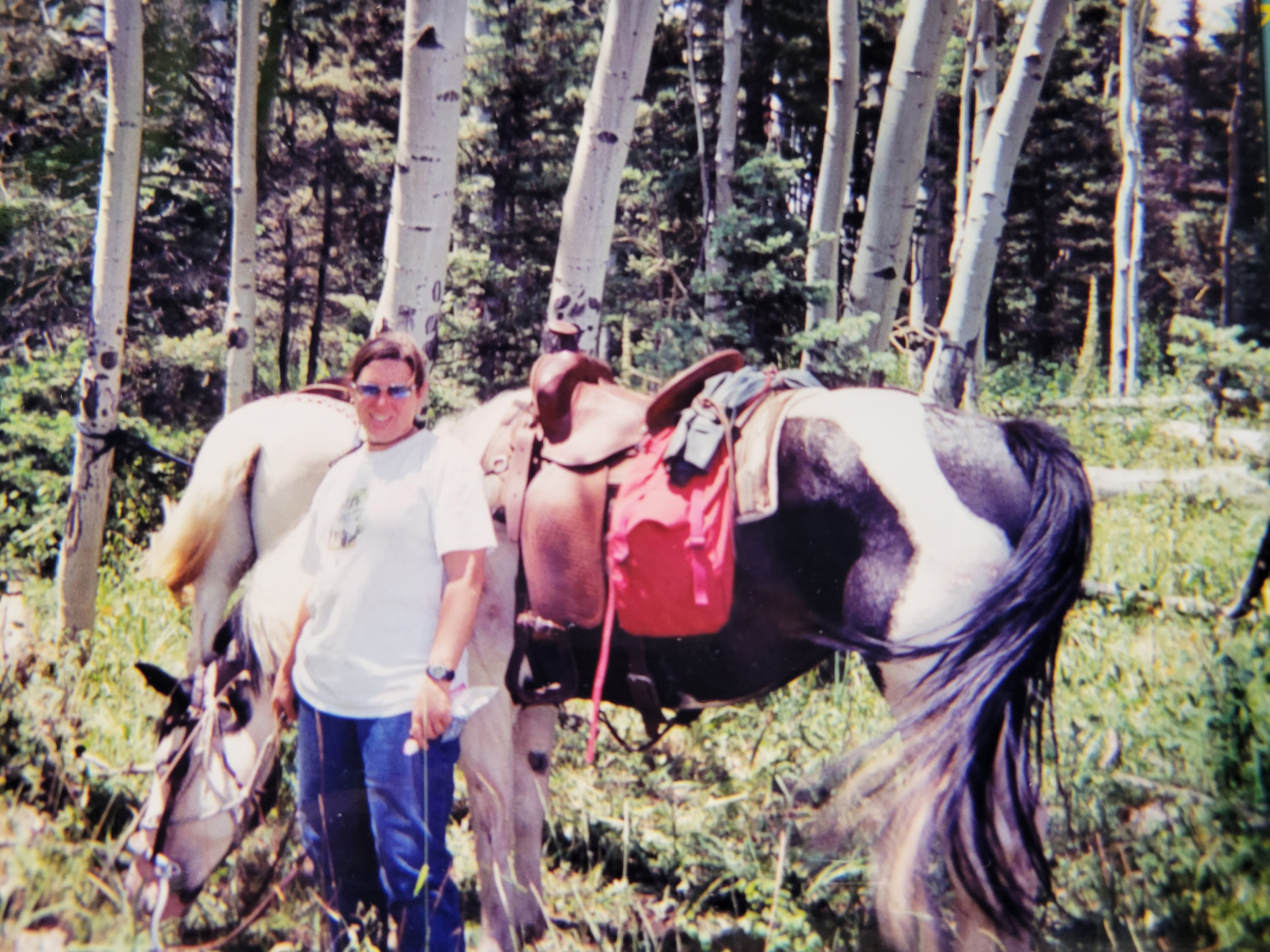
So, how much do I love bees? Well, I spent a summer reading a whole series of books about bees and blogged about it here. I spent a week one June on horseback in the Colorado wilderness riding a horse named Industrious Bee.
Bee and me. What a great week that was!!
I spent another summer teaching an advanced biology program with the best student teacher ever and learned even more about bees here in Colorado because his mother was a beekeeper. When the program ended in July, I received a little gift package of honey from him. See. If bees are involved, all things are good!
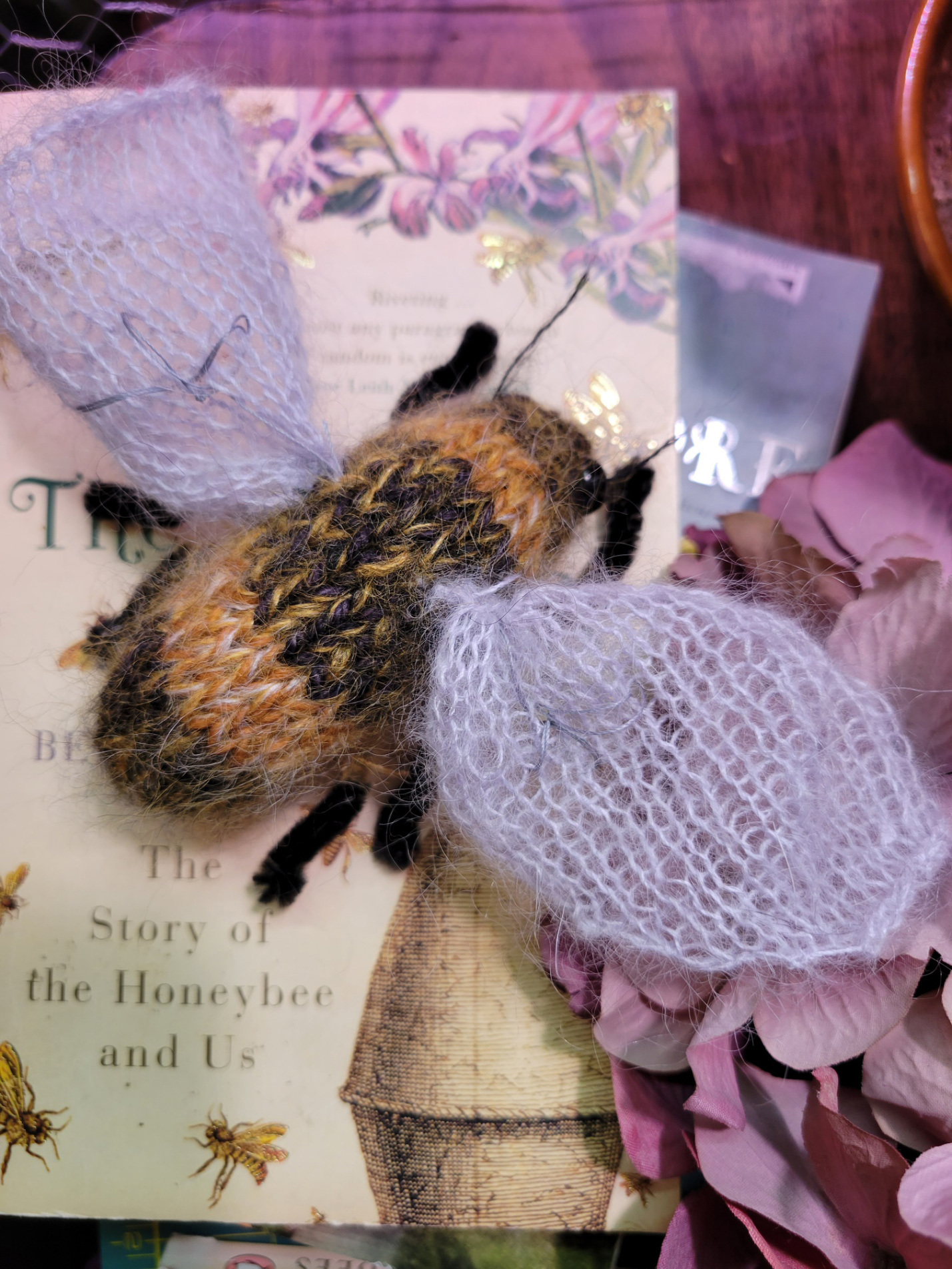
How much do I love bees? Well, I knitted myself my own little bee to keep me company over the winter.
The pattern for this bee is by Claire Garland and is called Bees are Beautiful.
All of a sudden, the season has changed on me. There are birds in my yard, the light is brighter, my backyard bunny is once again entertaining the cats, and shoots of green are starting to peek at me from under the winter bedding of leaves that I put in the gardens last fall. The cats are much more active as they rocket from window to window through the house tracking squirrels traveling from my front tree, over the roof, and then along the back fences (this is known as Squirrel Route One in my house). The fatigue-inducing storms of winter are transitioning to spring rains, and the first flowers are right around the corner. Bye, winter. Glad to see you gone.
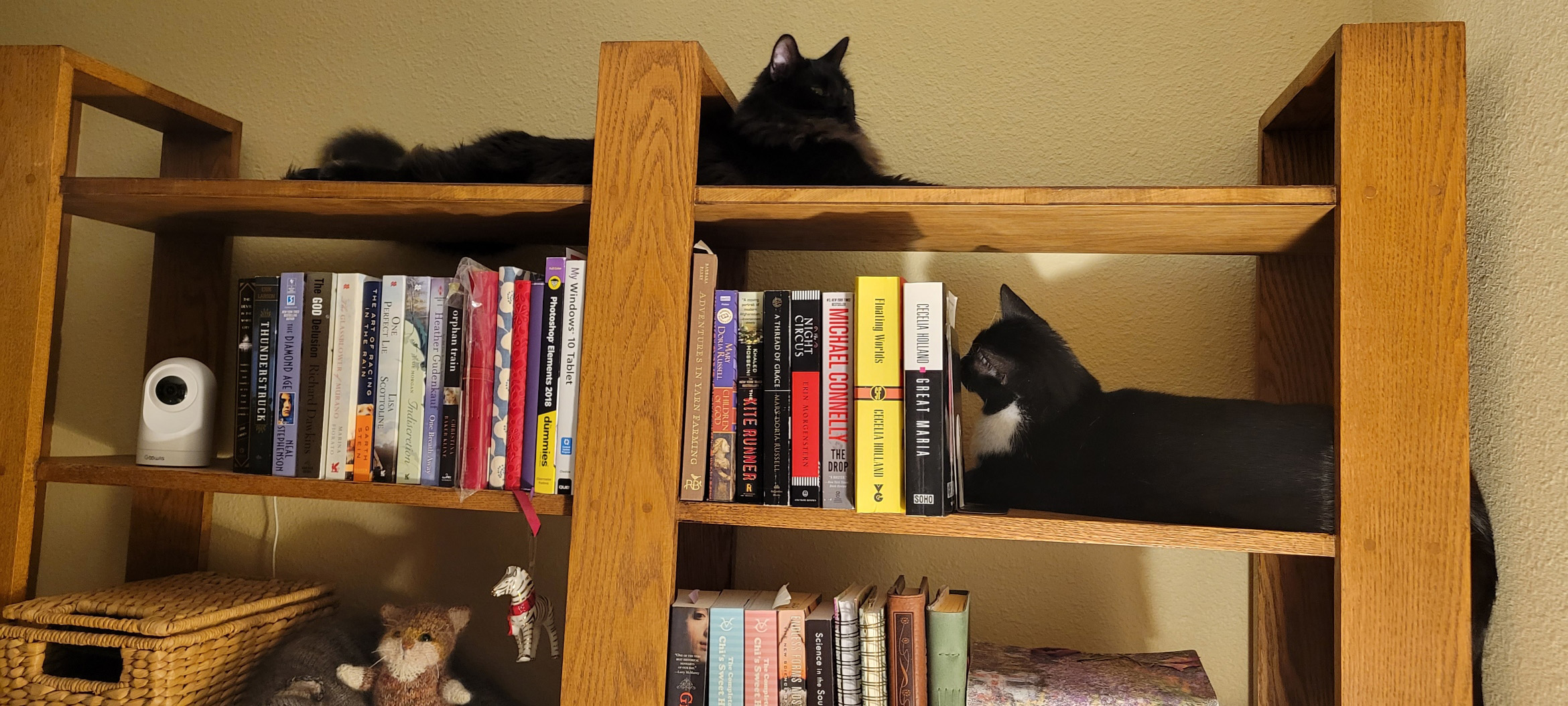
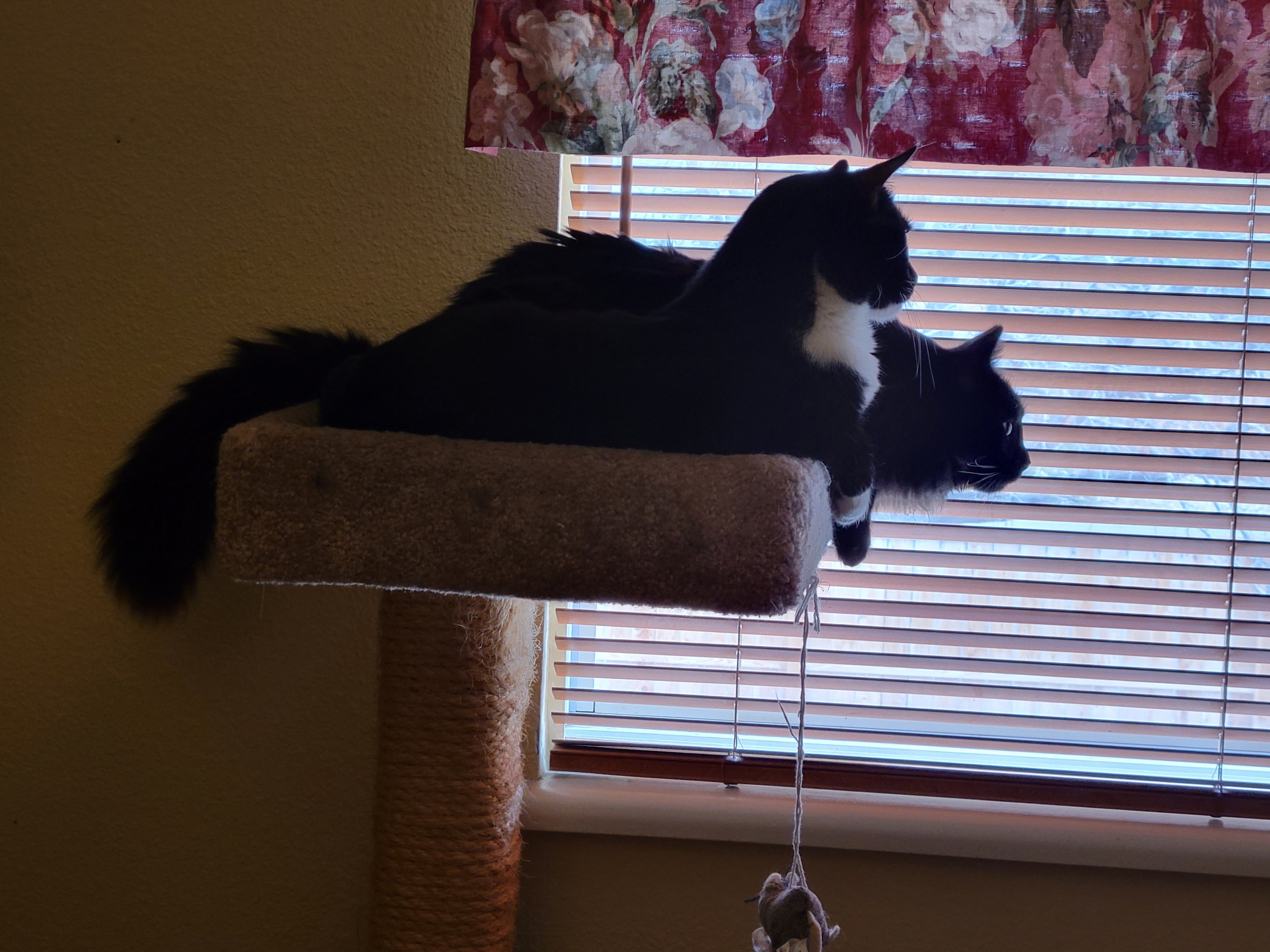
When the cats take a break from squirrel tracking and bunny watching they hang out on my bedroom bookshelf keeping their eyes on me. Since I spent most of the month in bed, they have been up there quite a lot.
Knitting
I really have gotten a lot of knitting done this month. Since I’m tracking my knitting for the year (well, actually, the number of skeins that I can get out of the stash), I thought that I would also give a quarterly update on my progress.
I’m continuing to knit hats and PICC line covers for the Kaiser infusion centers.
So far I’ve knitted 20 hats and 19 PICC line covers this year. Early in the month I delivered all the hats and covers to one of the infusion centers on my way to an appointment with the rheumatologist. The infusion center had a huge impact on me; it was located in a spacious room with large overhead windows; sunbeams streamed down from the windows lighting up the room. There were almost 20 stations in there, along each wall under the windows, each one with a patient receiving treatment. I was stunned. So many people! I must knit faster.
I finished a simple sweater made with merino/cashmere yarn that is like a comfy sweatshirt to wear. Also, it goes with all my shawls, cowls, and mitts.
The sweater is Cushman by Isabel Kraemer. This is the second one that I have made so I was really confident with the fit and raced right through it.
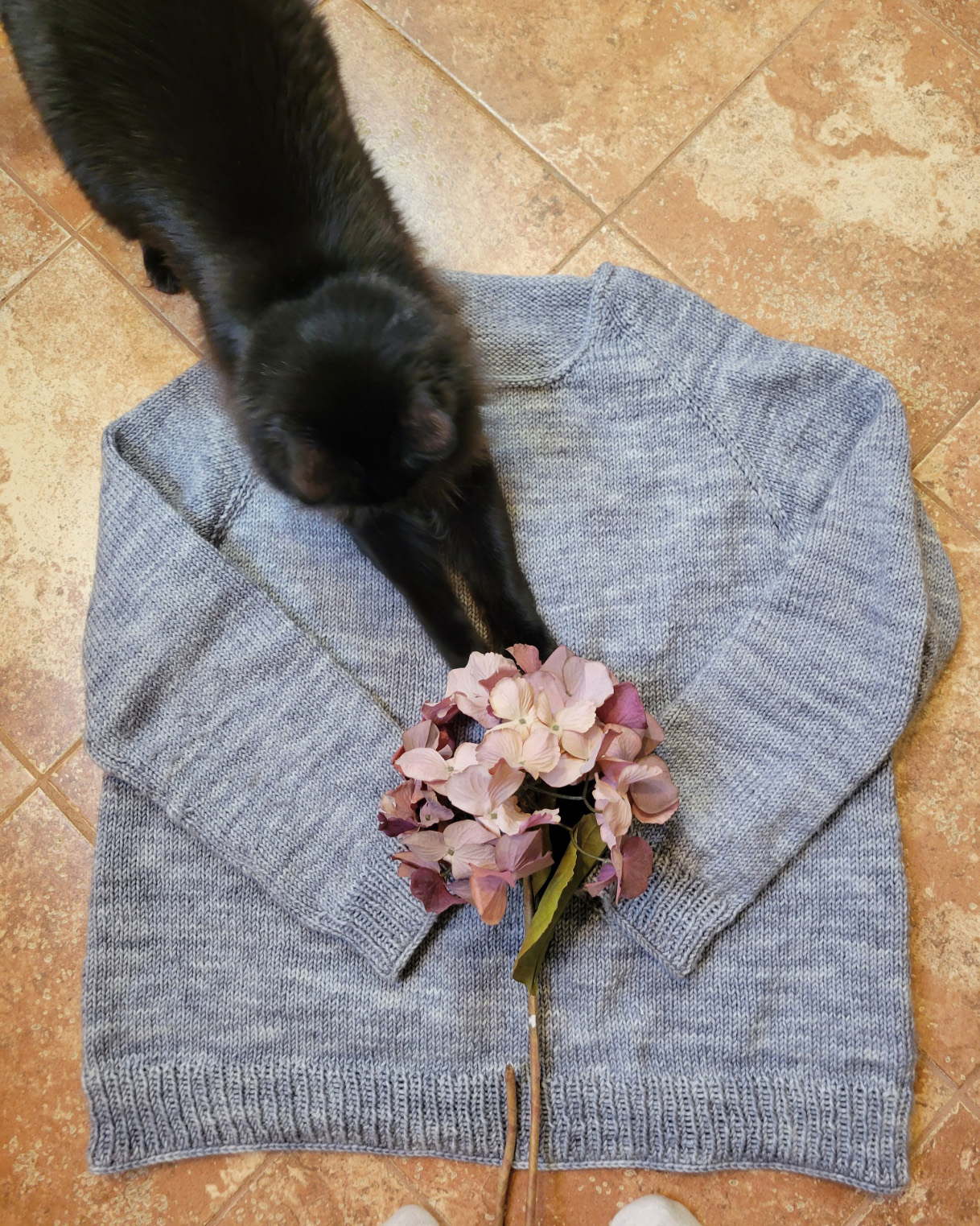
I cannot stress how helpful the cats are in getting these pictures.I have also been knitting along on a Goldenfern sweater (Jennifer Steingass). In another couple of inches I will start on the colorwork; the three golden colored yarns are for that. I plan to shade from the lightest to the darkest as I work my way down the chart.
Altogether I have knitted my way through 894 grams of yarn this month making the grand total of destashed yarn 3,154 grams (or the equivalent of 31 skeins) for the year. Okay, I did go through bins and pulled out several hundred grams of yarn that needed be thrown out… like many knitters I have saved the leftovers from almost everything I’ve knitted; at this point I need to let all of those scraps go! I had hoped to get 50 skeins out of the stash: now I’m thinking that I might manage 100 skeins. Knitting all those hats is paying off!
Garden
The outdoor garden is still dead, and the indoor garden is kind of pathetic. I’ve been buying some ferns and a spider plant to get more greenery into the house. The cats are fans of the new plants!
All the new plants are kitty safe.
Books
I’ve been reading like a champ so far this year. Mostly science fiction since I am not in the mood for thrillers, mysteries, or anything that is going to require the serious use of brain cells. I’ve been spending long blocks of time in bed with short outings to accomplish tasks in the house in the house all year. I’ve been relying on audiobooks heavily as I can listen to them when I’m too tired to hold a book (the fatigue is real, people!), and listened to more books while I was working on the quilt top that I got done this quarter too.
I was so happy to discover this little gem!
I usually don’t listen to the forward of a book, but this time I did, and I was glad that I took the time to let the author explain his book to me. John Scalzi struggled with writing a book in 2020 that he had contracted with a publisher for. Basically, he was kind of crushed by the whole Covid situation and the book wasn’t happening. He finally had to let his publisher know that the book was a no-go, only to think of another book idea a day later. A fun book. An upbeat and slightly ridiculous book with wisecracking characters and lots of fun. A book that celebrates scientific knowledge, jobs that you love, and sticks it to people who are kind of unethical in the pursuit of money/power. A book with Kaijus: those enormous monsters of Japanese fame… think Godzilla. The exact book that I needed!!
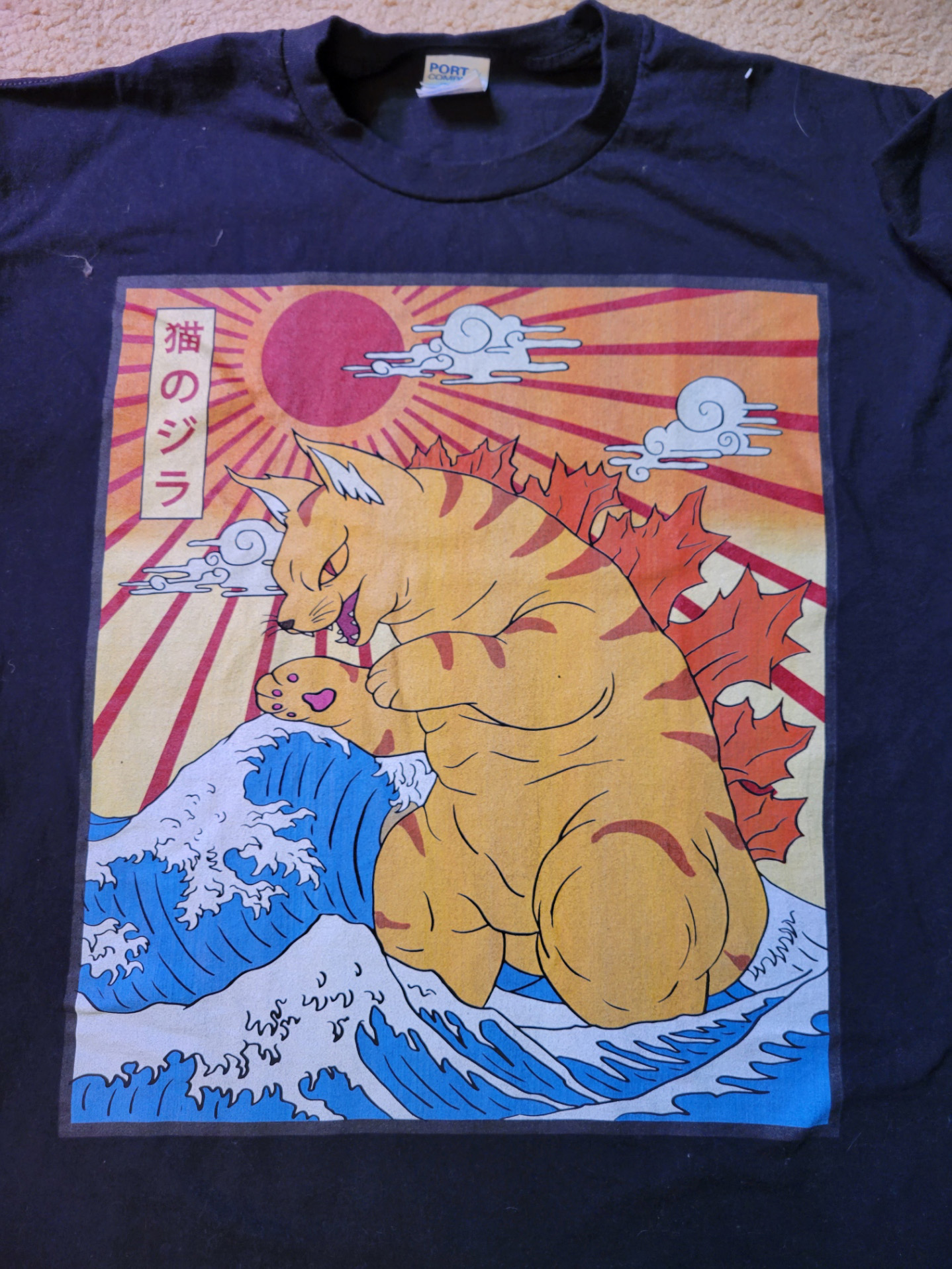
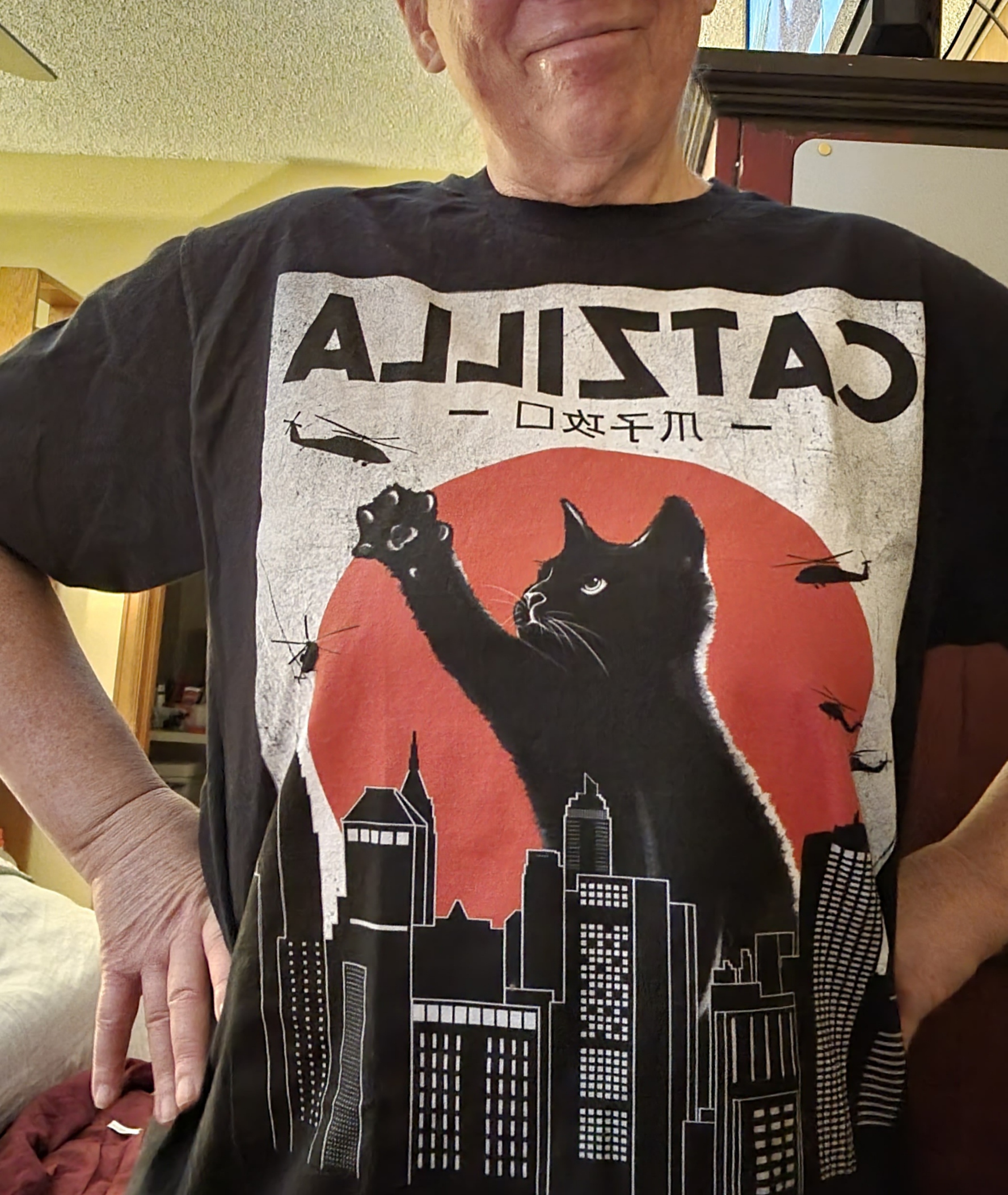
I even bought myself a Kaiju cat tee-shirt to go with my ridiculous, feel-good book.
So, how many books have I read this year so far? 19 books! The goal for the year is 50 books, so I am well on my way to meeting that goal.
That’s it for the month.
Hannah: Have a great April, everyone!! If you should come across a Kaiju, don’t try to play with it!!
My fatigue lately has been off the charts. I struggle to get the simplest of tasks done, and to be honest I just don’t feel like getting out of bed for days on end. I have been slowly, slowly sewing on a quilt top over the last few weeks. It is soooo exhausting to pin two fabrics together, guide the fabric through the sewing machine, and then to stand up to iron the seam. I handled all of this by 1) sewing only for an hour a day, and 2) lowering the ironing board so I didn’t have to stand while ironing. Take that, you nasty, exhausting fatigue!!
The quilt has a panel in the middle with really cute pictures like this one. Super cute, right?Here’s the finished quilt top. This baby has really simple quilting in one border and then simple, simple borders around the central panel. Yeah. This took over two weeks to complete. Thanks, fatigue.
When I noticed some strange terminology on my last heart imaging test report, I contacted my pulmonologist about it, and he ordered a CT scan of my lungs. (You can read about that adventure here.) I knew that something was up when I got a call from his office telling me the date and time of the earliest possible appointment with this doctor. The nurse had intervened and made the appointment for me ahead of time. Then there was a call from the cardiologist’s nurse that was the same; an echocardiogram and appointment with that doctor had also been scheduled for me in order to secure the earliest possible appointment. Kind of the harbinger of a tough appointment, right?
Today I had a pulmonary function test and met with the pulmonologist soon afterwards. We joked about the horrible year we had both had. (He is a pulmonary critical care specialist who has been on the front lines of Covid care for two years now; for me lockdown never ended and the BLZ was running wild.) We laughed at my summation of the year: Crushed by Covid. We decided that “Crushed by Covid” could be the name of a really sad band. Then he whipped out his laptop and had me move over to look at it with him.
He had prepared for my appointment with a spreadsheet of my lung function tests over time and my latest lung scan along with that of a normal person. The spreadsheet showed that I was losing volume in my lungs. The scan of a normal lung was really interesting (old biology teacher here…) and then we looked at mine.
Um… my lungs were really cloudy. Like frosted glass. Like… “Hey. Is that what they call ground glass lung?” I asked.
“Yes. That is exactly what we’re looking at. That’s why I wanted you to come in. This isn’t the type of conversation that you have over the phone,” he replied.
Ground glass is not good, folks. Ground glass is the type of lung imaging that Covid patients with pneumonia have. Covid presents like systemic sclerosis because there is an extreme immune response going on in the lungs; both are aggressively treated with drugs that target the immune system. I also have some honeycombing that is the beginning of fibrosis; first the inflammation (which creates the ground glass appearance), then the fibrosis follows. My ground glass lungs are, in his opinion, absolutely not Covid. It is not likely to be just pulmonary edema. It’s systemic sclerosis at its worst. This is interstitial lung disease.
So, it is not good. On the other hand, this is good. I’m in trouble, but the problem has been identified early on and that means aggressive treatment now may stave off the worst of the fibrosis. I am so glad (and lucky) that I googled those crazy medical terms and then followed through with an email to my pulmonologist.
I’ve been referred to a surgeon for a lung biopsy procedure. Evidently that will land me in the hospital for a few days. Following that, if things go to plan, I will be started on more aggressive immunosuppressive drugs. He is going to talk to my rheumatologist about starting a course of chemo and an anti-fibrotic drug. One of the last things that my pulmonologist said to me was, “It’s okay to cry about this, but we have a plan.” That’s when it hit me that this might be really bad; lockdown will continue, and the fatigue is probably going to get worse. Oxygen 24/7 is right around the corner.
Crushed by Covid plays on. What a sad little band it is.
Luckily for me and the cats it is squirrel season. They will have lots of entertainment while I’m in the hospital and laying around like a slug.
I’ve been continuing my adventures in cardiology over the last several weeks. If you have been following along on my scleroderma adventures you know that I had a trip to the Cath lab that led to the discovery of a cardiac shunt: a hole in my heart. I also was eventually diagnosed with exercise-induced pulmonary hypertension and started on drugs to treat it, which is a lengthy process as I was slowly titered up on two different drugs while monitoring for side effects. I’ve been mostly living in bed for the last 6 weeks except for short trips out for more testing and blood work. The cats have been loving this, by the way. I’m kind of their captive right now.
This is edema in my arm. I’ve been dealing with headaches, muscle pain, edema, low blood pressure, and extreme fatigue. I cough a lot. Every new weather system is a nightmare. Ugh!
While the whole process has been pretty difficult, I am breathing much, much better and that blue lipped thing has mostly faded away. No more panting!! I haven’t had to put my head down because I felt faint for weeks. This is huge, people!!
I may have to retire the whole BLZ logo the way things are going!
My cardiologist is still hunting for the shunt that was detected in the Cath lab. I have one that they can see (a patent foramen ovale, which is pretty common), but for the really significant disruption of circulation that was detected in the Cath lab the feeling is that I have something much bigger somewhere. I’ve gone through 3 rounds of testing looking for the dang thing, and so far, no joy.
When the test results come in, I always read the entire text and google terms that I don’t recognize. The last imaging of my heart did not find the shunt, and my cardiologist sent an email letting me know that my heart looked pretty good. Umm… okay, but where is that infernal shunt?!!! This is getting a little frustrating, but I am doing better, so I guess I should just roll with it. I did notice this little sentence in the report about the portion of my lungs seen in the heart imaging: “There is mild subpleural reticulation and bibasilar atelectasis.” Say what? I googled and …. bibasilar atelectasis is a partially collapsed lung. I shot off a little email to my pulmonologist to ask if this was something new.
This is why I decided to write this post. As it turns out, this is new. Both of the things that were noted in that test result were significant (subpleural reticulation is evidence of scarring in my lung), and I was immediately sent to get a specialized lung scan that shows I have sustained moderate advancing lung damage over the last 10 months. Oh. No wonder I’m so exhausted. At least they didn’t use the word “severe” in the report. I seem to have developed pulmonary edema and my lungs took a big hit during the last few months; scleroderma is now attacking my lungs. If I hadn’t read that report and then contacted my doctor, no one would have picked up on this. The BLZ may be on hiatus, but the lessons she learned during that drive for the pulmonary hypertension diagnosis really paid off now.
What do you do when you get a sad little lung report? Why, you put on your Catzilla shirt and go start a load of laundry, of course!!
Tuesday I go for a pulmonary function test and then immediately afterwards I will meet with my pulmonologist. I’m kind of thinking that there might be more drugs in my future. Anyway, there is a lesson here that I decided I should share with you all.
Be proactive! Read your test results and ask questions of your doctors. Google is your friend, and those online portals that let you shoot your doctor an email are priceless! Use them!
And now readers, back to the shunt hunt…
Mateo: and now readers, back to my nap! After that I’m going to go swat some more helicopters!




























 Yarn, Books & Roses