
My sister Selma sent me some of my favorite gifts ever. Beautiful plants, cute figurines, rice cookers, and great shirts all arrived on my doorstep sent by my sister. Two years ago, I tried to get back into weaving, but it didn’t go all that well. I used a table loom and even that was too much for my sad little hands. I had to use oxygen. I was feeling pretty down about the whole thing. Selma, forever unwilling to surrender to the hardships sent her way by life, sent me this tee-shirt. I packed it away.
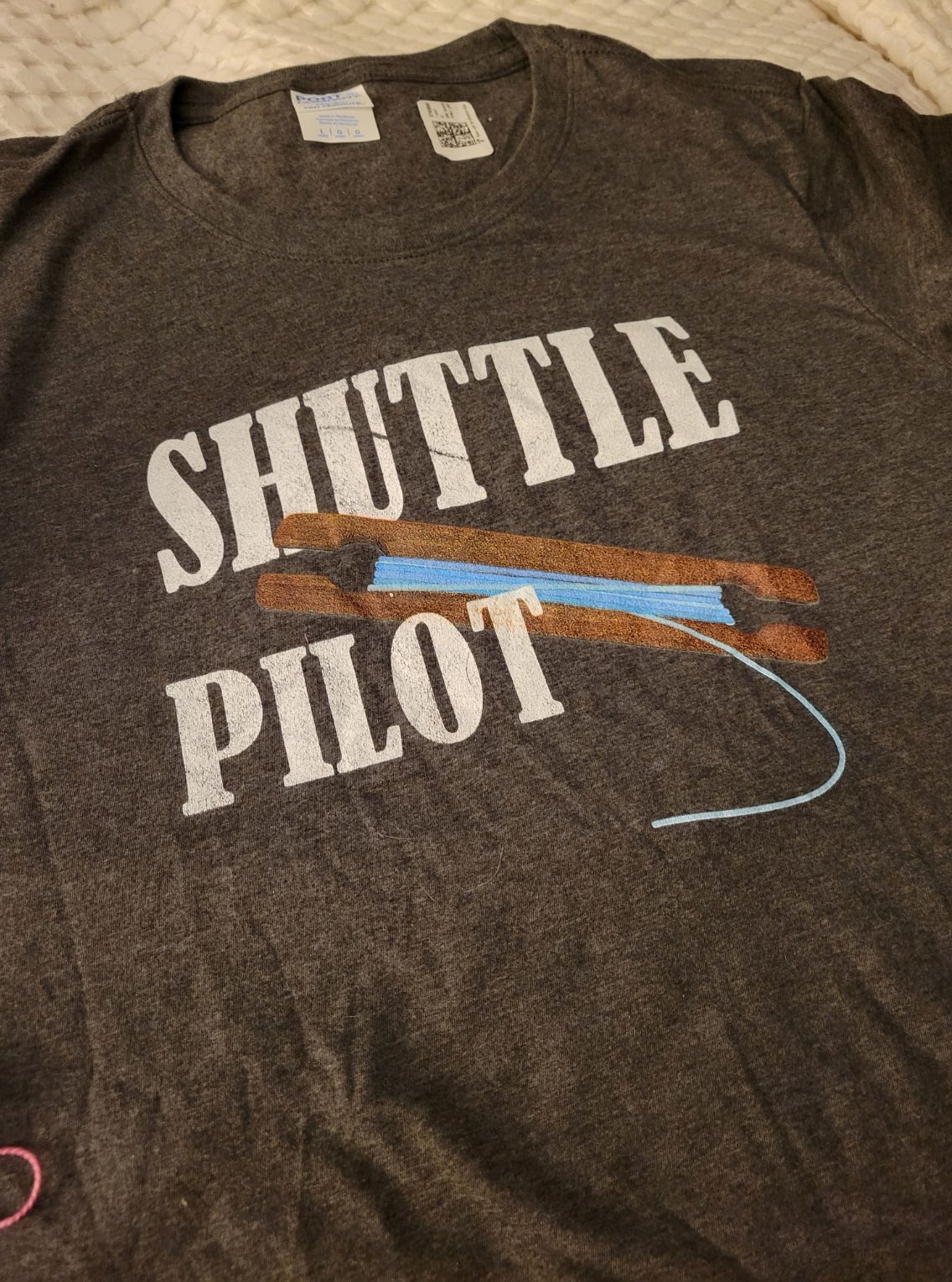
This is a beautiful shirt, very comfortable and in my favorite color. It was a kind of a flop, however, because… scleroderma. I have a great floor loom that hasn’t been used for almost a decade. I can’t remember when I last produced something useful on a loom. I had kind of accepted that my days of weaving were over.
Then Selma died last summer.
Time to channel the indominable Selma, right?!! This Christmas I bought myself a little rigid heddle loom that I thought I might be able to manage while sitting in bed. Good plan, right? I used the practice yarn sent with the loom to learn how to warp and use it, and then I warped it up again with superwash merino sock yarn. Guess what? I can weave like crazy propped up in bed binge watching Netflex. Yay!
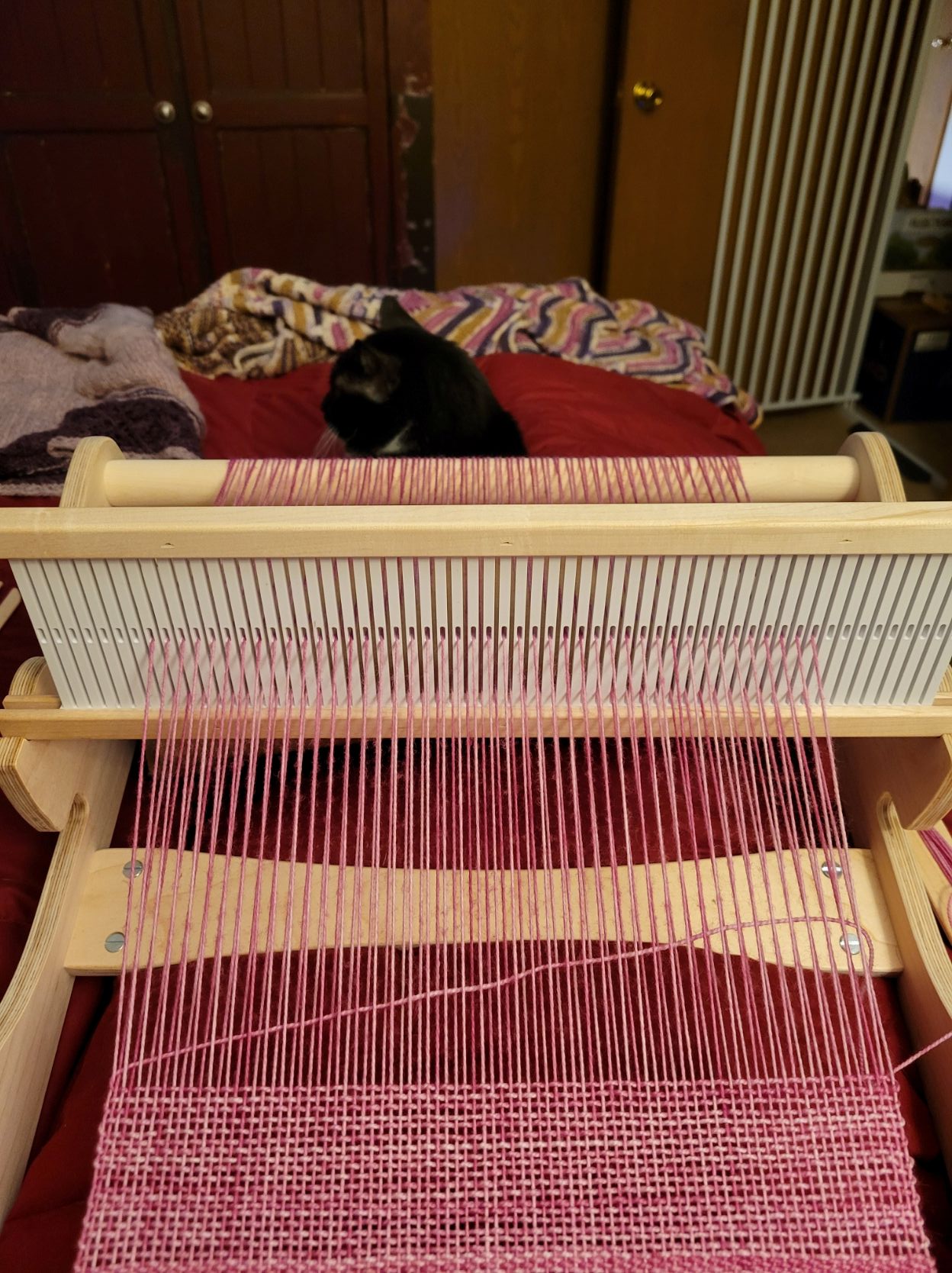
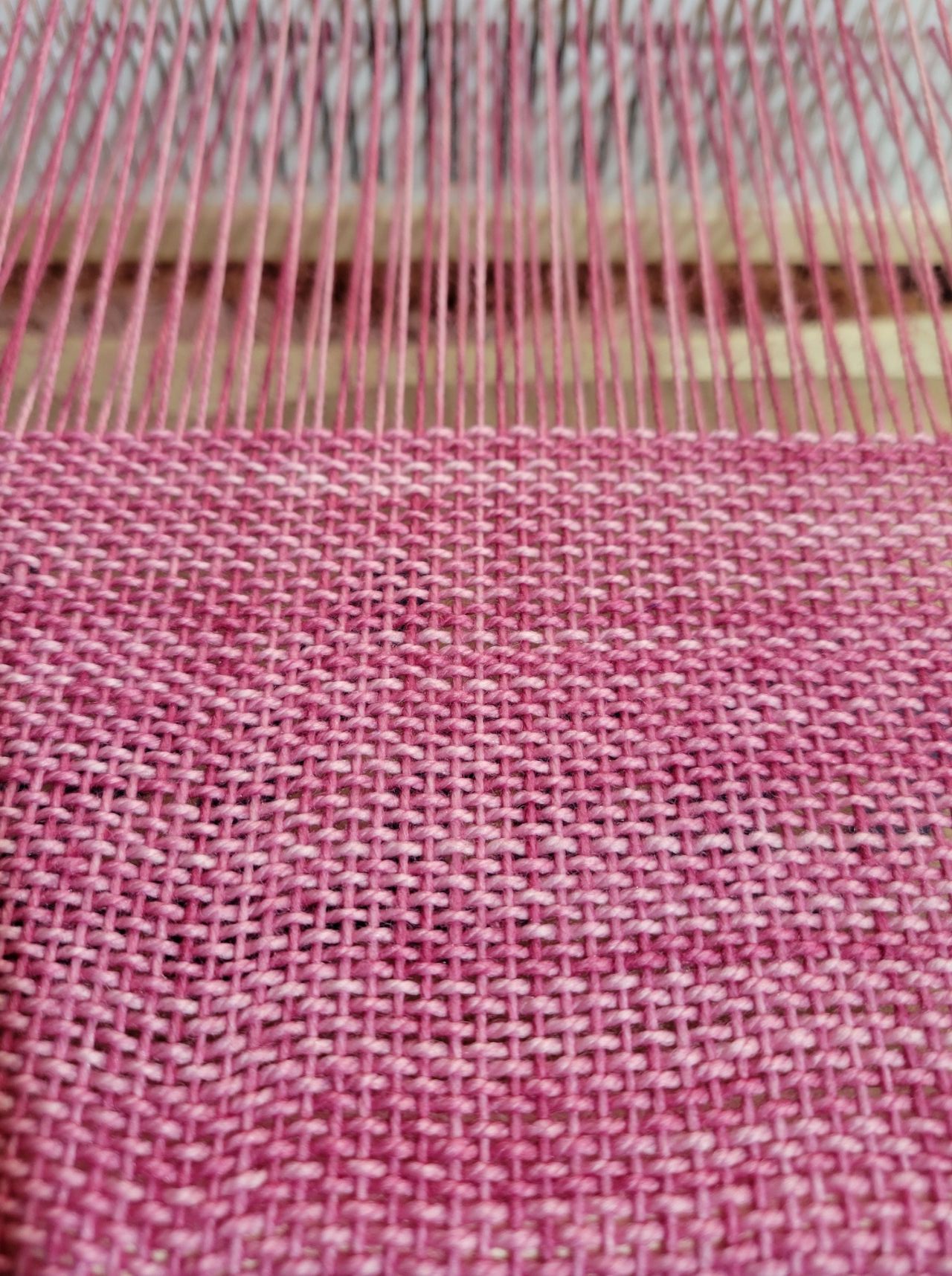
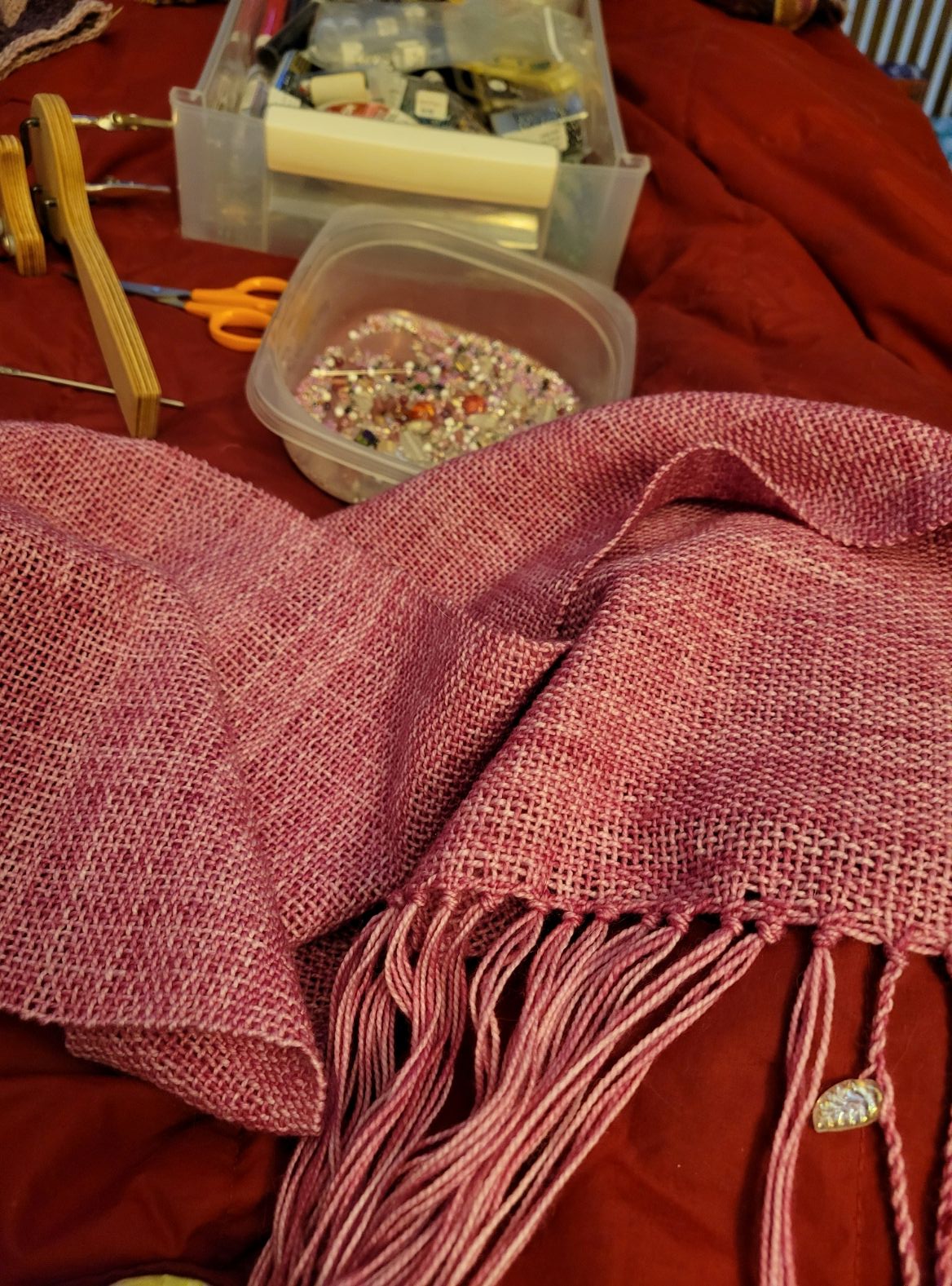
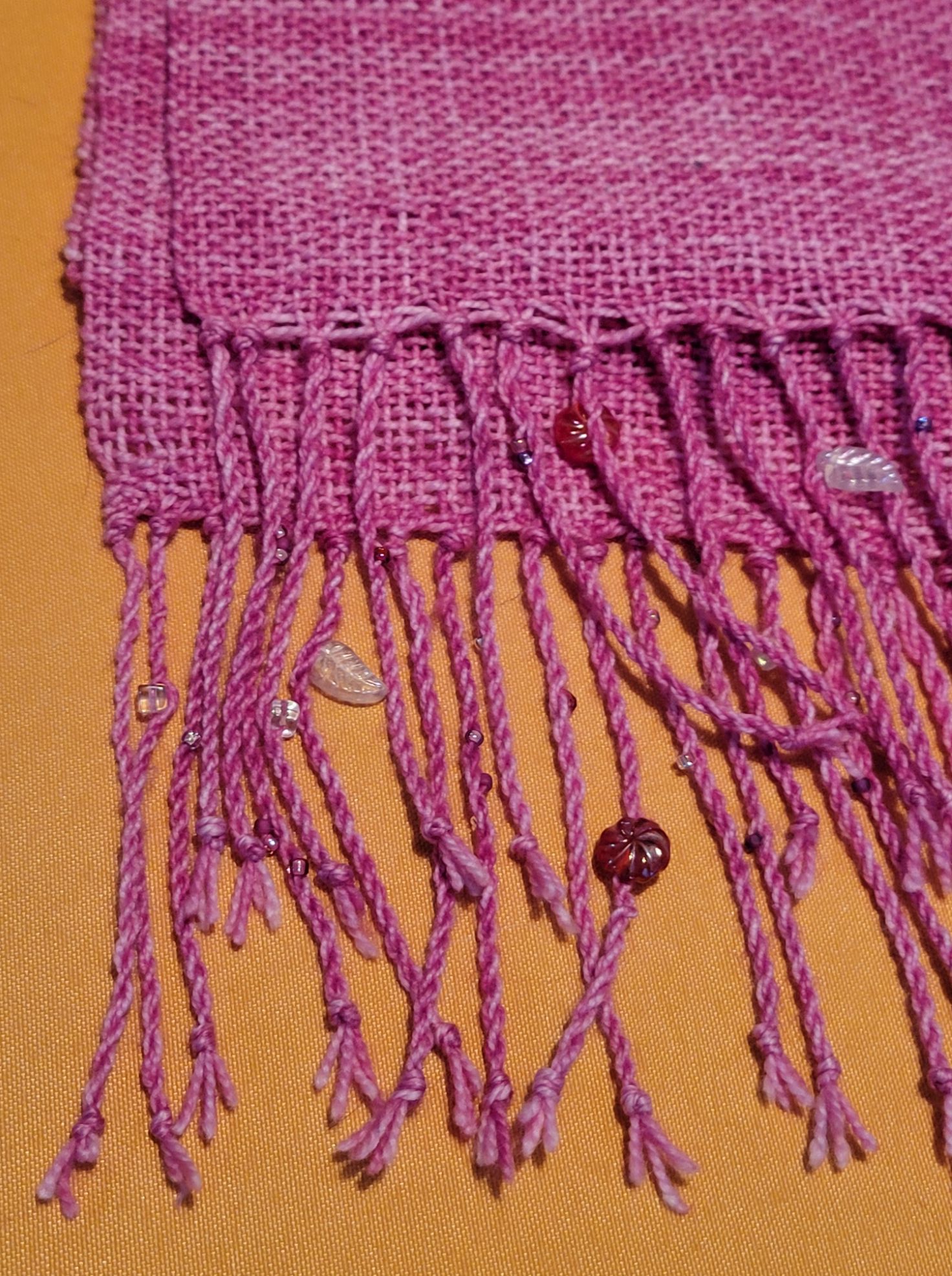
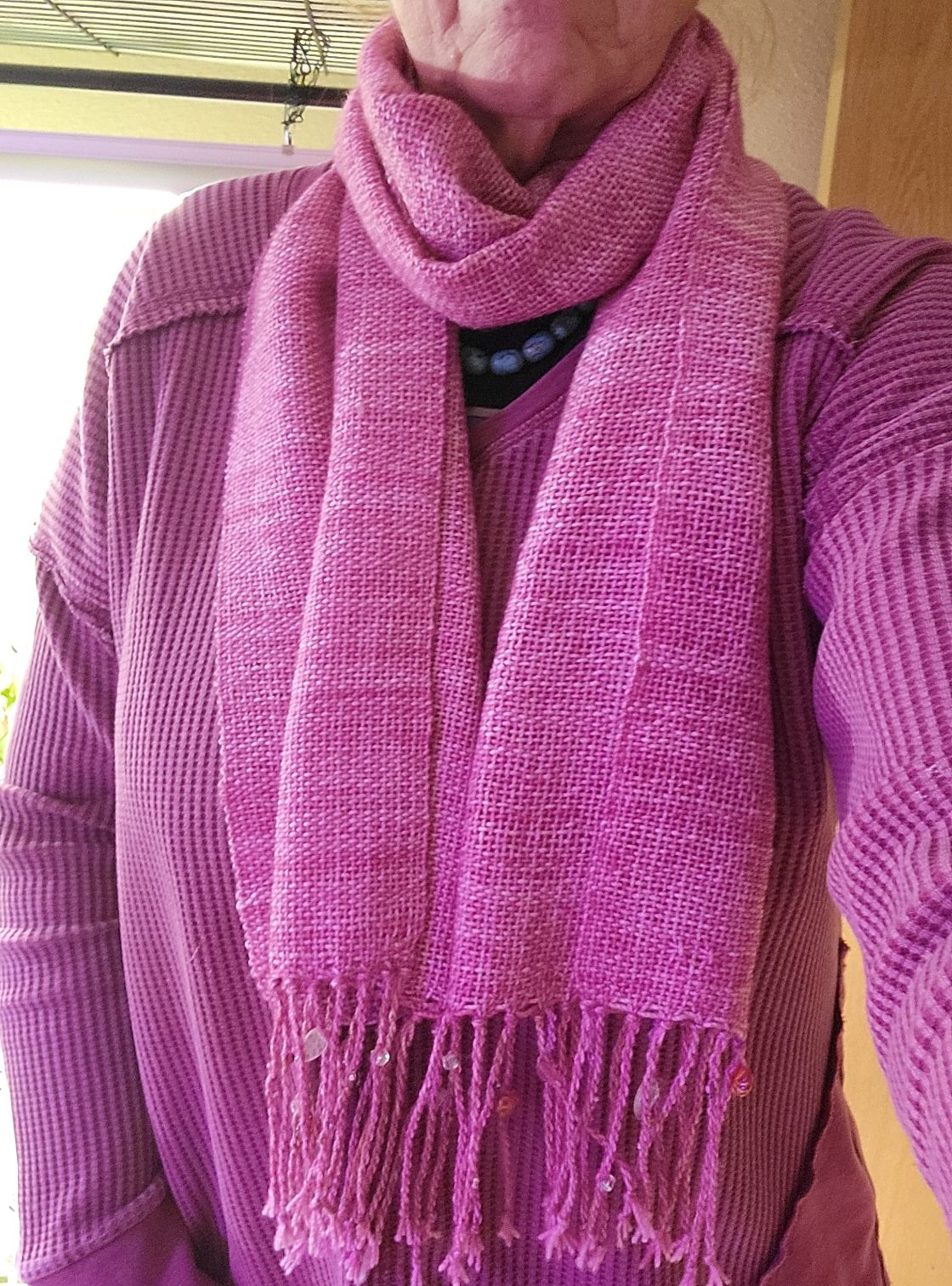
I finished the scarf this week and it is great! I am really happy with the feel and the drape. I bought a little fringe maker tool so I can make even twisted fringes with beads. Did I do this propped up in bed? Of course. I’m feeling pretty successful and I have already warped up the little rigid heddle again. Do I have visions of finished scarfs dancing in my head. Yep. Watch out yarn stash, I am coming for you!!
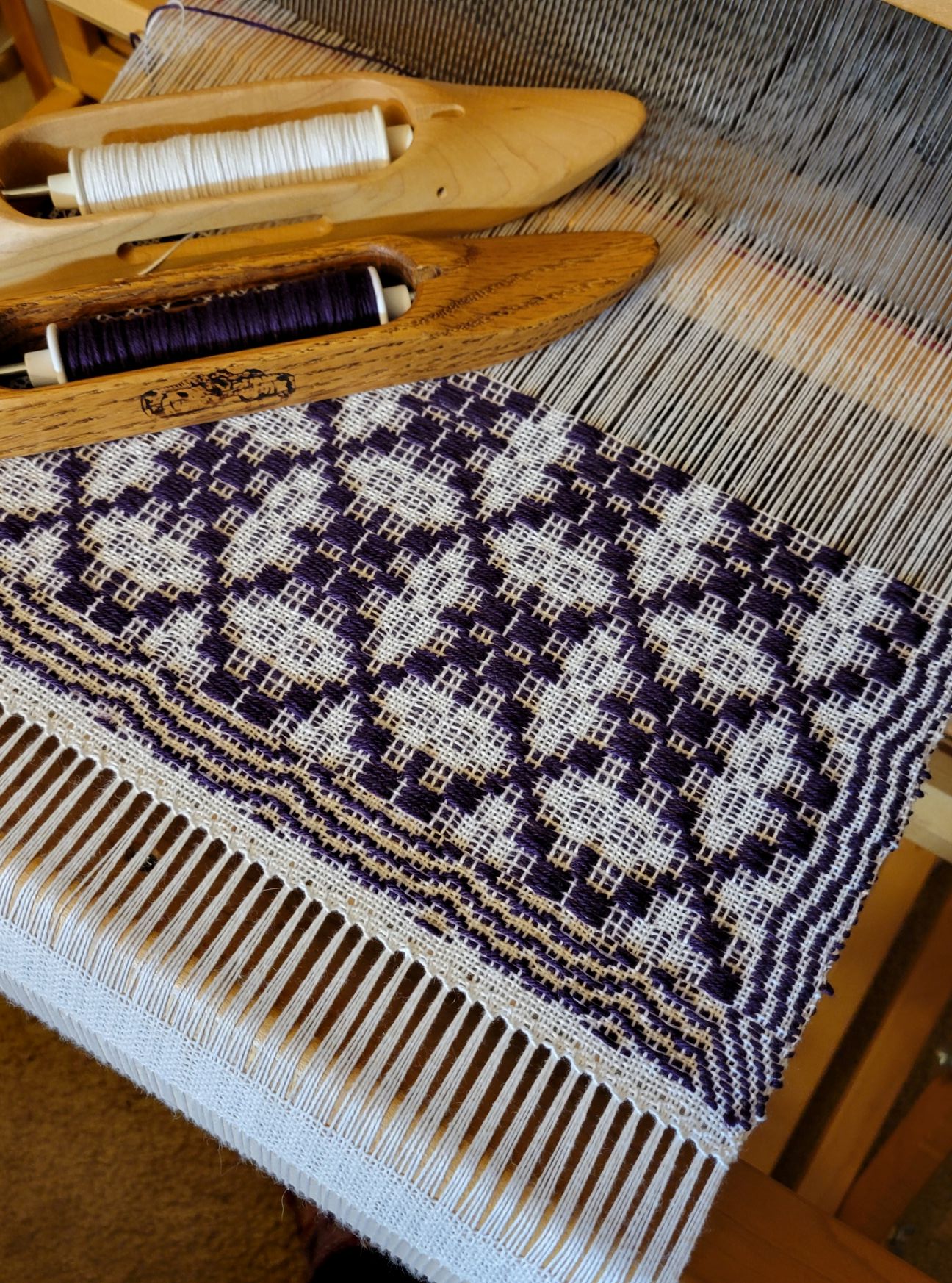
I also, in a moment of determined optimism, signed up for an overshot weaving class that would require me to warp up and use the floor loom. Oh, boy. Getting the loom warped and correctly threaded was… a lot. Just exhausting, actually, both mentally and physically. Eventually the warp was on and I could begin weaving. Yikes. This was a lot of work. There were problems with oxygen levels and sore muscles. I persevered, took a day or two off between weaving sessions, and slowly I became stronger and my breathing improved. I worked my way through the lessons online, clearly behind the rest of the class, and struggled to master the equipment and technical details involved in weaving overshot, a technique that involved weaving two fabrics interlaced with each other at once to create the type of designs in the pictures below.
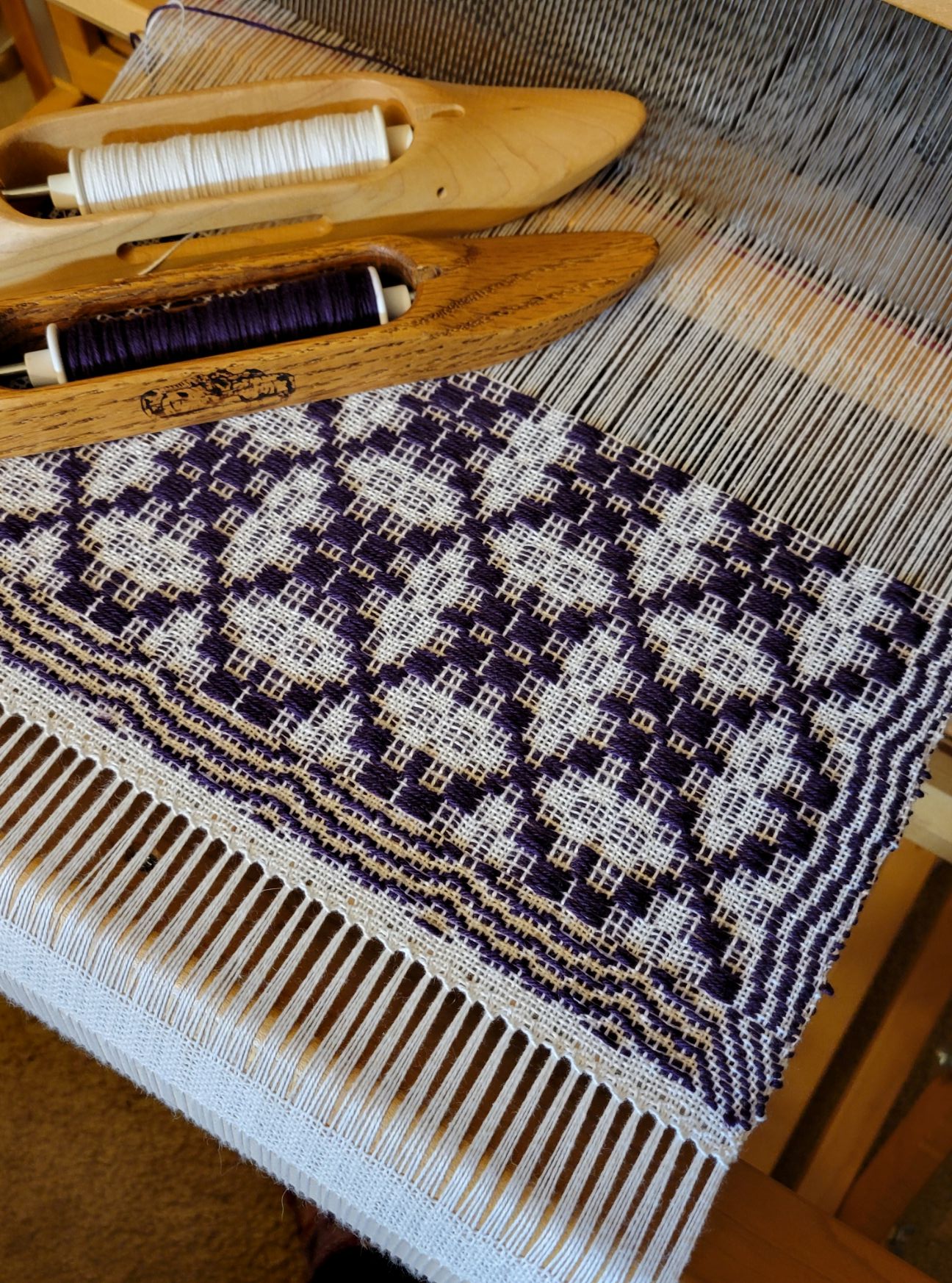
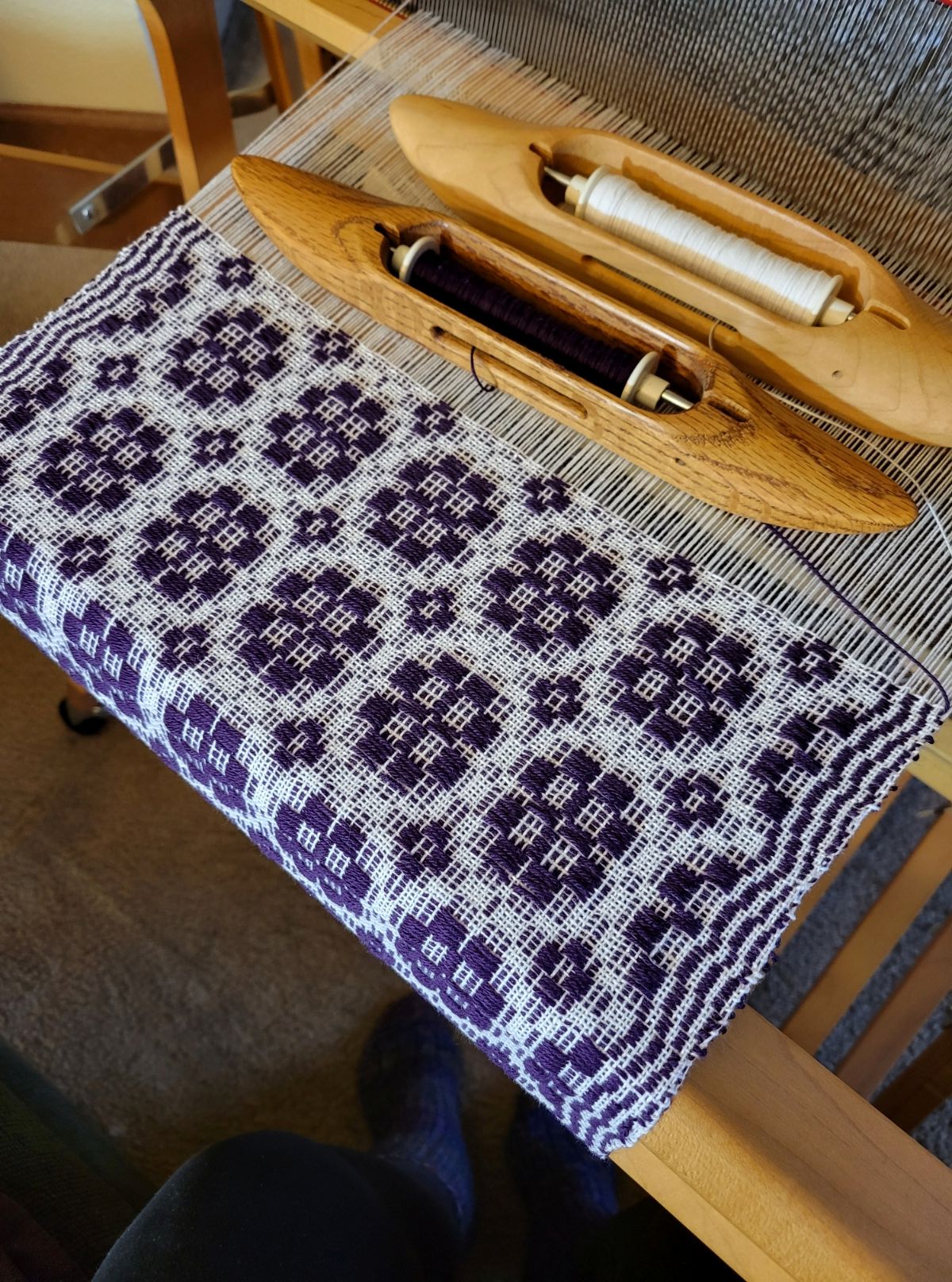
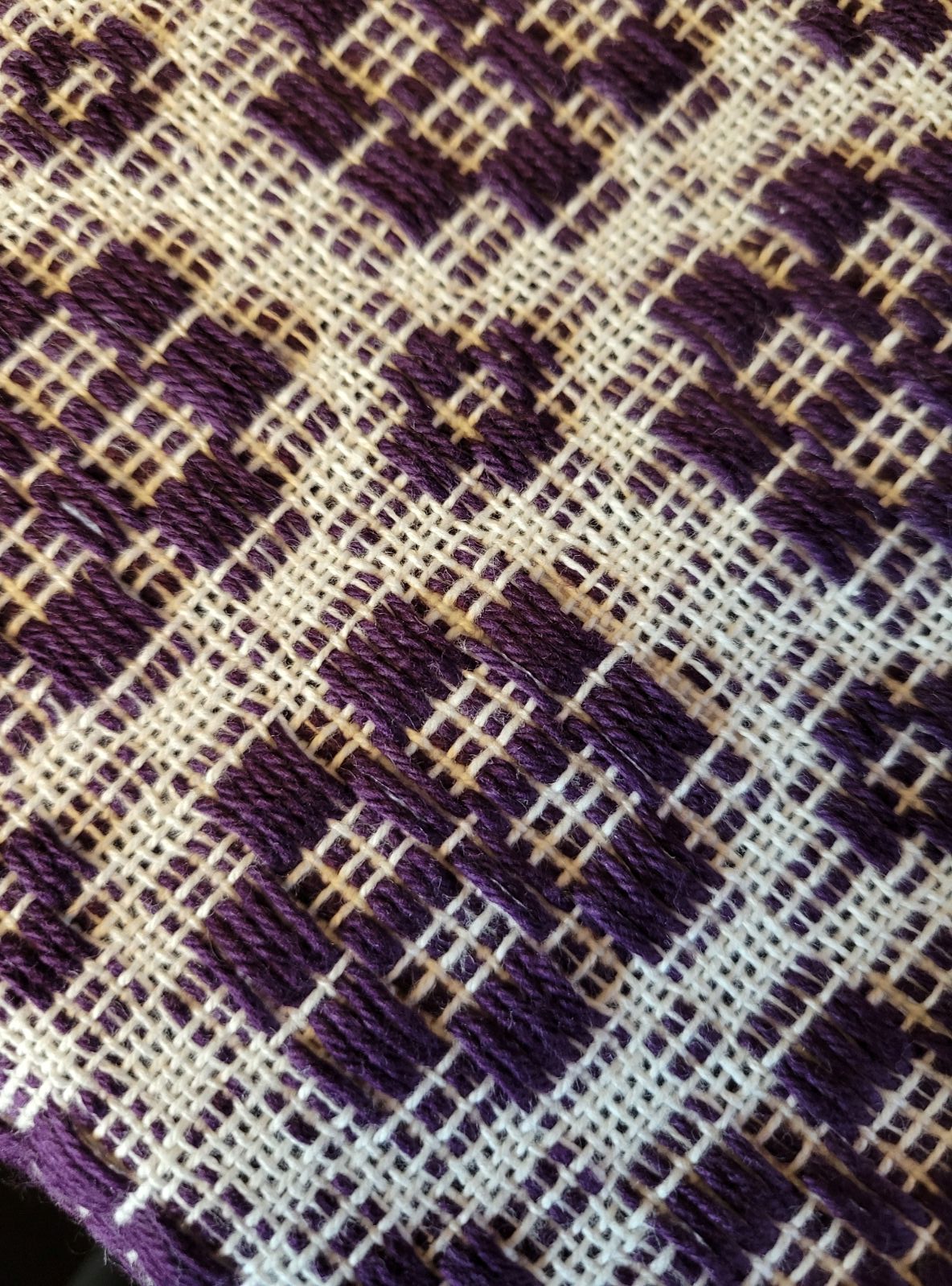
Today I have finished weaving two of the major projects associated with the class, and I couldn’t be more pleased. These two placemats look different, but they are actually made from the same threading on the loom. The two looks (the left is called “star” and the right is called “rose” in weaving language) are created by changing the treadling sequence. Cool, right? My next assignment is to create a table runner that combines these two patterns together in a creative way. Yeppers! I am so excited to do that and have already half-way figured out how it will happen on the loom. I have new yarn picked out and everything. I am gaining energy and I can weave much longer at a time, and I’m not experiencing too many joint problems. Am I wearing my shuttle pilot shirt? Why yes, yes I am!
Selma would be so pleased to know that I am once again a shuttle pilot!!
After thoughts:
- Selma sent me Swedish gingersnap cookies last year for Christmas. I bought another can and I’m now eating those cookies while I work at the loom.
- Grief is a tricky thing. So is stress management. I have discovered that working at the loom, creating something beautiful and useful over time using repetitive movements, helps with both.
- I’m thinking of joining the local weavers’ guild.
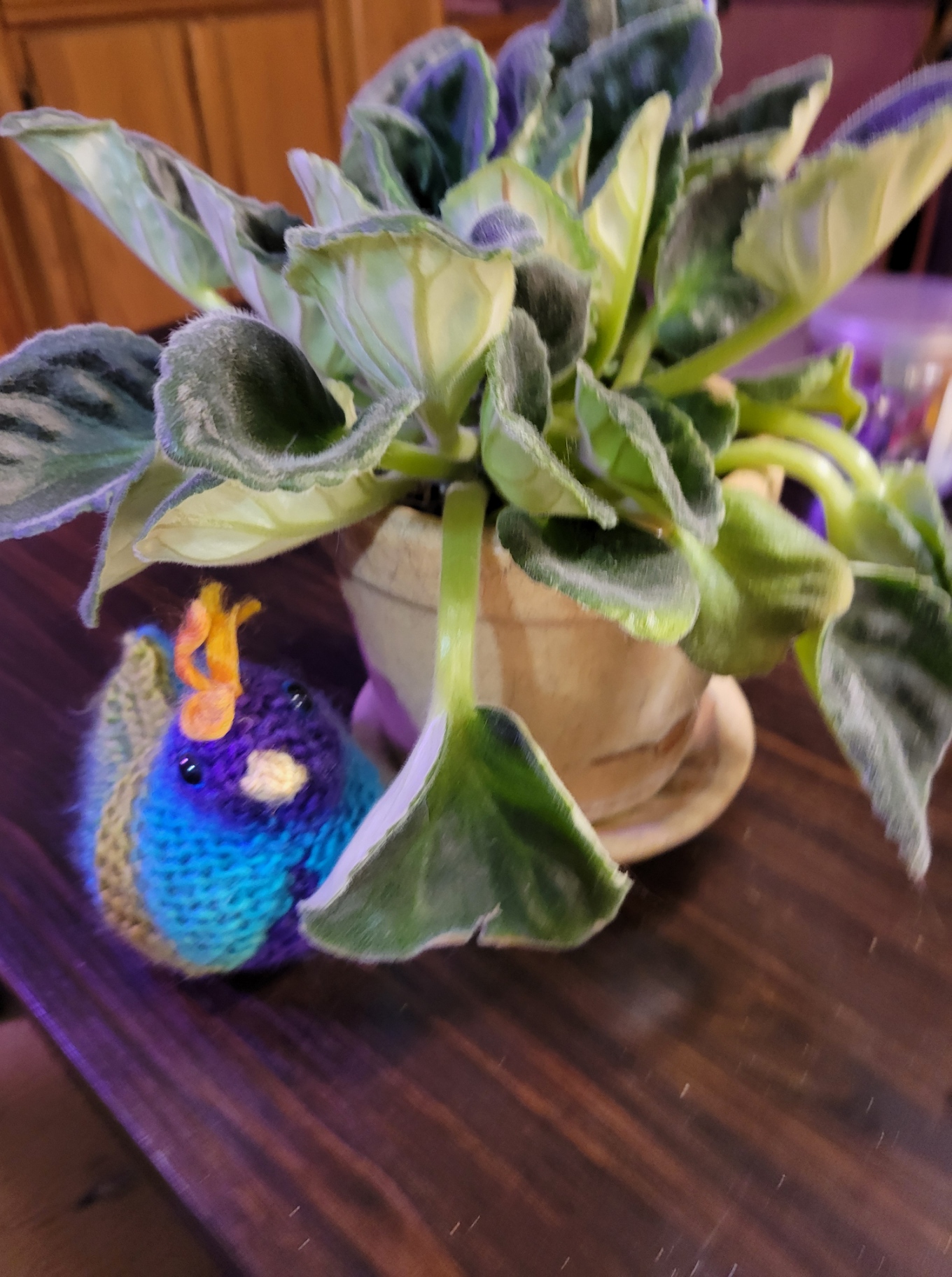
- I have a really lush, healthy looking African violet plant that Selma sent to me one year. Is this plant blooming? Nope. This is kind of on point for my sister. When the time is right, I anticipate that it will produce blooms better than any other plant that I own.





























 Yarn, Books & Roses