The Scleroderma Chronicles: and today’s new words are…Paroxysmal Atrial Tachycardia

So, finally the heart results have come back. If you haven’t been keeping up with all of my latest and greatest developments in the slow-moving train wreck that is called systemic sclerosis, let me quickly catch you up.

Over the summer I started to notice that my Fitbit was alarming frequently because my heartbeat was high. My heartrate was jumping suddenly from a moderate mid-70s bpm to over 140 bpm: cue the panting! I’d have to stop whatever I was doing to lean over while I caught my breath, and then it would be over. Sometimes my chest hurt, and I was pretty sure that this was contributing to my fatigue.

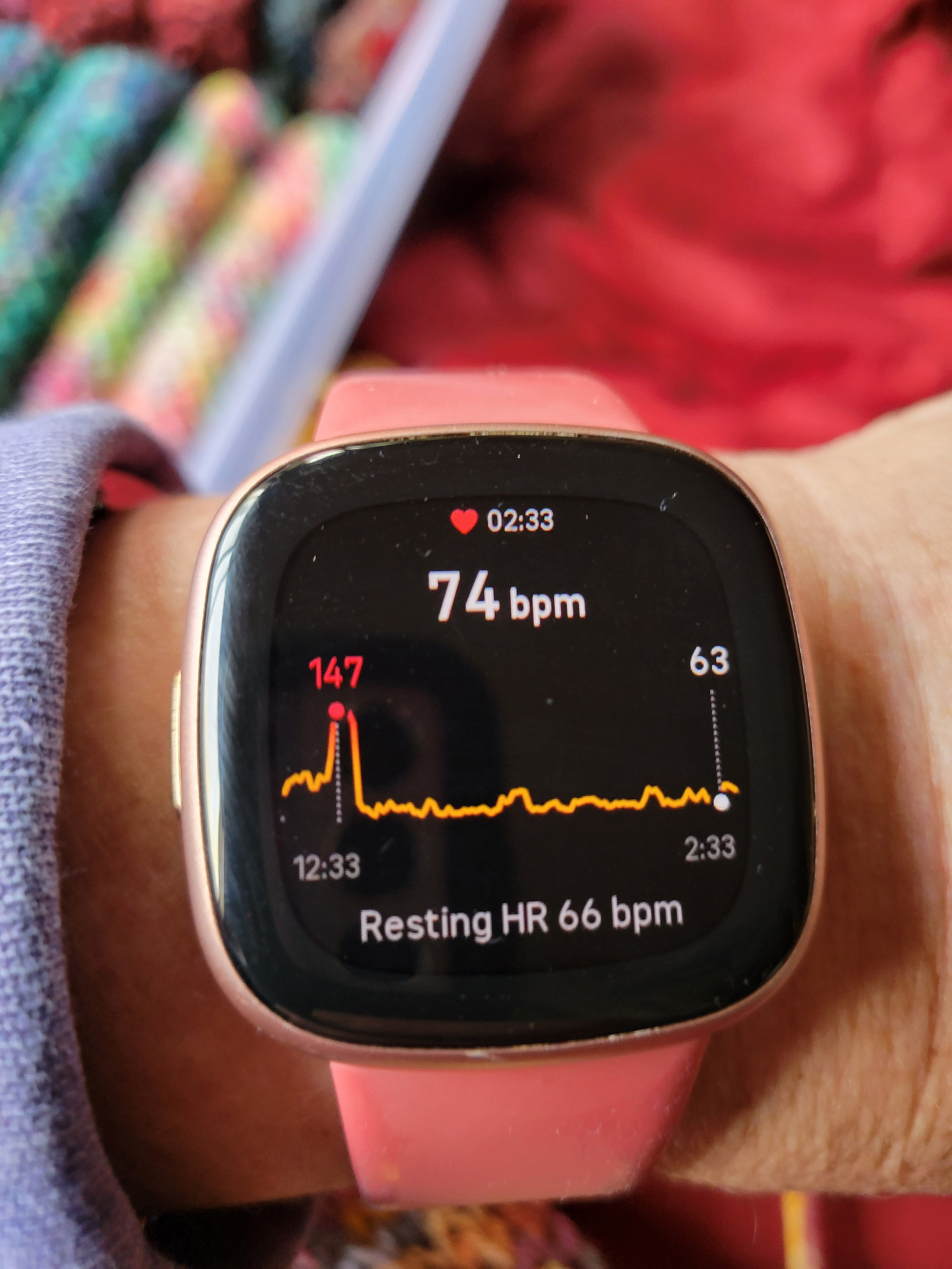
All of this craziness happened while I was trying to make hats on my Sentro knitting machine.
This is what I described to my cardiologist as my adventure on the stairs: I had watered the lawn, came indoors, walked up the stairs and was then suddenly profoundly out of breath.

I do have a long history of shortness of breath, and I’ve been diagnosed with several heart and lung issues that explained my symptoms: pulmonary hypertension, cardiac fibrosis, fluid around my heart, lung disease, and… yeah. I’ve been short of breath like this for a long time and I’ve just been dealing with it as my new normal. Still, the Fitbit was new data, so I sent an email to my cardiologist, and he ordered up a 30-day heart monitor test.

Behold: the fancy heart monitor.

Tuesday afternoon the results were in, and my cardiologist contacted me with the results. It’s kind of a good news/good news/bad news diagnosis. I have a type of supraventricular tachycardia called paroxysmal atrial tachycardia (called PAT for short). I had to do some google searches to understand those crazy terms. The commonsense translation would be: sudden onset rapid beating of my heart’s upper chamber (the atrium). In even more simple terms, my heart rhythm slips out of control suddenly and the upper chamber is beating waaay too fast. Here’s the good news: this is a pretty benign heart rhythm issue (no blood clots, heart attacks or strokes here!!), and it can be treated (probably). The bad news is… I’m stuck with it, and it is pretty unpredictable. The other bad news is that I should go on oxygen more often in the daytime as PAT episodes seem to be triggered when my oxygen levels drop. That’s why it hits when I’m folding laundry, or right after coming up the stairs, or when I rush to the door to answer the doorbell…
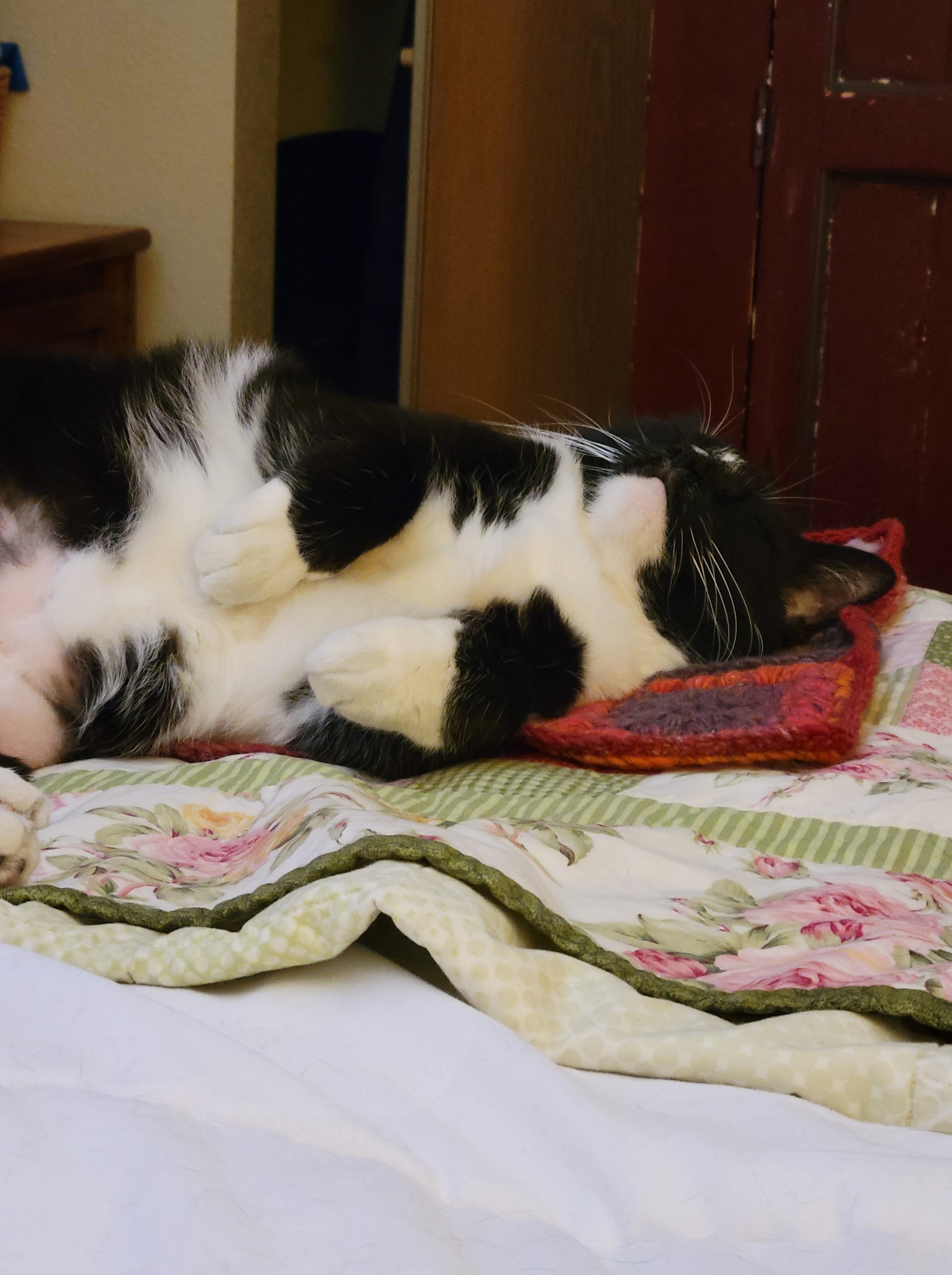
Hannah: Listen, the doorbell is enough to give anyone a heart attack!!!

Why wait on a new drug? Well… I’m just now recovering from a pretty bad flare that hit my tendons, wrists and knees with paroxysmal fury. Paroxysmal is a great word, don’t you think? What is really crazy, my heart symptoms improved while I was down with the flare, making me wonder if the two are somehow connected. I want to wait to start a new medication until after my rheumatologist has a chance to sort out what is happening with my poor wrists and knees. I am suspicious about calcium being involved somehow, and the treatment for PAT involves calcium channel blockers. There may be no connection if there are different pathways involved, but still… calcium is the multi-headed monster of the moment with new calcium deposits appearing on my arms and legs, osteoporosis, and a previously floated notion that I might have pseudogout (which is caused by calcium pyrophosphate crystals in joints… wrists and knees being hit the worst… and my knee x-rays showed that I had calcium deposits in the tissue around my knee…). My cardiologist is okay with a delay in treatment with the understanding that I need to contact him if things get worse.

I just love my doctors!

So, here is the lesson from this adventure. Data really changes a conversation. Having that picture of my Fitbit made a huge difference; after months of explaining that I had sudden shortness of breath things changed with the one email and attached photo. The results of the heart monitor test have now returned a data-driven diagnosis that helps me understand what is happening and makes treatment possible. It is helpful to email your doctors (instead of making phone calls…) as you have a clear record of your interaction. Google with abandon!! Rely on the advice of your doctors; they went to medical school after all, but try to be an active partner in your treatment plan.

Dang. There is another diagnosis on that growing list… no one will believe me so we should just keep this quiet. Paroxysmal Atrial Tachycardia.

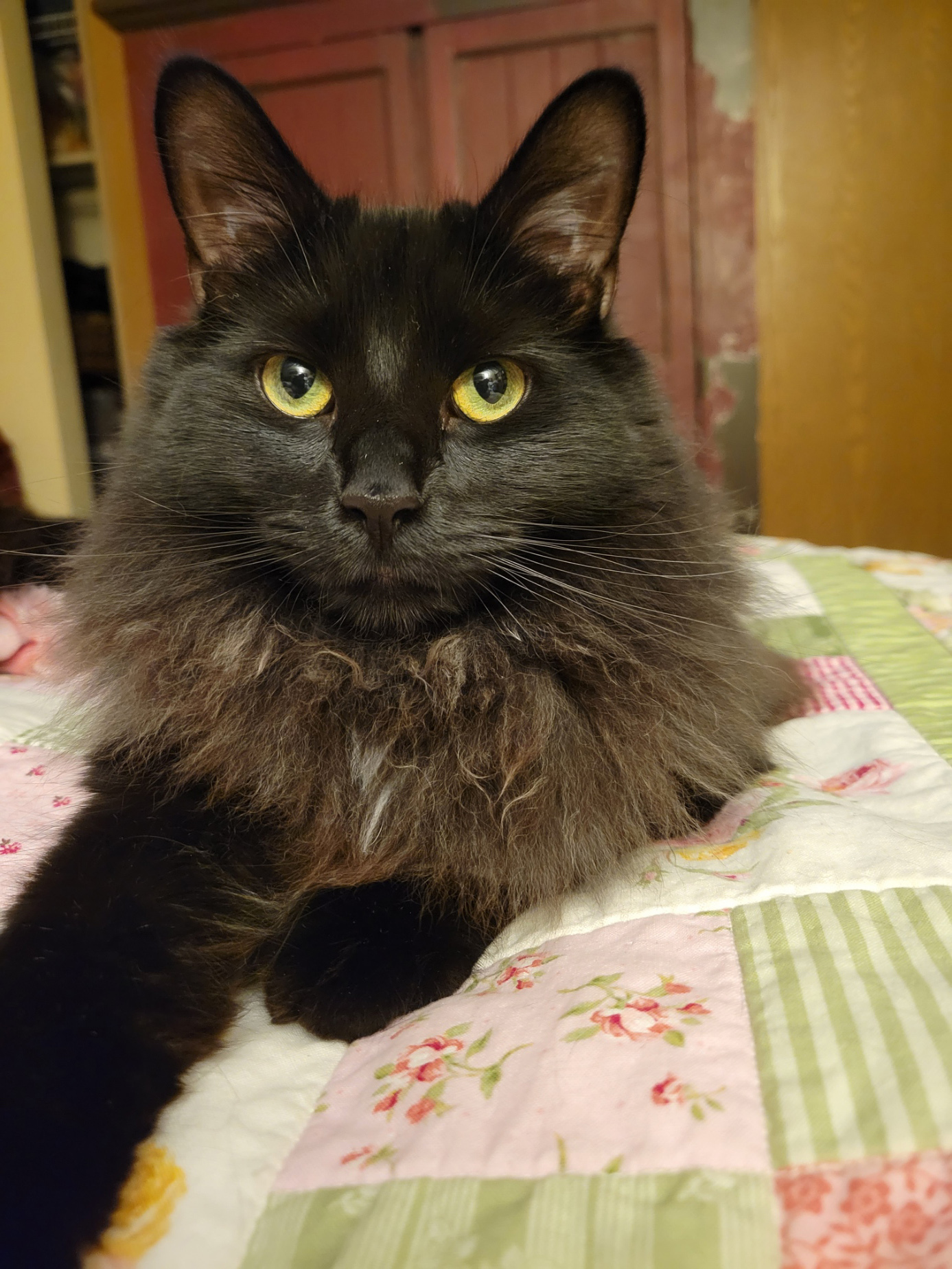
In the meantime, the cats are keeping their eyes on me!

Postscript: I forgot to mention, that of the three types of supraventricular tachycardia, PAT is the one that is the least common. Figures. Once a zebra, always a zebra!!

The Scleroderma Chronicles: The 39% Imposter Syndrome

It was the third day in the Intensive Care Unit following my lung biopsy. I was sitting up in the bed, rocking all of my tubes but finally off the high flow machine, drinking a Starbucks latte and chatting with a visitor. The nurse came in the door and stopped short, taking in the scene of me, the Starbucks, and my visitor. “I don’t believe it!” she exclaimed. “They just told me all the things that are wrong with you, and I walked in here expecting to see a gravely ill person. Instead… here you are! Not what I expected!”

There I am, day three post-surgery after ditching the high flow machine for a regular oxygen line.

“Yeah, I get that all the time,” I told her. It’s the curse of chronic illnesses… you adjust and stop acting sick. Your condition is invisible, and it is too exhausting to explain to people what’s wrong when the list of diagnosed conditions is… well… exhausting. Seriously, if you say more than a couple of things it starts to sound like you’re just making things up. It doesn’t help when the diagnoses sound fake to begin with (systemic sclerosis associated interstitial lung disease… it’s called SSc-ILD for short, but still… sounds like something invented in a science fiction novel, right?). It invariably gets worse if people start to share back some rheumatic or autoimmune conditions that they know of (like fibromyalgia or Raynaud’s), and you are compelled to say… “Oh, I have that too…” See what I mean? Attention-seeking hypochondriac is sure to cross their minds. I mean, I would wonder that… It is much easier to cover up as much as you can and act normal.

I’ve been thinking about this a lot. Several patients in the support groups that I belong to have been struggling with family and friends who are unable/unwilling to accept the diagnosis. They don’t want to hear about it, they don’t want their lives to change, and there is no support. There has been heartbreak and tears, to be frank. Others in the groups have shared that their families also refuse to accept the seriousness of their condition(s) because there have been years of struggle to obtain the diagnosis, and after so many doctors have said that it’s all in your head, or, you need to control stress better, they kind of believe that. From the perspective of these family members, their scleroderma family member is just trying to milk the diagnosis for attention. To make it worse, some patients (and this is exhausting, believe me) start to list all of their symptoms as if to justify their diagnosis. It is a little desperate, and more than a little heartbreaking.

Hannah: the Mother of Cats is making a new patient in her Zoom support group an emotional support chicken!! Her family is unwilling to become involved as she grapples with the implications of her new diagnosis.

Then there is the more insidious problem: what did you do to make this happen? I have been asked that, and it usually is followed by advice about things that I can do to control my scleroderma and the resulting lung/heart complications or even how to make myself get well. The implication is, if you don’t do this (herbal treatment, sunshine, exercise, wacky stem cell injection), it is your own fault that you are sick!! It happens to a lot of us. It eats away at self-confidence, and makes me, and other patients question just how sick they really are.

I, and a lot of others in my extended scleroderma community, feel like fakes a lot of the time. Like, almost all the time!

I mentioned that to my pulmonologist last week on the phone, and he was really direct in his response: do not fall prey to imposter syndrome!!! This is really happening to you, you are dealing with it very well, but you need to remember to take care of yourself!

I need this picture on a shirt!

I had never thought of imposter syndrome in this way, but I think that his point is well made. Maybe I should have a poster made with this written on it. With some sunflowers and a tuxedo cat for interest. Every person diagnosed with a serious chronic condition needs this, because it is easy to just trick yourself into pretending that you are “better” and then the bad decisions get made. Like going off your meds. Or partying like it is 1999. Or eating all of those things that are essentially forbidden at once! There has been a rash of wailing patients in my online support groups who say things like… I went off my meds and started treating myself with natural remedies, and now [insert new symptom that has them terrified] is happening. Yep. That is imposter syndrome, hard at work. No wonder my doctor was so firm with me.

Because the point that he was making is that I am pretty ill, and I need to own it. I’m in a very small group of scleroderma patients who have the full battery of the more serious systemic sclerosis complications: pulmonary hypertension, interstitial lung disease, and diastolic dysfunction. I am being treated aggressively for those conditions, and I am doing really well, but they haven’t gone away.

I finally pulled myself together to check what the survival rates are for patients with two of my concurrent conditions (SSc-ILD-PH) and discovered that there are recent studies that looked at patients being treated with the same drugs that I am on.

  • This study, done in 2009 with patients on the same drug regimen as mine, showed the 3-year survival rate to be 39%. Oh, oh. Not an imposter any more.
  • This study, published in 2011 has a 3-year survival rate of 47%. Oh. That’s better.
  • A huge study done in Germany and published this year, shows that scleroderma patients with ILD-PH had the worst outcomes: the 5-year survival rate was 79%. Gosh, that is a good-looking number!

I see a trend. Do you see a trend? It looks like things are getting better and that survival rates are going up. I have to admit, when I saw that first 39% I almost panicked and stopped searching, because… I was diagnosed and started treatment for pulmonary hypertension and diastolic dysfunction exactly 3 years ago. The ILD diagnosis came in a few months later. The clock is ticking, and I am one of the 39%… talk about imposter syndrome: how can I be this functional when the majority of patients like me are already dead?? I’m a fake, an imposter!! That can’t be true, it is not true, and that new data shows what is happening: it looks like the treatment plans of today are really making a difference. My pulmonologist feels that the drug that I’m taking to control my lung disease is a game changer, and that drug was only approved for use with scleroderma patients within the last decade.

For some reason the term 39% Imposter has stuck with me. That’s me. I’m not really all that sick, because only 39% of me is pretending to be sick. Or well. Whatever works today. I’m thinking about a tee shirt with the slogan. I’m rocking the imposter persona. Maybe a shirt that says 39% Imposter and 100% Survivor…

I mailed back the heart monitor last Monday and now I’m waiting for the results. It has been a difficult three weeks because the flare just won’t go away, my wrists and knees are being bad boys, and now I have painful heart palpitations. Sigh. It is always one thing after another.

And yet, in my heart, I don’t feel sick at all.

Imposter Syndrome.

But only 39%.

The Scleroderma Chronicles: True North

It has been quite a week. Something happened that put me into a snit that made me think about priorities all week long. Actually, several things are happening all at once and it has taken me days to sort things out. Let’s start with the snit, okay?

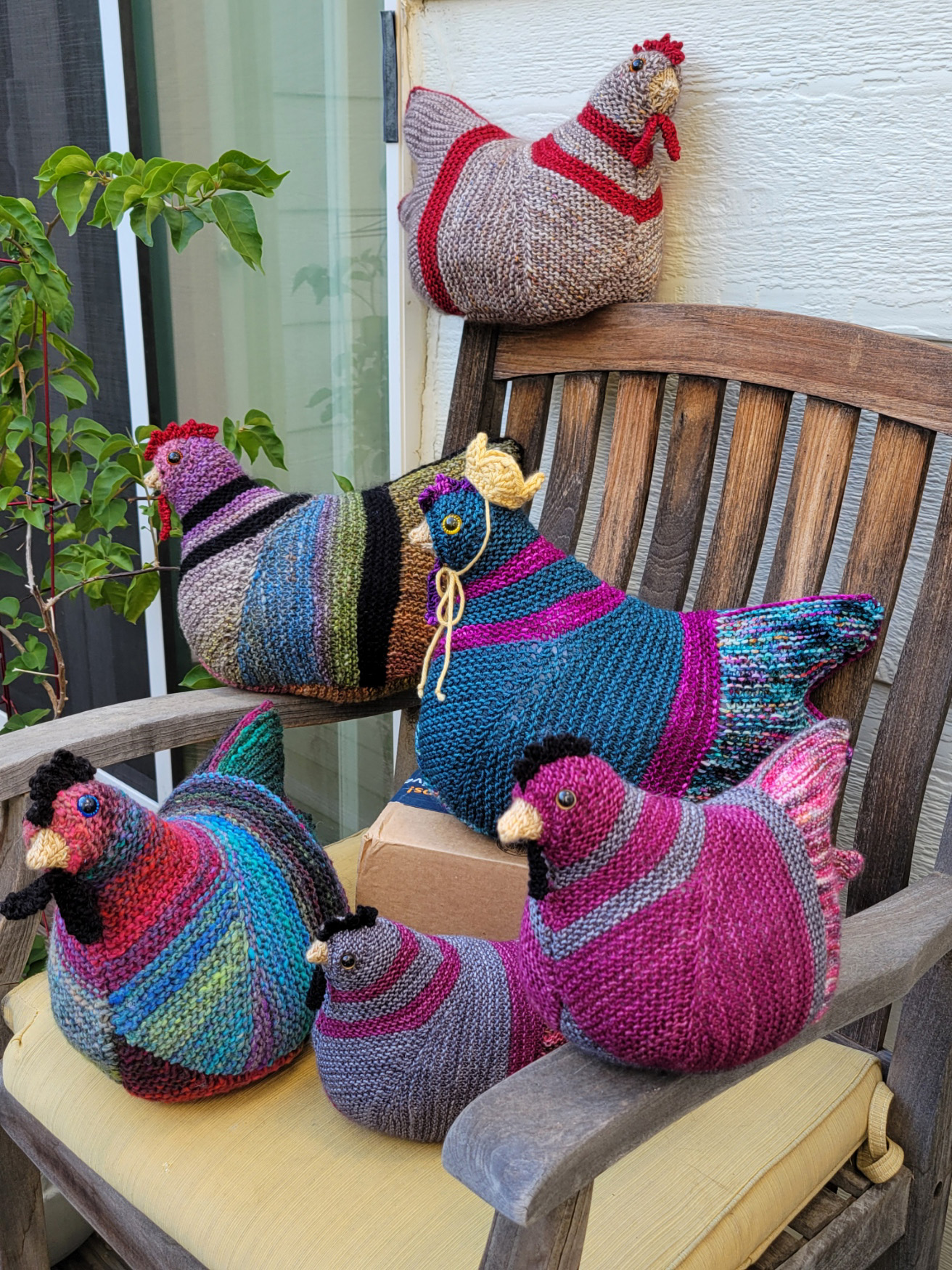
These are the chicken sisters, and even though they are really cute, they are the focal point of the snit that has made me rethink my priorities.

I started making emotional support chickens to give to people who needed… well… emotional support. People who are dealing with grief, or anxiety, or an uncertain future, or struggling with medical challenges. I want to send something to people like me who are dealing with something significant and life-altering that is also mostly invisible to other people. The chicken says (Ba-BOK!!!) I see you… I am here for you… give me a hug. That is the mission. It falls under the overarching mission of Knit Out the Yarn Stash Before I Die. Hey, I have a lot of yarn, so there is a sense of urgency there for me.

Well, the day I took a chicken to my knitting group seeking to enroll others to knit chickens things kind of backfired. As in, people begged me to make them chickens. Ugh. I couldn’t say no, because all of these ladies are making/giving things for others in the same circumstances as the people I gift the chickens to. I signed on to knit 5 chickens with the understanding that each chicken would require a cash donation to Frayed Knots. I knit some chickens, posted the pictures, and it was a chicken free-for-all as people reserved the chicken that they wanted.

Here they are, the first chickens looking for a new home.

Four chickens were grabbed right away. Then the problem arrived. One of the members of the board wanted the little raspberry and grey chickens, even though they were already adopted out. The words “those chickens are gone” did not work. She absolutely had to have those chickens. It was a close thing, but I did have enough yarn left over to make the two new chickens.

When I sent her the pictures of the finished chickens and told her they were done she was greatly disappointed that I hadn’t also made a black chicken that we had mentioned while she was debating her options. (Listen, she decided on the two chickens instead of that black hen, so this was a shock!) I told her that I didn’t have the yarn to make that chicken in the stash. She told me that she would buy the yarn. I was like… NO!!! Please do not buy me any yarn!

Overarching mission: Knit Out the Yarn Stash Before I Die

Which has kind of been on my mind since my heart is kind of acting up right now. I am having sudden attacks of extreme breathlessness with chest pressure and dizziness. My oxygen levels seem to be okay, but my Fitbit has been sending me alarms when it happens. My fatigue has gotten much worse and it kind of hurts to breath sometimes.

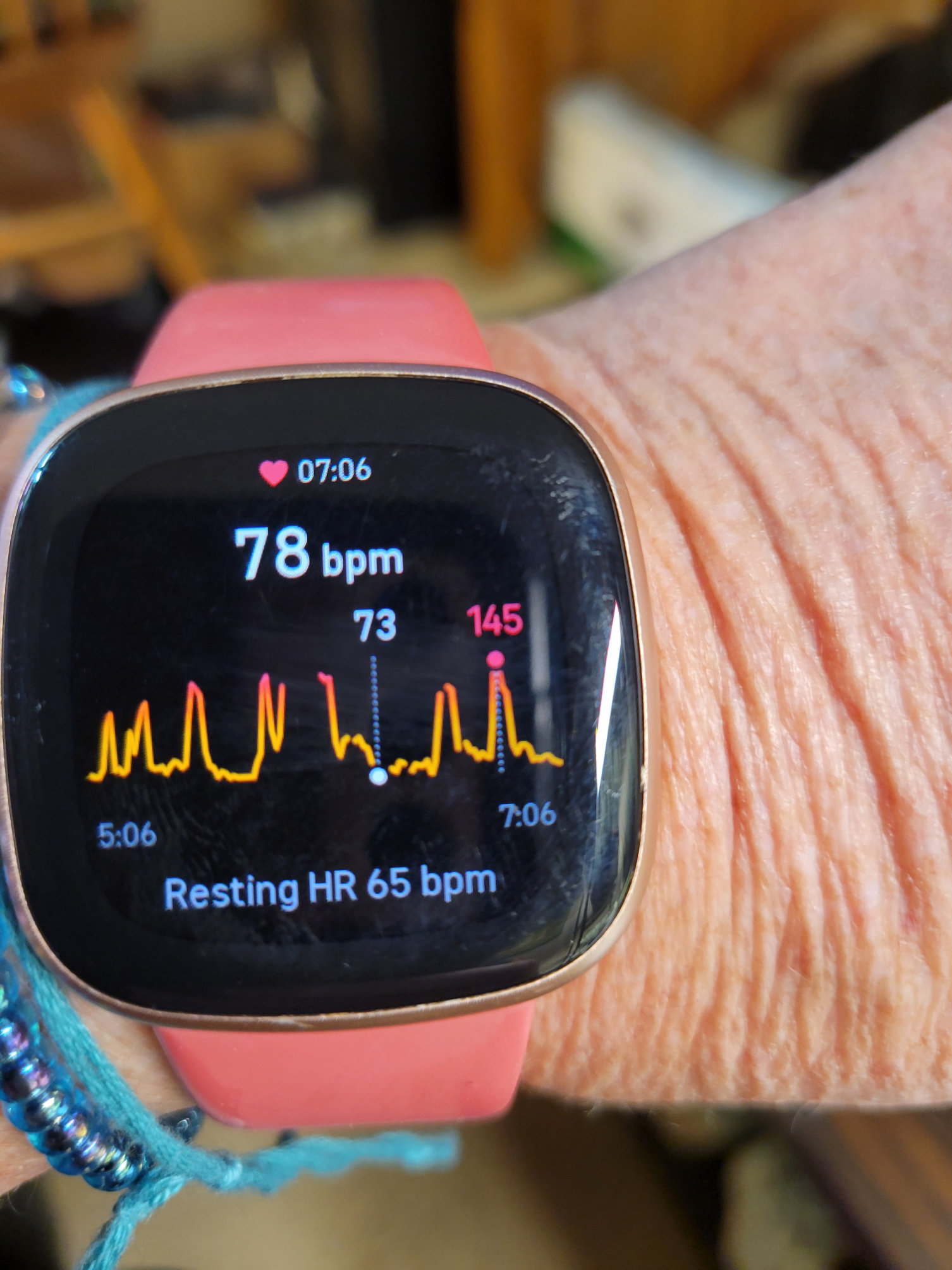
The really crazy Fitbit shot with lots of peaks happened when I tried to knit a chemo hat on my little knitting machine. I mean, making hats while trying to control the cats is stressful enough, but the constant Fitbit alerts are just piling on at this point!

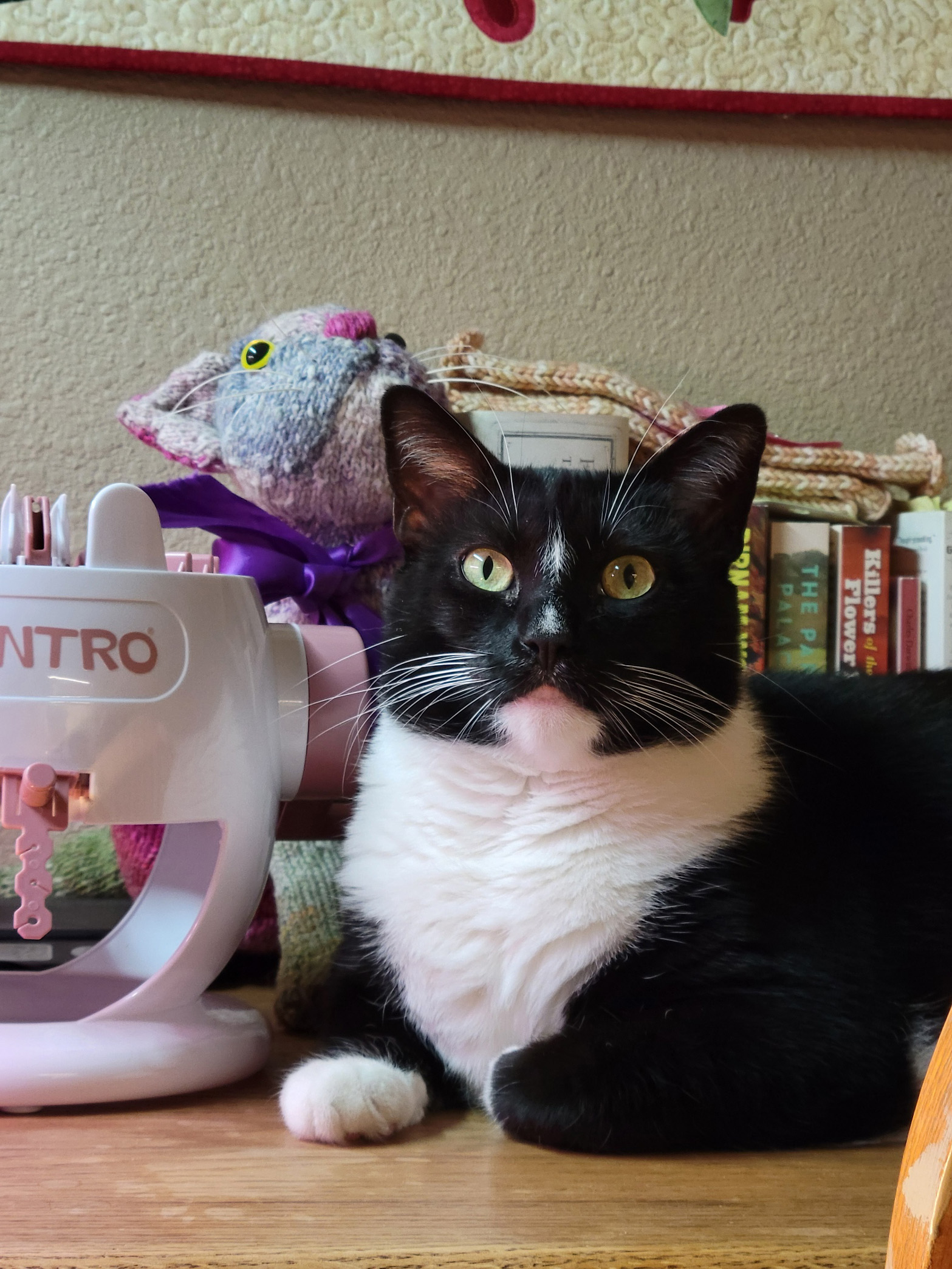
See the quality help that I’m getting while making the hats?

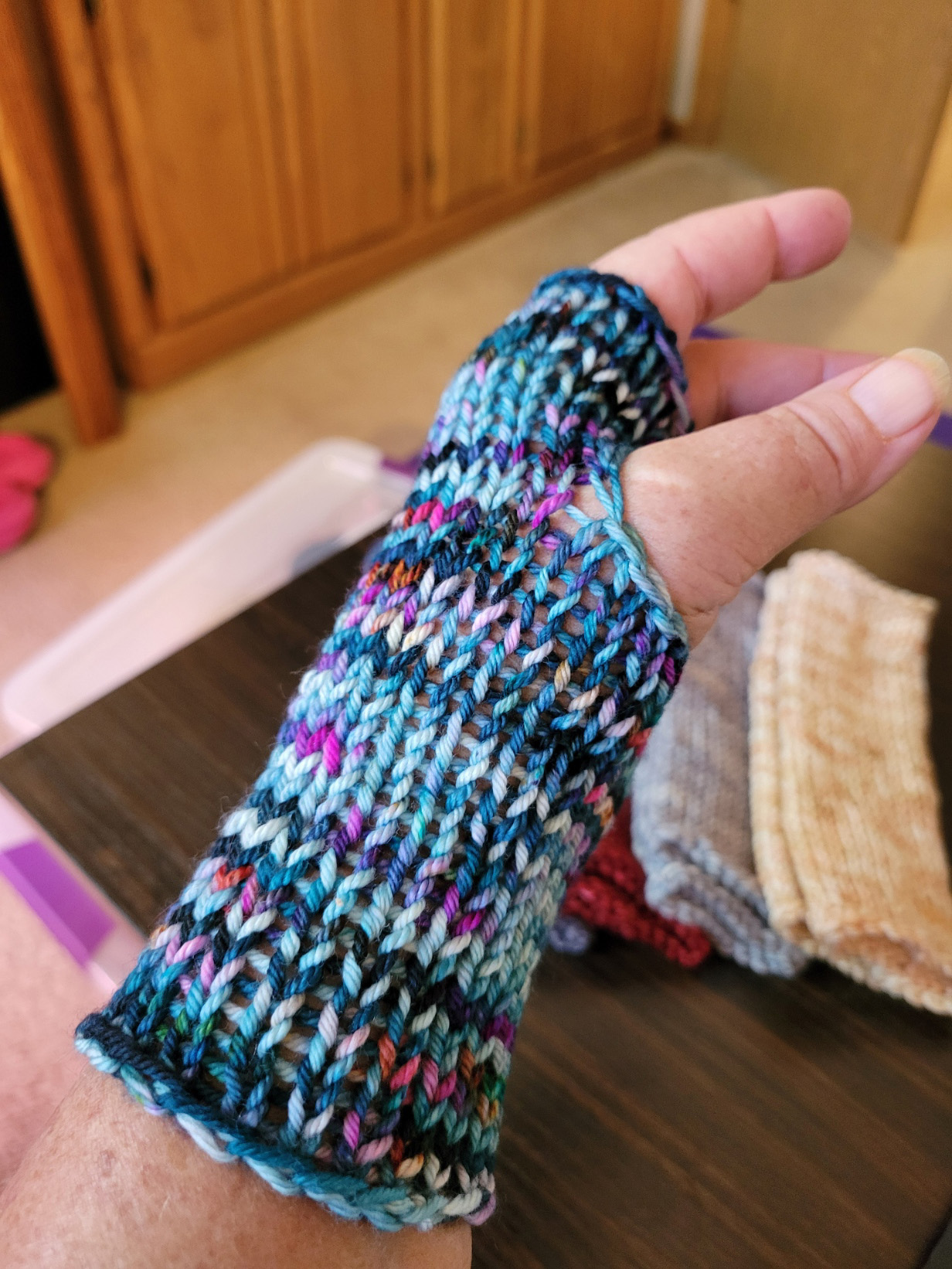
I seem to do much better if I wear oxygen while working with the machines, and I get fewer alerts while working on the smaller knitting machine making fingerless mitts.

Cute fingerless mitts, right?

So, it was a week of internal conflict. The lady who wants a black chicken is still not happy. My heart is not happy. My yarn stash is not shrinking, and somehow the joy of knitting chickens is gone when I have to make them in the exact colors that other people want. It is a chore when I don’t get to be creative, especially when I know that the chicken is going to someone who just wants a chicken, as opposed to someone who needs a chicken.

Hannah: On Friday the Mother of Cats pulled herself together, reset her priorities, and took some action!

Friday morning, I woke up, made my latte, sat outside with the cats, and decided to push the tiller over and return to a course of true north. I will remember my overarching mission statement, and I will do the things that help other people like me: people with chronic conditions that are isolating and mostly invisible to others. I will spend my time doing the things that feed my own creative spirit and my need for a sense of purpose.

  • I emailed my rheumatologist to ask if she would like fingerless mitts to give to other rheumatology patients. The answer came back in less than an hour: Yes, please!!!! I have my purpose again, and knitting out the yarn stash is back in business.
  • I emailed my cardiologist to let him know what was happening and attached the Fitbit pictures.
  • I took down a sweater (La Prairie) that has been languishing for months and started in on finishing the first sleeve. Gosh, it is going to be cute. Time to knit for me again!
  • I packed up the chickens to deliver to Frayed Knots. Those chickens are the last ones that I will knit for people who want chickens.
  • Saturday, I handed the chickens over to the head of Frayed Knots and asked her to please explain to the lady who desperately needs a black chicken that I’m done knitting them. The words I used were, “I’m not in the chicken knitting business, I’m in the emotional support business.”
  • I then sat with another member of the group and helped her knit her way through her first chicken. Suddenly, two other people wanted to learn. Yay! I am there for them!! Eventually, I am going to get some chickens into infusion centers for the patients!!
I have two little bracelets on my wrist with the Fitbit.

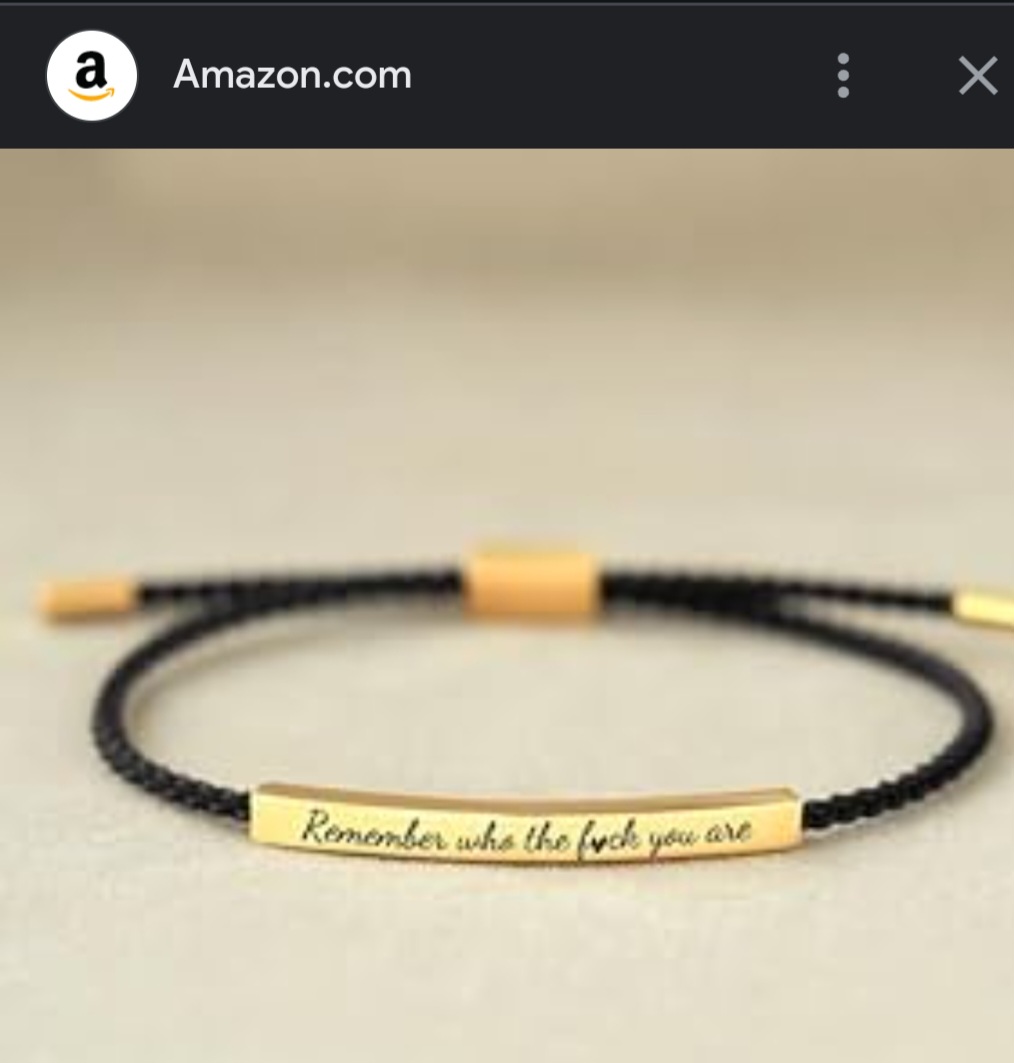
What was it that helped me pull things together Friday morning while drinking my morning latte? Those two little bracelets on my wrist in scleroderma teal. The little silver spoon was given to me by another patient, and it symbolizes the balancing act scleroderma people go through to manage our fatigue. We are “spoonies”. I need to remember to be ruthless about managing my own energy and resources. The teal beaded bracelet has a silver strip that says, “Remember Who the Fuck You Are“. Yes. I need to remember to not let other people run me over with their needs, because… limited resources. I need to set my own priorities with my limitations and needs in mind. I also need to remember to be brave, to face down the monsters, and to let my doctors know when new symptoms appear.

Just like that, I found my way again.

True North.

Hannah: I always remember who I am!

The Scleroderma Chronicles: Resilience

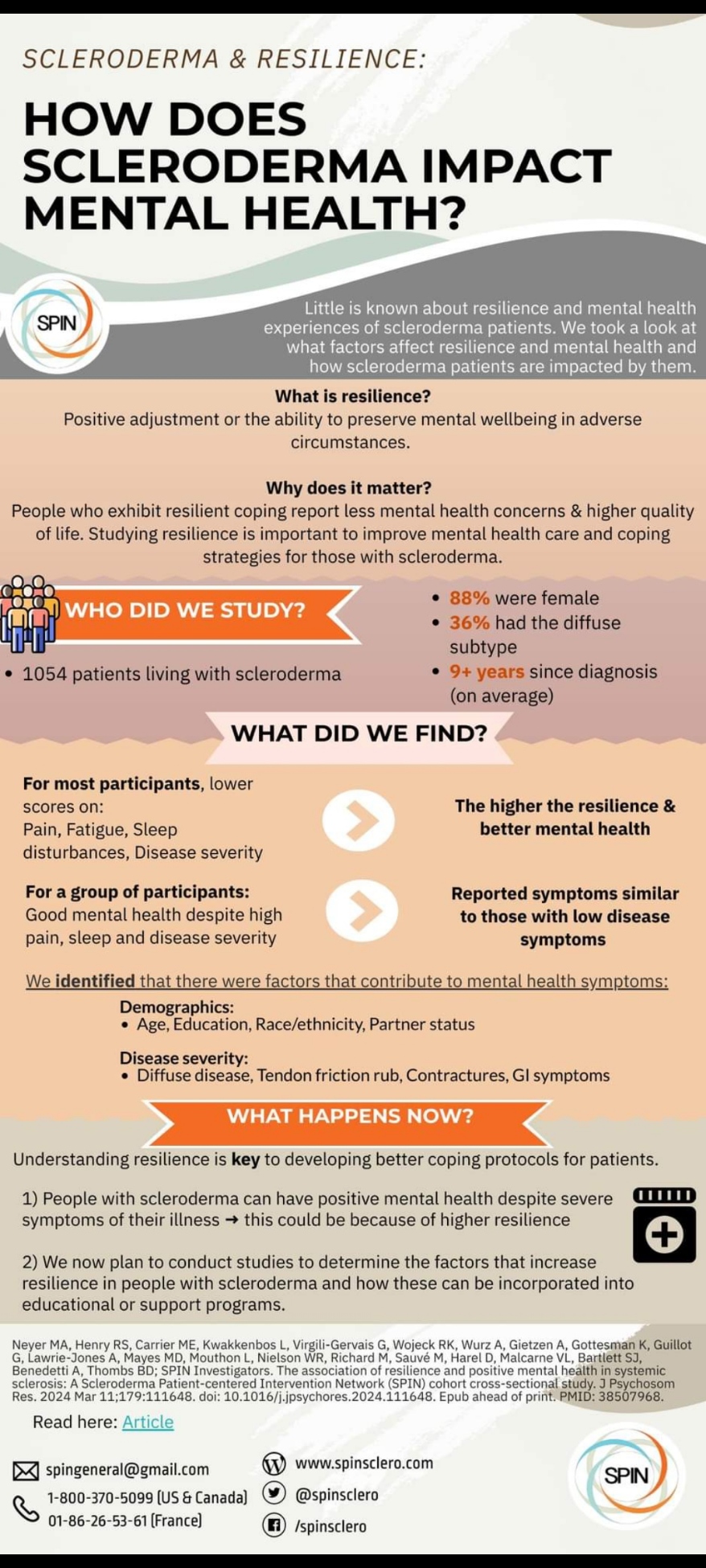
I’ve been thinking about resilience today after this graphic showed up on my Facebook feed.

What is SPIN you ask? It is the Scleroderma Patient-centered Intervention Network.

I’m pretty sure that I was one of the patients in this study. Certainly, I was a participant in a SPIN clinical research study during which I filled out lots of questionnaires about my illness. The focus of the project that I was enrolled in was to see if online educational videos about scleroderma, possible interventions to help with the progression of symptoms, and information about resources could help patients in how they coped. I was tracked for over a year to see how I was doing. How was my pain? How was my sleep? Was I depressed? How severe was my disease, and how did I feel about that? Did I have issues with anxiety? What were my scleroderma-associated complications?

Not surprisingly, the study referenced in the graphic found that they could break patients into 4 groups based on the severity of their disease (Low -> Very High). They found, for the most part, as patients dealt with an increasing disease burden, they coped less well and struggled with depression and anxiety more.

Except for one group of outliers. They had a pretty significant disease burden, but they were not depressed and didn’t struggle with anxiety. They kept rolling with the punches and finding ways to flourish even within the eye of the storm, securing for themselves a better quality of life than others facing the same challenges. I’m pretty sure that I am one of the people in this group of outliers. I remember that I reported that I was having lots of trouble with pain and sleep disruption, but no depression; my current battery of scleroderma-associated complications should put me into the High disease group. Here is a paper where the researchers further investigated the association between disease burden and mental health and resiliency.

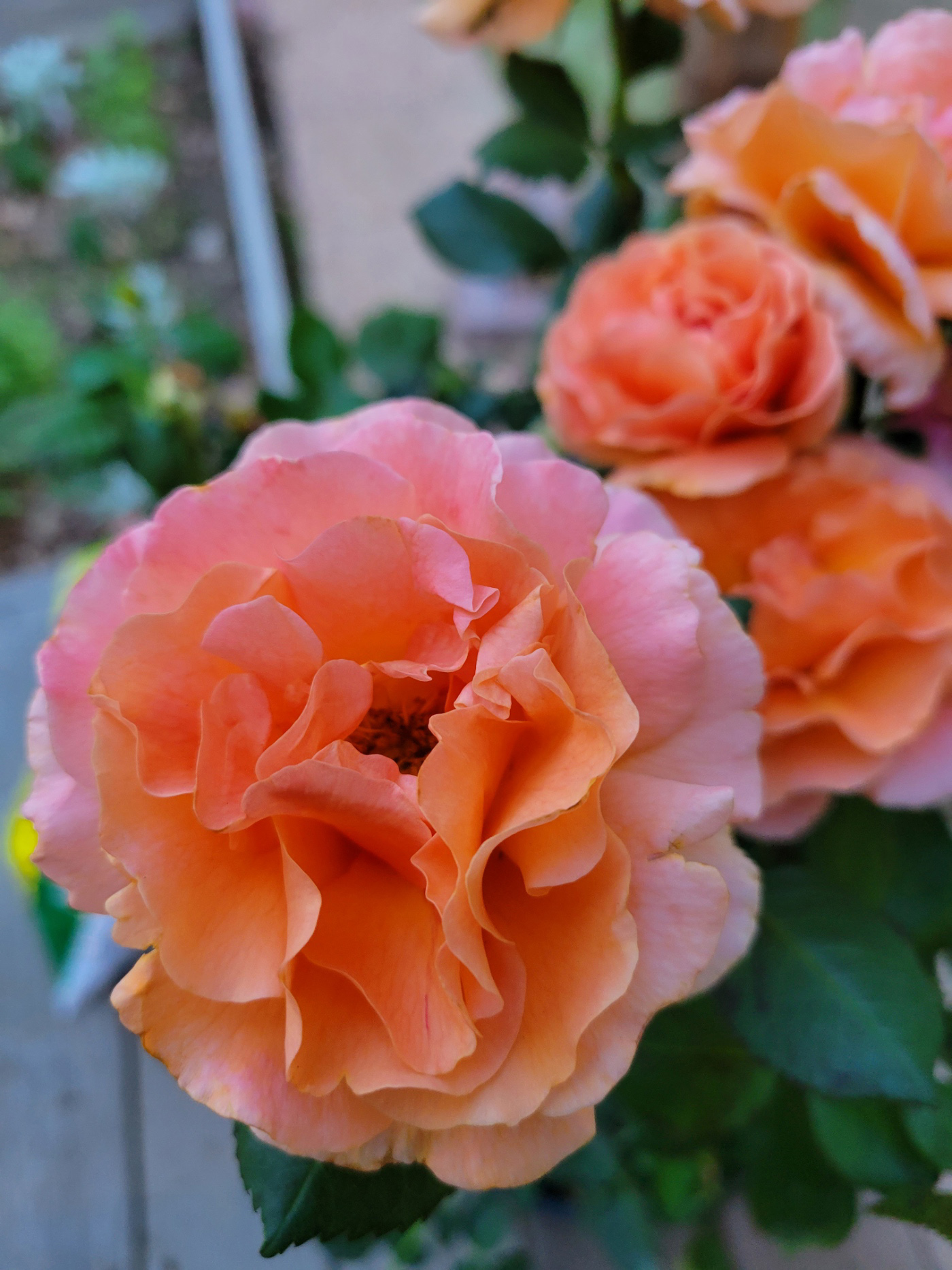
I bought myself little roses last week. Look at how cute they are! They are under a red light, but you can still kind of see that they are a peach color.

So, the big question that the researchers are now pursuing is what determines resiliency, and how can these essential coping skills be conferred to other systemic sclerosis patients through training and support.

So, what is resiliency? That was the big question of the day for me as I worked out front weeding a garden. Working outside is now hard for me, but I dragged out a little chair to sit on, put my tools into a crate that was easy to push, and I slowly worked my way along the front walk cleaning up my garden and pulling out weeds. I had to take breaks to pant from time to time, but by the time I was done the gardens looked great! The weather was perfect, there were lots of birds, and one of my neighbors had music playing while he worked in his garage. After a little break on the catio with the cats (coffee and a lemon bar time!!), I strapped on my portable oxygen concentrator and mowed the front lawn. I’ve had a hard week, and I struggled to get myself outside to work in the yard, but by the end of all of this I felt much better. You might even say I felt happy.

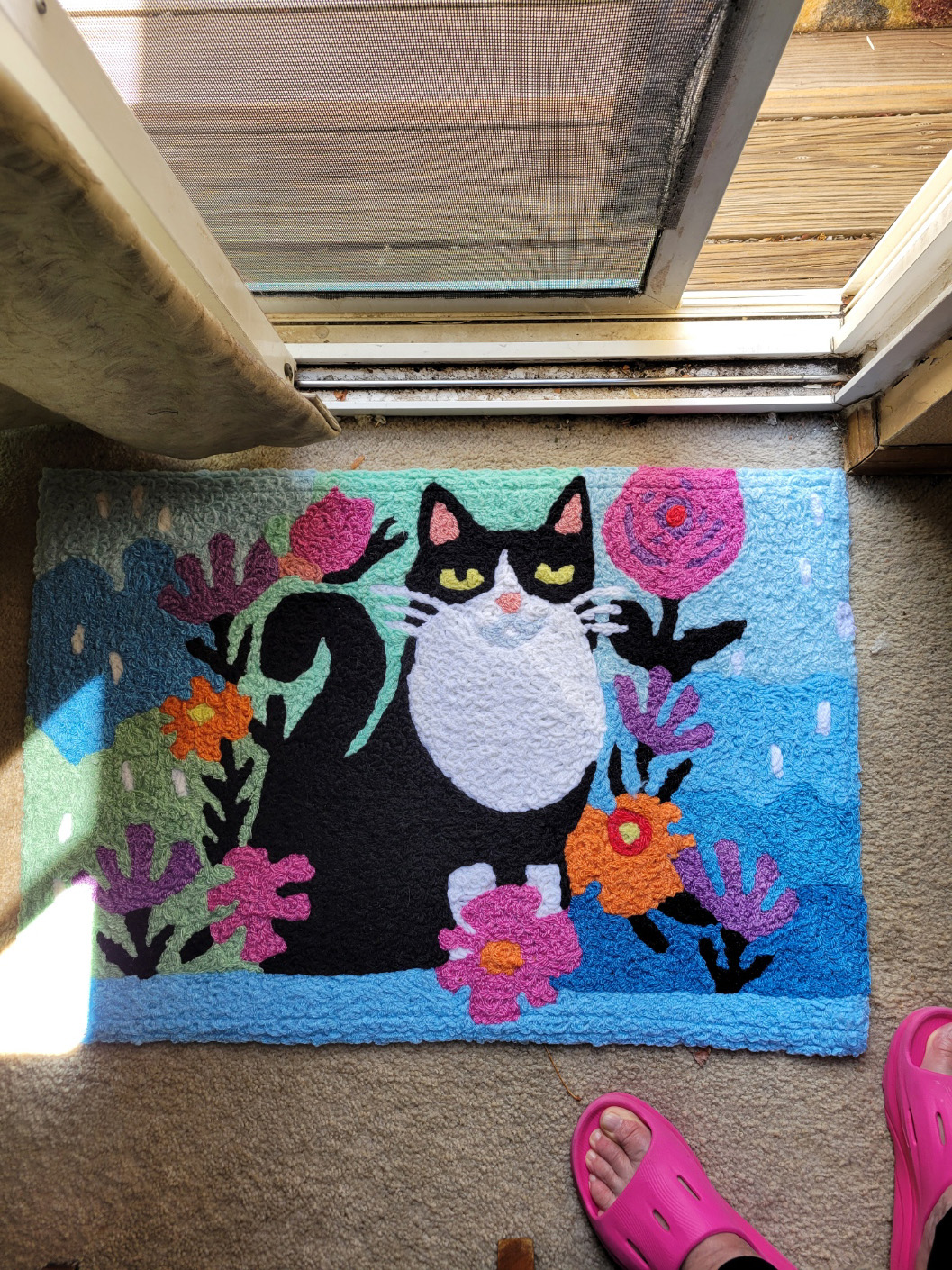
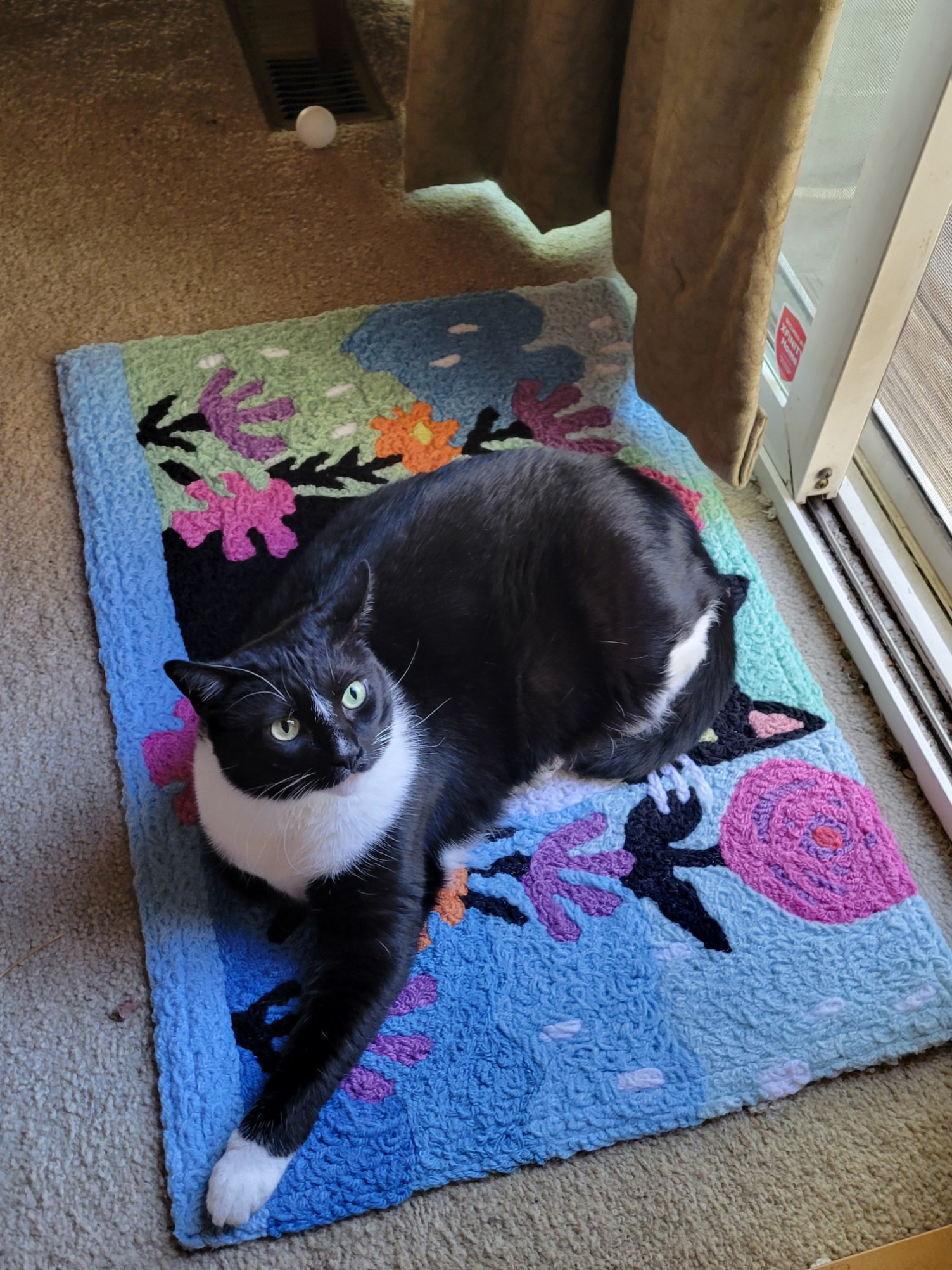
Look at how nice the front pot of flowers is looking! I bought a new rug to put by the door onto the catio, Amazon delivered it today, and Hannah moved right in. Yay! Take that scleroderma!! I win the day!! I am happy!!!!

So, what is resiliency? I’m still stuck on that question. I’m pretty sure that it is a state of mind that allows people to focus on what can be done instead of what has been lost. Resiliency allows people to embrace their changing circumstances and effortlessly employ life hacks to get things done while acknowledging that other things are now too much. It must have to do with an ability to name the monsters, stuff them into a box, and put them on a shelf (in the back of the yarn stash) while activating self-advocacy. It must require faith that you will be able to cope with scary things when they come, while still recognizing that you are in a difficult situation. It must require support and resources. I think it has to be an internalized quality: resiliency gives you the self-confidence and self-worth that’s necessary to face down medical authorities and to ask for demand help and answers.

I look forward to what these researchers find as they continue looking at the phenomenon of the outliers: patients dealing with a severely debilitating and isolating rare disease with grace.

I kind of think that they will discover that these people have engaging interests that allow them to have a sense of accomplishment and purpose. I bet that they find that they have pets and people that they love. I bet that they produce something of beauty in their lives. I am almost certain that they will find that the outliers have found ways to communicate in a positive manner with others about the challenges of life with a progressive, and often fatal disease.

Hannah on the Catio.

Why am I resilient? I have cats. I have yarn. I have curiosity and lots of resources to chase it. I have purpose as I produce donated items for others in difficult situations. I have roses. I have people who love me, and I have people who read my little posts about coping with life on the down slope of systemic sclerosis.

Thank you for being part of my resiliency system.

The Scleroderma Chronicles: Updates from the Sclero Front

It’s spring here in Colorado. The first baby bunny appeared this week, and the plants in the yard are starting to burst out in green buds. The roses are looking like they are going to do really well this year (except for that one that the bunnies ate…) and there was a huge outbreak of my little bulb flowers in the front garden. I have new cushions for my patio swing, and I sit in the sunshine, reading and drinking my morning latte, every warm morning. On chilly mornings I wrap in a favorite shawl and stay out with the cats as long as I can. The first grasshoppers of the year have arrived for the cats to chase, and the air is filled with birdsong. There are even blue jays!! Good days.

The phlox in the front is looking great!

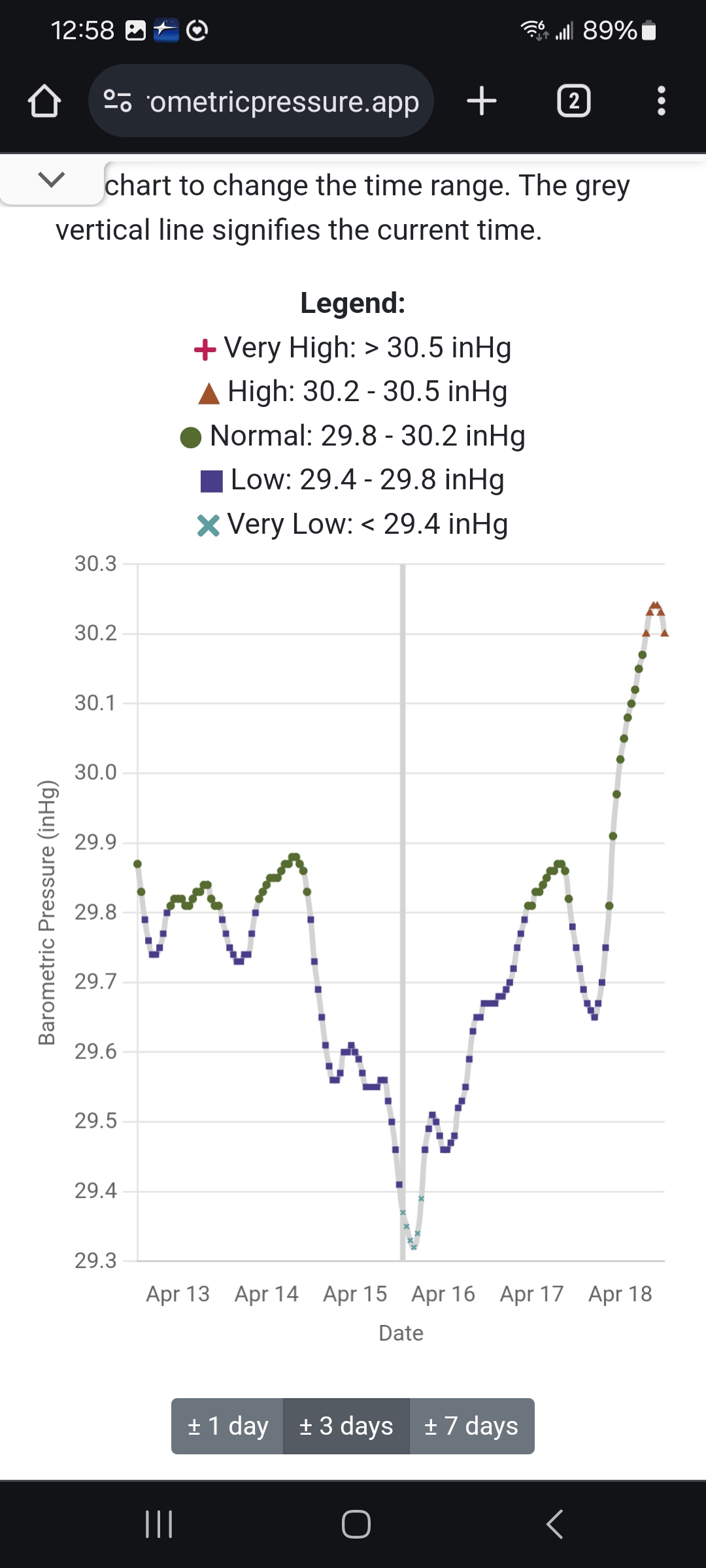
A couple of day have been so warm I couldn’t stay in the sunshine long and I’ve had to deploy the umbrella shade. Then, the next day, there may be snow. This is spring in Colorado: rapid changes and big temperature swings. The same is true for the barometric pressure; look at what happened this week.

My emotional stability has been a little like the air pressure the last couple of weeks as I’ve gone through a round of testing and doctor’s appointments. I was very upbeat when I went in to get my blood draw to check my iron levels, and the bone density scan last month was just routine. I mean, I’ve been feeling soooo much better: more energy, sleeping better, more mentally alert and even my appetite has improved. Suddenly my gut doesn’t hate me, and I am getting out of the house more. I went to my knitting group for the first time in months! I was positive that my test results would reflect the improvement.

Not so much. After weeks of eating iron-rich foods and downing my iron supplement there was absolutely no change in my test results, and in fact, the test that measures the concentration of hemoglobin in individual red blood cells (MCHC) got worse. Seriously? The only gain was one value of 25.5 that went up to 25.6; still too low. After all that red meat, salmon, iron pills, avocado, and spinach all I got was 0.1 improvement? Kind of disheartening as this means that I have to have some invasive testing to see if I’m bleeding in my stomach (it’s a scleroderma thing), and I don’t think my doctor will put it off much longer. (It’s called watermelon stomach) (fabulous) (of course this is rare) (my zebra self is not happy).

Then the bone density scan results arrived. I have somehow developed a fairly serious case of osteoporosis in a short time span; the report says to start immediate treatment. Then I did some googling and found out that the diuretic that I take can cause osteoporosis, and I absolutely shouldn’t have been taking it because I have a strong family history and I’m kind of high risk. (Of course I am) (I stopped the diuretic) (now my feet are swollen) (my zebra self is crying).

I have to be honest. I was kind of crushed by the bad news that I absolutely did not expect. Then I mentally slapped myself around, did my exercises, potted some lavender plants, and went shopping on Amazon for some cheer-me-up jewelry. Just what I needed to pull myself together. One day at a time, right? I already have more than my share of challenges, so I shouldn’t waste any energy on things that haven’t happened yet. Next week I have an appointment with my internist, and we’ll work out a treatment plan for the osteoporosis and next steps for the anemia. (I took another iron supplement) (my inner zebra has pulled itself together again) (the zebra wants to point out that its lips aren’t as blue as they used to be).

I also pulled out the La Prairie sweater and knit steadily through the sadness until the body came off the needles. Gosh. It looks really nice so far. Something has gone right this week…

Today I woke up to a snow/drizzle mixture that was too unwelcoming for even Mateo to go out on the catio. All my joints hurt, and my muscles weren’t sure if they were going to play nice either. Of course, I had to drive across town to get lung testing and a sit-down appointment with my pulmonologist to go over all my results. I put on my cute Weekender Crew sweater, wore my new “in your face, scleroderma!” jewelry, and headed off for the testing. It hurt to breath as I walked into the building. I convinced myself that it was just the cold air; after all, I feel pretty good, and I was overdue for some good news.

The lung testing specialist is now my friend. We laughed and talked and caught up as she got me ready for testing, and then I breezed through all the parts of the pulmonary function testing and the 6-minute walk test. Every single result was cause for celebration as Stephanie (my technician) became more and more excited with the little graphs and data appearing on the computer screen. “This is better!” she kept saying. By the last test she was practically jumping up and down with excitement. “This is great! This is great! she crowed as she walked me to the exam room to see my pulmonologist. “I’ll let him know that you are here.”

I love this pulmonologist. He is the doctor who first listened to me and picked up on the fact that I had a hole in my heart and pulmonary hypertension. He held my hand and told me I could cry when my interstitial lung disease was first diagnosed. He has always been the doctor who was most honest with me; he told me last year after the tide had turned that they hadn’t been sure I would make it a year. He supported me when I halted the anti-fibrotic drug due to quality-of-life concerns. Today he was all smiles as we went over the results and my exam. My lungs have maintained on the scans. I have regained some lung function. The decision to halt the drug was the right one; there is no obvious sign of fibrosis right now. This is the best possible outcome right now; everything that he hoped for. I was the last patient he saw today, and he was pleased to have such a good one. “Best appointment of the day!” he declared as he walked me out. We were both enclosed in a bubble of joyous happiness as we walked.

I took this picture outside the building.

Outside the clinic the parking lot was almost empty. The cold drizzle was steady, the sky was full of sad lumpy grey clouds, and the gloom of early evening was creeping in. Around the building some ornamental trees were just beginning to open their flower buds, but in the shelter of the courtyard on the south side, the sunniest location, one tree was covered in blooms. Kind of a metaphor for the last couple of weeks. Sit in the sunshine and bloom, no matter what is going on in the world around you.

On the drive home, in my mind, my zebra self was dancing for joy.

The Scleroderma Chronicles: The FDA, the Supreme Court and Unintended Consequences.

The United States Food & Drug Administration has really been on my mind this last week. Let me set the background: I have a rare, progressive autoimmune disease that at this date has NOT ONE SINGLE DRUG that can directly treat it. Not one. There are drugs that target symptoms and the complications of my disease, systemic sclerosis, but none that can shut the disease down.

Over the last few days two alerts about new treatment developments for systemic sclerosis hit my newsfeed. One of the drugs, Certa Therapeutics’ FT011, is designed to treat chronic fibrosis and was just granted FDA Fast Track status. After a 12-week trial 60% of the systemic sclerosis patients had clinically significant improvement: I suspect that they are talking about lung function here. This is huge! This is the drug that I have been waiting for ever since I quit the anti-fibrotic drug OFEV last summer due to intolerable side effects. Fast track status means I may get this drug in another year or so. THIS IS HUGE, PEOPLE!!!! HUGE!!!

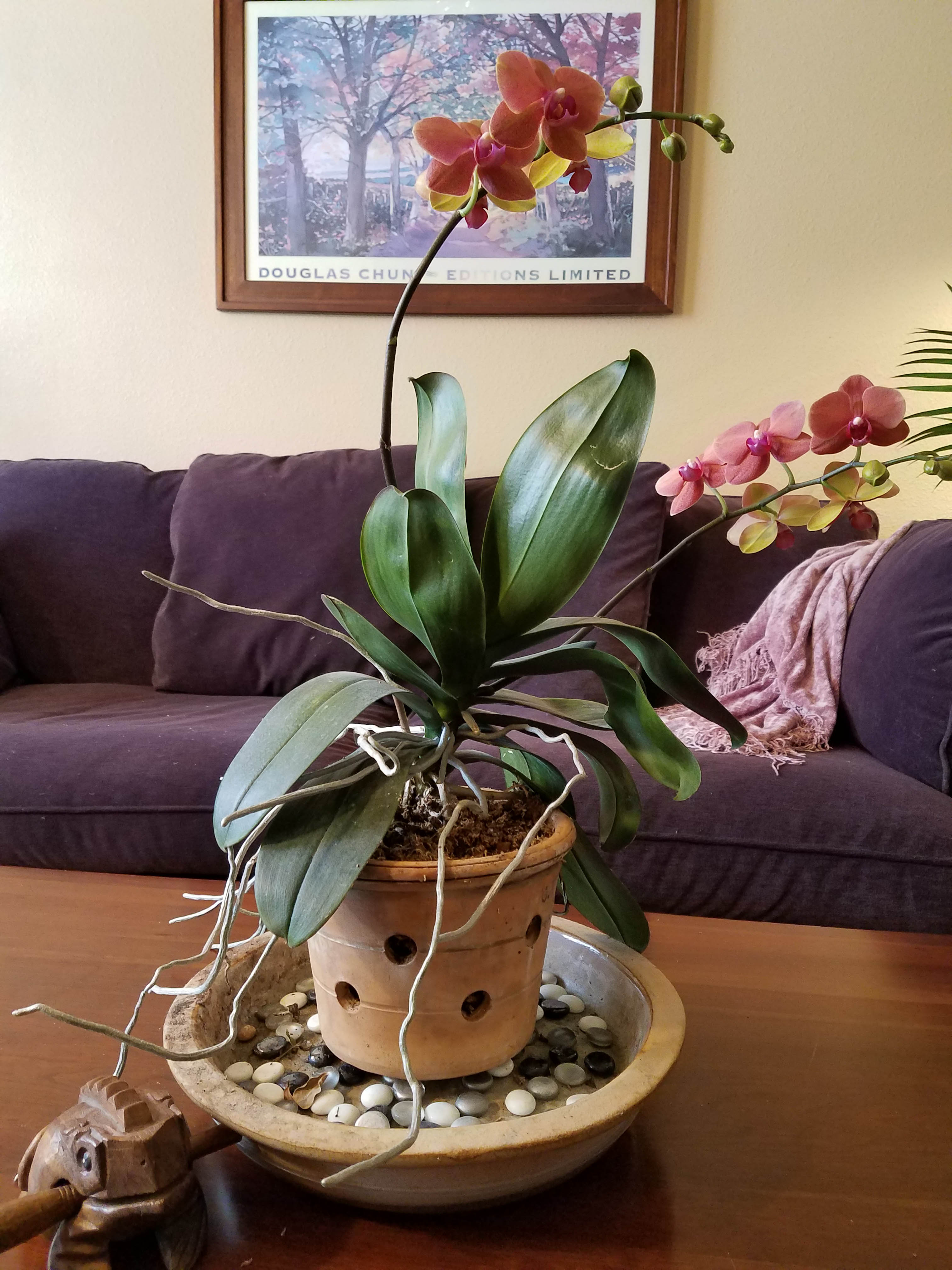
How about a break? Here is my monster orchid 4 years ago today.

Just a couple days after the news about FT011 another news alert, even bigger news, came that Cabaletta Bio’s CABA-201 drug had been granted Orphan Drug status by the FDA. I’m not completely sure, but this seems to be a type of CAR T-cell therapy that would provide an immune system reset: a cure. Did you catch that? A CURE!!!!! The disease that I live with, systemic sclerosis, could be stopped dead in its track if this works. Orphan Drug status provides some financial incentives and helps in bringing the drug to market, but it doesn’t speed up the process like the Fast Track status will for FT011. Still, this is good news arriving all at once. I have a sense that momentum is building as these new, very sophisticated drug treatment strategies come to market based on specific molecular interventions in the patient.

Anyway, none of this going to happen overnight because the FDA approval process is very slow and painstaking. This is the way it needs to be to develop drugs safely. Drugs are first visualized based on knowledge of the regulation and complexities of biological systems. “Oh, that’s a good idea for a drug,” some scientist tells themself, thinking about a regulatory pathway in humans. They follow through on their idea and then see if it works in a specific science-based process that tests the drug in lab, animals and then finally humans to see if it will treat the disease/condition.

Mateo: Hang on, everyone. The Mother of Cats is going to go all science geek now…

For example, one of my drugs is called Letairis. It is designed to treat pulmonary arterial hypertension, and it is an endothelin receptor antagonist. What the heck is that, you ask? As you might, because who in their everyday life would need to know about this stuff, right? Maybe you should skip this part if you are feeling sleepy… You’re still reading? Wow! I’m so impressed and grateful for your trust… Well, anyway, here is the very short version at the Midnight Knitter level of understanding: endothelin is a small protein produced by the cells lining the inside of my blood vessels that causes blood vessels to constrict. The drug that I take, Letairis, is a sneaky molecule that mimics endothelin; it binds to the receptor on the target site and blocks endothelin, keeping it from attaching to the receptor. The drug prevents my blood vessels from constricting and keeps my blood pressure in my lungs low. Yay!

Anyway, some scientist long ago had an idea that maybe blocking the action of endothelin would be a good way to control pulmonary hypertension. This idea was tested in the lab, then on animals, and then if all seemed okay it was tested on a very small group of humans, and then larger groups of humans. Data is collected and analyzed to look for the efficacy of the drug while also identifying all the possible side effects. There is a lot of risk/benefit analysis before the drug is released to market. After that more data is collected to hunt for bad side effects once the drug is being used in this much larger market.

I guess my point is, this is a long, long process with lots of safeguards along the way. The FDA is the agency that provides the scientific guard rails that protect me and every other drug consumer in the US from bad information, harmful drugs, and unscrupulous people who push pseudoscience treatments in order to make a buck. Thank you, FDA, for providing this essential service for me and every other American whether they appreciate it or not. I’m glad that you do this, even if it means I have to wait for my new drug that is slowly working its way through the process to come help me.

Mateo: Now the Mother of Cats is getting political. Watch out everyone!!

Today the United States Supreme Court heard arguments about the abortion drug mifepristone that centered around its approval by the FDA and the decision by that agency to allow it to be delivered by mail. I’m convinced that the issue has been raised solely because this drug is used for abortions, but the arguments brought before the court are suddenly extremely pertinent to me and my own situation.

I’m pretty sure that not one of the justices on the supreme court is qualified to make a judgement about the scientific process used to develop this drug and the analysis that was made about its safety. Just as I wouldn’t allow one of the large pharmaceutical companies to rule on a matter of law, I am alarmed that the courts are now going to second-guess a science-based agency.

I am also extremely concerned about the court deciding whether drugs can be sent to patients through the mail. It has to do with the ancient, mostly forgotten until now, laws on the books about drugs that can be used for abortions or contraception being delivered by mail.

Remember my drug Letairis? I need it to control my life-threatening pulmonary arterial hypertension that was gifted to me by my systemic sclerosis. This drug has a rigorous enrollment process and requires female patients to use two forms of birth control and to take a pregnancy test every month before they can get the next 30-day supply. Each month this drug is delivered to me by overnight express from a pharmacy in another state. This drug can harm an unborn child and may create the need for an abortion. Suddenly the arguments that were made today before the US Supreme Court threaten me and my access to medical care.

I sure hope that Certa’s FT011’s progress on the Fast Track isn’t affected by all of this. An upended FDA approval process could be disastrous for me and a lot of other people waiting for a new drug to arrive to save their butt.

Unintended consequences are a bitch.

Update 3/27/2024: While I was writing this post yesterday, the FDA approved a new drug for pulmonary arterial hypertension (WHO Group 1). The relief and celebration in the online support communities this morning was pretty amazing. This is good news for me, too, as my PAH is in Group 1. Yay science!!

These are a few of my favorite things…

Hannah is taking the week off, but she would like to remind everyone that they should have a good Caturday. Go outside and listen to the birds! Roll around and coat your fur with some nice dust to take the oil off. Look for a bunny. Demand tuna!! Run wild through the house, chase your brother, and sleep in a sunbeam.

What? I’m busy out here on the catio…

I’m still struggling with fatigue, and even though I’ve been trying to eat iron-rich foods, my doctor has decided that I need supplementation. Ugh. I’ve discovered that iron supplements are pretty much evil. Seriously evil! Like, the awful goes on for at least three days after each supplement, but I am starting to feel better. I sleep better. I have more energy. My GI symptoms are starting to calm down. I’m more mentally alert and have an urge to write. Huh. Anemia. There is another post in here somewhere, but not today. Today is about my happy place, the crafting room.

For some reason that I don’t understand, Hannah has decided that I need to spend all my waking hours in the crafting room. She trills and carries on (like, she scratches the woodwork around the doors to make me come running…) until I come back to the room. She is okay if I’m up and moving about, but if I try to read in bed, she intervenes and makes me get up. Okay. Transferring my reading to the craft room… huh… there is lots of sunlight in this room. I have a little loveseat along with the indoor garden, my loom, and a television, so this is actually a good place to hang out while I’m iron-loading. Did I mention that there is a walk-in closet attached to this room with all things crafting inside? Maybe Hannah knows what she’s doing. Over the last week I’ve been gardening and moving things around, and I realized that I really have made a happy place for myself in this room.

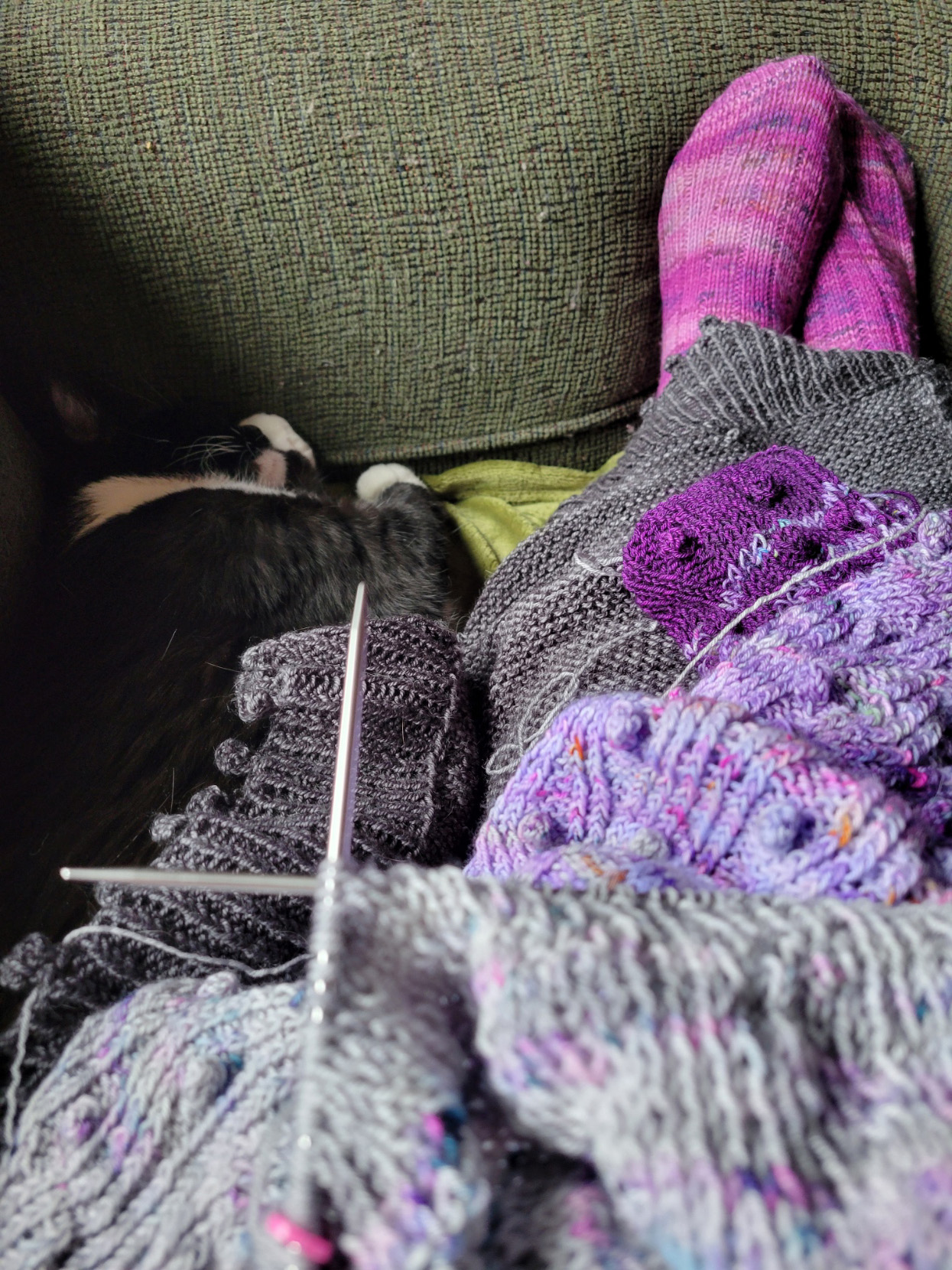
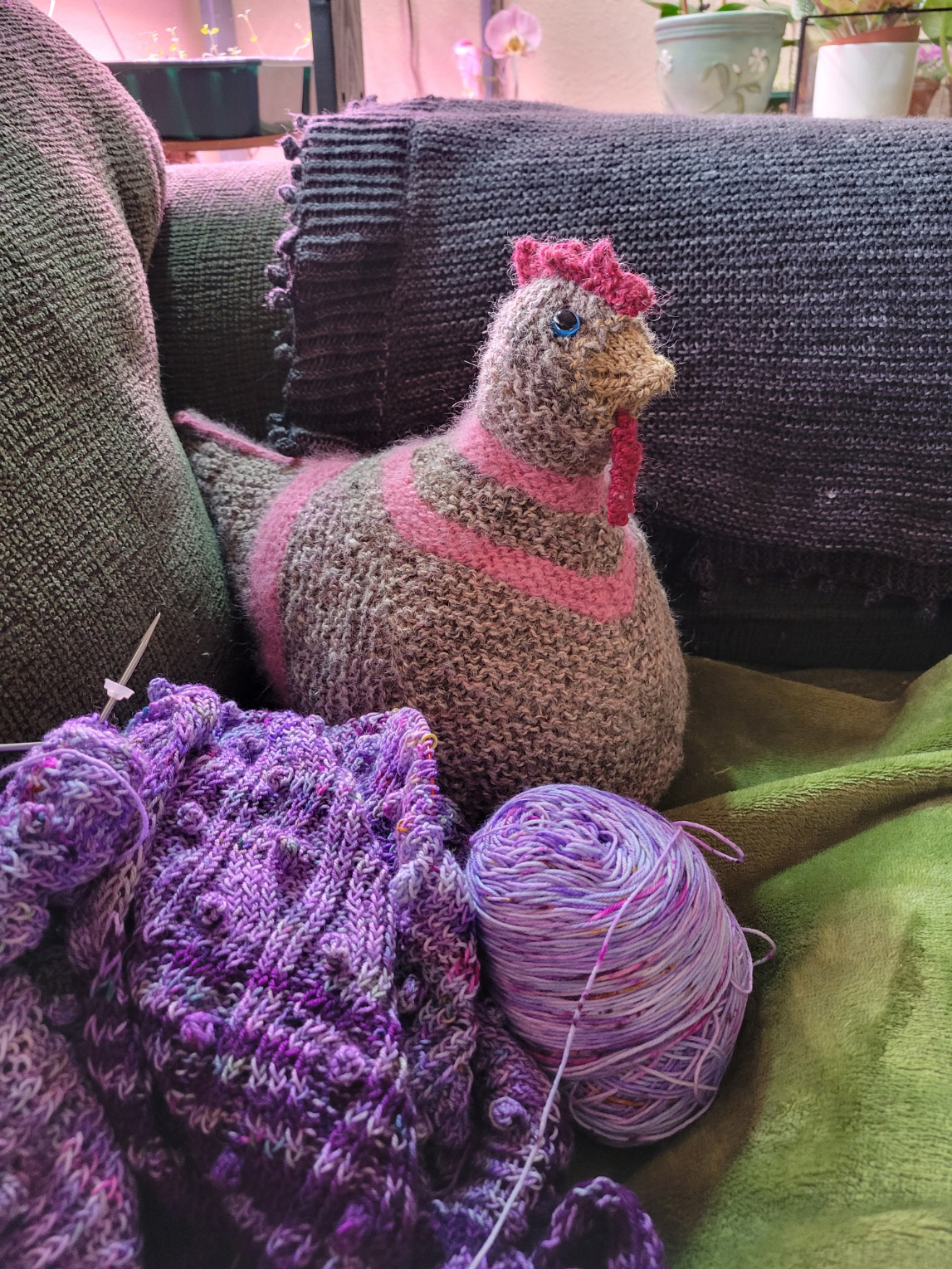
Here’s my loveseat with my emotional support chicken, my knitting, and one of my favorite shawls.

Did you want the links for those knitted objects? Just in case you do, here they are. The sweater is La Prairie by Joji Locatelli. The shawl is another Joji creation called Julie’s Wrap, and here is the link for the Emotional Support Chicken.

Do you see all the popcorns on the edging of Julie’s Wrap? It took FOREVER to make all of those, and you would think that I’d learned my lesson, but noooo…. I went ahead and made those popcorn stitches on the La Prairie. Do I regret this choice each time I come to that row on the chart with the popcorns? Why yes, yes I do. And yet…

Look at how cute they are in this cardigan!!!!

If you commit to knitting this sweater, and it is a serious commitment, you might as well commit to the popcorn. I’m really pleased with how this is looking. I’m into the third color of yarn and can’t wait to get to the fourth one. This is going to be a fun light cardigan later on this year.

Back to the happy things. They have pretty much piled up on the table in the room that usually has my fabric cutting station on it. This is what has moved onto it over the last week or two.

That teddy bear is the one that my son gave me in the ICU after my lung biopsy. He’s wearing a hat that I’ve knit for Frayed Knots donation, and the little zebras are ones that my niece sent to me as happy surprises. The Amazon Echo on the table reads my audible books to me while I knit. Happy. This is happy stuff.
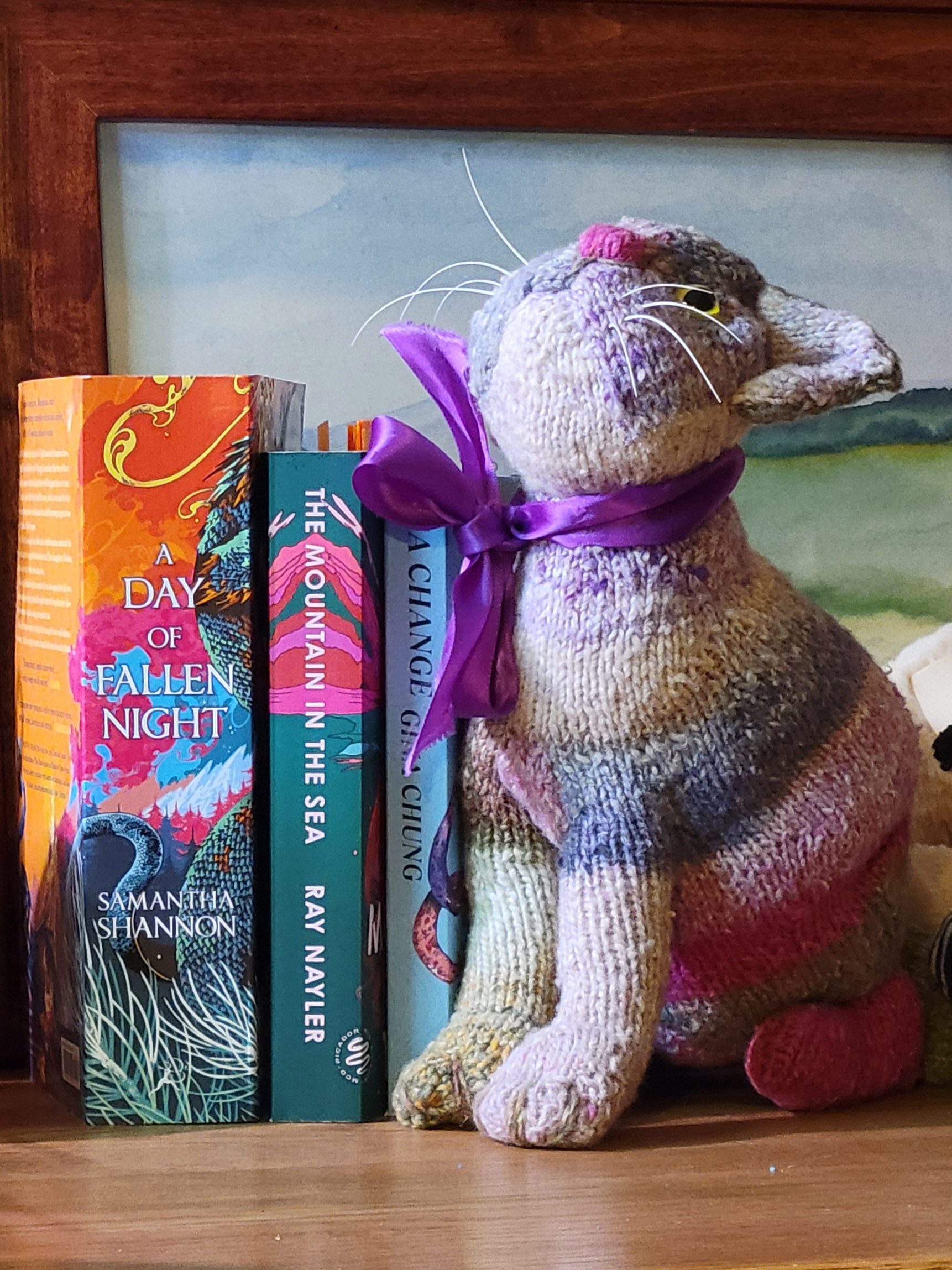
Did you notice the green cat tail in the last photo? Here is the knitted cat, in fun spring colors. He’s propping up my current dragon/octopus books and doing a great job at it, too. Those books make me happy! The watercolor painting in the background is one I bought with a girlfriend at an art sale one perfect fall day in Golden, Colorado. My friend died two years ago, but the memory of her and that perfect day lives on in the painting.
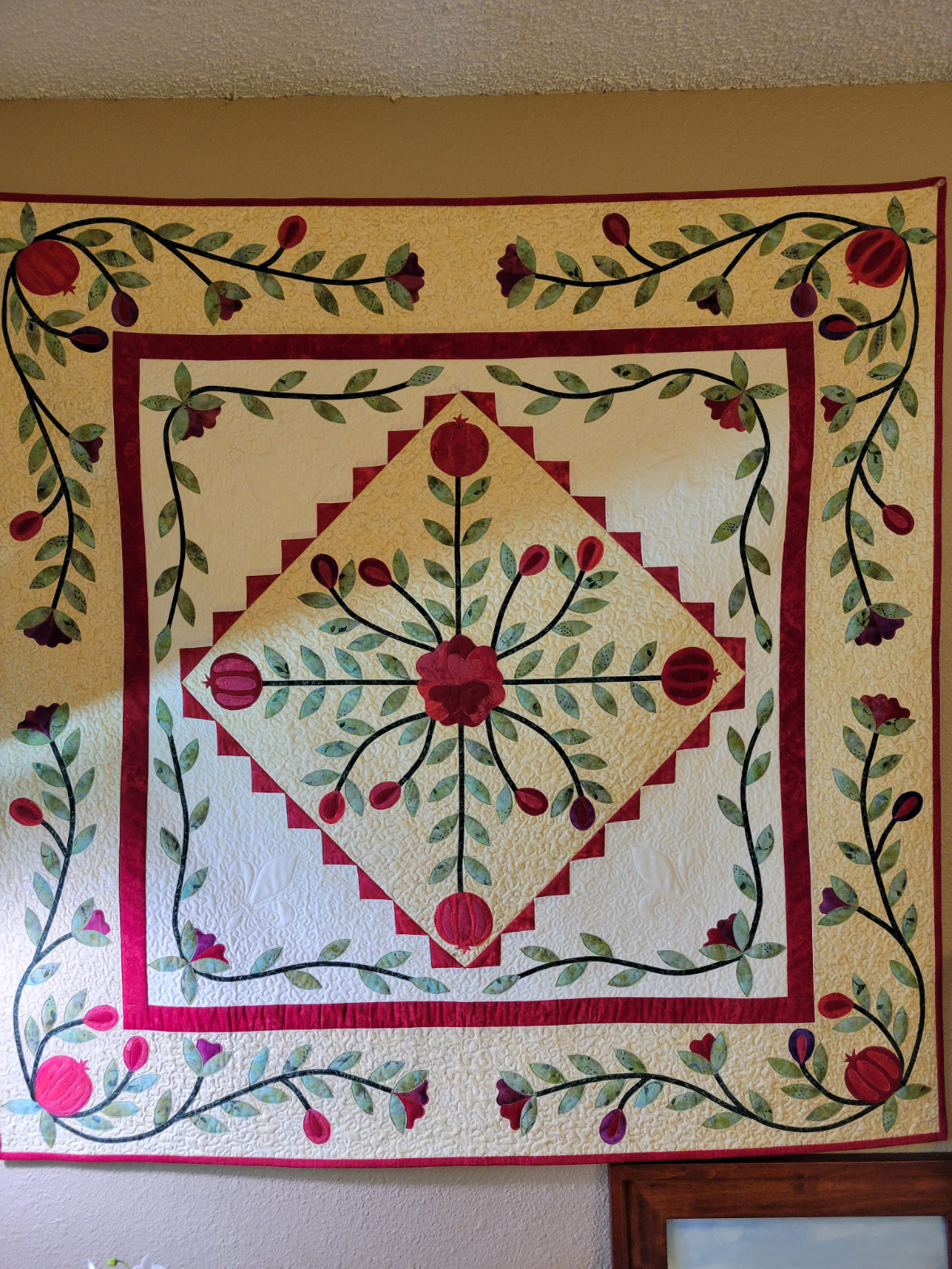
Some of the plants from the indoor garden have overflowed onto this table. (Actually, that’s what set off the rearrangement of happy stuff.) This white orchid is a rebloom on a plant from last year (yay!), and in front of it is one of the new little fig trees. To the right, in a little terrarium that MAKES ME HAPPY is an African violet that is blooming its heart out. Above them you can see a bit of the quilt that my cousin made and sold to me a few years ago. Hey, doesn’t this make you happy too?

If you are interested in knitting your own cat, the pattern is Grey Kitten, Calico Cat by Claire Garland. I think that some more things will be joining this assembly on the table. I have some little statues that were put away because… Hannah… that I can now take out and arrange with the flowers. I have some special skeins of yarn that might be fun to display. Maybe I should focus on weaving a little wall hanging on the loom.

Tomorrow it will snow again, but I will be safely indoors with Hannah in the craft room, embracing the popcorn stitch, and enjoying all the little happy things that have been collected in here that are emblematic of friends, family, favorite knits, and happy memories.

There is a little take-home lesson here somewhere. If you are struggling with extreme fatigue, shortness of breath, and everything hurts, just go with it. Make yourself a happy place. Make something beautiful. Hang out with your cat. Embrace the popcorn stitch. Read in the sunshine.

Don’t forget to take your iron supplement, though, no matter how nasty it is!

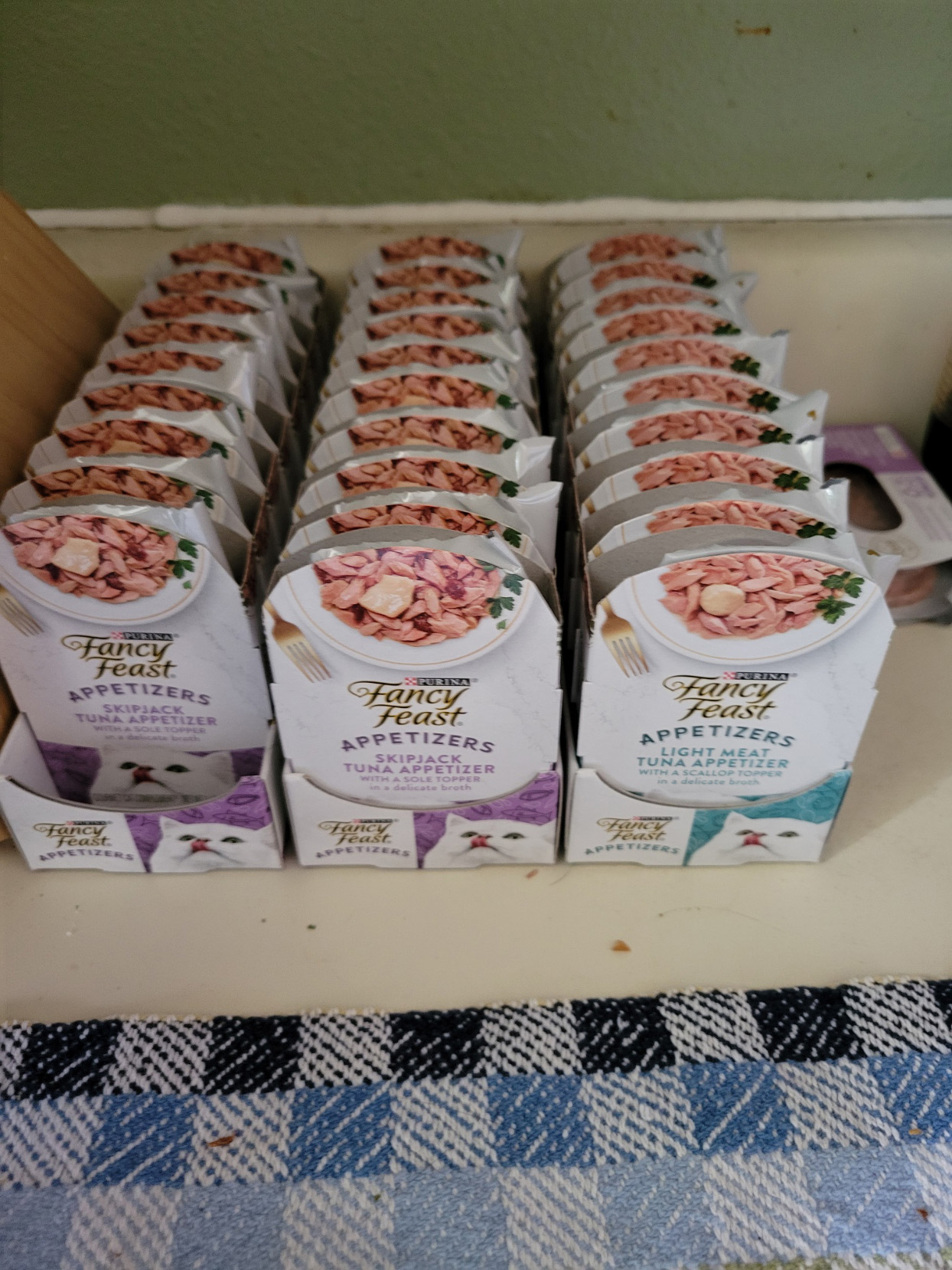
Hannah wants me to mention that the Chewy tuna fairy visited us yesterday.

p.s. MR, how could I have forgotten to post the picture of the whole quilt? Here it is, a ribbon winner by my wonderful cousin Ruth Ann. Ya’ll, MR is at Downunder with Boodz and sets me straight whenever I wander from the straight and narrow…

The Scleroderma Chronicles: Rare Disease Day 2024

Rare Disease Day is tomorrow, but since I’m going in for a lung scan on the 29th, I thought I would post this now.

Well, here it is again. Rare Disease Day. This is my 9th year posting about rare diseases: on August 28, 2014, I was diagnosed with a form of scleroderma called limited systemic sclerosis. This condition, autoimmune in nature, is progressive as multiple organs, blood vessels, and the skin of the patient (that would be me) stiffen and harden due to scarring (fibrosis). It is also considered rare, since fewer than 200,000 people in the US are currently diagnosed with it.

So, what’s up with the zebra? Well… in the medical community doctors and other health professionals are trained to focus on the most common cause for the symptoms that they are seeing in their patient. The saying goes: when you hear hoofbeats, think of horses, not zebras. Certainly, that makes a lot of sense in terms of patient care and cost control. It works most of the time.

Unless, of course, you are a zebra.

Life is challenging if you are a zebra in a herd of horses. Doctors screen for the most likely cause of reported symptoms, and then when those tests are negative, you usually get told that you are fine, and then you are pawned off with some pablum like… do these exercises… try to reduce stress…would you like anti-depressants?… Seriously, it is pretty crushing as you start to wonder if you are just an attention-seeking hypochondriac since for the most part you look great. In my case, I didn’t even appear to be aging…

This can go on for years. And years. Autoimmune conditions like mine tend to send patients with vague complaints (I hurt all over…) to the doctor’s office looking for help. Some of the symptoms can be so subtle that you just don’t think to mention them to the doctor because you already feel pretty defensive about complaining after a few borderline disparaging interactions in the past. Why mention that you have trouble swallowing sometimes? Or that your arm is starting to look like Flipper the dolphin in appearance and texture? Some new red freckles have shown up on your face, but why mention them when you really want to get to the bottom of why you hurt all over and what is up with this fatigue????? Sure, there were those carpal tunnel surgeries 10 years ago, and the hospitalization for gastritis last year, but why would you mention them… When I was finally diagnosed, I discovered that I was absolutely classic and presented with all five of the CREST features of limited systemic sclerosis. Oh, one more thing: lack of wrinkles is a red flag for scleroderma…

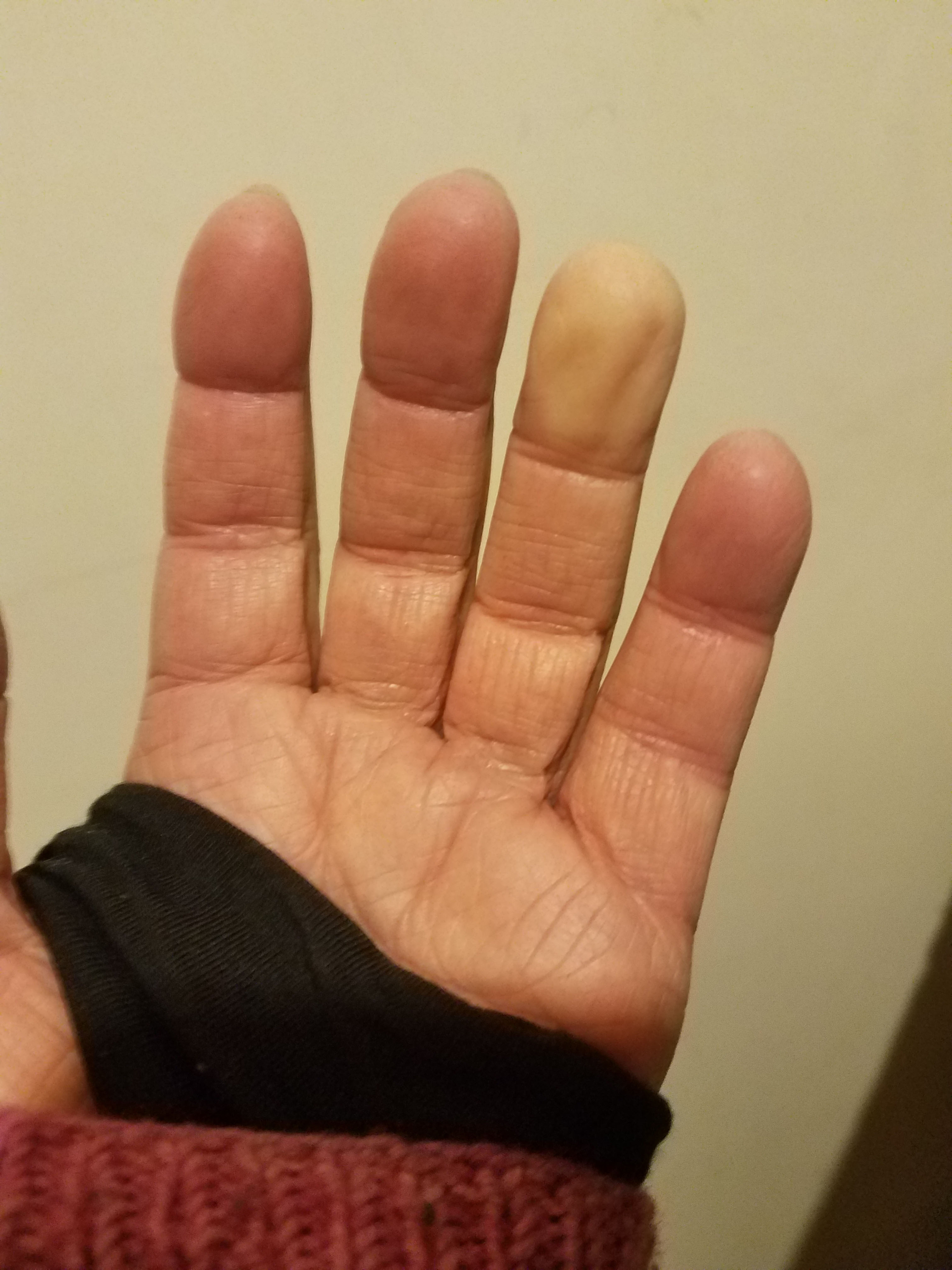
You can see two of the CREST characteristics here. I’ve lost circulation in my ring finger as a result of Raynaud’s, and the thick (sausage-like) fingers that are trying to contract are examples of sclerodactyly. The other distinguishing symptoms are trouble swallowing, lumps of calcium deposits on some of my bones, and those pesky red freckles that are now appearing everywhere. It was official: I was a zebra. There are a lot of us.

Rare diseases are also known as orphan diseases. They are poorly supported and most of the time there is no treatment. After failing a chemotherapy drug, I was moved to an off-label treatment using an immunosuppressant drug developed for kidney transplant patients. It was hard to get the drug as it was declined by my insurance, then the appeal failed, my doctor filed another appeal, and I went to see the pharmacist with a pathology report showing extreme gastritis. It was a fight, but I got the drug. This drug, Myfortic (mycophenolic acid), has proven to be so effective in slowing disease progression that it is now approved for systemic sclerosis and is a drug of choice along with its close relative CellCept. It has been doing a pretty good job at slowing things down; at the time of my diagnosis the 10-year survival rate was about 50%. Now that there are some better treatment options the survival numbers have improved: 10-year survival is up to 70%.

Two years ago, I developed two of the more serious complications of systemic sclerosis (SSc): pulmonary hypertension and interstitial lung disease: two more rare diseases. Not good news at all; my pulmonologist told me it would be okay to cry as he showed me my lung scans and gave me the bad news. Remember that little word “progressive” that I used to describe SSc? This is disease progression; the inflammation and formation of scar tissue (fibrosis) had hit my lungs and heart, and my have doctors responded with big time drugs. Yes. Big time and pretty expensive drugs. Over the last few years, literally in the time since I was first diagnosed, drugs have appeared that can greatly improve treatment and life expectancy in patients like me, and there are more drugs in the pipeline.

The first drug that can be used to directly treat SSc just moved from orphan drug status to the fast track. This is serious, serious good news. I looked into entering a clinical trial for this drug, but my doctors thought that I wasn’t a good candidate because I have too many complications right now. Seriously, I have been slotted into a diagnosis called SSc-ILD with PH which means that I am a SSc patient with interstitial lung disease and pulmonary hypertension. Good grief, I’m now a walking bundle of acronyms. That’s okay. I can hang on, help is on the way!! FT011, I am waiting for you!!!

So, what is up with all the colored stripes?

Serious medical conditions usually have an awareness ribbon color. It is a little cheesy, but if you are dealing with scary stuff, why not have some fun? Be a zebra, color your stripes in your awareness colors, and get yourself some fun t-shirts while you are at it. Eat Zebra Food (that would be black and white striped caramel popcorn to you non-zebras), get colored medical bracelets, and collect the stuffed animals. Zebras, of course!! My zebra has teal stripes (scleroderma), periwinkle stripes (PH) and purple for the ILD. Lung disease in general is green and blue. I also get purple for my Sjogren’s and fibromyalgia, and don’t forget the red for my heart failure. I’m a rainbow zebra!! Yay!

Okay, time to get serious. What is Rare Disease Day about? Raising awareness in the public about the challenges of living with a rare disease. There are a lot of people who have rare diseases, so by sharing our faces and voices the hope is that it will help make us more visible. We hope that a more educated public will aid in the diagnosis of others with rare conditions. (See above; diagnosis can take years. It would be wonderful if that could be sped up a little…) We hope it will help with funding for drugs, treatments, and maybe even cures. We hope that for those with invisible conditions, they will become more visible and supported. We hope.

MacKenzie and me from 2018.

To learn more about my rare conditions and others you can go to:

To everyone who battles on against scleroderma or any other serious medical condition, rare or not, I see you. Hugs! Shine on, my friends, shine on!

The Scleroderma Chronicles: Carrying Light

You know, I think that synchronicity is a real thing; you just have to pay attention to what is going on around you. Sometimes, if you take notice, the world hands you just what you need at that moment.

Scleroderma has been kicking my butt lately. Having improved dramatically over the summer and sailing through my heart/lung testing last fall, my doctors were pretty upbeat when I reported worsening symptoms while visiting them in late winter. They ordered some testing, but they were also very reassuring.

A week ago I arrived at a Kaiser facility bright and early for a routine echocardiogram and 6-minute walk test. The echocardiogram did not go well (usually they don’t hurt, and what was up with having to pause so I could pant a little to catch my breath…) and I was in the red zone (the pulse oximeter starts glowing red if your oxygen drops below 90%) after a minute of walking. The test was halted after 3 minutes, and the concerned nurse walked me out to the elevator.

Ugh. Not good, little BLZ, not good. Refusing to overreact, I went to my favorite yarn store on my way home, bought some great yarn, and then hit Starbucks by my house. It was a bright, blue day and I headed out to the deck to knit.

I took this picture of Hannah. Look at that bright, blue sky!

Do you know the quote by Elizabeth Zimmerman that goes “Knit on, with confidence and hope, through all crises.”? Yep. That is a quote to live by! I cast on a new hexagon for my blanket and started knitting. I felt myself settle inside, my breathing steadied, I began to process what had happened, and my anxiety faded away. Scleroderma is a monster, and by the time I was casting off the hexagon, I was ready to once again face it down.

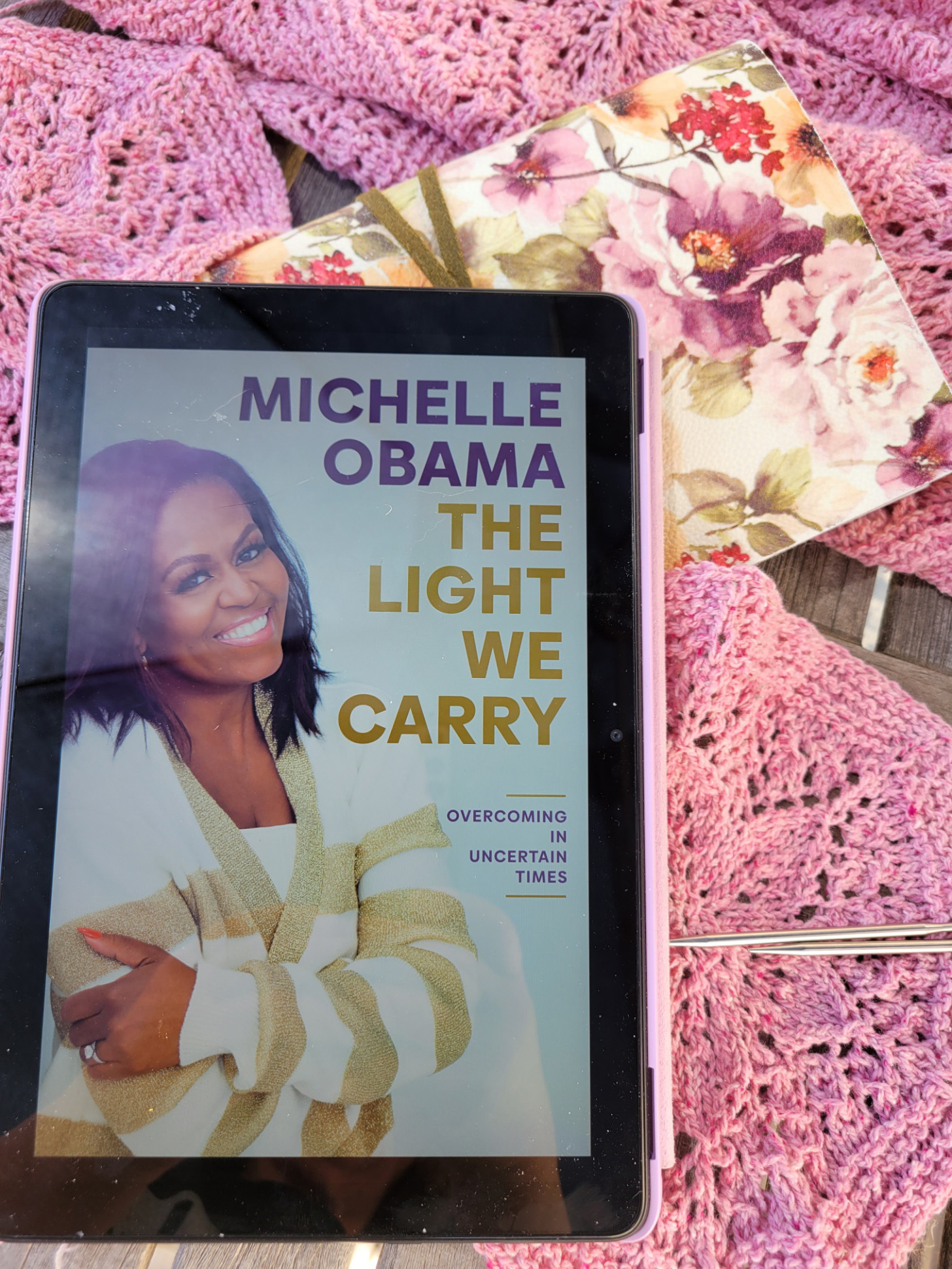
This post had appeared in my knitting group on Facebook from Michelle Obama a few days before:

Well, look at that: Michelle Obama is a knitter! Yay! It looks like she also knows about the Zen of knitting and the ability it has to bring calm and purpose to a simple activity while you reflect upon and process problems large and small. I knitted every night to finish my teaching days. I knit in hospitals. I knit in meetings. I knit just about everywhere I can, and I especially knit to deal with the rolling shitshow that is my chronic illness. I went and bought Michelle’s book.

Thursday morning the results from the echocardiogram were posted and a couple of hours later my cardiologist called me. I was knitting and ready for the call.

For the first time the words stage 3 heart failure were used in the discussion with my doctor. My pulmonary pressure is higher than ever before and there is more fluid around my heart. It is not clear if my symptoms are caused by worsening pulmonary hypertension or pericarditis, but the only way to sort this out is to go back into the cath lab and directly measure the pressures with a right heart catherization. It may be both. I will need a different treatment regimen. An emergency referral was put in and tomorrow I’m heading back to the hospital for the procedure. This is what happened the last time I did this.

My pulmonologist, who works closely with my cardiologist and rheumatologist, saw me on Friday for a lung function test and office visit. My lungs are hanging in there, but my ability to diffuse oxygen into my bloodstream has dropped significantly. I told him about the upcoming trip to the cath lab, and he started checking those test results. I’m not going to lie, it is a little alarming when your doctor says, “No, no, this is not good. I am not happy with this at all.” More testing has been ordered. He emailed the other doctors on the team to start the discussion about what changes should be made with my meds.

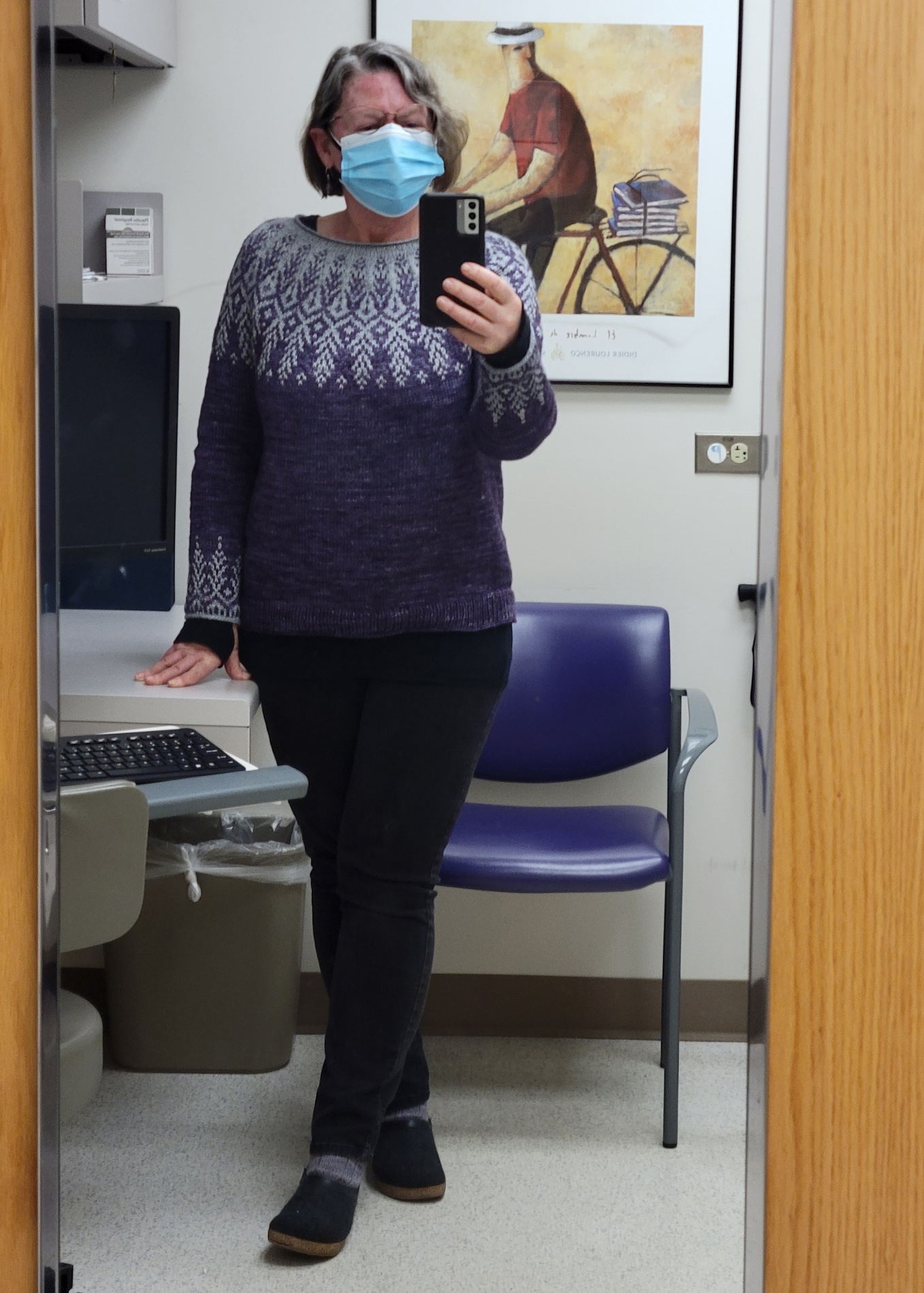
I took this picture of my new Goldwing sweater in his office the day that I met him. If you are going to scary appointments, armor yourself in your favorite knits!

This weekend I started reading The Light We Carry and was amazed that it starts with… knitting. Serendipity strikes!! Michelle Obama began knitting at the start of the pandemic as she struggled with the lockdown: grief, isolation, loss, and everything else that happened in that time. It became an important vehicle for processing, recovery, and perspective for her. The daughter of a father with MS, she is very aware of disability and how it absolutely impacts how someone like me can view myself and the rest of the world. She talked about using tools such as the cane that her father needed to empower ourselves to deal with what comes our way. Her book appears to be a toolbox of different strategies to cope with the challenges in life.

For the first time since all this started happening last week, I cried. This book is absolutely, positively, what I needed to read right now as I pack my bag for the hospital and prepare for what is coming my way in the upcoming days and weeks. It’s like someone could see right into my heart and lit a light for me. I will carry that light along with its warmth and glow tomorrow as I join my doctor and the pit crew in the cath lab. Whatever happens, I am positive, I will glow, and my light will shine.

So, Michelle, whatever can I show off as a favorite knit? Every single item that I cast off my needles has left me with a sense of purpose, accomplishment, and fed my creative needs. Knitting helps me cope with adversity, plan my day, and work through problems. Knitting delivers calm in a time of crisis. Knitting allows me to deal with an unpredictable autoimmune disease that delivers an uncertain future. Knitting connects me to all the knitters in the past and provides gifts for others as I pay forward. It is essential for my being and a vehicle to connect with others.

Here are some things I’m really pleased with: Goldenfern, a knitted copy of a beloved (and lost) cat, baby booties gifted to a neighbor knitted from a pattern handed down through 4 generations of my family, the hats and PICC line covers that are donated to Kaiser infusion centers in my area, and Mando (and Grogu) mitts for a knitworthy niece.

Tomorrow I’m wearing arm warmers and knitted socks into the cath lab. Take that, scleroderma.

Behold, I carry my (knitted) light with me!
Did you wonder what a BLZ is? That’s me, the Blue-Lipped Zebra!

The Scleroderma Chronicles: Unforeseen Circumstances and Unintended Consequences

I guess almost everyone in the world knows by now that the United States Supreme Court issued a ruling last month (June 24th) that overturned the constitutional right for a woman in the United States to seek an abortion at any time during the first two trimesters of pregnancy.

This post isn’t really about abortions, okay. This is about the unbelievable unintended consequences of that decision for women who are dealing with unforeseen circumstances. Women who are dealing with medical conditions that they never saw coming, and that they absolutely did not bring upon themselves.

Like autoimmune disease. Like cancer. Like any one of a number of medical conditions that require serious, high-risk medical interventions by the medical professionals who are treating that woman.

My first inkling that there might be a problem with the Supreme Court ruling that was much larger than what was being reported in the press happened the evening of June 29. A woman in one of my autoimmune online support groups posted that she saw a message from a doctor who had a patient reporting that she couldn’t get her methotrexate prescription renewed. I literally couldn’t sleep that night I was so upset. In the days that followed there were more reports, and this is really happening to some women. They are being denied refilling of their methotrexate prescriptions. This drug is a common one used to treat autoimmune diseases like rheumatoid arthritis, lupus, and scleroderma. It is a chemo drug, it can harm an unborn child, and it can also be used to induce an abortion. Here is an article on Health.com, another at msn Everyday Health, and this one from Time.com.

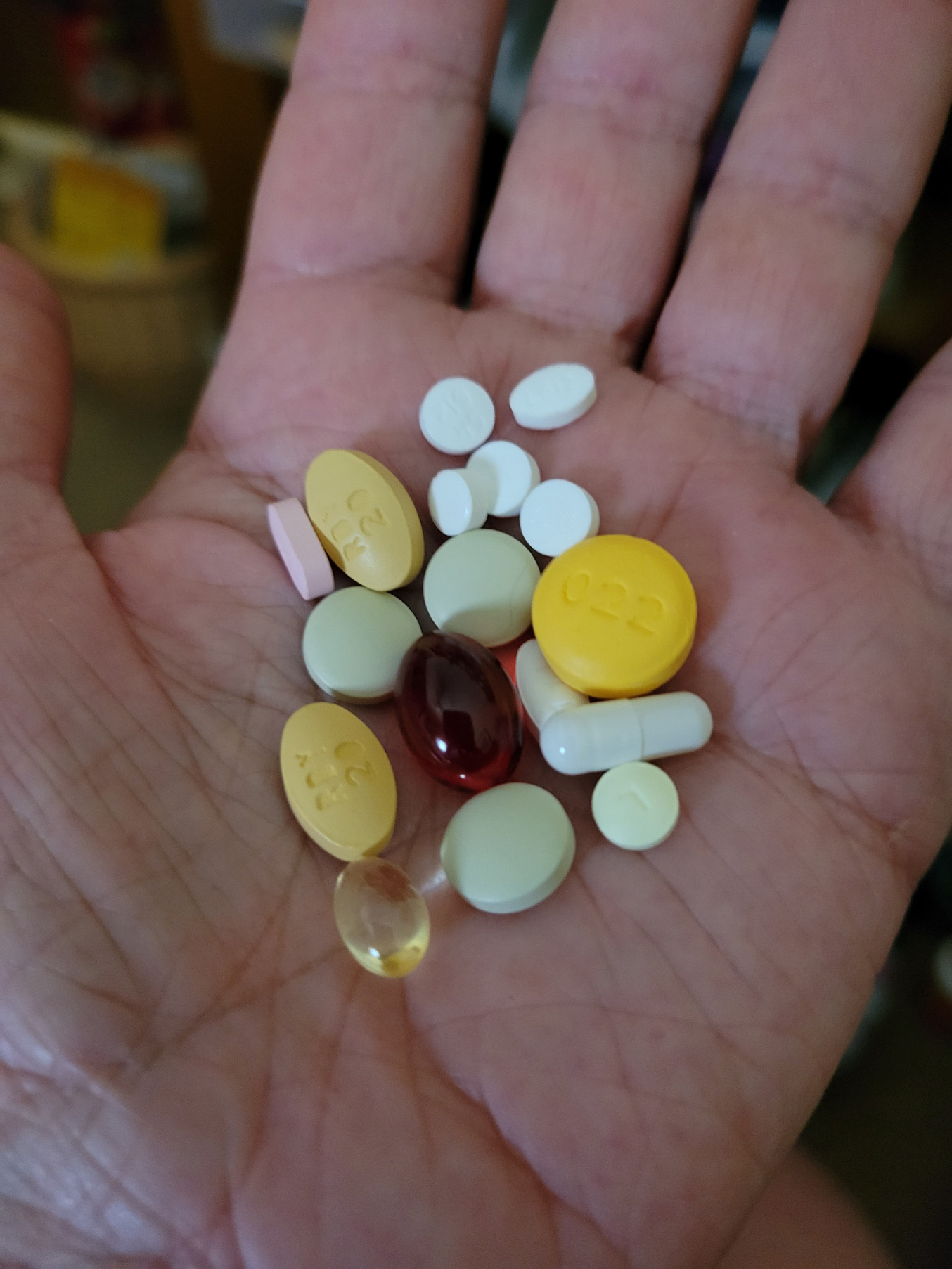
My morning pills.

There are some serious drugs there in my hand. The green pills, Myfortic, can harm an unborn child by causing birth defects or a miscarriage. I take 6 of those every day. The white capsule, omeprazole, should only be used “only if the benefit outweighs the risk to the fetus”. I have to take two of those each day. That little pink pill towards the upper left is the really big problem in my hand. That drug, ambrisentan, required a rigorous enrollment process with paperwork from my cardiologist and myself along with two interviews by pharmacists. I had to prove that I could not get pregnant to avoid taking a pregnancy test prior to each month’s supply of the drug being shipped to me. Even with all of that, I am screened each month before the next month’s supply is overnight express shipped to me. This drug poses a serious risk to a fetus. In my support groups for pulmonary hypertension there are women who are reporting that they are getting dropped from the programs that allow them to get the drug.

I’m okay because I’m beyond childbearing age. Many other women who are dealing with autoimmune diseases that require drugs such as these are of childbearing age. Why? Because the people in the population who are at the greatest risk of developing an autoimmune disease are women of childbearing age, that’s why. Because of the recent decision about access to abortion these women are also now at possible risk of being denied treatment for their autoimmune disease, or in the worse-case scenario, access to an abortion in consultation with their medical professionals.

I literally couldn’t sleep when I read the first reports of the problems with access to methotrexate in my online forums. This is absolutely unbelievable. This is unbearable. How could this be happening to a population of desperate woman, through no fault of their own, who are in this horrible situation? Right now, methotrexate is being targeted, but there are all these other drugs that are used for so many patients with so many conditions. Women, absolutely, are at risk of receiving inferior health care in the US.

This is awful. Have a rose. Right now, I need a rose. And a hug.

This is hitting me hard this evening because I have been dealing with autoimmune pneumonia since last December. My doctors are trying to get it under control with high dose immunosuppressants, but I am coming off one of them right now and I am struggling with shortness of breath and chest pain once again. I’m back on daytime oxygen and I’m feeling a little low. The lung biopsy was the first engagement with my interstitial lung disease, this current drug strategy the second battle, and the third battle is looming on the horizon. This isn’t a disease; it is a war. I never asked for this, and yet, here I am trapped in this unforeseen circumstance, engaged with an uncurable foe. Without the drugs in my hand above, I would already be gone. Yay, science!!

I think that there is another CT scan in my near future, and then there is a possibility that my doctors will move to the Plan B (see what I did there) that they have already discussed with me. Cyclophosphamide (a chemo drug) and OFEV (an anti-fibrotic drug) are on deck if my doctors decide to escalate my care. Both of these drugs can harm an unborn child. I will get access to these drugs. If I was in my 30s, as many other members of my support groups are, it might be a different story. What about women in other support groups that I don’t belong to who just got diagnosed with cancer or an equally serious disease who also need medical treatment with high-risk drugs such as these? Women of childbearing age. Women who may already have children who they need to think of and care for in their health care journey.

Being diagnosed with an autoimmune disease like the ones that I have (systemic sclerosis and Sjogren’s disease) is a punch to the gut. Being denied access to treatment because of your childbearing status is an unbearable second blow. Becoming pregnant while on one of these drugs would place a woman in an impossible situation. Nothing, NOTHING, about this situation is good. Where is the privacy for these women? Where are the HIPPA protections that they are entitled to? The decisions that these women face are absolutely heartbreaking, morally complicated, and ethically challenging. They deserve privacy as they make them along with their health care providers, religious advisors, and families.

This post isn’t about abortion, not really. This post is about unforeseen circumstances and unintended consequences.

I feel a lot better for having gotten this out.

Peace be with you all.

Take this rose with you as you go.

But if you decide to share this post, write a congressperson, join a march, or take some other action to ensure that women have equal access to health care, that would be great.