The Scleroderma Chronicles: The 39% Imposter Syndrome

It was the third day in the Intensive Care Unit following my lung biopsy. I was sitting up in the bed, rocking all of my tubes but finally off the high flow machine, drinking a Starbucks latte and chatting with a visitor. The nurse came in the door and stopped short, taking in the scene of me, the Starbucks, and my visitor. “I don’t believe it!” she exclaimed. “They just told me all the things that are wrong with you, and I walked in here expecting to see a gravely ill person. Instead… here you are! Not what I expected!”

There I am, day three post-surgery after ditching the high flow machine for a regular oxygen line.

“Yeah, I get that all the time,” I told her. It’s the curse of chronic illnesses… you adjust and stop acting sick. Your condition is invisible, and it is too exhausting to explain to people what’s wrong when the list of diagnosed conditions is… well… exhausting. Seriously, if you say more than a couple of things it starts to sound like you’re just making things up. It doesn’t help when the diagnoses sound fake to begin with (systemic sclerosis associated interstitial lung disease… it’s called SSc-ILD for short, but still… sounds like something invented in a science fiction novel, right?). It invariably gets worse if people start to share back some rheumatic or autoimmune conditions that they know of (like fibromyalgia or Raynaud’s), and you are compelled to say… “Oh, I have that too…” See what I mean? Attention-seeking hypochondriac is sure to cross their minds. I mean, I would wonder that… It is much easier to cover up as much as you can and act normal.

I’ve been thinking about this a lot. Several patients in the support groups that I belong to have been struggling with family and friends who are unable/unwilling to accept the diagnosis. They don’t want to hear about it, they don’t want their lives to change, and there is no support. There has been heartbreak and tears, to be frank. Others in the groups have shared that their families also refuse to accept the seriousness of their condition(s) because there have been years of struggle to obtain the diagnosis, and after so many doctors have said that it’s all in your head, or, you need to control stress better, they kind of believe that. From the perspective of these family members, their scleroderma family member is just trying to milk the diagnosis for attention. To make it worse, some patients (and this is exhausting, believe me) start to list all of their symptoms as if to justify their diagnosis. It is a little desperate, and more than a little heartbreaking.

Hannah: the Mother of Cats is making a new patient in her Zoom support group an emotional support chicken!! Her family is unwilling to become involved as she grapples with the implications of her new diagnosis.

Then there is the more insidious problem: what did you do to make this happen? I have been asked that, and it usually is followed by advice about things that I can do to control my scleroderma and the resulting lung/heart complications or even how to make myself get well. The implication is, if you don’t do this (herbal treatment, sunshine, exercise, wacky stem cell injection), it is your own fault that you are sick!! It happens to a lot of us. It eats away at self-confidence, and makes me, and other patients question just how sick they really are.

I, and a lot of others in my extended scleroderma community, feel like fakes a lot of the time. Like, almost all the time!

I mentioned that to my pulmonologist last week on the phone, and he was really direct in his response: do not fall prey to imposter syndrome!!! This is really happening to you, you are dealing with it very well, but you need to remember to take care of yourself!
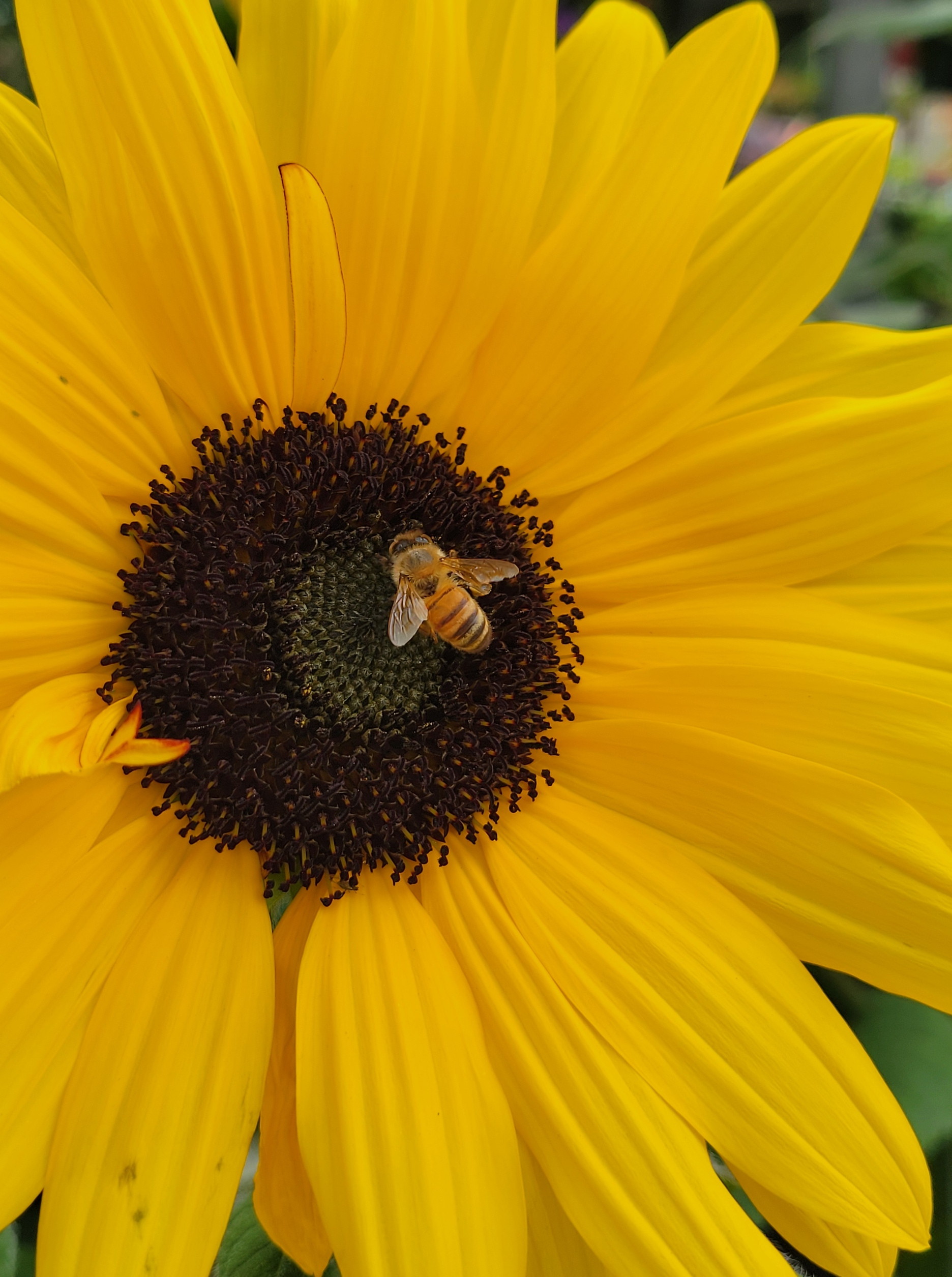
I need this picture on a shirt!

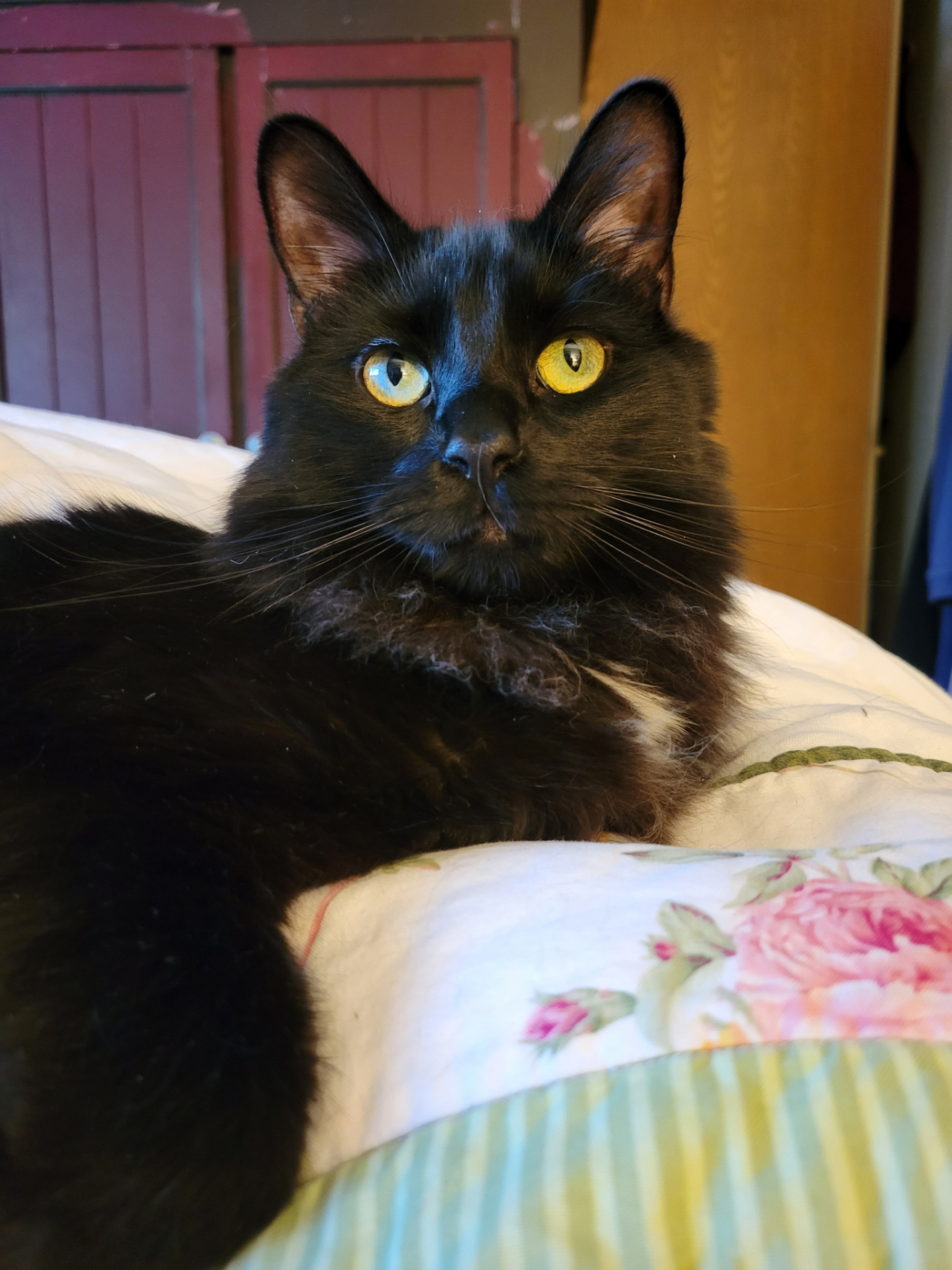
I had never thought of imposter syndrome in this way, but I think that his point is well made. Maybe I should have a poster made with this written on it. With some sunflowers and a tuxedo cat for interest. Every person diagnosed with a serious chronic condition needs this, because it is easy to just trick yourself into pretending that you are “better” and then the bad decisions get made. Like going off your meds. Or partying like it is 1999. Or eating all of those things that are essentially forbidden at once! There has been a rash of wailing patients in my online support groups who say things like… I went off my meds and started treating myself with natural remedies, and now [insert new symptom that has them terrified] is happening. Yep. That is imposter syndrome, hard at work. No wonder my doctor was so firm with me.

Because the point that he was making is that I am pretty ill, and I need to own it. I’m in a very small group of scleroderma patients who have the full battery of the more serious systemic sclerosis complications: pulmonary hypertension, interstitial lung disease, and diastolic dysfunction. I am being treated aggressively for those conditions, and I am doing really well, but they haven’t gone away.

I finally pulled myself together to check what the survival rates are for patients with two of my concurrent conditions (SSc-ILD-PH) and discovered that there are recent studies that looked at patients being treated with the same drugs that I am on.

  • This study, done in 2009 with patients on the same drug regimen as mine, showed the 3-year survival rate to be 39%. Oh, oh. Not an imposter any more.
  • This study, published in 2011 has a 3-year survival rate of 47%. Oh. That’s better.
  • A huge study done in Germany and published this year, shows that scleroderma patients with ILD-PH had the worst outcomes: the 5-year survival rate was 79%. Gosh, that is a good-looking number!

I see a trend. Do you see a trend? It looks like things are getting better and that survival rates are going up. I have to admit, when I saw that first 39% I almost panicked and stopped searching, because… I was diagnosed and started treatment for pulmonary hypertension and diastolic dysfunction exactly 3 years ago. The ILD diagnosis came in a few months later. The clock is ticking, and I am one of the 39%… talk about imposter syndrome: how can I be this functional when the majority of patients like me are already dead?? I’m a fake, an imposter!! That can’t be true, it is not true, and that new data shows what is happening: it looks like the treatment plans of today are really making a difference. My pulmonologist feels that the drug that I’m taking to control my lung disease is a game changer, and that drug was only approved for use with scleroderma patients within the last decade.

For some reason the term 39% Imposter has stuck with me. That’s me. I’m not really all that sick, because only 39% of me is pretending to be sick. Or well. Whatever works today. I’m thinking about a tee shirt with the slogan. I’m rocking the imposter persona. Maybe a shirt that says 39% Imposter and 100% Survivor…

I mailed back the heart monitor last Monday and now I’m waiting for the results. It has been a difficult three weeks because the flare just won’t go away, my wrists and knees are being bad boys, and now I have painful heart palpitations. Sigh. It is always one thing after another.

And yet, in my heart, I don’t feel sick at all.

Imposter Syndrome.

But only 39%.

The Scleroderma Chronicles: Supermoon Zebra Update

This morning, I dragged myself outside to the catio and just sat there for a while warming my joints and charging up for the day. Sometimes I wake in stunned astonishment at how bad I feel; this was one of those days. The cats, confused by the change in routine, finally stopped begging for tuna and came out to check out the wildlife. Things were certainly busy in the yard this morning!

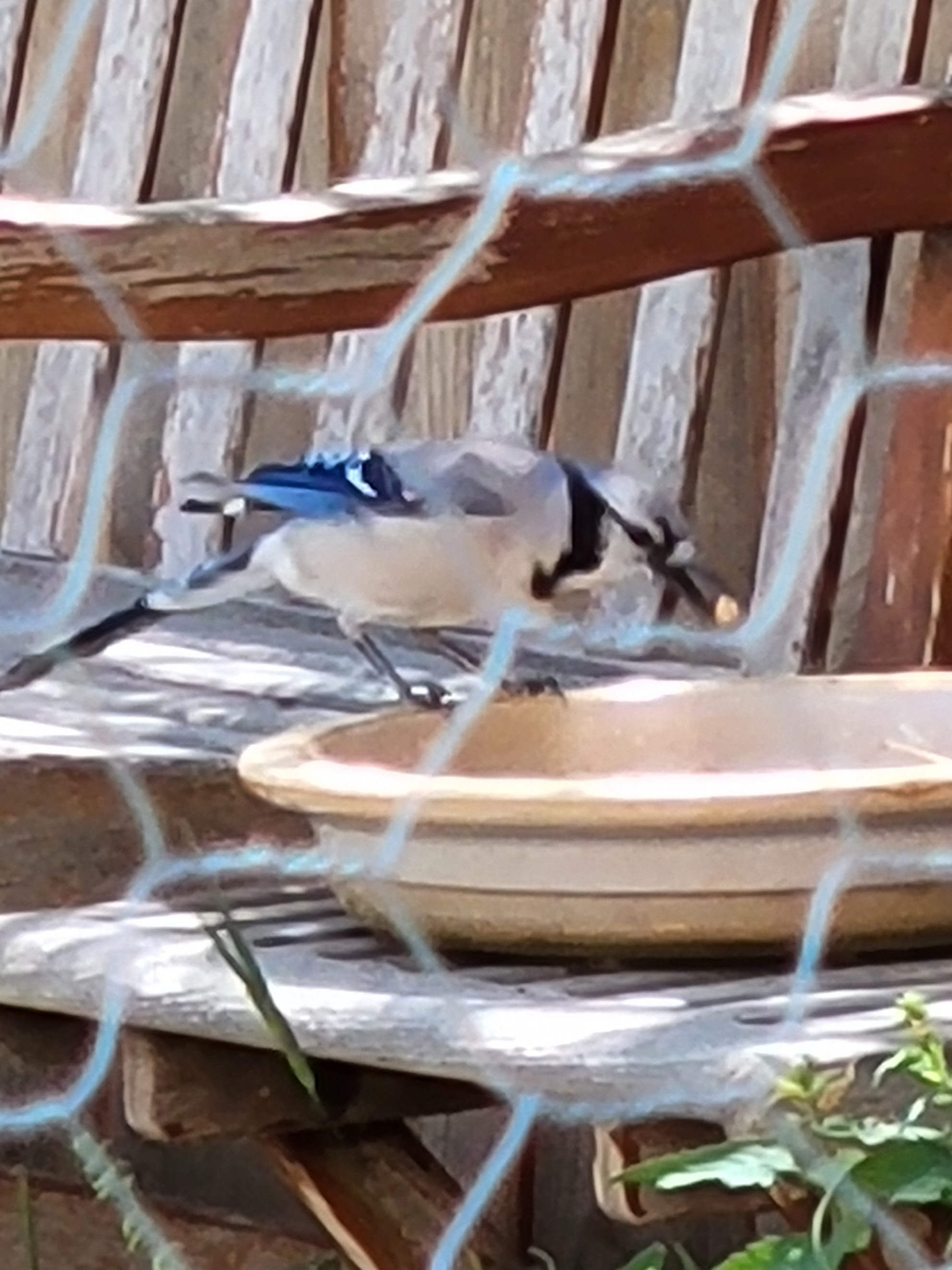
The bird feeder was open for business with a steady line of little birds waiting for their turn at the feeder parked in the low branches of the tree. Higher up in the upper branches a blue jay was calling back and forth with the other jays in the neighborhood. A bunny napped shamelessly in the middle of a patch of dirt at the upper end of my yard (why do I have a batch of dirt? Bunnies!!! They dig and roll in this dirt. I love the bunnies more than I love the lawn…), and a pair of doves napped nearby in plants escaping my garden. There were grasshoppers in the catio to Mateo’s delight. Squirrels ran along the fence as I baked and recovered; there was a slight breeze and the day was cooler. Time to water the flowers and go in.

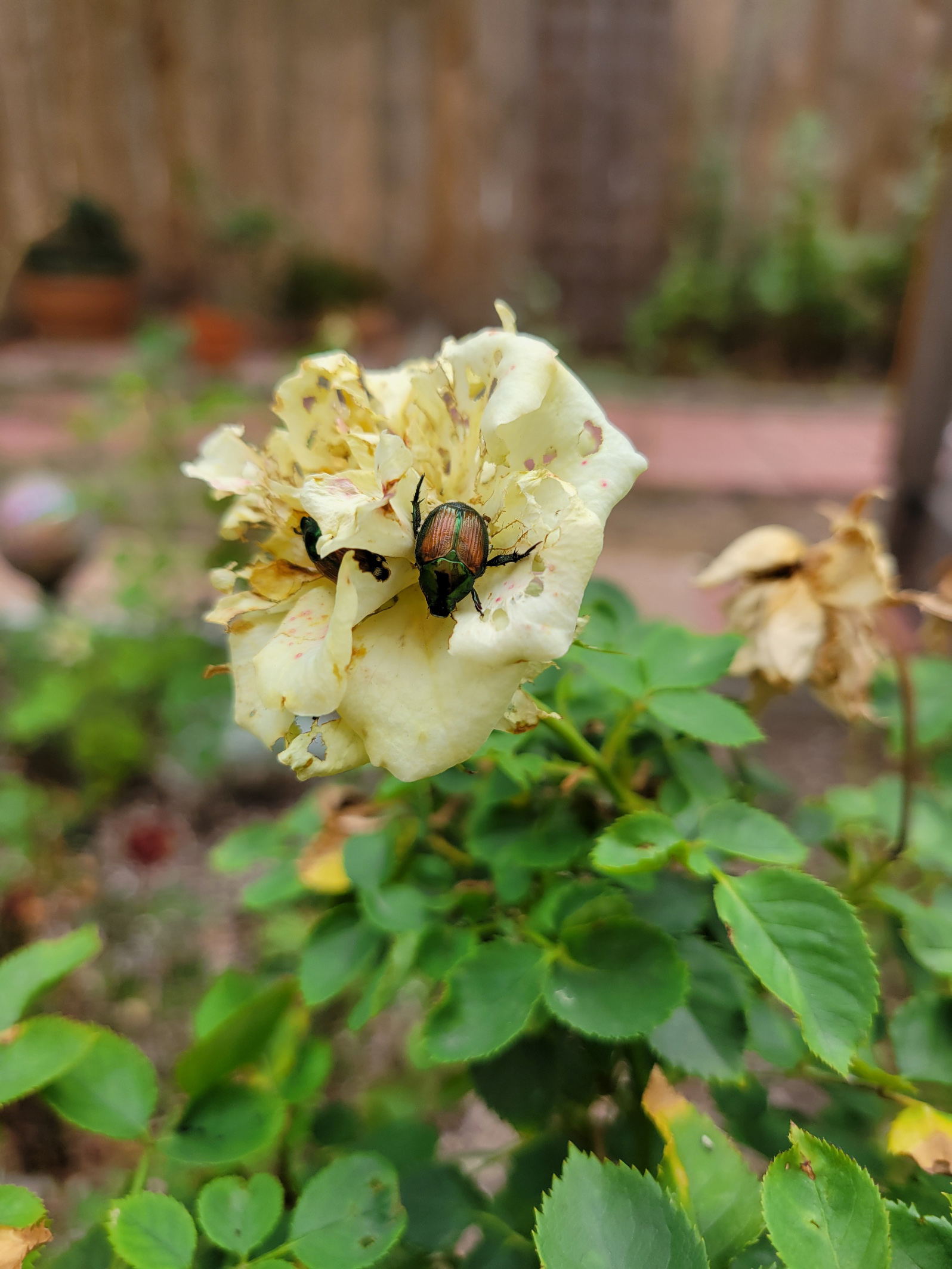
Japanese beetles in my roses! The HORROR!!!!

There were Japanese beetles in my roses!! Very cute, and very not wanted. I drowned those guys in a bottle of soapy water. Bad beetles, bad. No matter how well things are going, there is always something to deal with, right? I was completely recovered and ready-to-go by the time I went in to deal with the tuna-starved cats and my latte machine.

Not a bad start for the day, right? Bake in the sun when you need it, enjoy all the pleasant things happening around you, and take immediate action to deal with stuff that is unacceptable.  

It has been another tough week. Having gotten through a huge round of doctors’ appointments and testing, you would think I could just rest up for a few days and recover. Not so much. It is stressful waiting for test results, especially since my cardiologist was openly concerned when I saw him at the end of July. I felt dizzy and struggled with vague symptoms like a sore throat and stiff neck for a few days, and then finally began to face the reality that something more than scleroderma might be going on.

What pushed me into action? Well… the very last medical test was MRIs of my bad boy knees, and the technician who worked with me was concerned that the pupils of my eyes were dilatated more than they should be. There was concern and lots of questions about my medications. “No,” I insisted. “I’m not taking any drugs that weren’t prescribed.” I finally got out of there and immediately forgot about the incident because I had just spent an hour in an MRI machine that looked like a giant sandworm from Dune and made some of the same noises, too!

Then the next day, I fell over sideways while combing my hair. I tried to put on my shoes, and I fell over again to the same side. Huh. That is kind of unusual. I checked my eyes in the mirror, and yep… those pupils looked pretty dilatated. I called in to my health provider, and I was sent to Urgent Care. The words “this might be a brain bleed” got my attention, so I filled up the cat food and water dishes, put a phone charger into my purse, and off I went.

Listen, going to urgent care or the ER is kind of risky if you have a rare disease or two. Either the doctor has never had a patient like you before and just refers you on to a specialist, or the doctor is kind of excited to get his/her hands on you because when will another patient like this come along? They want to do something!! Sign me up coach! I’m just trying to represent here!! You can literally see it on their face and in the sparks in their eyes.

The urgent care doctor was the second type of doctor.

Sitting in the exam room I could hear the zebra laughing…

My eyes were fine when he checked them, and we concluded that what was happening was probably a transitory effect caused by one of my meds. It seemed reasonable, so I was okay with that. Great. I’m out of here, no brain bleed for me! Nope. Nope, nope, nope! He had a real, live zebra here, and he wasn’t letting it slip away!! He felt that while I was there, I should have a lot of tests run to rule out a hypothetical infection that was pushing me over the edge and causing all my fatigue, dizziness, headaches, etc. The stiff neck was concerning. No one should fall over while combing their hair… Sigh. It is hard to argue against such reasonable observations… I didn’t even mention that it hurt to breathe, but there was that, too…

I approved some testing, declined others, and off to the x-ray machine and lab I went. Everything was negative, but he decided that I should go though a course of wide-spectrum antibiotics anyway since I was immunosuppressed, and something clearly was not right. Fine. I’ll do that. My whole life is “not right” and antibiotics make my unhappy gut even more unhappy, but he was so earnest about helping me: I took the plunge and started the pills.

I just want to note that it is hard to score antibiotics if you feel sick with vague symptoms, but being a zebra got me special treatment. I’m still processing that because most of the time my symptoms are dismissed. My knees have been hurting for years and doctor after doctor has just blown me off because the joints seem fine. They are swollen, but my inflammation markers are normal, so nothing is done… My knee x-rays were normal, so this time I requested MRI imaging, which is how I ended up visiting that Dune machine, meeting a nurse upset about my eyes, and now, landing me in urgent care. There is some type of zebra paradox here: specialists who disregard symptoms that set off actions in mainstream health professionals, and special treatment that normal people don’t get because… zebra.

Anyway, I took the antibiotic. It was a strong one that I had never taken before… and two days later I was better! Even my gut has improved. The headaches have stopped, and my dizziness is fading into the background. My chest pain is gone. Yay antibiotics. Yay earnest young doctor in the urgent care facility. He’s written me two notes following up on the test results, and I’ve let him know that I am, indeed, much better.

The last of the test results that my scleroderma care team ordered have come in, and it looks like there may be some adjustments to my care in the future. My pulmonary hypertension is under control, but my heart failure has gotten worse. The steroid injection in my hip has made a huge difference, and I am walking better, but my knees hurt more. There is, indeed, something wrong with my knees; I don’t know if they can do anything about it. The words on the report are

Grade II, both knees.

Which is commonly known as “runner’s knee”, and is an overuse injury in most cases. Not in my case, obviously, since I can hardly walk! I have edema in the bone, and in the cartilage, and there is calcium being deposited in the soft tissue which is a response to… you guessed it… inflammation.

That dang zebra is rolling on the floor laughing!!!

It has been quite a week. I pushed for more testing, paid expensive copays to get it, and have gotten validation on the bad-boy knees. I understand a little better why the cardiologist was concerned, but the news isn’t as bad as he anticipated, so the outcome (Class 3 HF) isn’t as bleak as it could be. I learned a lesson about not ignoring symptoms, and the zebra outing to urgent care worked out much better than I expected. I turned in 43 hats and 7 chickens this week to my community knitting group, and yesterday I bought a bushel of roasted green chiles. A tough week in some ways, but also a good week. A week of crazy zebra-related events, knitting, and even green chiles.

All My Chickens

Tonight is the blue supermoon, a rare event, and kind of special. Knitting in the light of the blue supermoon is the best way to end a day that started baking in the sun.

And if you have a crown, tonight is the night to wear it!

Shine on, supermoon, shine on.

The Scleroderma Chronicles: A Decade on the Little Teal School Bus.

Here it is again: World Scleroderma Day.

June 29th is World Scleroderma Day. In Australia sunflowers are used as a symbol of scleroderma. Almost everyone uses the color teal for scleroderma.

I used to be a high school biology teacher before I became a scleroderma patient, and I took my students on field trips sometimes. We would all pile on the bus and off we went on one adventure or another: into the mountains for an ecological assessment, or to the Natural History Museum for an anatomy lesson, or a visit to a biotechnology center, or even off for the weekend to study for the Biology AP Exam. It was always exciting, exhausting, sometimes joyful, often a little overwhelming, and at the heart, an educational experience.

Lately I have been thinking about my illness as a ride on a little teal-colored school bus with a crazy rainbow striped zebra behind the wheel. That dang scleroderma zebra is careening down the road on its way to an unknown destination just over the horizon, and would you believe it, he keeps stopping to pick up more passengers along the way.

Don’t make fun of my bus! I changed the colors on some clip art that I found, and putting a zebra behind the wheel was beyond me!! Use your imagination… the zebra is braying hysterically while driving the bus!

When the bus stopped for me, and I stupidly jumped on board, I only had a few symptoms. I had some trouble swallowing sometimes. I had GERD. I suddenly lost circulation in my fingers if I got cold. Speaking of my fingers, they were pretty fat and puffy. I had lots of red blotches on my face, and the skin was pulling tight. It was hard to open my mouth wide…

Still, I was feeling pretty hopeful as I jumped onto the bus. “This will be fun!” chortled the scleroderma zebra. Bad zebra, bad!! Before I knew what was happening, that dang striped miscreant had pulled the bus over, opened the door, and couple of little demon passengers had hopped on board: kidney disease and gastric complications. What kind of an outing is this… have you ever heard a zebra laugh?

Bouncing down the road, suddenly screeching to a halt periodically to pick up a new passenger, the zebra continued the crazy outing in the little teal school bus. The little demon passengers kept piling into the bus, and those little monsters even started to sing “the wheels on the bus go round and round…” while laughing and clapping. What kind of a field trip is this, anyways?????

The demons all wore little nametags:

  • Gastroparesis
  • Pericardial effusion
  • Chronic respiratory failure
  • Diastolic dysfunction
  • Pulmonary Arterial Hypertension
  • Interstitial Lung Disease
  • Heart Failure with preserved ejection fraction

“STOP THE BUS!!!!” I shouted at the zebra! “I absolutely did not sign up for all of this sh*t!!!!” Nope. Evidently there is no stopping the bus. Ten years on the road, and we are still on our outing. Somehow some extra demons that don’t even wear nametags snuck onto the bus, but they are certainly annoying as they are making all my tendons hurt and what is up with all this edema!!!! Did I mention the fatigue? Always, always there is fatigue. That fatigue demon is sitting on top of the bus blowing raspberries at all the other people on the road…

It has now been a decade for me on the little teal school bus: always exciting, exhausting, sometimes joyful, often a little overwhelming, and at the heart, an educational experience.

I learned about prioritizing and not worrying about things that haven’t happened yet. I learned to advocate for myself, and I have maneuvered myself into the care of some great doctors. I have learned to build for myself a network of supporters. I pretty much have lost interest in making money, but I’m highly motivated to help others. I’m keeping notebooks and collecting souvenirs while on this field trip, and to be frank, it is the outing of a lifetime. Believe it or not, I’m now singing along with the little demons on the bus with me…

The wheels of the bus go round and round… and the zebra is still laughing its head off… and I’m okay.

Shine like a sunflower, everyone!

Happy World Scleroderma Day.

Note: Scleroderma (systemic sclerosis) is a rare autoimmune disease that is chronic, progressive, and often fatal. It has three main hallmarks: damage to blood vessels, the development of autoantibodies, and subsequent scarring of tissues and organs. Right now, while there are many excellent treatments emerging to handle the serious complications due to the underlying disease (like my pulmonary arterial hypertension and interstitial lung disease), there is no cure. You can learn more about scleroderma and systemic sclerosis in the links below.

The Scleroderma Chronicles: Rare Disease Day 2024

Rare Disease Day is tomorrow, but since I’m going in for a lung scan on the 29th, I thought I would post this now.

Well, here it is again. Rare Disease Day. This is my 9th year posting about rare diseases: on August 28, 2014, I was diagnosed with a form of scleroderma called limited systemic sclerosis. This condition, autoimmune in nature, is progressive as multiple organs, blood vessels, and the skin of the patient (that would be me) stiffen and harden due to scarring (fibrosis). It is also considered rare, since fewer than 200,000 people in the US are currently diagnosed with it.

So, what’s up with the zebra? Well… in the medical community doctors and other health professionals are trained to focus on the most common cause for the symptoms that they are seeing in their patient. The saying goes: when you hear hoofbeats, think of horses, not zebras. Certainly, that makes a lot of sense in terms of patient care and cost control. It works most of the time.

Unless, of course, you are a zebra.

Life is challenging if you are a zebra in a herd of horses. Doctors screen for the most likely cause of reported symptoms, and then when those tests are negative, you usually get told that you are fine, and then you are pawned off with some pablum like… do these exercises… try to reduce stress…would you like anti-depressants?… Seriously, it is pretty crushing as you start to wonder if you are just an attention-seeking hypochondriac since for the most part you look great. In my case, I didn’t even appear to be aging…

This can go on for years. And years. Autoimmune conditions like mine tend to send patients with vague complaints (I hurt all over…) to the doctor’s office looking for help. Some of the symptoms can be so subtle that you just don’t think to mention them to the doctor because you already feel pretty defensive about complaining after a few borderline disparaging interactions in the past. Why mention that you have trouble swallowing sometimes? Or that your arm is starting to look like Flipper the dolphin in appearance and texture? Some new red freckles have shown up on your face, but why mention them when you really want to get to the bottom of why you hurt all over and what is up with this fatigue????? Sure, there were those carpal tunnel surgeries 10 years ago, and the hospitalization for gastritis last year, but why would you mention them… When I was finally diagnosed, I discovered that I was absolutely classic and presented with all five of the CREST features of limited systemic sclerosis. Oh, one more thing: lack of wrinkles is a red flag for scleroderma…

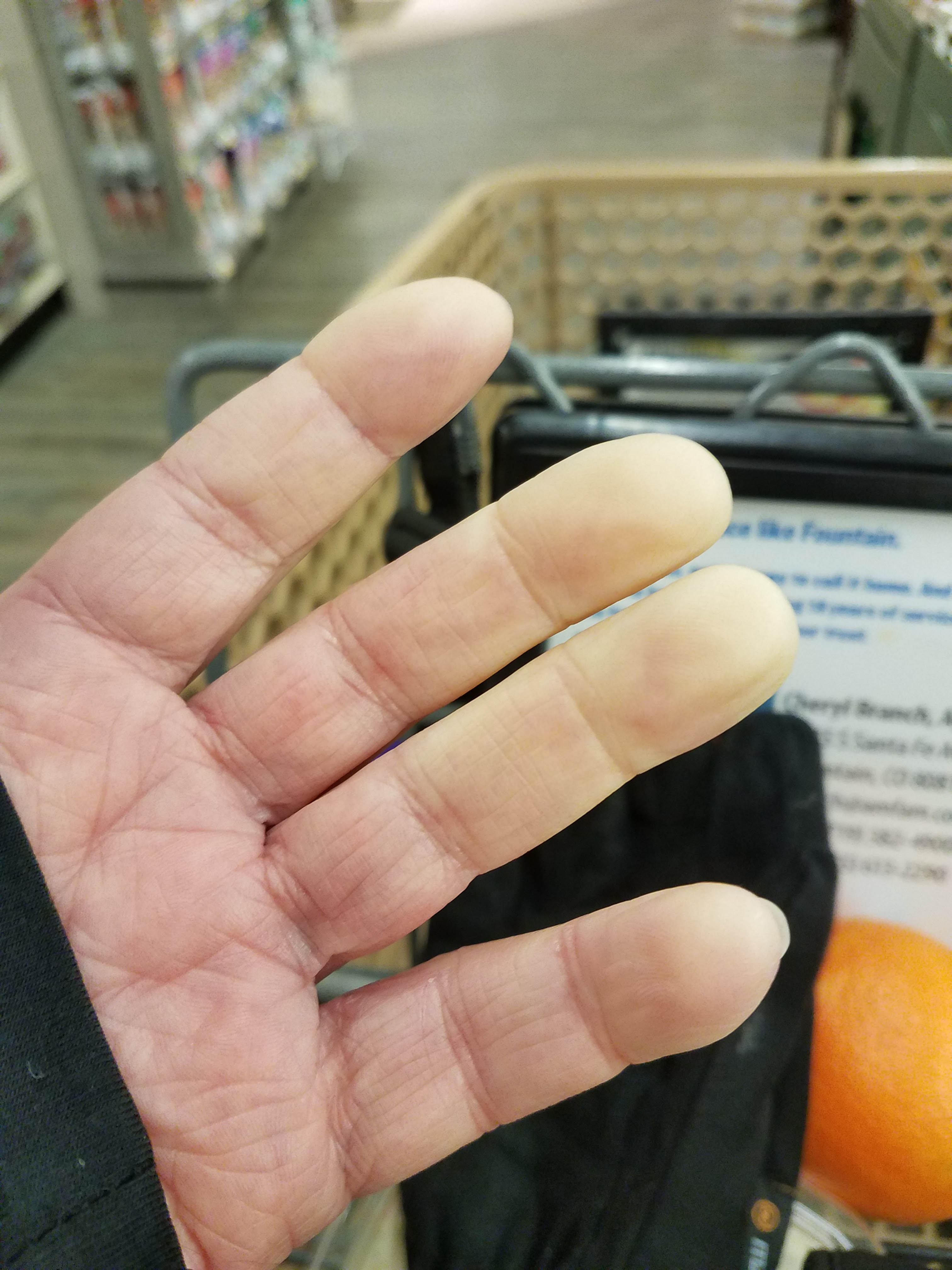
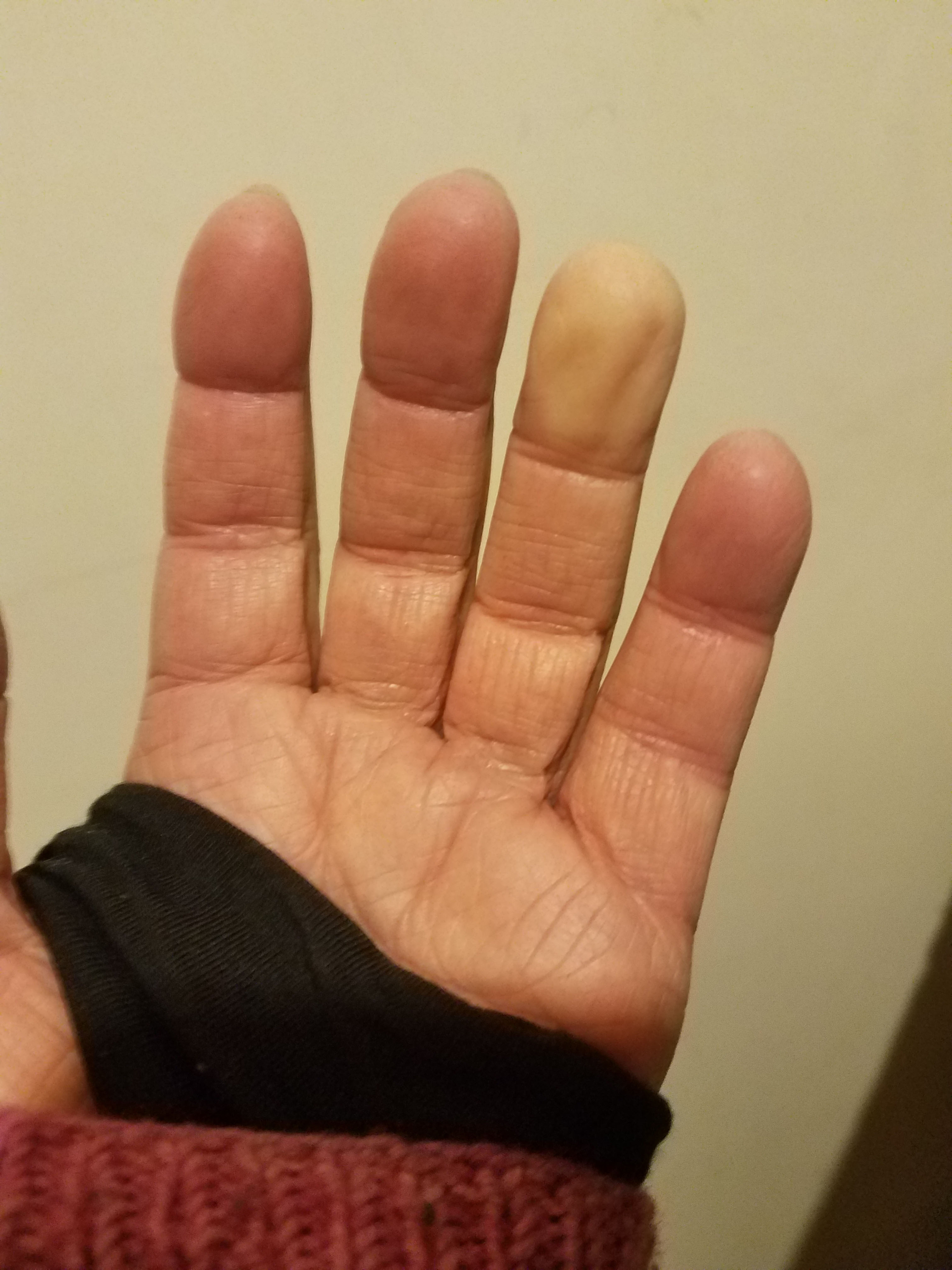
You can see two of the CREST characteristics here. I’ve lost circulation in my ring finger as a result of Raynaud’s, and the thick (sausage-like) fingers that are trying to contract are examples of sclerodactyly. The other distinguishing symptoms are trouble swallowing, lumps of calcium deposits on some of my bones, and those pesky red freckles that are now appearing everywhere. It was official: I was a zebra. There are a lot of us.

Rare diseases are also known as orphan diseases. They are poorly supported and most of the time there is no treatment. After failing a chemotherapy drug, I was moved to an off-label treatment using an immunosuppressant drug developed for kidney transplant patients. It was hard to get the drug as it was declined by my insurance, then the appeal failed, my doctor filed another appeal, and I went to see the pharmacist with a pathology report showing extreme gastritis. It was a fight, but I got the drug. This drug, Myfortic (mycophenolic acid), has proven to be so effective in slowing disease progression that it is now approved for systemic sclerosis and is a drug of choice along with its close relative CellCept. It has been doing a pretty good job at slowing things down; at the time of my diagnosis the 10-year survival rate was about 50%. Now that there are some better treatment options the survival numbers have improved: 10-year survival is up to 70%.

Two years ago, I developed two of the more serious complications of systemic sclerosis (SSc): pulmonary hypertension and interstitial lung disease: two more rare diseases. Not good news at all; my pulmonologist told me it would be okay to cry as he showed me my lung scans and gave me the bad news. Remember that little word “progressive” that I used to describe SSc? This is disease progression; the inflammation and formation of scar tissue (fibrosis) had hit my lungs and heart, and my have doctors responded with big time drugs. Yes. Big time and pretty expensive drugs. Over the last few years, literally in the time since I was first diagnosed, drugs have appeared that can greatly improve treatment and life expectancy in patients like me, and there are more drugs in the pipeline.

The first drug that can be used to directly treat SSc just moved from orphan drug status to the fast track. This is serious, serious good news. I looked into entering a clinical trial for this drug, but my doctors thought that I wasn’t a good candidate because I have too many complications right now. Seriously, I have been slotted into a diagnosis called SSc-ILD with PH which means that I am a SSc patient with interstitial lung disease and pulmonary hypertension. Good grief, I’m now a walking bundle of acronyms. That’s okay. I can hang on, help is on the way!! FT011, I am waiting for you!!!

So, what is up with all the colored stripes?

Serious medical conditions usually have an awareness ribbon color. It is a little cheesy, but if you are dealing with scary stuff, why not have some fun? Be a zebra, color your stripes in your awareness colors, and get yourself some fun t-shirts while you are at it. Eat Zebra Food (that would be black and white striped caramel popcorn to you non-zebras), get colored medical bracelets, and collect the stuffed animals. Zebras, of course!! My zebra has teal stripes (scleroderma), periwinkle stripes (PH) and purple for the ILD. Lung disease in general is green and blue. I also get purple for my Sjogren’s and fibromyalgia, and don’t forget the red for my heart failure. I’m a rainbow zebra!! Yay!

Okay, time to get serious. What is Rare Disease Day about? Raising awareness in the public about the challenges of living with a rare disease. There are a lot of people who have rare diseases, so by sharing our faces and voices the hope is that it will help make us more visible. We hope that a more educated public will aid in the diagnosis of others with rare conditions. (See above; diagnosis can take years. It would be wonderful if that could be sped up a little…) We hope it will help with funding for drugs, treatments, and maybe even cures. We hope that for those with invisible conditions, they will become more visible and supported. We hope.

MacKenzie and me from 2018.

To learn more about my rare conditions and others you can go to:

To everyone who battles on against scleroderma or any other serious medical condition, rare or not, I see you. Hugs! Shine on, my friends, shine on!

The Scleroderma Chronicles: Bioethical Dilemmas and Unintended Consequences

I was a biology teacher in the time of the Human Genome Project. This week, with the coming release of the newest movie about Oppenheimer and the development of the atomic bomb, I’ve been thinking about the DNA and genes again (I know, it is a biogeek thing…), because one of the candidates running for the Republican nomination in the US wants to cut the Department of Energy if elected.

Kind of a loose chain of threads, you’re probably thinking. Am I right? Well… the Department of Energy is the agency that is responsible for the regulation of the nuclear energy industry in the US. There’s a lot of waste coming out of those nuclear reactors, and there was some concern about how much mutational damage was being done to DNA through exposure to radiation. Well, to figure that out, you need to know what undamaged DNA looks like. The initial drive to figure out what the human genome looks like came from that agency and once the results came in early this century the world completely changed. Like a big change. Like an atomic bomb level change. Like, there are now sites that have huge depositories of biotechnical data and tools to aid in research.

Hannah’s World: no big changes here!

In the classroom we biology teachers began to teach about the Human Genome Project and also did a week-long unit around the ethical problems associated with this new knowledge (bioethics, if you will). The kids grappled with dilemmas like… if you had the gene for a fatal, untreatable illness, would you want to know? If you were a child at risk for this gene, would it be okay for your parents to have you tested for it before you are 18? If your unborn child tested positive for this condition, what would you do? Would it be okay for human organs to be grown for transplantation? Who should get the transplant… a single father of 4, or a 16-year-old student in your high school? Should your employer allow you to continue in your airline pilot job if a genetic test shows you are high risk for a sudden cardiac event. Should genetic test results be private? Whew. Lots to grapple with in this unit.

Makes your head hurt, doesn’t it. Check out my knitting progress this week!

So, shit kind of got real this week. One of the members of an online support group for pulmonary arterial hypertension (a progressive and fatal heart/lung condition that I have thanks to systemic sclerosis) has just been identified with a gene (bpmr2) that causes the condition; her PAH is caused by this gene and can be inherited; she has a different type from me, but it is still PAH. Oh, boy. This is not good at all. The life expectancy right now is up to about 7 years, but you only need one copy of the gene to be at risk for PAH… there is a 50% chance for each of her children that they inherited the gene. Only 20% of people with the gene will develop PAH, but that is still a big risk.

Should she tell her two children? she is asking in the forum. They are in their late 20s. If she does, and they get tested, should they have their own children if they have the gene? Her heart is broken, literally.

Life expectancy has greatly improved over the last few years with new medications being generated in the modern climate of expanding cellular and molecular biological information. Untreated PAH (and PH kind of gets lumped together with it according to my pulmonologist…) has a life expectancy of about 2.8 years… not good.

Rose break! By the end of the discussion thread, she was leaning towards telling the kids.

Which brings me to the next shitty bioethical item that occurred this week. One of the members of another support group caught Covid and had to go off her drugs while fighting the virus. She has been slow to recover, and still feels pretty bad, but she took a pregnancy test and restarted her medications again a few weeks ago, only to discover this week that she is actually 12 weeks pregnant. Why did she have to take a pregnancy test before restarting her drugs? Because some of the drugs used to treat PAH can cause extreme damage to a human fetus. The enrollment process is very strict, and every effort is made to keep patients from this situation.

I am in grief for this woman. The doctors think that the baby has been spared the worst of the drug toxicity, but now she is working her way through whether to abort or not, to restart her drugs, or not. To risk death to save the baby, or to abort and restart treatment. If the baby is born in good health, will she live long enough to see it enter kindergarten. If the baby is born with health problems, her medical burden is increased. She is young. This is a horrible mess, and she is already too far along to get an abortion in many states in the US. I don’t know if she has other children, or what her support structure is…

This week I heard that some states are demanding private health records to identify any out-of-state abortions or transgender care that has happened in another state. I hope that this woman lives in another country…

Then I heard that a popular hamburger joint near my home is now going to fire employees who wear a mask. Say, WHAT?! Let me tell you, any person who has a serious lung/heart condition like mine wants to wear a mask, and they are so grateful if the person at the service window is also wearing a mask. Sometimes people offer to put on a mask when they see that I am wearing one. Now that person can be fired for putting on a mask… remember the young PAH patient whose nightmare began with catching Covid? Truthfully, any random virus can cause serious damage to patients with PAH, especially if they are also immunosuppressed.

So, there are a lot of bioethical dilemmas here, and the unintended consequences of people who want to make sweeping decisions without understanding all the interlocking systems involved and the potential ramifications are staggering. NO, you can’t just disband the Department of Energy, and sweeping, inflexible decisions about reproductive issues (that seem to be smugly self-righteous to me) can be disastrous. It is easy to order up genetic tests, but what happens once you have the information can be life-altering.

And don’t get me started on this animosity towards mask wearing…

I can’t help but think that no one should attempt to enact legislation without suffering through experiencing something like the bioethics unit that was taught at the high school where I used to work. I keep wondering, do these legislators actually understand nuclear power and weapons? Have they heard of the Human Genome Project? About gene testing? About rare diseases? They absolutely need to go see the Oppenheimer movie, maybe, and then write me a report about the Human Genome Project. I’m pretty sure that they would struggle with epigenetics, but it would do them good if they looked into it. They can get extra credit for a summary of pulmonary arterial hypertension. I would like to give them a book list of summer reading to get through on their breaks, because only the well-informed and educated should attempt to make decisions about these issues in the seven levels of bioethical hell that is the life of patients like me.

Because this week was a really hard one; for too many people this shit is real.

PS: Have you seen the show House? I kind of think that he could use a little bioethics sensitivity training, too.

You all be safe out there!!

Knitting Changes

You know, some of the best lessons in life are ones that you didn’t see coming. Years ago, I was a member of a 6th grade instructional team that taught integrated units. The kids were learning about Canada in social studies at that time, and the language arts teacher had them reading Julie of the Wolves. I read the book too even though I was the social studies/science teacher, and one of the lessons really stuck with me. It was advice from Julie’s father to her: if what you are doing doesn’t work, change what you are doing. I am not one to quit easily, but sometimes that isn’t the right attitude.

I’ve been struggling with my treatment plan for months and I finally decided that we needed to do something different. My pulmonologist stopped the medication (Ofev) that I was taking to treat my lung disease (interstitial lung disease) because of side effects and started me on two inhaled medications instead. In the aftermath of this change, every single one of my tendons has decided that it hates my guts. Everything, everything hurts, and my arms are back in braces. I have two canes going so I am never far from one when I walk, and the walker is back out for use in the house. Feeling sorry for myself, I was slow to realize that Hannah had a rash on her tummy, and she was just miserable, licking and cleaning herself so much all the hair was gone and she had open sores.

After eliminating everything that I could think of, I have concluded that Hannah is allergic to the blanket that I’m knitting!

That yarn that makes up the Nectar blanket is made of recycled fibers, and it includes raw silk. If you don’t know raw silk, it has a slight smell because the proteins from the silkworm cocoon are present. I kind of think that the silk is the problem, so I have packed the blanket away for now because Hannah LOVES TO LAY ON IT!!! Hannah got a bath with soothing anti-itch shampoo and the rash is gone and her fur is growing back. Bad yarn, bad!!

It hurt my hands too much to knit on it anyway. The lace is hard to work, and the purl rows are misery. Goodbye, blankie. You are going into time out for now.

I also packed away the yarns for the La Prairie sweater that I wanted (really badly) to knit because it is a cardigan and is knit back and forth (instead of in the round); all those purl rows on the wrong side will kill me. The yarn is now keeping company with the Nectar blanket in time out.

Obviously, I needed to find something that I can knit. What I’ve been knitting (and want to knit) isn’t working, but by golly, there must be something that I can knit on. Something that is only in the round, almost all knit stitches, and easy to pick up and put down again without losing my place.

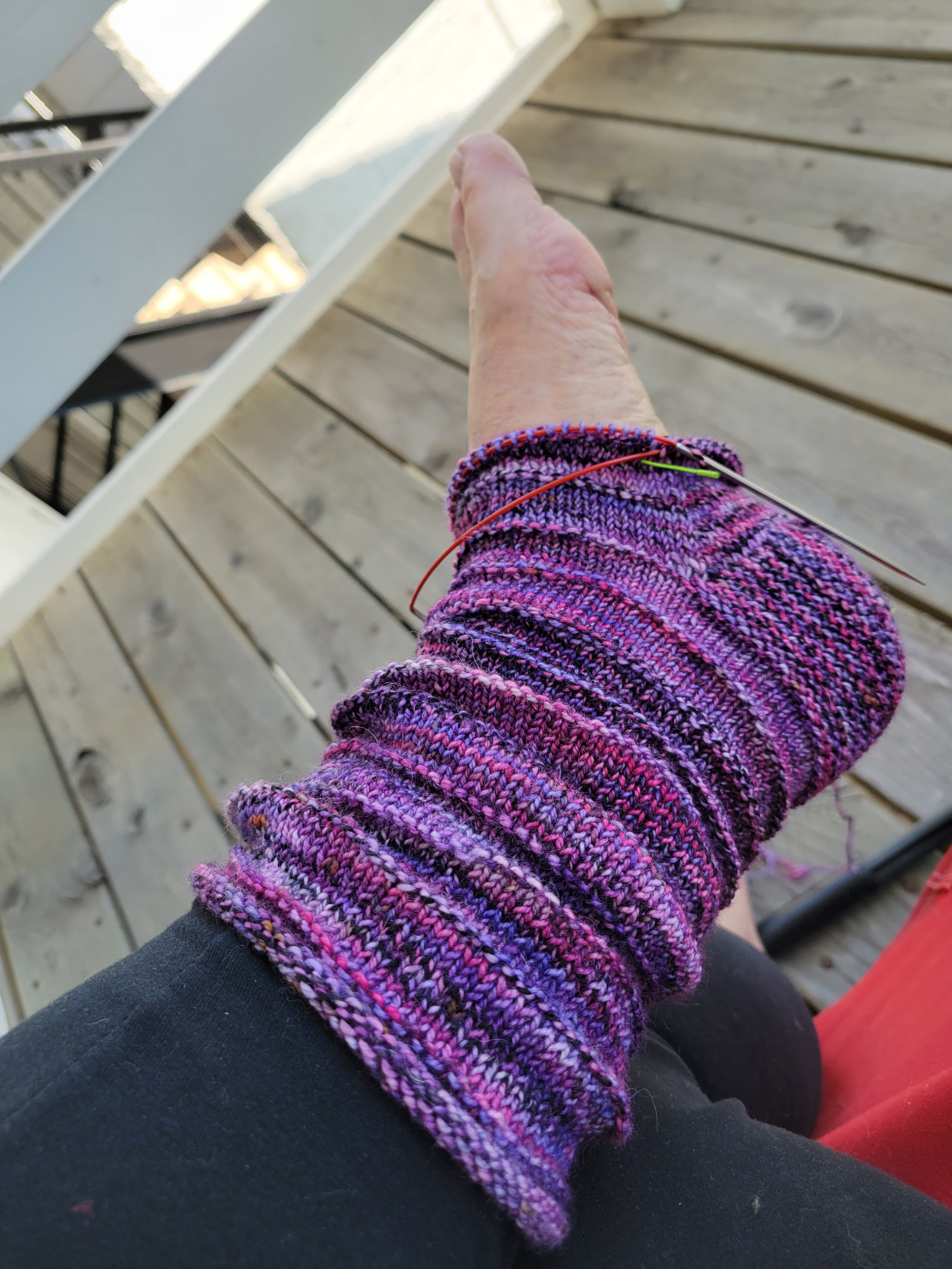
Behold: Scrunch Socks!!

These socks were a free pattern on Ravelry, and they are just what I needed. There is no ribbing at the top: just stockinette that curls around to form a rolled edge. The purl row is every 9 rounds, so I can manage that. The heel is made with all knit stitches! I’m able to knit with size 1 cable needles because I push them with the back of my hands without using my wrists.

and these socks are… scrunchy!

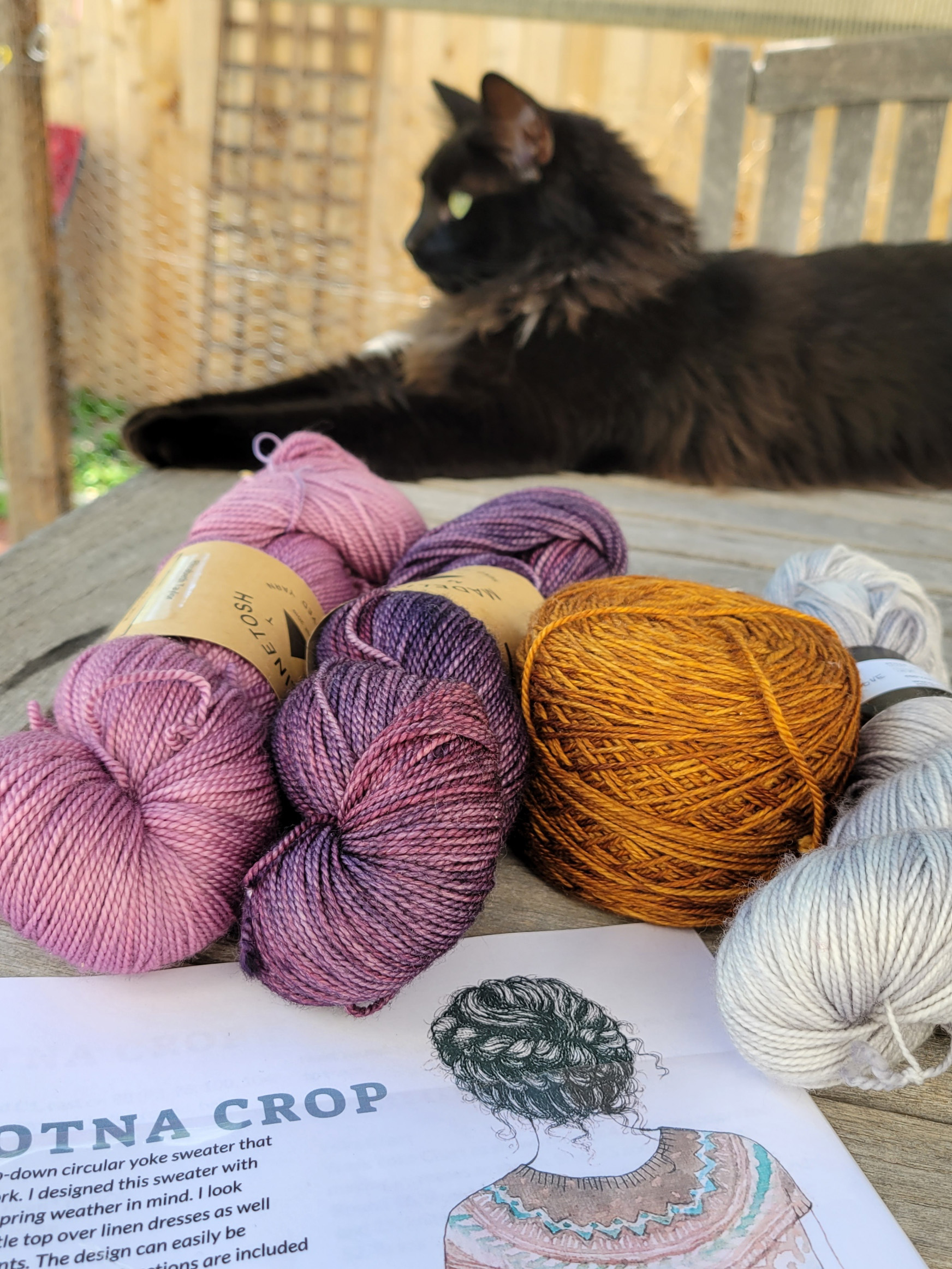
The socks are slightly oversized so they are easy for me to pull on. I’m slowly making progress and my wrists have improved so much that I’ve transitioned from the hard braces to compression braces on my wrists while I work. I knit outside most mornings with the cats enjoying the birdsong and fresh air, dreaming about the colors to knit a Soldotna Crop sweater in fingering weight yarn.

The cats hang out under my swinging seat while I knit. I think that they are dreaming about catching bunnies…

Soldotna is written to be knit in DK weight yarn, but I think that is too heavy for me to use as a light topper over long-sleeved shirts. I have been messing around looking at other sweaters by this designer that I’ve made that were written for fingering weight, and I think that if I go up a size in the pattern, I can substitute fingering for the DK. Also, fingering is easier to work with while my hands are totally acting like assholes, and stranded knitting is slower knitting and hopefully easier on my hands than my usual speedy pace. Did I mention that there are no purls in this pattern once I’m through the first rows of ribbing?

As usual I am fussing about the colors and the order in which they will be knit. I had completely decided on the first combination (with Mateo in the background) when I decided to play around with a combination that is more colorful by adding in the turquoise multi. Everything depends on the order of the colors in the design; I’m pretty happy with the combination on the right, and I’ve decided that if I don’t like it, I’ll just shop the stash and start over with some other colors. You know, if what you’re doing doesn’t work… The other factor that is causing me to lean towards the more colorful set is that the yarn is a little heavy for fingering, so I have a better chance that it will work in the pattern.

Have I wound the yarn for the sweater yet? Nope. It still seems too exhausting right now, but it is hopefully set out by the umbrella swift in my dining room. Soon, Soldotna, someday soon my wrists and hands will decide to behave themselves and it will be your turn.

Take that scleroderma. You’ve been messing with the wrong knitter!

Notes:

  • Julie of the Wolves is one of the books that gets banned from time to time, but it certainly made an impact with me and my students loved it.
  • My pulmonologist says that there are two other drugs in the pipeline that I may be able to take when they are approved. Yay, science!
  • Hannah was the best girl ever with her bath. She didn’t struggle or even meow while I was washing her tummy and then she let me blow dry her with absolutely no fuss. How about that!
  • The color of the yarn that I am knitting the socks with is… Perfect Miracle. How cool is that? Just the color that I need right now.

The Scleroderma Chronicles: Rare Disease Day, 2023

Well, here it is again. Rare Disease Day. I kind of was going to ignore it this year because I’m quite frankly worn out by my… wait for it… rare diseases, but I also feel like I should pull myself together and represent for the community again.

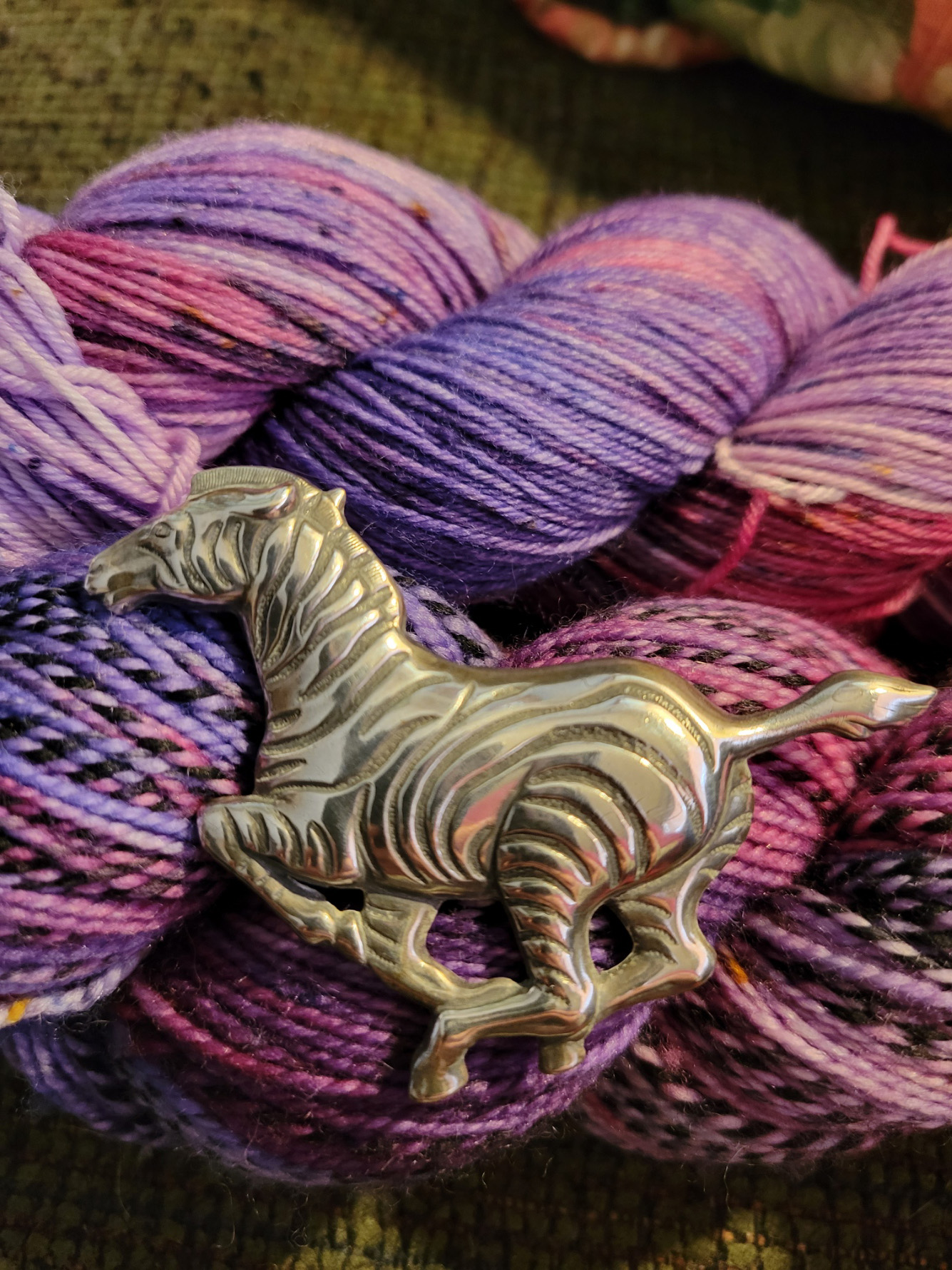
People with rare diseases are referred to as Zebras in the medical community. I obtained my zebra status when I was diagnosed with systemic sclerosis in 2014. This zebra was sent to me last week by my Most Knitworthy Niece Melissa.

I wrote a pretty darn good post last year about my journey with a rare disease which you can read here if you want. I talked about rare diseases in general, my specific conditions, and the many things that have been said to me by my doctors over the years. I thought about just reposting what I wrote last year, but I’ve been reflecting all morning on some recent events that kind of shine a light on my situation and that of other people who are coping with rare conditions.

  • I recently managed to go knit with my fellow members of Frayed Knots. This was a big social outing for me because it’s hard to get out of the house, and I have to be having a really good day to go to something like this. Knitting with friends is just “normal” for most people, and it would just be a little part of their day, but for me this was something that I had to prepare for a couple of days in advance, and then recover from in bed the next day. Many rare conditions are chronic, and chronic illnesses can be very isolating by their very nature.
  • A woman at the knitting group questioned my decision to wear a mask. I started to explain, but she cut me off to say that I was doing it so I could feel comfortable. It was a little condescending and suggested that I was being paranoid. Truthfully, my immune system, crushed by the drugs that I am taking right now, is compromised in its ability to make antibodies. If I catch a viral disease like the flu or Covid, there is a good chance that I won’t survive. My vaccinations have a low chance of protecting me for the same reason. For people with rare diseases, life is fraught and full of difficult decisions. For me, and for many other immunocompromised individuals, simple decisions involve life/death level risk analysis.
  • Another woman at the knitting table was struggling with long Covid and shared her difficulties with returning to work. She especially felt crushed by the attitudes of her coworkers who seemed to feel that she was “fine” and just trying to get attention. Yep. Been there, done that. Many rare diseases are genetic or largely invisible to others. Invisible illnesses are especially hard to cope with because others tend to question their validity.
  • I’m in several online support groups, and there are always discussions about what drugs to take, and whether the side effects are worth the risks. Yep. There are no specific drugs for systemic sclerosis, no cure, and treatment can involve a patchwork of risky off-label drugs. The drugs that are used are often non-specific carpet-bombing like approaches. Rare diseases have fewer treatment options because there are only a limited number of patients.

Over the last year my wonderful team of physicians have been suggesting that I am really unusual and have been extremely responsive to my emails. They clear an hour for appointments with me. I’m one of the very lucky zebras who has managed to get diagnoses, secured treatment, and am benefiting from a team of collaborative, interdisciplinary physicians who actively communicate with each other and with me; just last week my rheumatologist told me that for a patient with my status this is the only way to deliver care. I’m so grateful to have secured this level of medical attention, but I also feel a little nervous about it. I spent some time this morning trying to work out the probability of one person having the several medical diagnoses that I’ve racked up since 2014. Like, just how rare am I?

The National Organization for Rare Disorders estimates that there are 100,000 patients with systemic sclerosis in the United States. That’s rare, but still, a big club, right?

The 15% Rule is a general measurement of the risk of severe organ involvement in systemic sclerosis. As it turns out, quite a few of the major lung, heart, and kidney complications associated with systemic sclerosis happen about 15% of the time. I have Sjogren’s Disease overlap with my systemic sclerosis, which happens in about 13% of patients. Suddenly, I’m in a much smaller group of about 13,000 patients.

My most worrisome complicating conditions are diastolic dysfunction (a type of heart failure), pulmonary arterial hypertension (PAH) and interstitial lung disease (SSc-ILD). I looked up the risk of having each of these conditions using the 15% rule data, and it turns out the risks are 16% (diastolic dysfunction), 15% (PAH) and 35% for the SSc-ILD. Did you notice the the ILD doesn’t fit the 15% rule? Yep. It’s much more common and is the leading cause of death in systemic sclerosis patients. I found that risk factor here.

I brushed up on my probability math (you multiply the probabilities of independent events…), and after running the numbers:

100,000(13/100 x 16/100 x 15/100 x 35/100)

I came to a grand total of 116 other patients in the US who share my set of diagnosed conditions.

Oh.

See, I have lots and lots of stripes. Stripes in purple, teal, periwinkle, red, green, and blue: these are the awareness colors for my conditions.

I just ordered that rainbow zebra unicorn shirt! I plan to wear it with my mask on my next social outing…

You can learn more about Rare Disease Day or my conditions at the links below.

The Scleroderma Chronicles: World Scleroderma Day, 2022

Wow, it is that day of the year again. The Niagara Falls will turn teal, Scleroderma organizations around the world are sending out messages and videos, and patients with scleroderma like me are wondering how best to showcase our conditions in a meaningful way. Here in the US the theme is Know Scleroderma. In Australia it is Shine Like a Sunflower.

The whole idea is to educate the public about this rare disease that pretty much flies under the radar to help secure support for patients, funding for research, and awareness of treatment options. Patients are encouraged to tell their stories and to do what they can to expand scleroderma awareness in the public eye.

Well, shoot. I do that all the time! I wrote about World Scleroderma Day last year and I kind of like what I wrote. I talked about what was going on in my illness and the progress that I was making in getting diagnosed and treated for the significant organ damage that was underway in my lungs and heart. I also mentioned the similarities between Covid-19 and systemic sclerosis (the type of scleroderma that I have), and the fact that people like me are still dealing with lockdown. You can read that post here.

So, what has changed in the last year and why am I typing away on my computer once again about World Scleroderma Day? Well… awareness and support are the messages that I’ve been urged to put out, but I’ve been reflecting on what I’ve learned this year and how it might be useful to others. This was a huge year for me… I was diagnosed with pulmonary arterial hypertension, a complication of systemic sclerosis that is developed by about 15% of patients, and I was also diagnosed with interstitial lung disease, another complication of systemic sclerosis that is also developed by about 15% of patients. These serious complications develop so routinely around the 15% mark that there is now a rule of thumb about it in treating patients with systemic sclerosis. There are other conditions that fall into the 15% rule, and I have two more of them: Sjogren’s Disease and diastolic dysfunction.

MacKenzie and I from a posting a few years ago.

So, I am getting a lot of experience in dealing with being sick in a way that is not visible to the public and is not the first thing considered when you head into a doctor’s office seeking help for debilitating symptoms that have no obvious cause. I have been successful this year in becoming an active participant in my own health care and I love my team! Here are my lessons learned:

  1. Physicians tend to diagnose with the most common condition that matches your symptoms. You know, if you are struggling with fatigue, it must be depression or sleep apnea…
  2. They also tell you to stay off the internet.
  3. That works great up to a point. Get onto the internet!!!! Look up the symptoms and treatment options for the condition/illness that your physician is talking about. Do they really fit? Go ahead with the testing that your doctor orders but continue to educate yourself. Get the full text of any testing reports (those are your tests on your body, so do insist… nicely…) Look up crazy words that you don’t understand.
  4. I should include here…DON’T PANIC… about any crazy-ass, scary condition that you run into on the internet that you think you might have. I mean, what could happen? You already are sick, and you won’t get magically worse overnight once you get a name for it. You might, however, get some really helpful treatment that could turn things around for you. That is, if you have that crazy-ass, scary condition that you really, probably, don’t have. DON’T PANIC!!
  5. What if you get test results that say “you are fine” and your doctor pretty much is ready to stop there? Um… go right back to specific test results and symptoms to reset the conversation. You know, “my face is still blue, and the latest CT scan showed that I was losing tissue in my lungs. What other testing can we do to figure out what is going on?” is exactly where you should redirect the conversation.
  6. Make a list of your symptoms and track them in a journal or on a calendar. Document stuff and then contact your health care provider (email works great!) with your concerns and the symptoms that you are noticing. Specific data helps a lot, and the written record makes you more credible and your health provider more accountable.
  7. Do not let a medical health professional dismiss or disparage you. Kick them to the curb and get another. On the other hand, don’t go doctor shopping to get the diagnosis that you want; that is not productive for you or anyone else involved in your daily struggles.
  8. Ask your physicians to communicate with each other and make sure that they include your primary care physician in any messaging.
  9. Remember to be kind to others: your doctors, the nurses, your family, your friends, and yourself.
  10. DON’T PANIC!!! at any time. Remember, feeling powerless and not knowing what is happening is stressful. Learn everything that you can, do everything that you can, and then sleep well at night. Hugs to anyone who finds this meaningful.
More lavender for my garden!

There. Those are the best, most excellent lessons that I learned this year. Today I am out of the serious flare of the winter and feeling pretty darn great. I am on steroids, and my immunosuppressant drug’s dose has been doubled; I feel more like myself than I have in a couple of years. I headed out on errands this afternoon, bought a Starbucks, and signed up for a Tour de Fleece team at my local yarn shop. I bought some new lavender plants that I am going to put into the ground this evening and I am cleaning up the spinning wheel to see if I can get some paco-vicuna spun next month before my steroids get stopped.

I have some really serious conditions that carry a significant risk of a poor outcome. And yet, I feel a little like an imposter as I laugh and interact with other people that I encounter. The man at the drive-through window at Starbucks traded cat photos with me. The lady at the yarn store and I laughed and talked about spinning wheel misbehaviors; are the wheels worse if you name them? Behind the mask, I am still me, the old me; I may have scleroderma, but it doesn’t have me. I am kind of the poster child for what an invisible illness looks like, and that’s why there is this campaign today to “Know Scleroderma.”

Those serious conditions that I mentioned… they are complications of scleroderma, but they happen for other reasons, too. Some are rare, but some are not. Knowing about scleroderma can help with research efforts into these other conditions (sadly, some are now more common because of Covid long haulers), and perhaps the lessons I have learned will help others in their efforts to secure empowerment and medical treatment.

This is World Scleroderma Day.

Shine Like a Sunflower!

Hannah and the CoalBear: It’s Caturday Again

Hi. I’m the CoalBear (AKA Mateo)

It is sooooo hot today. It is almost 100 degrees outside, and Hannah and I are staying cool in the house. The Mother of Cats has all the windows closed and we’re too hot to look out the windows anyway. Do you notice that the Mother of Cats has been brushing out all of my downy fur? I used to have a huge ruff around my neck, and now it is almost all gone. I look a whole size smaller now. I don’t like getting brushed, but today I guess I am glad that she did it. She also cuts my nails off and I will never get used to that!!

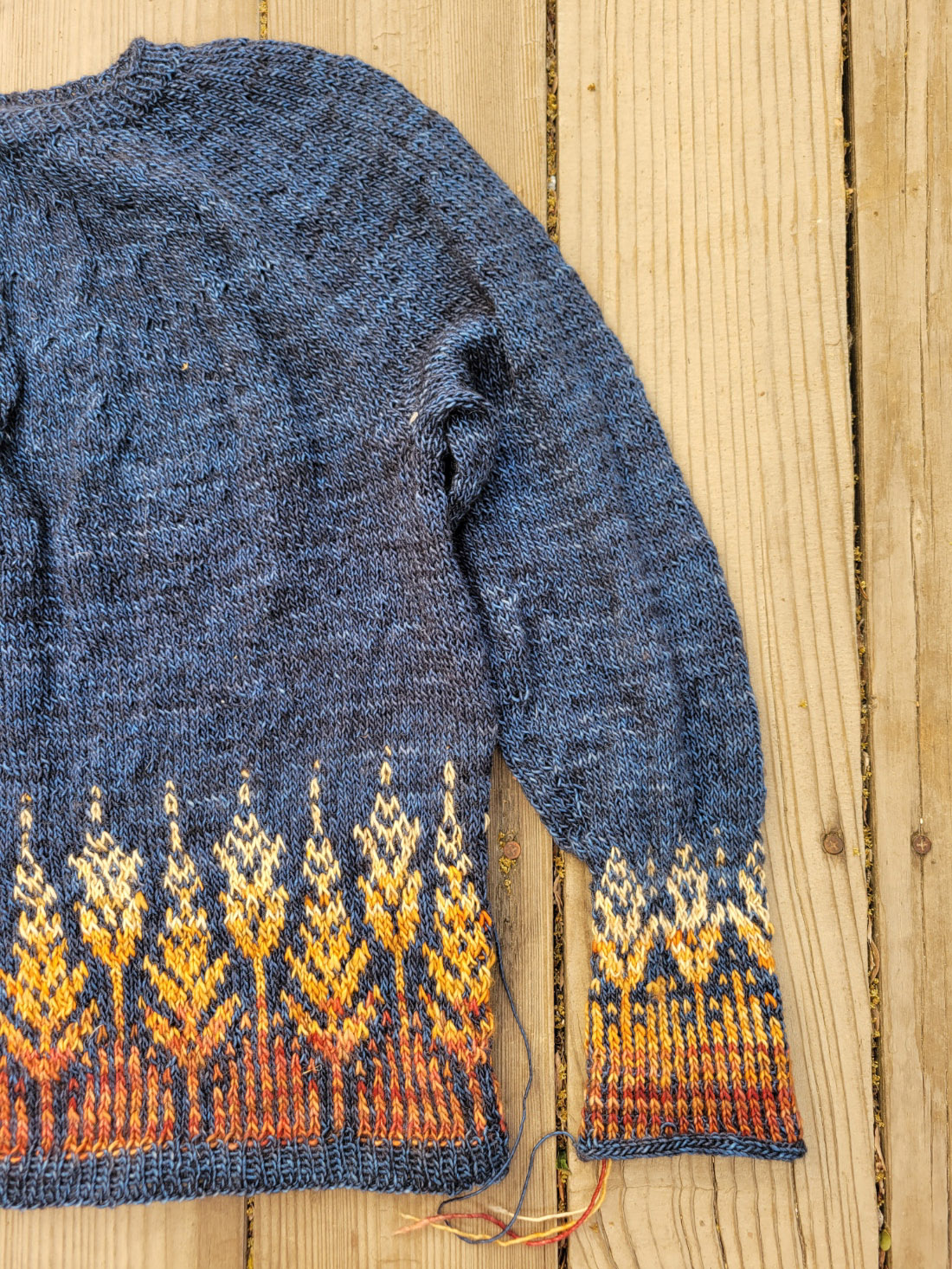
The Mother of Cats has been knitting away on her sweater this week and look at how far she’s gotten! She is done with the first sleeve and halfway down the second one already! She has also been sewing on the quilt with Hannah.

The quilt is coming right along and should be done in just a few more days. The Mother of Cats can’t wait to get it done. Hannah kind of hopes that she is going to get to keep it for her new bed, but I think that the Mother of Cats is planning to hang it up on the wall behind her knitting chair. I ripped the old quilt down a couple of days ago (Hey! There was a moth!) and she didn’t even bother to hang it back up again. Okay, the old quilt was a Christmas themed one, so maybe she’s ready to put it away now anyway. I’m such a good boy; see how I did her a big favor?

A scary man came this week and messed around with the Mother of Cat’s oxygen machine. When he left there was new stuff left behind including this new green bottle with a snazzy carrying bag. Now the Mother of Cats has oxygen she can take with her when she goes out on errands, but mostly she stays home with us because we are so cute! She has been working on her gardens this week and they are starting to look pretty good. The first rose bloomed this week which made her really happy.

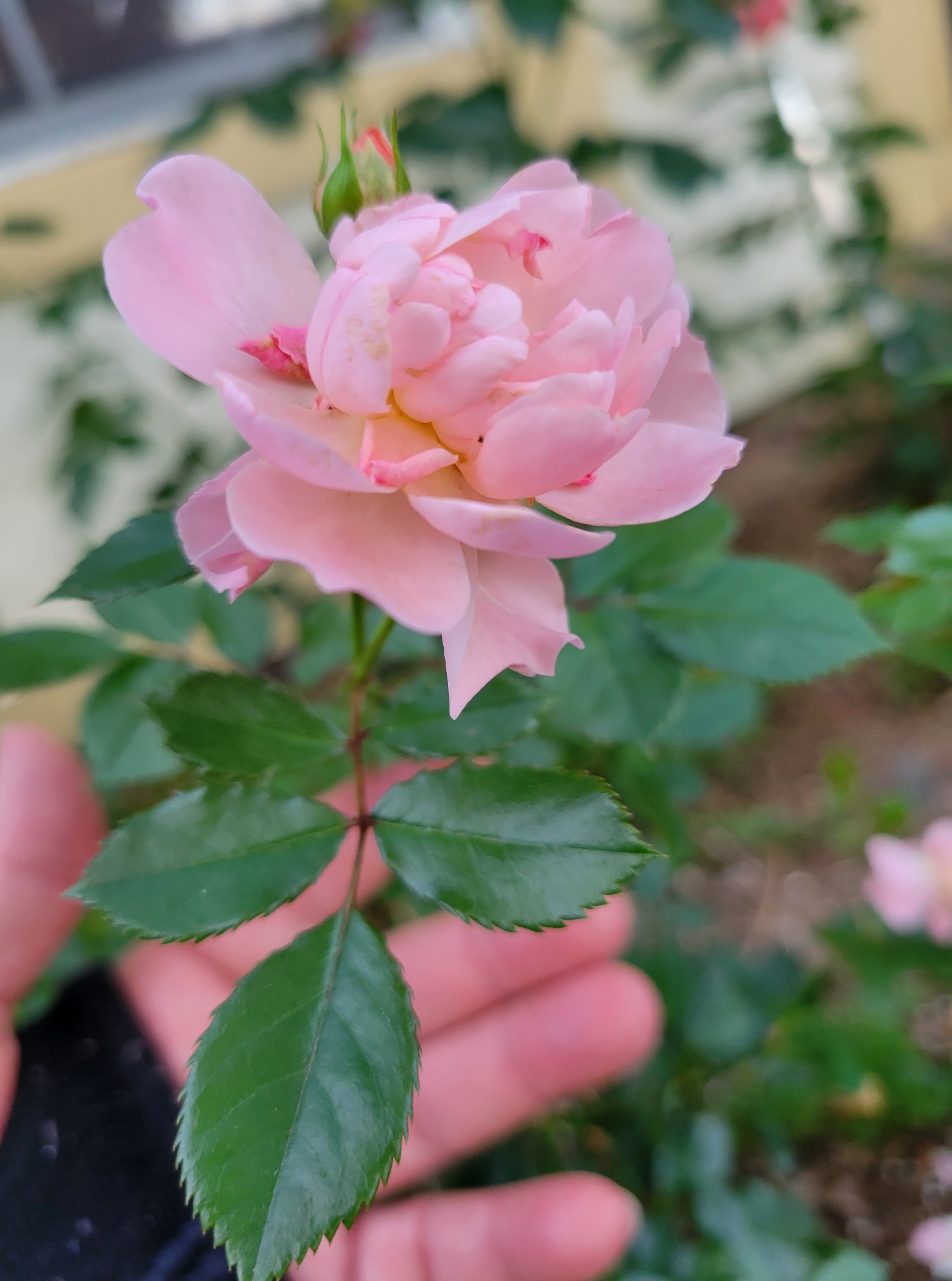
It’s her first English rose of the year!
Well, that all I have. It’s still stinking hot outside and all of the animals are asleep, so I am going to take a little nap too.

See you next week!

>^..^> CoalBear

Notes from the Mother of Cats

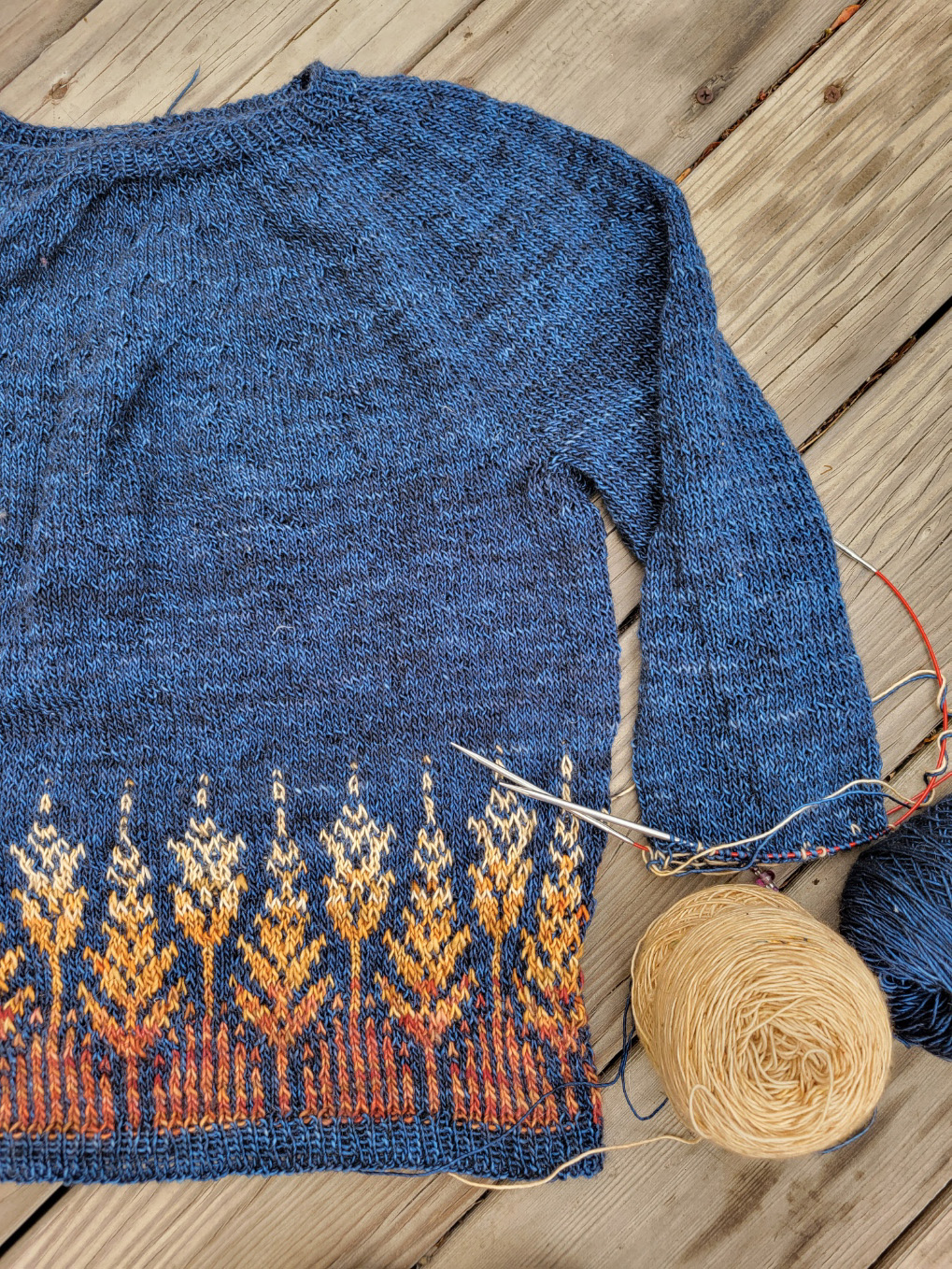
  • The sweater is GoldenFern by Jennifer Steingass. Hopefully I will have it done in another week or so. I’m really anxious to start another sweater but so far I’m sticking to getting this one done first.
  • I know that isn’t a good shot of the quilt, but hopefully I will have a nice picture of the completed quilt to show off next week. Hanging on the wall, where I hope it remains as long as no moths land on it. 🙂
I’m listening to this audiobook while I quilt and I just am loving it!!
  • Not only did I get oxygen-to-go this week, but I also got my injections of Evusheld, which is a combination of two monoclonal antibodies that will give me protection from Covid for at least 6 months. This is huge piece of mind for me since my doctors are dialing up my immunosuppression drug dose this month and have started me on a new immunosuppressant drug at the same time. Yay, Evusheld! With the higher dose of drugs, I won’t be able to make many antibodies of my own, so I’m glad to have the Evusheld antibodies.
  • That rose is Princess Alexandra of Kent, and it is pretty much my favorite rose in the garden right now.
  • Hannah and Mateo don’t know it but they are heading to the vet for their vaccinations and checkups next week. Sad cat day is on the way…

The BioGeek Memoirs: Sunflower

Okay, I need to be complete upfront about this: this is a crossover post. It is going to be a total amalgamation of the Scleroderma Chronicles and The BioGeek Memoirs because I just couldn’t come up with anyway to make them separate posts. Hey, I’m a biogeek with scleroderma. It was bound to happen eventually…

So, let’s get this ball rolling by talking about bean plants. That makes a lot of sense, right? When I was a biology teacher struggling to make plants interesting and to help students understand experimental design, I came up with the genius idea of letting the students design an experiment looking at the effect of fertilizer concentration on the growth of bean plants. The students had solutions with different concentrations of Miracle Gro fertilizer available to them, and then they had to struggle with planting and growing 6 bean plants while holding all the other variables constant. The plants grew, the students measured their growth, and then they charted the growth to make decisions about the best fertilizer amount.

I had the hot idea of using an Excel spreadsheet to display the student data to the whole class. That worked great! I then combined the data from all 5 classes together and… it was a huge mess. The plants were all different heights depending on which class was collecting the data. The students weren’t making any errors; the bean plants were raising and lowering their leaves each day in circadian rhythm. Depending on the time of day, the plants were a different height. Oh. Plants can move!

Sunflowers have been on my mind a lot recently. Beautiful sunflowers, whose faces turn throughout the day to follow the sun. My cousin grew enormous sunflowers one year that towered over the other plants in the garden. Sunflowers are the symbol of Ukraine. The sweater that I am knitting right now is in the colors of a field of sunflowers with their faces in the sun.

Those aren’t sunflowers, but the colors remind me of all the “Support Ukraine” knitting that is going on right now.

There are enormous fields of sunflowers near the airport in Denver that are just spectacular in the late summer. Early one morning in late August,2014, I drove past them on my way to my first appointment with a rheumatologist; my primary care physician had referred me to a specialist after some concerning bloodwork results. I was pretty sure that this morning was going to be a turning point in my life, and I was nervous and kind of fighting off tears. Behind me the rising sun poured light onto the glowing faces of sunflowers ahead of me as far as I could see; the sight was just thrilling, and I settled right down. An hour later the rheumatologist explained that I had limited systemic sclerosis (a form of scleroderma) and Sjogren’s disease. I was prescribed medication, sent for more testing, and told to stay off the internet. I looked for the sunflowers as I drove home that afternoon, but I couldn’t see them; the fields were too far from me as I drove east. Still, just knowing they were there sort of helped. Sunflowers. They were kind of a symbol of hope and the promise that I could handle anything.

Are you ready for this? The sunflower has been chosen as a symbol for scleroderma by Scleroderma Australia. Shine like a Sunflower is their campaign this June to bring scleroderma into the light of awareness.

Just like that the sunflower became an international symbol for scleroderma. I swiped this shirt image off of Amazon.

Why a sunflower? Well, like sunflowers, we scleroderma people follow the sun. Strong sunlight is actually a problem, but the warmth… bring on the warmth! For the last few weeks, I have been recovering from surgery and waiting for my biopsy results. I have been sitting outside on my deck out of the direct sun, soaking up the heat and light. Day by day, I have been improving and no longer need daytime oxygen support. My cardiologist has restarted the medication that was halted while I was in the hospital, and it hasn’t even caused a bump in my recovery. Heat and sunlight are really making a difference.

My biopsy results arrived on the first day of June. I have developed a type of interstitial lung disease that presents as hypersensitivity pneumonia. I also have the characteristics of what the report called a vascular/collagen autoimmune disease, which is pretty much a descriptor for scleroderma. Yep. What my pulmonologist prepared me for. This is interstitial lung disease associated with system sclerosis (SSc-ILD) and I am going to get started on an increased dosage of immunosuppressants and a new drug to prevent scarring in my lungs called OFEV. This drug is really new; it has been developed in the years since my diagnosis, and now it is here just when I need it.

June is Scleroderma Awareness Month. Here in the US the theme of the campaign is Know Scleroderma. Oh, I know scleroderma, and so do some of you through my blog. Let’s put scleroderma aside for the time being and go back to sunflowers. And science. Remember that this post started with a little story about doing a science experiment with bean plants and my students? As simple as that was in my classroom, the heart of that process, curiosity, scientific experimentation, and data manipulation, is serving me well now. Ironically, new therapies and treatment approaches are being developed because of the lung scarring caused by Covid-19. Science. It rocks!

Today I planted these sunflowers along my side fence.

This afternoon I am once again outside in the warmth and light, knitting on my new sweater in the colors of sunflowers against the sky, admiring my beautiful newly planted sunflowers. They have their little faces angled to the southwest, following the sun as it starts to dip towards the Rocky Mountains.

Beautiful, tough, follow-the-sun sunflowers, reminding me to also follow the sun and to shine when I can. They remain a symbol of hope and a promise that I can handle anything.

Shine like a Sunflower.

June is Scleroderma Awareness Month. You can learn more about scleroderma at these links.