The Scleroderma Chronicles: This is World Scleroderma Day!

A couple of weeks ago I went in for a routine blood draw at my local Kaiser clinic. I gave the phlebotomist my ID card and told her my name and birthdate: for some reason they like to verify these things, right? Anyway, what happened this time was… she exclaimed that didn’t look my age. (Well, yeah. That may be one of the bigger red flags for scleroderma… no wrinkles.) “It’s just my disease doing that,” I assured her. “I really am that old.”

This lady wanted to know what I had done to get rid of the wrinkles. She wanted this magic wrinkle remover too! I carefully told her about scleroderma. “I never heard of that!” she said. Still thinking that I was a lucky person, she drew my blood and I got out of there. I would be happy to have every single wrinkle that I have earned over the years, but no… I have scleroderma. The systemic form with limited skin involvement. Lucky me.
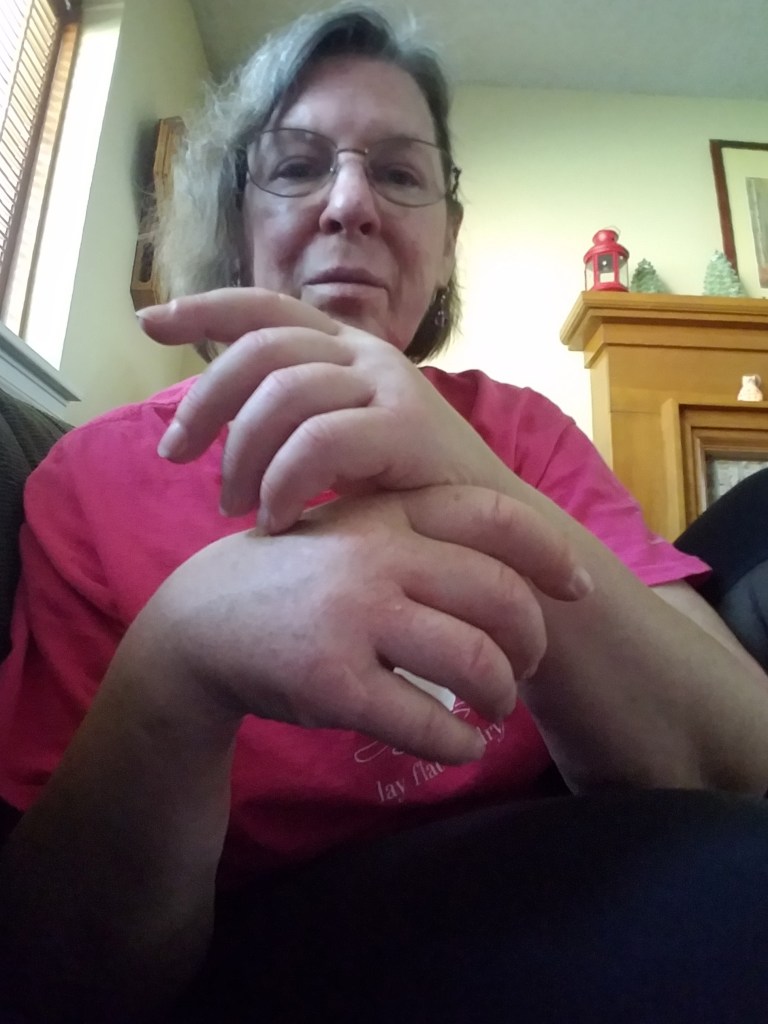
I do have wrinkles around my chin and mouth, but I was wearing a mask during the interaction with the lady at Kaiser. I had to go on oxygen this day (I have lung and heart involvement) and you can see the swollen tendons in my hand and the tight skin over my knuckles.

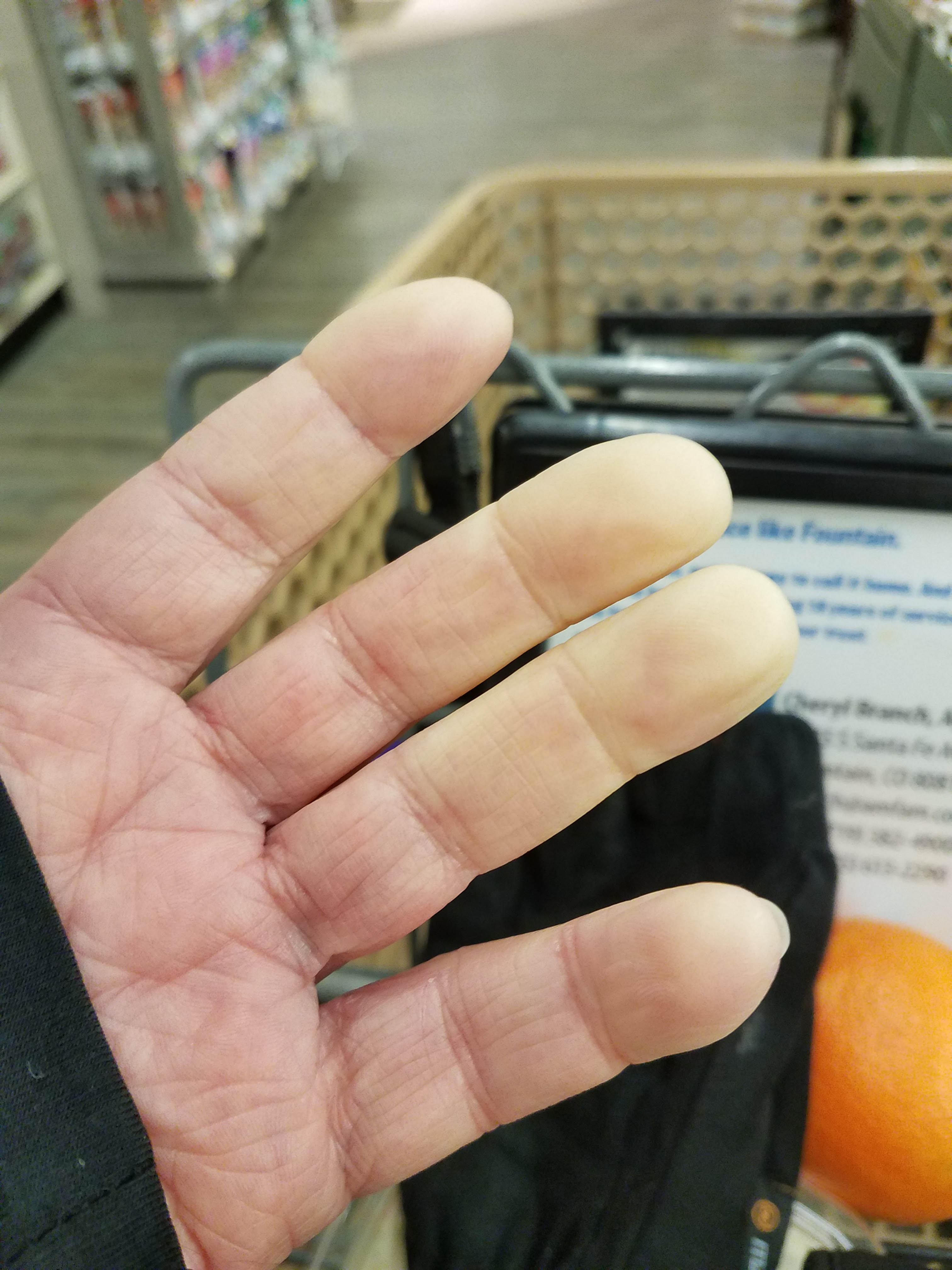
That’s why there is this thing called World Scleroderma Day. This is a complex autoimmune disease with illusive symptoms (brain fog… trouble swallowing…GERD…swollen fingers…trouble breathing sometimes…fingers that suddenly lose circulation and turn white or blue…) that make the disease difficult to diagnose without specialized testing and evaluation by a scleroderma specialist.

Systemic sclerosis (the form of scleroderma that I have) is thought to start with some event (still unclear) that triggers the formation of antibodies that target specific molecules the nucleus of cells. These antibodies lead to damage in blood vessels and their linings; the damaged blood vessels release chemical signals that trigger a cascade of events that impact other cells of the body. Some cells are related to inflammation. Other cells are tipped over into forming uncontrolled scar tissue (fibrosis). Here is the problem: the tissue engaged in fibrosis is all of the connective tissue. What is connective tissue, you ask? Think of all the ways a person is held together. Tissue that makes your skin stretchy. Tissue that holds your muscle fibers together. Tissue that makes up your tendons, ligaments, and the structure in your joints. Tissue that holds your intestines, heart, kidney, and lungs together. The cartilage in your ribs. All inflamed, under attack, and forming thicker and thicker layers of scar tissue. Some of this damage causes calcium deposition. Unobservable from the outside, the patient is slowly hardening inside. The most obvious symptoms is the skin thickening and then pulling tight over time.

Scleroderma, and especially systemic sclerosis, has the highest fatality rate of all rheumatic diseases. Did I mention that there is no cure? There are treatments for complications that develop like pulmonary arterial hypertension (PAH) and interstitial lung disease (ILD), but they, like the immunosuppressant drugs that many of us take, mostly stabilize and slow progression. (Dear Kaiser lady… that’s why I was getting a blood draw. The drugs that I take are risky, and my doctors need to make sure my kidneys and liver are tolerating the meds okay.)

So, what is the purpose of World Scleroderma Day? It’s to highlight this condition that impacts more people than it should even though it is rare. It’s to raise awareness of the symptoms and hopefully aid in other people getting an appropriate diagnosis. Maybe shining a spotlight on scleroderma will help in getting funding for research, treatments, and even a cure.

Sunflowers are the international symbol for scleroderma.

Here is where you can learn more about scleroderma, it’s symptoms, and treatment.

PS How was my blood work? Yay, doing okay!! Kidney function is up into normal ranges again!!! How old am I? I was born in 1951. 🙂


The Scleroderma Chronicles: A Decade on the Little Teal School Bus.

Here it is again: World Scleroderma Day.

June 29th is World Scleroderma Day. In Australia sunflowers are used as a symbol of scleroderma. Almost everyone uses the color teal for scleroderma.

I used to be a high school biology teacher before I became a scleroderma patient, and I took my students on field trips sometimes. We would all pile on the bus and off we went on one adventure or another: into the mountains for an ecological assessment, or to the Natural History Museum for an anatomy lesson, or a visit to a biotechnology center, or even off for the weekend to study for the Biology AP Exam. It was always exciting, exhausting, sometimes joyful, often a little overwhelming, and at the heart, an educational experience.

Lately I have been thinking about my illness as a ride on a little teal-colored school bus with a crazy rainbow striped zebra behind the wheel. That dang scleroderma zebra is careening down the road on its way to an unknown destination just over the horizon, and would you believe it, he keeps stopping to pick up more passengers along the way.

Don’t make fun of my bus! I changed the colors on some clip art that I found, and putting a zebra behind the wheel was beyond me!! Use your imagination… the zebra is braying hysterically while driving the bus!

When the bus stopped for me, and I stupidly jumped on board, I only had a few symptoms. I had some trouble swallowing sometimes. I had GERD. I suddenly lost circulation in my fingers if I got cold. Speaking of my fingers, they were pretty fat and puffy. I had lots of red blotches on my face, and the skin was pulling tight. It was hard to open my mouth wide…

Still, I was feeling pretty hopeful as I jumped onto the bus. “This will be fun!” chortled the scleroderma zebra. Bad zebra, bad!! Before I knew what was happening, that dang striped miscreant had pulled the bus over, opened the door, and couple of little demon passengers had hopped on board: kidney disease and gastric complications. What kind of an outing is this… have you ever heard a zebra laugh?

Bouncing down the road, suddenly screeching to a halt periodically to pick up a new passenger, the zebra continued the crazy outing in the little teal school bus. The little demon passengers kept piling into the bus, and those little monsters even started to sing “the wheels on the bus go round and round…” while laughing and clapping. What kind of a field trip is this, anyways?????

The demons all wore little nametags:

  • Gastroparesis
  • Pericardial effusion
  • Chronic respiratory failure
  • Diastolic dysfunction
  • Pulmonary Arterial Hypertension
  • Interstitial Lung Disease
  • Heart Failure with preserved ejection fraction

“STOP THE BUS!!!!” I shouted at the zebra! “I absolutely did not sign up for all of this sh*t!!!!” Nope. Evidently there is no stopping the bus. Ten years on the road, and we are still on our outing. Somehow some extra demons that don’t even wear nametags snuck onto the bus, but they are certainly annoying as they are making all my tendons hurt and what is up with all this edema!!!! Did I mention the fatigue? Always, always there is fatigue. That fatigue demon is sitting on top of the bus blowing raspberries at all the other people on the road…

It has now been a decade for me on the little teal school bus: always exciting, exhausting, sometimes joyful, often a little overwhelming, and at the heart, an educational experience.

I learned about prioritizing and not worrying about things that haven’t happened yet. I learned to advocate for myself, and I have maneuvered myself into the care of some great doctors. I have learned to build for myself a network of supporters. I pretty much have lost interest in making money, but I’m highly motivated to help others. I’m keeping notebooks and collecting souvenirs while on this field trip, and to be frank, it is the outing of a lifetime. Believe it or not, I’m now singing along with the little demons on the bus with me…

The wheels of the bus go round and round… and the zebra is still laughing its head off… and I’m okay.

Shine like a sunflower, everyone!

Happy World Scleroderma Day.

Note: Scleroderma (systemic sclerosis) is a rare autoimmune disease that is chronic, progressive, and often fatal. It has three main hallmarks: damage to blood vessels, the development of autoantibodies, and subsequent scarring of tissues and organs. Right now, while there are many excellent treatments emerging to handle the serious complications due to the underlying disease (like my pulmonary arterial hypertension and interstitial lung disease), there is no cure. You can learn more about scleroderma and systemic sclerosis in the links below.

The Scleroderma Chronicles: Rare Disease Day, 2022

Well, this is a hard topic to write about. Quite frankly, I have been getting my butt kicked lately by my (wait for it) rare diseases. Still, I am trying to respond to the calls for publicity about rare diseases along with other members of the scleroderma and pulmonary hypertension communities.

You know, I feel like I should represent.

People with rare diseases are referred to as “zebras” in the medical community.

So, what’s a rare disease? A rare disease is classified as one that impacts a small percentage of the total population. Here in the United States that means fewer than 200,000 people diagnosed with the condition/disease. Perversely, there are a lot of people with rare diseases as there are almost 7,000 different rare diseases!  Some of these diseases are common enough that you may be familiar with them: albinism, achondroplasia (a type of dwarfism), and autoimmune hepatitis are examples. Others are very rare. Most are genetic in origin, and half of them impact children. More than 90% of rare conditions have no drug treatment.

The type of scleroderma that I have, limited systemic sclerosis, is considered rare as there are about 100,000 people in the US with this diagnosis. The latest diagnosis added to my medical history is of pulmonary arterial hypertension, another rare disease, and one that is a consequence of my scleroderma. Well, I am really rare now! I have struggled to explain my scleroderma to people when they ask; how can I explain in just a few sentences something that is just frankly causing horrific damage to my body and generating an ever-growing list of diagnosed conditions. Here’s my best answer at the moment:

Scleroderma is a chronic, progressive, uncurable, and often fatal autoimmune disease that causes scaring and damage to blood vessels, skin, internal organs, and muscles/joints. It is controlled and treated through the use of immunosuppressants and drugs that address symptoms. It is a life-altering diagnosis. It is my life.

So, I have blogged about Rare Disease Day several times in the past. Here’s what I wrote a couple of years ago, and what I wrote in 2018. In the past I have written about my symptoms and the struggle of living with a rare disease. It is pretty isolating. It is hard to get diagnosed and treated. I have also written about the difficulties to get funding for research for rare diseases and conditions, and the lack of treatments and cures because the patient population is so small.

This year I thought I would share some of the things that doctors have said to me since my scleroderma diagnosis. I’ve tried to organize these into chronological order to better reflect my journey.

  • My internist: It’s good to have a diagnosis, even if it is a shame.
  • My rheumatologist when I asked him what my life would be like in 5 years: Let me run some more tests, and then we can talk.
  • My ophthalmologist: Do you have a will?
  • The physician at the regional acute diagnostic center: This is a diagnosis like cancer. Of course, some cancers can be cured.
  • A physician speaker at a scleroderma support group presentation: this drug [the immunosuppressant that I take] can really give you a chance, as long as you don’t contract an infection.
  • My old rheumatologist: All you do is complain. Maybe I should order a sleep apnea test or prescribe antidepressants.
  • My internist, as I begged for an anti-inflammatory drug: I’m sorry. There isn’t anything that I can give you that won’t hurt your kidneys.
  • My dermatologist, as she prescribed an anti-inflammatory topical gel: This is unacceptable, and I am putting a stop to it now.
  • My new rheumatologist as she orders more testing on my painful joints: Why has no one followed up on this?
  • My rheumatologist two days later: You need to get a steroid injection in your hip joint as soon as possible.
  • The hip specialist: There is nothing more that I can do for you because your scleroderma is attacking all of your tendons and ligaments. You need a hip replacement, but it will fail.
  • The physician at urgent care: I don’t think they understood how complicated your medical status is when you were referred here. You need to be hospitalized because we can’t do the testing that you need here.
  • My pulmonologist as he walked me back to the waiting room: I really admire your attitude.
  • My cardiologist as I was being sedated for a right heart cath: Don’t worry. I’ll take good care of you.
  • My cardiologist as he started me on medication for pulmonary arterial hypertension: This is challenging, and we will need to be comfortable with “out of the box” thinking.
  • My rheumatologist last week, referring to herself, the cardiologist and the pulmonologist: We are your team!
  • My rheumatologist, also last week: We need to add a gastroenterologist to the team.

You can see how rocky the start was. There is a lesson here, I think. To be rare, to be a zebra in a medical community that is designed to identify the most likely cause of symptoms in a herd of horses, is hard. It is really challenging to secure the care that you need when, no matter how hard doctors try, you do not respond to the usual treatments, and you never fit the usual profile. It is easy to be seen as a problem. It is hard to keep insisting that there is something wrong when all the test results say you are okay.

Even when you are blue-lipped and panting it can be hard to convince doctors that there is a problem.

And yet, it is possible to get there. Over time, with great determination and persistence, I have A TEAM of doctors who view themselves as active collaborators in my care. They message each other to discuss test results and possible drug interactions, and they loop me into their discussions. It is only now, newly diagnosed with a terminal condition, that I feel confident and hopeful about my care.

Today I went in for a blood draw and a little jaunt through the local bookstore. The sun was shining, I bought a Starbucks coffee, and it was a good day.

****************************************

My scleroderma-related diagnoses:

  • GI tract: difficulty swallowing, hiatal hernia, GERD, gastroparesis, chronic gastritis.
  • Kidney: stage 3 chronic kidney disease.
  • Lungs: pulmonary arterial hypertension, interstitial lung disease, asthma, partial lung collapse.
  • Heart and circulatory system: grade 2 diastolic dysfunction (a type of heart failure), Raynaud’s phenomenon, telangiectasia.
  • Muscle/Skeletal: fibromyalgia and severe joint damage.

This is scleroderma. I’m a zebra, and these are my stripes.

Happy Rare Disease Day, everyone!

The colors associated with my diseases are teal (scleroderma), purple (Sjogren’s), and periwinkle (PAH). It sounds like the start of a great sweater, huh. 🙂

Hannah and the CoalBear: Mateo does Caturday.

Hi. I’m Mateo (AKA the CoalBear).

I’m almost 10 months old now. What do you think of my ruff?

The Mother of Cats isn’t feeling well today so I am hanging around with her on her bed. I’m helping her write on her computer right now! I’m such a good boy!

I’ve been bringing toys onto the bed so she can watch me play with them.
I chewed on the palm plant downstairs to keep up my energy.
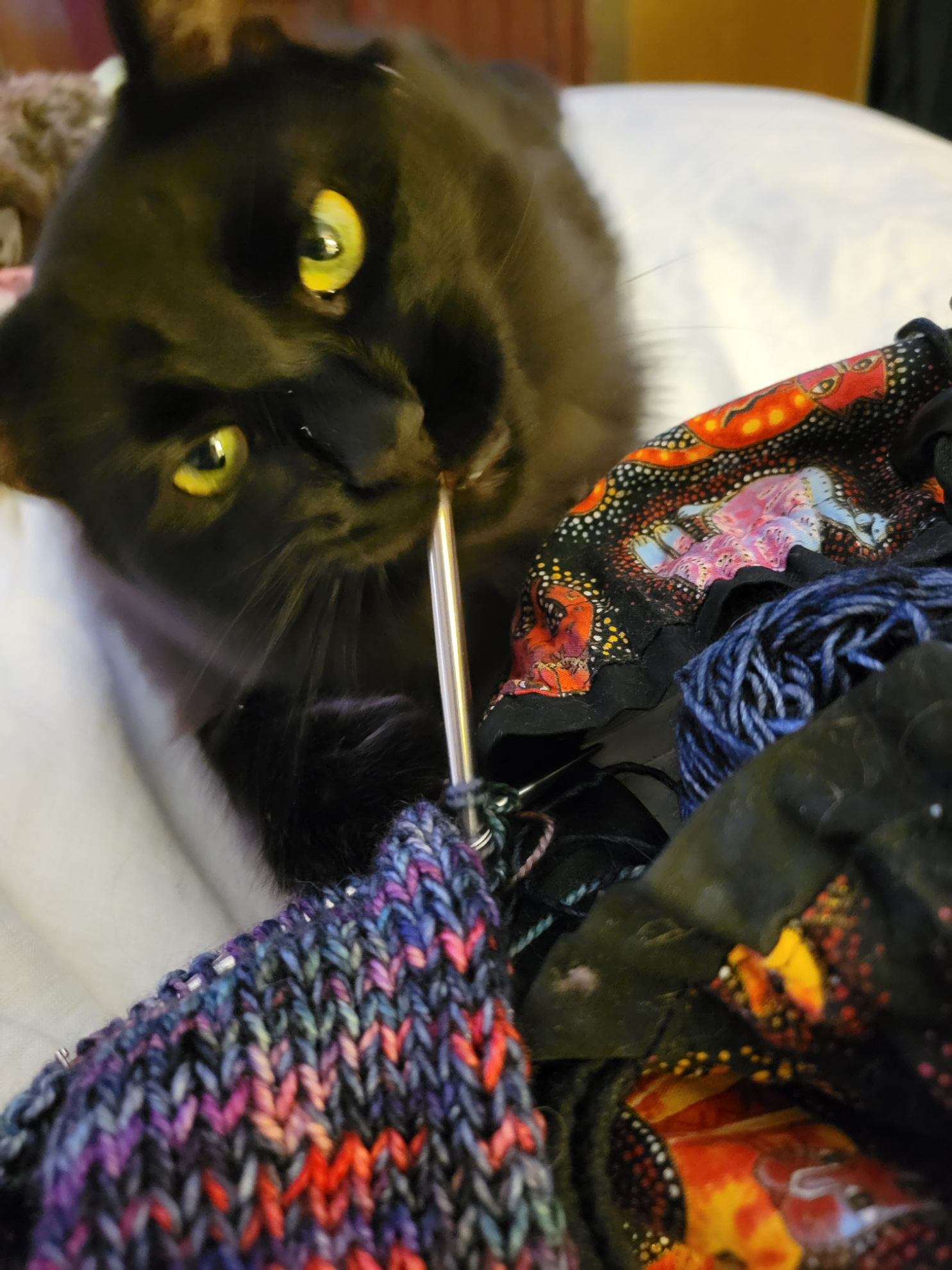
I then helped the Mother of Cats with her knitting. I’m such a great helper!!
I groomed my sister so she would let me sleep on the cat tree with her.
I’m the best CoalBear ever!!

Happy Caturday everyone!!

May you all have an excellent day!

Notes from the Mother of Cats:

I’ve gone off my immunosuppressant drug so that I can get my Covid booster on Monday. Sigh. There was a big pressure change yesterday with a cold front that triggered some symptoms along with the predictable flare of my disease that has me back in bed for the weekend.

I’ve been in lockdown for two years and I desperately want the booster because my next round of medical appointments starts in another week. I also want to start knitting with my new-found groups, too. I want some of my life back!!

Please think of me and the other people in a situation like my own (high risk, immunosuppressed or immunocompromised, and struggling with chronic conditions that complicates their lives on the best of days) when you are out in public.

And wear your mask!

ps: I threw out the palm last night. It wasn’t a match for the CoalBear and I was afraid it would make him sick. Next up: a Boston fern.

The Scleroderma Chronicles: June is Scleroderma Awareness Month

Five years ago the course of my life altered forever when some blood test results ordered by my doctor arrived: the results showed that I definitely had two autoimmune diseases. Specifically, I was producing antibodies that were diagnostic for scleroderma and Sjogren’s disease. I was expecting lupus, so this was kind of a surprise shock. After a quick trip to Google to establish what type of scleroderma was associated with my positive test results I burst into tears. It was worse, much worse, then I expected.

The scleroderma diagnosis was the problem. Through an unbelievable sequence of serendipitous life events I was more knowledgeable then the average newly diagnosed patient, and I knew that scleroderma was a disease that impacted connective tissue, that it was progressive, disabling, and that there was no cure. This was a life-altering diagnosis, and I was in for a long fight that would last the rest of my life.

You see, I used to work in a rheumatology research lab, and I did research in scleroderma. I was a member of the research team that found the first identified antigen associated with scleroderma. I had visited scleroderma patients in the hospital. Later in my life I taught AP Biology and spent years trying to explain connective tissue to students.  It’s a type of tissue that we just never think of, but it is critical in organizing and operating our bodies. Connective tissue makes your skin elastic and strong. It organizes your muscles and makes up your tendons and ligaments. It is a critical layer in your blood vessels, and is part of the essential structure of all of your organs.  In scleroderma all or parts of this connective tissue is under attack by your immune system.

As white blood cells invade my tissues and attack this connective tissue it produces too much collagen in response. The built up collagen produces thick layers of tissue and scarring. My fingers look really swollen, but it is actually very thick hard skin. My skin is also getting really shiny which means that the collagen is hardening up and losing flexibility. Must knit faster!!

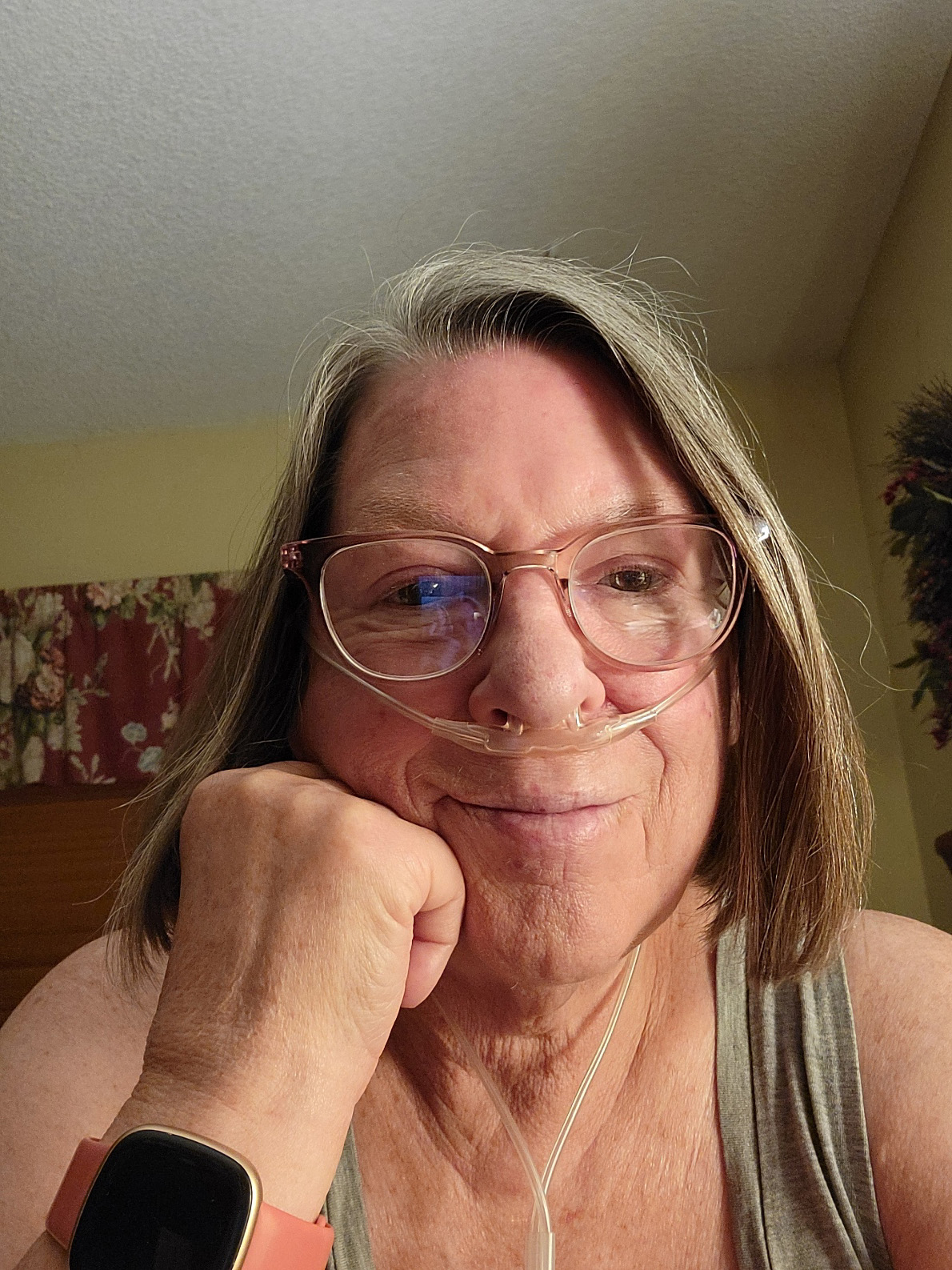
You can perhaps see that same thickness on my face, especially on my cheeks. It means that I don’t have wrinkles, but it is also hard to open my mouth, my smile is mostly gone, and I can’t turn my neck well. Crazy, huh.

That is the most ironic aspect of scleroderma: you look pretty darn good, especially if you are a senior citizen like myself, but you actually struggle daily with your illness. For many scleroderma patients their disease just  involves the skin, but for others, the disease is more than skin deep.

As it turns out, my skin is the least of my worries. The rare type of scleroderma that I have, systemic sclerosis, also causes scarring of internal organs. The muscles of my stomach and esophagus have lost function. My kidneys are damaged and I have chronic kidney disease (stage 3). My lungs are scarred and my diaphragm isn’t exactly happy any more. Part of my stomach herniated up into my chest this year… whatever was it thinking of?! My tendons are getting calcified due to inflammation and at least one has partially ruptured. My muscles are sore to the touch and I have bruises everywhere. I have nerve damage and trouble controlling my body temperature. It’s hard to walk. Blood vessel damage affects circulation to my hands and feet and I’m starting to develop open sores (ulcers)… There is a long list of diagnosed conditions linked to my scleroderma, but you get the idea. Pretty much I’m a walking limping train wreck. Well, a knitting train wreck for sure!

There is no cure for systemic sclerosis, but there are treatments that really help a lot. I am taking four different drugs to crush my immune system into submission; it’s a balancing act as I need my white blood cell count to stay high enough to protect me, but low enough to control my symptoms and prevent more damage. I take a drug to shut off the acid produced in my stomach so I won’t accidently inhale it in my sleep since the muscle barrier that usually keeps it in my stomach is now gone. I take a couple more drugs that help control inflammation, and some supplements that help with nerve damage. I’m on oxygen at night. All of these drugs/supplements have made a huge difference for me: my last lung scan showed improvement and my high heart pressure, the most concerning complication that I had, has returned to normal ranges. My kidney damage continues, but it has slowed way down. There is something funky going on with my red blood cell count, but you can’t win them all, right? The main point is that I continue to manage and live independently.

MacKenzie and I last year when I posted this online as part of the “Face of Scleroderma” campaign.
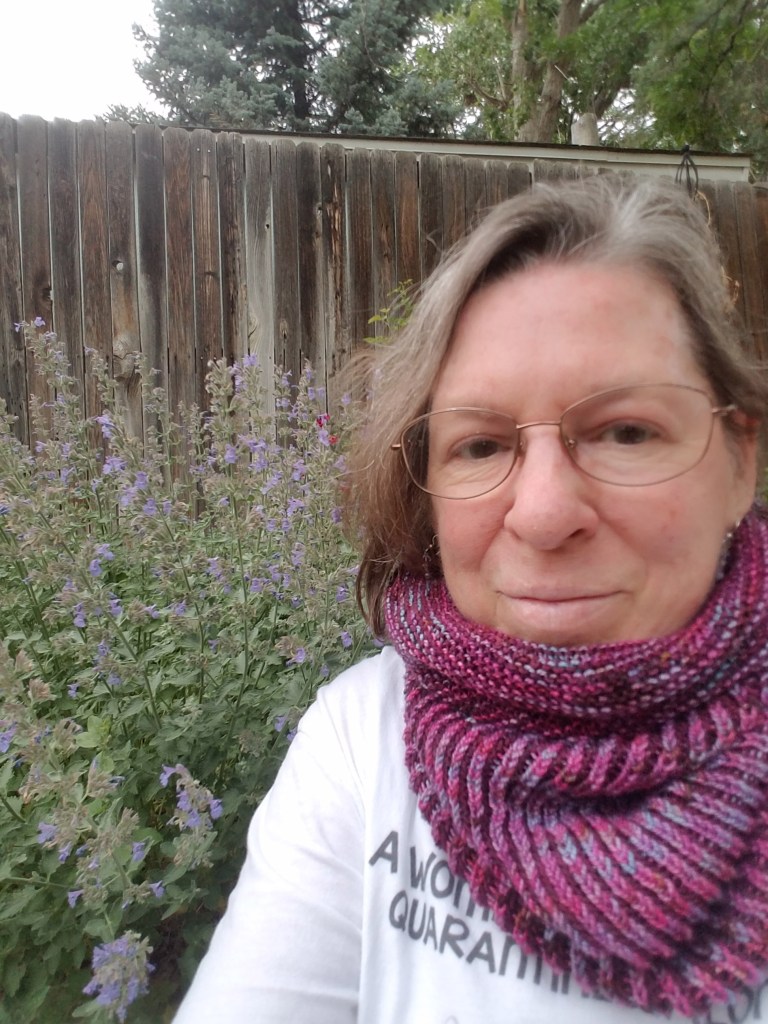
In short, I am a mess. And yet, to the joy of my doctors, I continue to do really well. Okay, I have blue lips, am short of breath, and struggle with tissue damage, but I also continue to thrive compared to other scleroderma patients that they treat. I have had to make many changes to my life, but I have found work-arounds and I still do things that I love. Attitude is all!

Well, knitting, the cat, and the garden are pretty darn essential, too!

So, there it is. What an annoying disease, right? How dare it make you look younger while shortening your life? How dare it do all of this invisible internal damage that makes people think that you are lazy or an attention-seeking hypochondriac when actually you view each day that you are able to leave the house as a personal victory? I’m in several online support groups and there are people dealing with crushing negativity like that. I can see how it can happen; it is so hard to understand something beyond your own experience that is hidden from view.

That’s why there is Scleroderma Awareness Month. It is hard to have a rare disease, especially when it is one that is hard to pronounce (Sclero… what?!). It’s harder still to have one that has no cure and a pretty high fatality rate (hey, with all of the drugs that I’m on my 10 year survival rate is now up to 80%!!). It makes you learn to laugh in the face of terminal complications while forcing you to take every possible precaution to avoid contracting Covid-19. It messes with your head; it gives you power, but it’s also strange and a little lonely.

That’s why we scleroderma patients share our journey with all of you every year so you can get a glimpse of our lives.


If you look harder you will see the signs of my scleroderma on my face. The small red spots are called telangiectasia and are symptomatic of my form of systemic sclerosis. The skin of my forehead is tight and shiny, my hair is falling out,  and my dimples are now buried under my thick skin. My upper lip is trying to decide if it wants to turn blue… 

I am the Face of Scleroderma.

Footnote: In addition to scleroderma I also have Sjogren’s Disease and fibromyalgia. The symptoms from these three diagnosed conditions overlap and always make things interesting in sorting out my treatment plan. You can learn more about any of these autoimmune disease by checking out the links in my post.