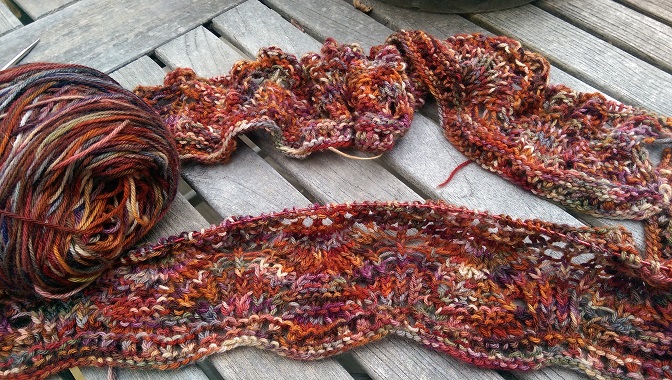
It’s July! The garden is blooming, it’s a wonderful time to hit the great outdoors, and the warm afternoons are prime knitting and reading windows of opportunity. I have been spending the this week working on a fun shawlette from Bijou Basin called Culebra.
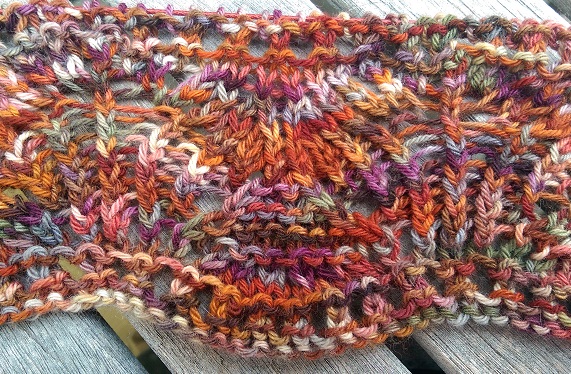
I loved this yarn when I first found it at the Interweave Yarn Fest. It’s 85% Yak and 15% Nylon. As soon as I wound the yarn my enthusiasm waned a little. It didn’t look very nice anymore. Once I started knitting it I was in love with the yarn again. I had to cast on three times to get the correct number of stitches (long tail cast-on issue; somehow I never learn…) and the yarn really bloomed and softened as I worked with it.Here’s a close-up of the lace design on the shawl. Fun, huh. The yarn is Tibetan Dream yarn by Bijou Basin. Here’s my project notes on Ravelry.
I finally finished the lace portion of the shawl this afternoon and now the rest will be garter stitch short rows from the middle of the shawl out which will create a shallow crescent shape. The shawl is knitted from the lace edge up towards the top. Lots of stitches to cast on, but then the knitting was easy. Now that I am out of the lace I am definitely in the knitting home stretch on this one.
My garden is blooming and looking much better than it did a couple of weeks ago, but it is absolutely lacking in humming. I haven’t seen very many bees hanging around even though I have lots of flowers that they like. Look at what is happening in my strawberry patch:
See all those luscious baby strawberries? Right. Neither do I. These plants have bloomed like crazy, but no berries. Dang it!
I miss the bees this year. I used to show a NOVA video to my biology classes about bees that they really liked a lot called Tales from the Hive. Bees are just amazing; a few years ago I entered a drawing for a bee hive for my classroom and was just crushed when I didn’t win. (Sounds strange, but this is a thing. The hive would have been set up in my room’s greenhouse and the bees would have traveled outside through a Plexiglas tube.) Years ago I had a bumblebee nest in the garden and they were the cutest things… Ok, there was one little incident with the cat, but other then that it was all peaceful. 🙂
Bee Books! I am behind in my reading resolution for the year. It’s the first of July, and I am now on book #44. I should be done with book #50, so I need to pick up the pace a little. As it turns out I have a stash of books (almost as big as the yarn stash) that includes a number of titles that involve bees. Hey. That’s the ticket. I’ll read bee books. Here’s the list.
This is the book that I’m reading right now. It’s about bumblebees. the kind of bee that used to live in an underground nest in my garden. I hadn’t really thought about them as being different from honey bees, but they are.
This is actually an eclectic mix of genres in this little collection of bee books. Some are informative non-fiction books, one is a mystery, a couple look to be great little novels. Perfect reading for the high days of summer.
I’m always on the hunt for a good science fiction novel. Like many other readers of the genre, I’ve run into my share of books set on multi-generational space ships traveling to distant stars. Some of these books are great, and some not so great. The problem, I think, is in creating a believable world within the boundaries of the ship while spinning the tale for the reader. Some authors get lost in the technical details of creating an independent, self-sustaining world and social culture within the ship and forget that they meant to tell us a story. Others remember the story but it is set in such a flimsy framework that it just doesn’t work. Every once in a while, however, I come across a book that strikes the right balance and is just great.
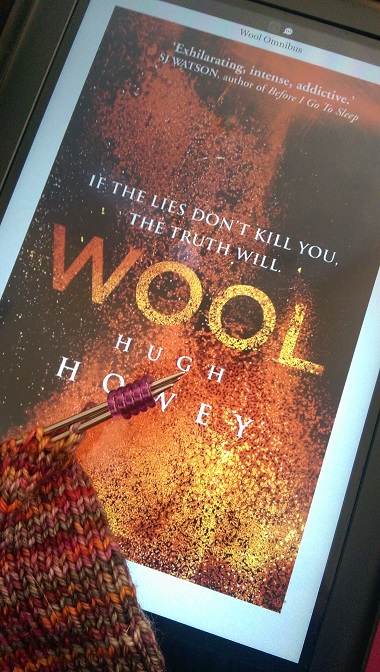
Hello, Wool by Hugh Howey! This book isn’t set in a spaceship traveling to a distant star, but in a silo with 144 levels set deep into the earth. The silo is closed off and completely self-contained, and the few thousand residents have lived within it for hundreds of years. Everything on the surface of the planet is now dead, and the only chance for the survival of our species is to stay within the closed ecosystem of the silo until the earth recovers. Instead of traveling to a distant location, the residents of the silo are time travelers to a distant future and the journey began a long, long time ago.
Here’s the deal: nothing is what it seems. It isn’t clear how the earth was destroyed, and the residents have no notion of any other world other than the one that they live in; their history was lost when computer servers were wiped during a past rebellion. There is a rigid social structure within the silo, and reproduction is carefully controlled by lottery while dead citizens are “recycled” in the gardens that grow food and produce oxygen. The lowest levels of the silo contain the critical power plant, the mines and the oil production facilities. The top levels contain the workers of the more “white collar” occupations. Gluing it all together are the major administrators: the mayor, the sheriff, and the head of the IT department. It is essential that the status quo is maintained. Dissension and rebellion are ruthlessly repressed, and it is absolutely forbidden to express a desire to go outside; to do so is a death sentence.
Mr. Howey has created a fantastic immersive world within the silo; it is believable and hangs together extremely well. (It is so real that fans have been sending him schematics of the silo…) The story is also great; it begins with the death of the sheriff and a subsequent power struggle. As events unfold it quickly becomes apparent that the world in the silo isn’t what it should be; lies are being told, there are mysteries within mysteries, and the hunt for the truth is very dangerous. There are deaths, rebellions, a heavily guarded IT department, and so many secrets. Our girl, the newly recruited sheriff Juliette Nichols, is determined to get to the bottom of things. The trouble is, the truth may be even more dangerous than the lies.
I loved this book! I was dragged in by the suspense and driven to understand what was going on. The characters are complex and well constructed; their stories were so real to me. I bought the next two books in the Silo series, Shift and Dust, and just kept reading. These books bring new characters into the story, and as the pages went by I started to understand how everything hung together. The resolution of the story and the integration of all the independent characters was a little weak at the end, but altogether the three books were great and I am on the hunt for another book by this author. Gosh, I hope they make a movie of this!
If you are a science fiction fan that doesn’t necessarily need a space ship, this book series is for you.
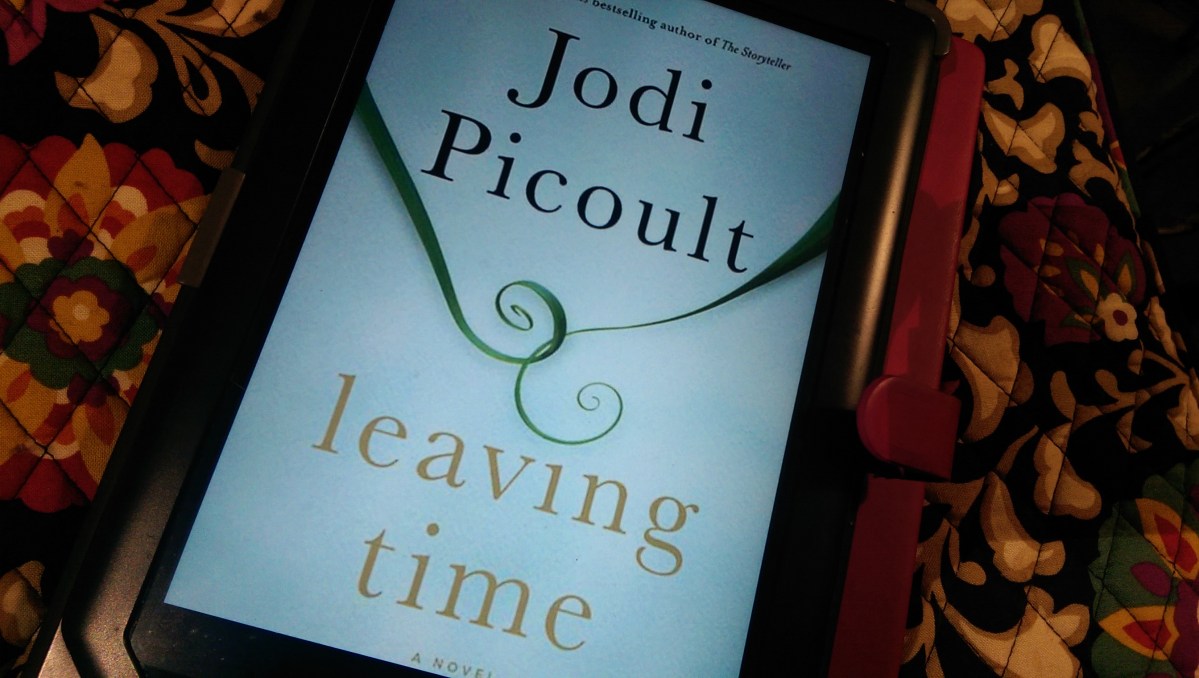
Gosh, I was really looking forward to this book. I just love Jodi Picoult’s books. They are always engaging and thought-provoking stories that are sure to capture me for days. As soon as Leaving Timewas released I traveled to the NOOK store to check it out and buy it. I always read the customer reviews before clicking that “purchase” button, however. Oh, oh. Not everyone liked this book. Some major spoilers were dropped by some of the reviewers, (may they have tons of snow to shovel, uncomfortable nights and frozen days. Also frozen pipes. Really, I hope that raging stomach flu breaks out in their households along with the pipes, not that I mind that they REVEALED major elements of the plot before I could read this book…) and some people were disappointed that there was so much information about elephants in the book. Well, darn! Now I have a problem. Should I buy a book whose unexpected twists and turns have been partially revealed ahead of time? Do I really want to know more about elephants? Elephants! Of course I want to know more about elephants! How can I resist reading a book that twists the plot around elephants?
Yep, that was the deciding factor. There are elephants in the book. You see, every year I showed a National Geographic video to my biology classes called Journey to the Forgotten River. This video documents the events that occurred during years of drought in Botswana, Africa when herds of animals travel from their normal habitat to the Linyanti. The great migration included herds of elephants who made the journey to this place where none of them had even been before. The memory of a safe haven at Linyanti is an ancestral one; it is inherited. What is going on in their brains, I would wonder every year? What is the biochemical basis of memory? How cool it would be to research that.
Then there was this 60 Minutes segment I saw on elephant speech called The Secret Language of Elephants. I seem to remember a researcher in the segment describing standing in front of the elephants in a zoo exhibit and feeling a low vibration; she had detected elephant speech in a register too low for us to hear. Modern elephant research now includes listening projects to collect examples of language along with other observation of their behavior; an elephant language dictionary is currently being developed. We all know that elephants have tremendous memories; evidently they also have language and culture. I’m a geek, through and through. There was no way I could walk away from a Jodi Picoult novel that included elephants even if I knew critical details of the story ahead of time. Hello, she had me at elephant!
It was a good decision.
The story in Leaving Time centers around Jenna Metcalf, a self-sufficient and determined 13 year-old hunting for her missing mother. Her mother, Dr. Alice Metcalf, was an elephant researcher who disappeared 10 years earlier under mysterious circumstances that included a dead body and (what a shock) an elephant. Driven by the need to know what happened on that fateful day, Jenna saves up her babysitting money and takes action to get to the bottom of things and find her mother. She hires a down-and-out PI and enlists the aid of a psychic. Together they investigate the cold case, hunt for answers, solve the mystery, and obtain closure. There, that is all you get about this plot because I refuse to spoil this for anyone! I will say that the themes of this book are engaging and meaningful. The book is about the bond between mothers and daughters, grief, memory, and the pervasive connections between people, between elephants, and even between people and elephants. Yep, you do learn a lot about elephants, but they are essential to the story. I was not surprised by all of the plot twists in the book, because of the evil, thoughtless spoilers, but the story held me fast, the need to solve the mystery was compelling and I cried at the end.
I did it! I went to Goodreads and joined the 2015 Reading Challenge with the goal of reading 100 books this year. That was the New Year’s resolution, and I am sticking to it! Luckily the weather is cooperating. It is cold and snowing again, and the cats and I are piled in bed reading between snow-shoveling breaks. If this keeps up I will have the 100 books done in no time!
Hunting for a warm and dry patch in the yard. Sorry, guy. There just isn’t one. Too bad kitties can’t shovel snow.
No, I will not be reviewing all of those books on this blog. (Did I just hear a sigh of relief from my sister in San Diego?? ) Seriously, that might cut into my knitting time! Besides, I really have no intrinsic desire to become a book reviewer; too much like doing book reports late Sunday night like I did in school. Every once in a while, however, there is a book that I feel compelled to write about. It consumes me while I am reading it, it forces me onto the internet to track down information, and leads me into reflection on the personalities and motivations of the story’s characters. I’m almost forced to write about it to get it out of my system. Having said that, let me present to you the first book of 2015. Ta-daa! The Beautiful Mystery by Louise Penny.
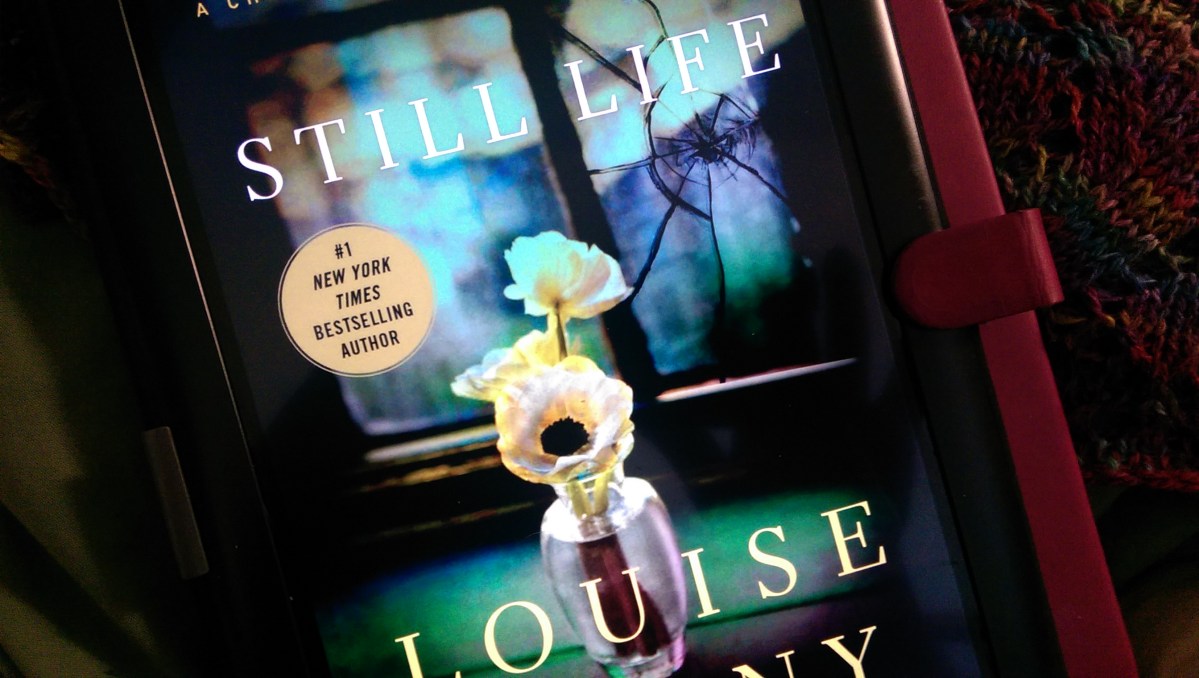
I’ve been reading her Chief Inspector Gamache novels steadily since I read the first one in early December, Still Life. What a series! I’ve grown to love the people of Tree Pines even though they seem to have too many murders in their tiny, artistic village with its great food and crazy duck-loving poet. The complex relationships between the Chief Inspector and his staff, the hint of a conspiracy of immense magnitude, the ongoing themes and mystery plots keep me reading each new book as I care about the people in them so much.
The Beautiful Mystery is a book of many layers. In the most simple terms the story centers around the murder of a monk in a remote monastery in the wilderness of Quebec called Saint-Gilbert-Entre-les-Loups. As Gamache and his second-in-command Jean-Guy Beauvoir investigate this crime they discover that the monks, who have taken a vow of silence and devoted their lives to the singing of unique Gregorian Chants, are deeply divided and engaged in civil war. When Gamache’s superior arrives at the monastery it becomes clear that another civil war is waging within the Surete du Quebec. If that wasn’t enough, further events make clear that the monastery’s secret location and devotion to music is part of an ancient division within the Catholic Church. Good grief! How many layers deep does this go?
It should have been a confusing book, but the many different themes and plots are skillfully woven together and the book is written beautifully. The murder is solved, some of the conflicts are resolved, and others move forward to be continued in further books. I am becoming concerned as this is the 8th book in the series, and I do hope that I will get to the bottom of this immense conspiracy within the Surete soon. Wait, forget I just said that. I think that the suspense was getting to me there. The truth is, this book was simply wonderful. It is a book about faith, love, betrayal and great divisions. It addresses addiction; to music, to drugs, to power, and what people will do to protect and secure their addictions. Easily, and too often, these addictions can lead to murder.
“The Beautiful Mystery” in Gregorian chant is the starting note for the chant; the baseline that can be used to compare all other notes to. This book is about beginnings, but it is also about endings; the beginning of the conspiracy in the Surete has now been reveled, the sides in the civil war are drawn, the battles have begun and resolution is coming. At the end of the book it becomes clear that Gamache is much more than meets the eye; he has been engaged in a campaign of complex and long duration to clean up the rot in the Surete. He feels he has “been at sea a long time, but he can finally see the shore”.
Please, please make it soon. I’m running out of books.
I’m starting How the Light Gets In, the next book in the series tonight!
Well, this is it. There are only a couple of hours left for the year. The end of a really busy year, and I have no idea what exactly was accomplished over the last 12 months. Well, I did read a lot of books and did a lot of knitting, but since I didn’t keep track of things, I don’t exactly have any numbers. I do have a memory of a quilt that I made for my younger son, and then there was the enormous landscaping project along the house, but seriously, the year is just a blur.
This year I would like to set some goals and then measure my progress. With the best of intentions, here is what I’m planning for in 2015.
Seriously, how many sock books does one knitter need? Wait… that’s not a fair question.
Knitting
I’m going to go through my sock books and select a different sock to make each month. Then I will knit the sock! Seriously, I will get this done.
I will knit the socks with the STASH YARN!!!
I will make a really serious effort to record my projects in Ravelry.
I tend to make multiple items of the same pattern, so I will also start a spreadsheet to list my knitted items. Ha! Next year I will know exactly how many baby booties I actually made.
Here’s my beautiful Schacht wheel. Poor baby, the flyer is in pieces and it actually has a loose screw.
Spinning
I dropped my spinning wheel. Parts fell off. I finally sucked it up and told Maggie Casey of Shuttles, Spindles & Skeins (Boulder, Colorado) that I had hurt my baby. She told me (3 months ago) to bring it in and she would fix it. I will for sure absolutely without fail take it in this month!! next month before summer.
I’m struggling with the spinning wheel because I bought 5 ounces of Paco-Vicuna roving to spin. Wow! This stuff is soft beyond belief. I’m afraid to spin it. If the wheel is broken, I can’t be expected to spin it, can I? All right. I’m a big person. I will without fail get this fiber spun before the end of the year.
The Paco-Vicuna is from a local grower, Jefferson Farms. The name of the animal is Gulliver. I promise to call them up before the year is over and I will go visit Gulliver. Won’t that be a fun post!
This fiber is so soft I am scared to spin it. I need to settle on a project first, I think.
Books
Goodreads says I read 25 books this year. That can’t be right!! I know that I am reading more than that. Therefore I resolve to list every book that I read at Goodreads this year.
I will even review every some of the books that I read.
Maybe I should start a spreadsheet while I am at it.
I would love to read 100 books this year. Ha! Really, it will be fun!
Here are the Home Run on the day I planted them. The shrubs are now 2.5 feet tall and covered with blooms after two years of growth.
Roses
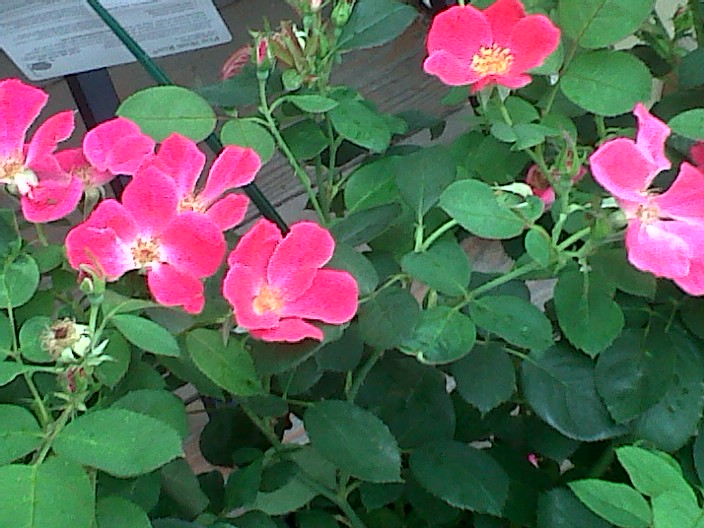
The roses at the front of the house, Showbiz, look just terrible these days. Mainly they serve as food for wandering insects. Maybe I shouldn’t have dosed them with bleach while painting the house two years ago. They have never been the same again…
I am going to rip those roses out and replant with some roses that are hardy, full of blooms and resistant to insects. The Home Run roses at the side of the yard look great. Maybe I will get some of those for the front.
That’s it. There is only an hour left to the year. Goodbye, goodbye 2014.
I started reading this book the Sunday of Thanksgiving week, the same day that is the setting of the book. Hey, it’s a sign. As it turns out Thanksgiving in Canada is in October, but still it was an eerie coincidence. Obviously this book and I were meant for each other.
The first sentence: Miss Jane Neal met her maker in the early morning mist of Thanksgiving Sunday. The hairs went up on my arm, and I settled in for the afternoon.
Jane Neal is the retired schoolteacher of the small village of Three Pines located in Quebec. This village is so small that it doesn’t even appear on any maps. Amazingly, it is the home to a small community of complicated and richly conceived characters. There is a lumber mill, a bistro, a new and used book store, a B & B, and all the other small stores and businesses that you would expect. This is also an artistic village filled with introspective, clever and creative people. Some of the people are decidedly odd, but it all works somehow as people interact and support each other.
Chief Inspector Armand Gamache arrives in this village, sets up a command post, and sets about solving the crime. He is stable, kind and gentle. Huh? This is a homicide investigator? Yep. He is the best kind: self-contained, insightful, patient, polite, and powerful. An excellent superior and mentor; he installs confidence and loyalty in those he leads. He listens well, observes even better, makes connections over distance and time, knows that old pains can lead to deaths years later, and is not afraid of decisions or confrontations. With him are Inspector Jean Guy Beauvoir and Agent Yvette Nichol, and together they set about solving the murder. This is how it begins:
In all the years Jean Guy Beauvoir had worked with Gamache, through all the murders and mayhem, it never ceased to thrill him, hearing that simple sentence. ‘Tell me what you know.’ It signals the beginning of the hunt. He was the alpha dog. And Chief Inspector Gamache was Master of the Hunt.
The book is about the hunt. Gamache knows that murder is often personal, and this one may have been years in the making. He engages the community, unpacks their events, secrets and history, and eventually pieces together what happened, why, and by whom. Of course; this is a murder mystery.
I really enjoyed the book. It was well constructed and contained enough suspense to keep me flipping pages late at night. The conclusion was satisfying and believable. What I didn’t expect is how much I would love the writing of this book, appreciate the host of village people (and their amazingly snappy and snarky dialogue!), and long to be a member of this community myself. I so want to pack up my car with the spinning wheel, loom, my yarn stash, as many books as I can cram in and move there! I could get a dog and plant some roses and really, I would be happy…
Well, that isn’t going to happen. However, I was thrilled to discover that there are nine more books in the series for me to read. Hey, in a way I can move to Three Pines after all! Happy, happy, happy.
I am a child of the 50’s. I had a happy childhood, loved school, and really, really liked science. My standout memories of my elementary years are these: we made a paper machè cow in 2nd grade, the sunset is red because that color light is bent by the Earth’s atmosphere more than the others, Russia launched Sputnik, John Glenn orbited the Earth, chocolate comes from cocoa beans, and the Golden Age of Greece was only 50 years. What a hodgepodge of memories! As a child I knew absolutely that America was the best nation on Earth, and that I was living in a new Golden Age. In my mind, always, the Golden Age was linked to spaceflight. I also knew that the Golden Age of America would probably end within my lifetime.
I have lived through amazing times. I watched the moon landing, abandoned my slide rule in favor of calculators, learned to write programs and use computers, watched the arrival of the Internet, and now own a cell phone that is actually a powerful computer beyond anything I dreamed of as a child. The world of biology has transformed in an equally powerful way as understandings about DNA and cells created an explosion of biotechnology that affects our food supply, medical options, and quality of life. Energy use and production has changed, human population has exploded, and diseases that I never heard of before have emerged. Polio is almost gone, Ebola is here. Climate change is upon us, and the geopolitical climate is transforming at the same time.
The Golden Age of Greece was only 50 years. What we have today will not continue forever.
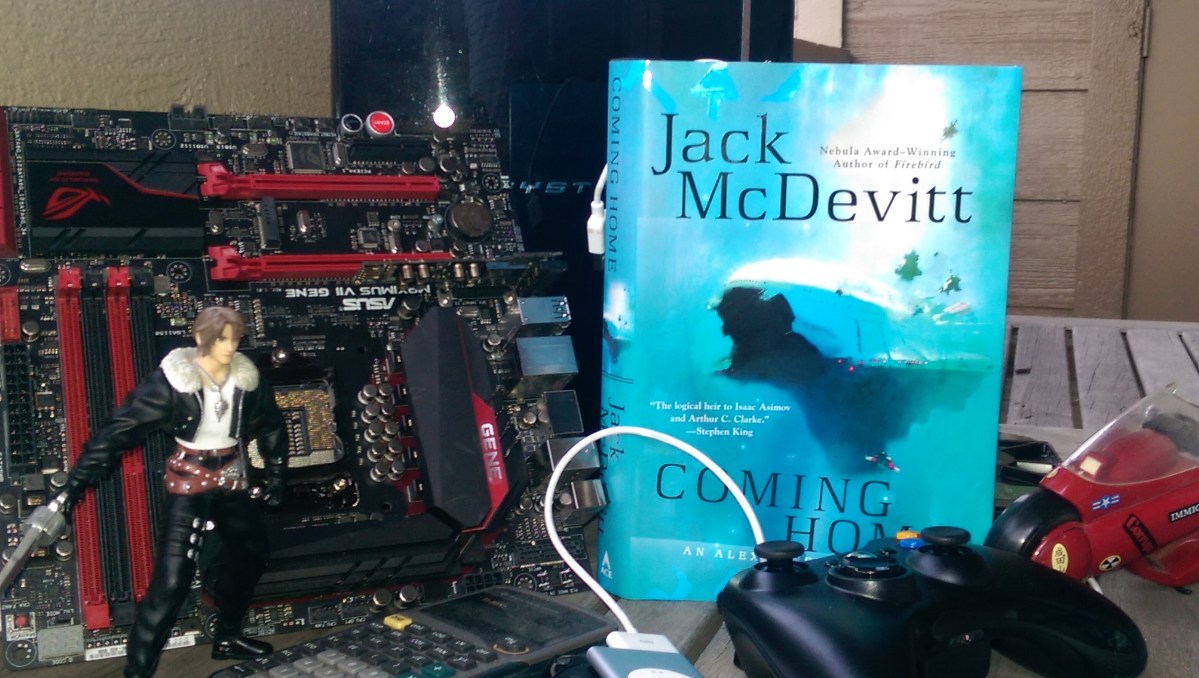
This is one of the central premises of the book Coming Home by Jack McDevitt. In the book the society that we live in now eventually crashed, entered a Dark Time, and much was lost; the time when man first began to enter space is known in the future as the Golden Age. Thousands of years have gone by, humanity is spread over many distant planets, and the bits and pieces from our time are now worth money. Because of the intervening Dark Time, books, art and other artifacts from our era are rare. Just imagine: a drone, a copy of Pride and Prejudice, the lamp on President Obama’s desk, and James Watson’s Nobel Prize medal all for sale! The antiquities trade developed in the future is very lucrative for the right dealer, and objects from the time when people first left Earth and entered space are especially marketable. You know, a laptop that went to the moon, parts of the lunar orbiter, mission patches from the original astronauts, slices of moon rock, a coffee cup from the first mission beyond the asteroids. These things are now worth a bundle.
The story focuses on Alex Benedict, a successful antiquities dealer who is part detective, part celebrity, and his associate Chase Kolpath, interstellar pilot and Girl Friday. When a client brings them an ancient electronic device found in a closet during a clean out, they quickly realize that they have found an important artifact from the Golden Age of Earth. The previous owner, the deceased Garnett Baylee, devoted his life to finding a mythical cache of rescued materials from ancient space museums. Did he succeed? Why the secrecy? Where are the rest of the materials? The hunt is on!
Alex and Chase backtrack Baylee’s movements and contact his old associates in an effort to solve the mystery, locate the cache, and recovery these important historical relics. At the same time they are involved in a race against the clock to devise a rescue plan that will save the 2,600 passengers (including Alex’s Uncle Gabe) of an interstellar transport, the Capella, trapped in a space/time warp when they return briefly to sidereal time in the near future. In both efforts there is a race against the clock, conflicting opinions about the best course of action, elements of personal danger, and complications that can cause a devastating outcome. Action, suspense, family, danger, enormous profit! Read on, me hearties!
Here’s the whole series of books in order from left to right, and reading up from the bottom of the stack. I’m still working on knitting while I read.
I really liked Coming Home. It is a great balance of suspense, action, science and historical/social commentary all rolled into one reading extravaganza. This book is actually the latest in a series of seven books that follow the adventures of Alex and Chase, and concludes so well I’m wondering if this is the end of their story. I hope not. The dynamics between the two are great; kind of a little like Sherlock Holmes and Dr. Watson with some rogue planets, lost space expeditions, and artificial intelligences thrown into the mix. I mean, how can you have more fun than that, science geeks? This series invites meaningful speculation about some big questions: What does it mean to be human? Why do we seek extra-terrestrial life with the assumption that what we find will be a reflection of ourselves? Who does the past really belong to? If it was possible to create a digital interactive avatar of yourself, would you do that? How many flyers can one woman crash? Do rogue planets really exist? At what point do you conclude that your ship AI is “alive”?
Final question: If this is the Golden Age, what, if anything, should be changed about how we think about the future?
Out in the courtyard between buildings at LASP my team and I spread out our antenna (yards and yards of wire hung in trees and across the ground), plugged in the earplug, and hunted up and down the radio-wave spectrum using our tuner looking for a signal. Suddenly, it was there. A voice and music from far away; a momentary connection to an invisible person that launched us into yelps and leaping high-fives in the afternoon heat. Even for people who can’t survive without computers and smart boards it was a magical moment.
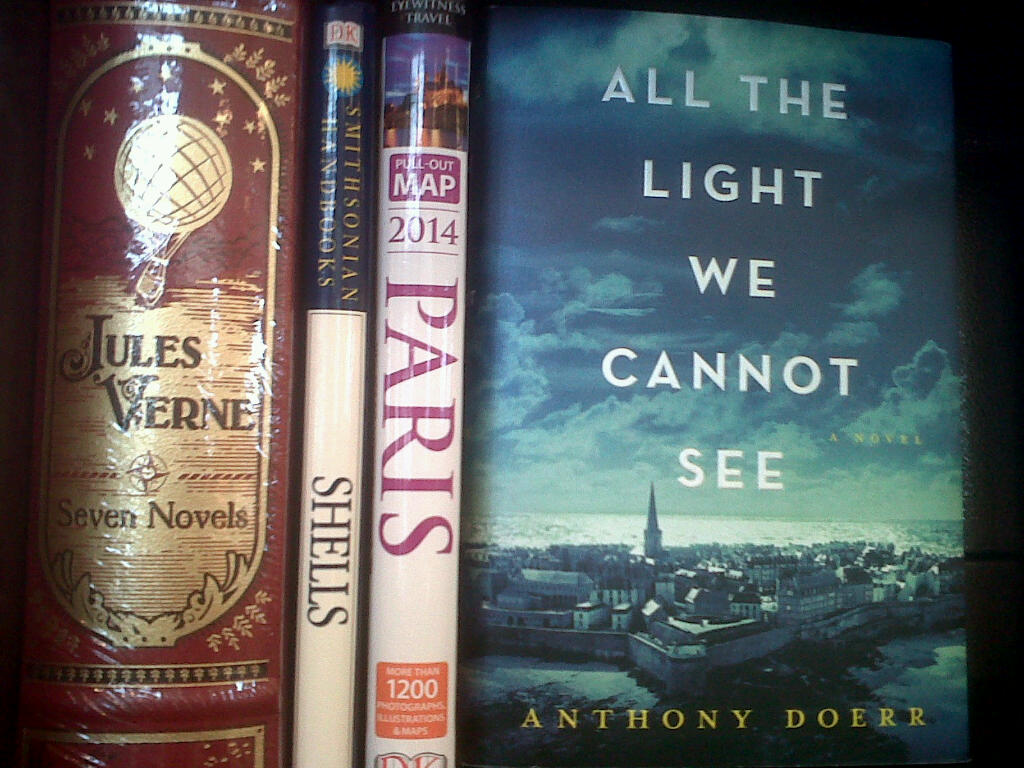
In the book All the Light We Cannot Seethe author Anthony Doerr tells a tale about connections such as these and so much more. On the surface it is a tale about a boy, a girl, and a fabulous diamond. Under the surface we discover that the “Sea of Flames” diamond is cursed with mystical powers, the boy is a genius whose talents will be consumed by the Third Reich, and that the girl is blind but sees better than many others around her. Their story is framed within the shocking human waste and chaos of war.
This should have been a grim story, and the likelihood that I would continue reading it was slim, but I was captured quickly by the humanity of the characters and the sense of wonder they brought to their worlds. Werner, our young boy in this book, keeps a book of “questions” of the kind only a budding scientist would collect. He builds a radio from scraps, and he and his sister Jutta listen to voices over the airwaves. They learn about the world outside their oppressive coal mining community, and they hear science lessons for children in a French voice that captivates them. “Open your eyes and see what you can with them before they close forever,” says the voice. Their eyes are opened.
Marie-Laure loves to explore the inhabitants of the ocean shoreline. She especially loves the whelks and collects shells.
Marie-Laure, our young girl, blind from a young age, is raised by her father in a museum in Paris, France. She is a clever young lady who observes, learns, and applies logic to the world around her. She collects pine cones, explores the inhabitants of oceans shores, learns how to classify mollusks by variations in their shells ,and reads Jules Verne novels in Braille. Her father loves her greatly.
The lives of Werner and Marie-Laure intersect through the radio. Werner becomes part of a unit that hunts for radio transmissions by freedom fighters in occupied Europe. Marie-Laure becomes involved in outlawed radio broadcasts. Through the radio these two are destined to meet each other. Because this is war, and there is an enchanted diamond of immense worth involved, nothing will be simple. Lives are lost, conditions become desperate, both Werner and Marie-Laure will be trapped in fire-bombed and burning Saint-Malo, and the sea reclaims its own. Human potential will be lost, a promising future obtained. What a book!
The book is much richer than the central characters and storyline. It is peopled with a host of other characters who are connected to Werner and Marie-Laure. It has themes within the central theme. Science lives in its pages, and books shine throughout. We become aware of the immense destructiveness of war; lives and cultures will be impacted for generations to come. We begin to understand our inability to control our own lives, and glimpse the amazing power of self-determination. As with the diamond in the book it is possible for great gifts and curses to exist at the same time. What is the light that we cannot see? I’m pretty sure that it is radio waves, microwaves, the heat from burning coal, and so many things that are obvious looking at an electromagnetic wave chart. “How does the brain, locked in darkness, build for us a world full of light?” Marie-Laure’s great-uncle asks in the book; the light we cannot see is also about souls, promises kept and lost, and the connections that bind us all together.
“Open your eyes and see what you can with them before they close forever.”
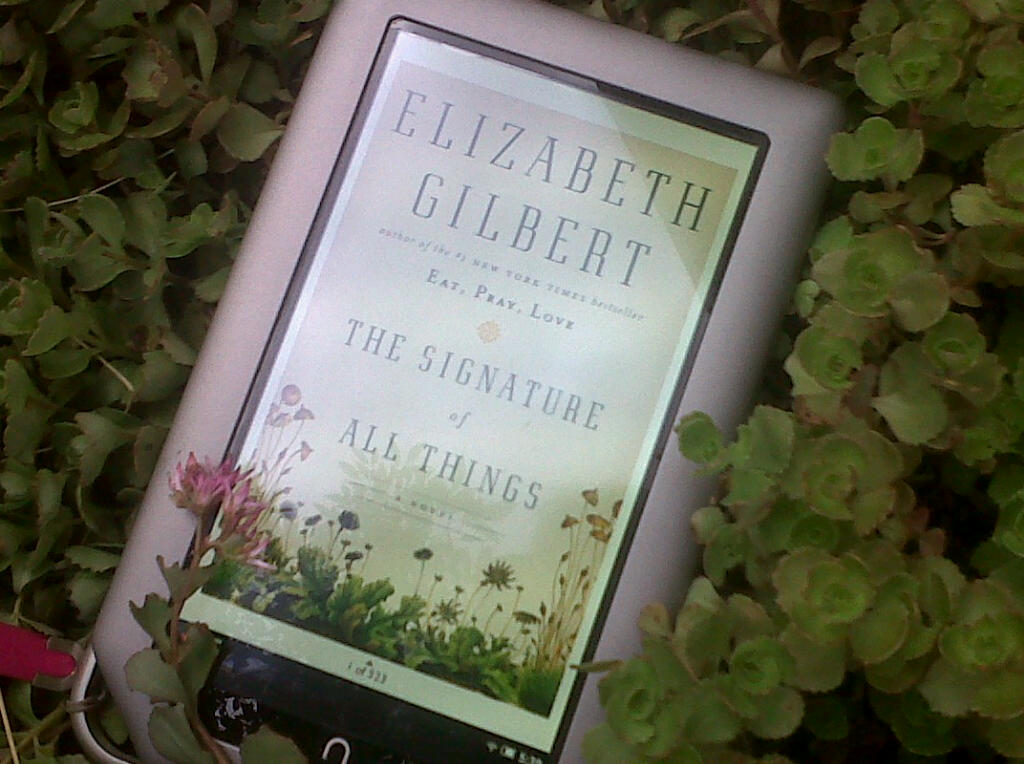
It seems that my life has become an exercise in synchronicity and random coincidences. I checked a book out of the library, read one that had been sitting on my NOOK for weeks, picked up a book on a sale table at Barnes & Noble, and remembered a video that I used to show my biology classes each winter. Strangely, they all fit together. No matter what I thought the book would be about, it began to talk about DNA and evolution at some point. How bizarre! All three books (The Signature of All Things, The Sociopath Next Door , and Orfeo) echoed things that I remembered from the video series Intimate Strangers: Unseen Life on Earth, which was broadcast in November 1999 on PBS. All these connections are just churning around in my head; here’s my thoughts about the video and one of the books, The Signature of All Things by Elizabeth Gilbert..
The episode that I’ve become fixated upon while reading these books is the first one in the Intimate Strangers series, The Tree of Life. If you would like to actually watch this episode (and all the others, of course) they are housed at Microbe World. The biology classes saw this video when they were learning about taxonomy and the kingdoms of life. In the video we meet Dr. Carl Woese, a microbiologist of singular vision and drive. Working alone for years, chasing patterns in the mutations of a small, heavily conserved region of DNA, he pieced together the pattern of relationships between living things on earth. Using this information, Woese was able to determine the sequence of descent, establish common ancestors and eventually created a new “Tree of Life”. His work shook up the taxonomy world as domains were created (a grouping above “kingdom” in the normal sequence of “kingdom, phylum, class, order, family, genus, species”), and our understanding of evolution was enriched and altered forever. One man, working alone, chasing patterns in the musical score of life that is DNA, was able to change our view of the natural world.
This is what Dr. Woese says on camera in the video:
You have to have your own particular sensitivity to the world, and there has to be parts of it that are beautiful to you, because they’re beautiful to you regardless of what anyone else ever thinks. You see this all the time in an artist, and you see it also in good scientists.
This brings me to The Signature of All Things. In this book we meet Alma Whittaker, the daughter of a botanical robber baron. Raised in a wealthy and enriched environment that encourages learning and allows Alma to meet many eminent people in the scientific world, and possessing the logical mind of her mother, Alma is nonetheless trapped within the small world of her father’s estate. She sets up a lab in the carriage house, explores the land around her, and spends the majority of her life studying the world of mosses and liverworts. Small as her life becomes contained within the estate as she handles her father’s business and the details of life, it allows her to follow her “own particular sensitivity to the world” as she observes the interactions and changes in her moss populations; in truth she sees that mosses living within a timeframe much slower than our own engage in the same behaviors as the animal kingdom around her. It is a life of study in a world that is beautiful to her, and Alma is a good scientist. Life altering events cause her to leave the estate following her marriage and the death of her father, and she travels to Tahiti and Holland, where the glory and chaos of a larger world help her develop a theory of evolution based on her understanding of mosses. This theory, while never published, propels her into a new life within her mother’s Dutch family and she obtains standing in the scientific community based on her own merits.
This was a good book. I’m a biology geek, so of course I liked it! Is it believable that Alma could have slowly come to a theory of evolution on her own? Sure. This book is a glimpse into the world that gave birth to the original theory. Science can always be pursued by a committed individual of observant and reflective nature. This was the time of Charles Darwin, Gregor Mendel, and Alfred Russel Wallace; Alma would have had access to the same ideas and published works that they had. All three of these men worked alone as gentlemen scientists, observed nature, designed experiments and looked for patterns. They wrote each other and shared their scientific ideas. Darwin and Wallace arrived at the mechanism of natural selection through independent work at about the same time; they published jointly in 1858. Mendel published his work in 1866, which would have been extremely helpful to Wallace and Darwin, but they missed the boat on that one! It will be almost 100 more years before we understood that the molecule of inheritance is DNA, and many more years before Carl Woese read the musical score of DNA to finally see the signature of all things.
Alma never publishes her theory because it can’t explain why all people aren’t sociopaths. Why does altruism exist, she wonders? How can natural selection account for what we see in people around us? Richard Dawkins addresses this very issue in The Selfish Gene. Guess what’s next on my reading list?
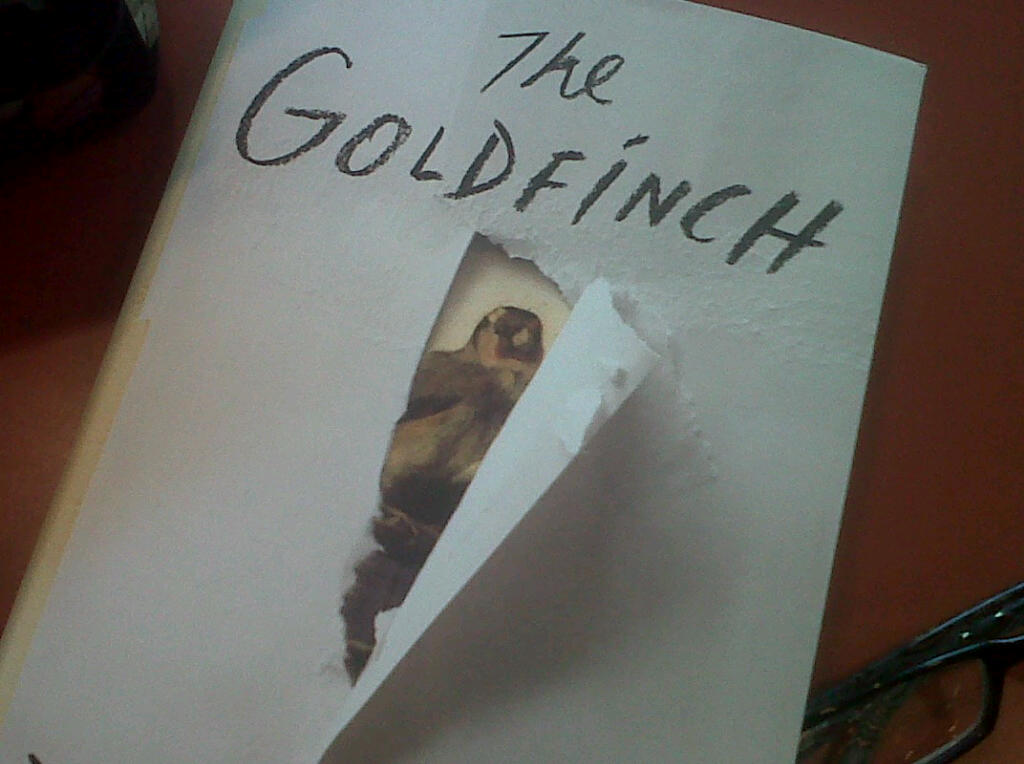
I started reading The Goldfinch by Donna Tartt a few months ago, and quickly lost interest . The main character, Theo, seemed to be a young man with a shaky moral compass and a dose of affluenza. The mother was distracted and slightly self-absorbed. Imminent death loomed just ahead. The plot was unpacking in a dubious manner since I (the reader) was told by Theo right off the bat that things weren’t going to go well. Ugh. It was tax time, and I couldn’t continue.
Still, the Pulitzer Prize isn’t something to sneer at. Perhaps, I thought, happier now that I had the taxes filed, the refund into the bank, the landscaping in the yard done, and a major quilting project out of the way, I should give it another try…
Well, I had to push through parts of the book, but the moment arrived where I was captured by the text and story. I found myself consumed and engaged in endless reflection about Theo and the other people in the book. I recalled with great sadness the many children living in crisis that I have known during my teaching years. I finished the book last week in a marathon session that occupied my waking hours until I reached the last page during an apocalyptic thunderstorm. Itching with nerves, racing to secure my animals and batten down the house in a lightening-fired downpour, I continued to ponder WHAT WAS THE BOOK REALLY ABOUT?
Well, that’s a good question, isn’t it! I have spent the last week thinking and thinking about this book. I have gone online to learn about the painting “The Goldfinch”. I have re-read parts of the book. I have searched for meanings and patterns. As I drove around town this week (avoiding thunderstorms!) I have considered the importance of stable adults in young lives, the failures of adults who we think are the safety net for children in need, the lengths some people will go to maintaining “appearances”, the search for meaning in an impersonal tragedy with crushing lifelong impact, and whether a young man named Boris should be considered a human superstorm. Then there is the goldfinch; forever chained to its little perch in an artistic display with extraordinary detail. The survivor of an explosion, a transitional piece in art history, displayed against an empty wall…
Why do bad things happen to good people? Is it possible that seemingly random events can redirect our lives if we pay attention to what is happening around us and we search for patterns? Theo is tortured by this in the book, and in the passing of pages we begin to suspect that Theo can find the safe path again; a chance encounter at the moment of the greatest tragedy in his life will ultimately bring him home.
This is The Goldfinch. It is a book of lasting impact that will continue to unpack in layers in the days and weeks after you have read it. It makes you think about tragedy, craftsmanship, redemption, and art.
You might even find yourself buying a print of the painting.








 Yarn, Books & Roses