The Scleroderma Chronicles: This is World Scleroderma Day!

A couple of weeks ago I went in for a routine blood draw at my local Kaiser clinic. I gave the phlebotomist my ID card and told her my name and birthdate: for some reason they like to verify these things, right? Anyway, what happened this time was… she exclaimed that didn’t look my age. (Well, yeah. That may be one of the bigger red flags for scleroderma… no wrinkles.) “It’s just my disease doing that,” I assured her. “I really am that old.”

This lady wanted to know what I had done to get rid of the wrinkles. She wanted this magic wrinkle remover too! I carefully told her about scleroderma. “I never heard of that!” she said. Still thinking that I was a lucky person, she drew my blood and I got out of there. I would be happy to have every single wrinkle that I have earned over the years, but no… I have scleroderma. The systemic form with limited skin involvement. Lucky me.
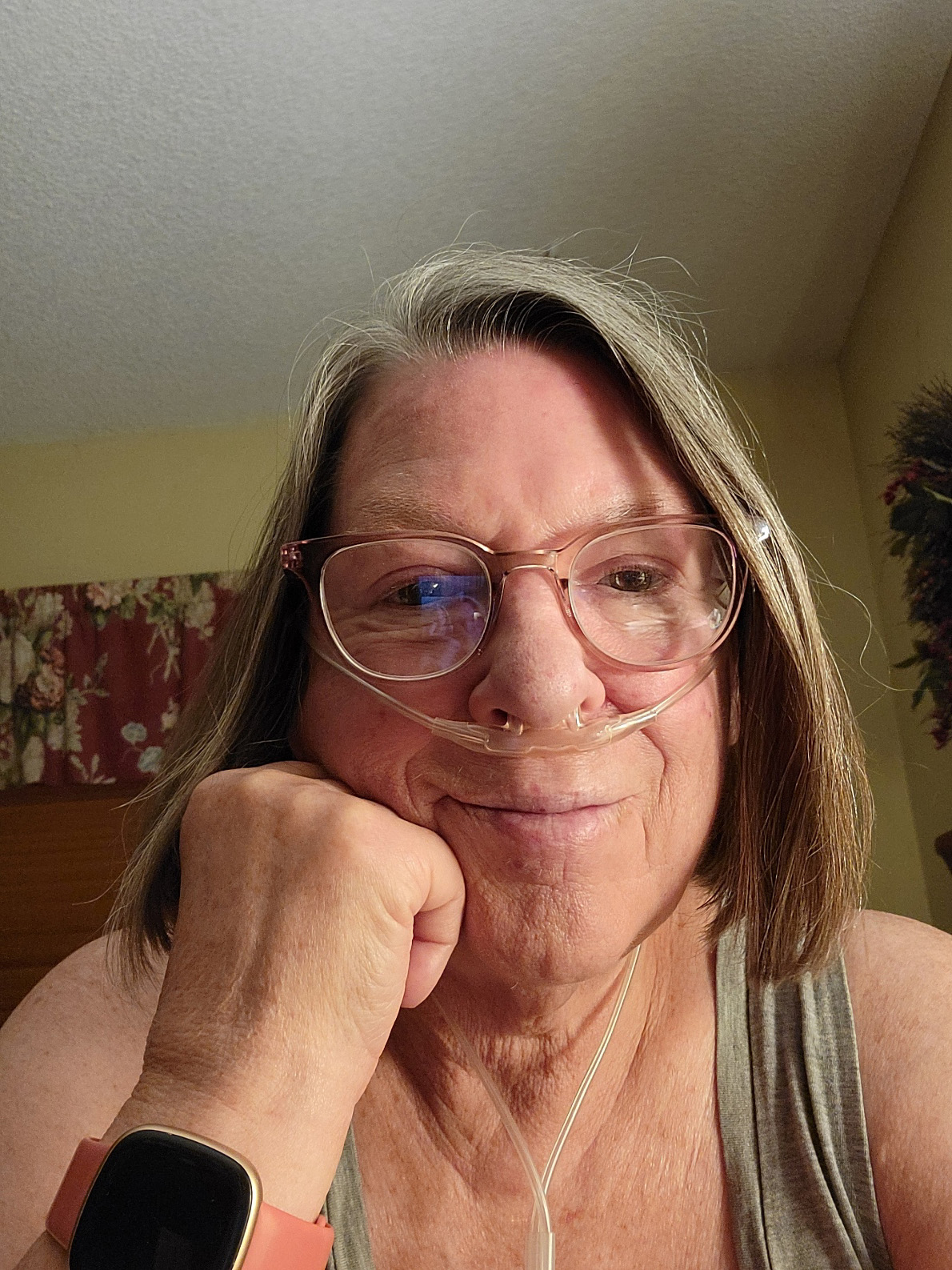
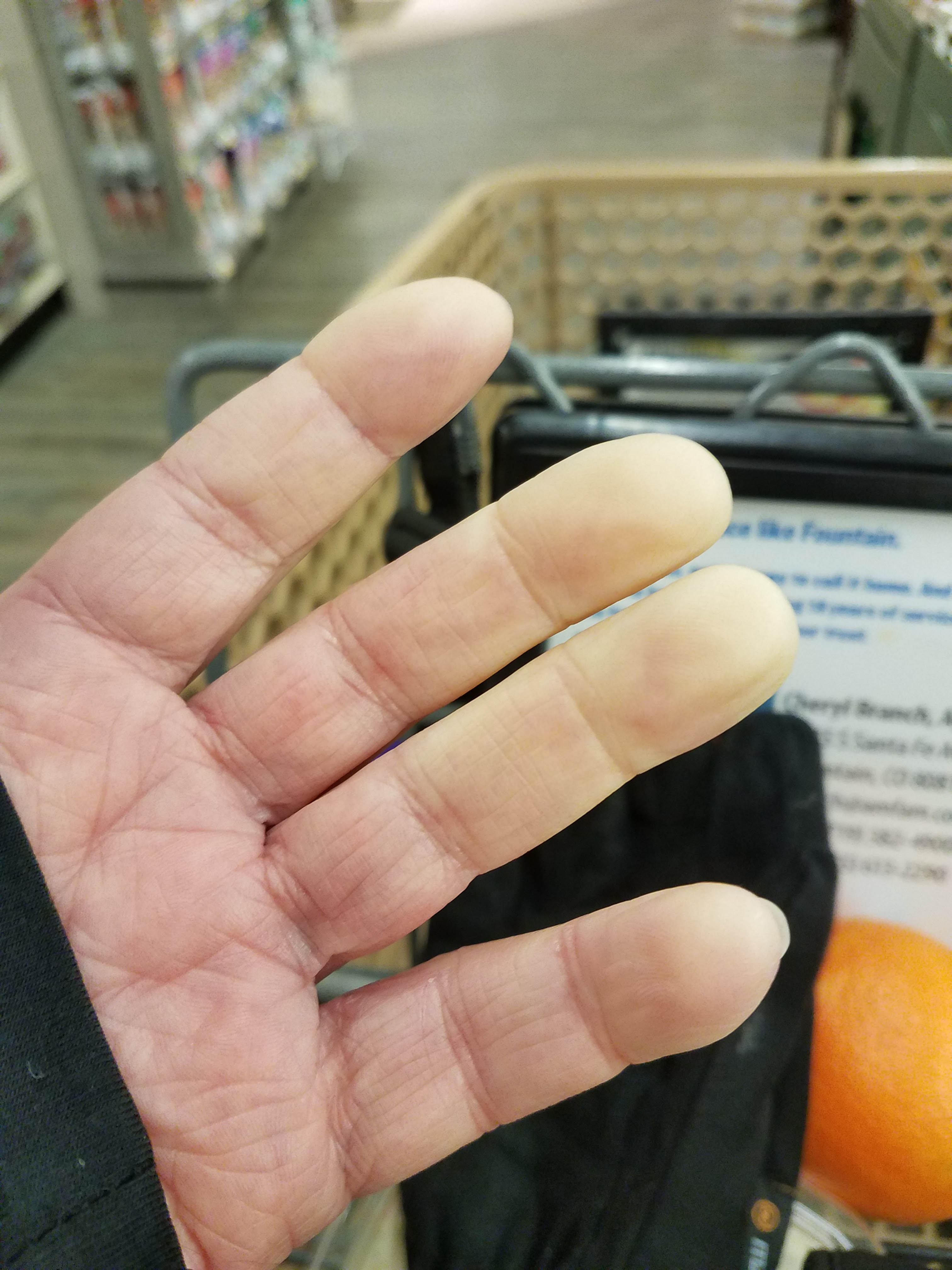
I do have wrinkles around my chin and mouth, but I was wearing a mask during the interaction with the lady at Kaiser. I had to go on oxygen this day (I have lung and heart involvement) and you can see the swollen tendons in my hand and the tight skin over my knuckles.

That’s why there is this thing called World Scleroderma Day. This is a complex autoimmune disease with illusive symptoms (brain fog… trouble swallowing…GERD…swollen fingers…trouble breathing sometimes…fingers that suddenly lose circulation and turn white or blue…) that make the disease difficult to diagnose without specialized testing and evaluation by a scleroderma specialist.

Systemic sclerosis (the form of scleroderma that I have) is thought to start with some event (still unclear) that triggers the formation of antibodies that target specific molecules the nucleus of cells. These antibodies lead to damage in blood vessels and their linings; the damaged blood vessels release chemical signals that trigger a cascade of events that impact other cells of the body. Some cells are related to inflammation. Other cells are tipped over into forming uncontrolled scar tissue (fibrosis). Here is the problem: the tissue engaged in fibrosis is all of the connective tissue. What is connective tissue, you ask? Think of all the ways a person is held together. Tissue that makes your skin stretchy. Tissue that holds your muscle fibers together. Tissue that makes up your tendons, ligaments, and the structure in your joints. Tissue that holds your intestines, heart, kidney, and lungs together. The cartilage in your ribs. All inflamed, under attack, and forming thicker and thicker layers of scar tissue. Some of this damage causes calcium deposition. Unobservable from the outside, the patient is slowly hardening inside. The most obvious symptoms is the skin thickening and then pulling tight over time.

Scleroderma, and especially systemic sclerosis, has the highest fatality rate of all rheumatic diseases. Did I mention that there is no cure? There are treatments for complications that develop like pulmonary arterial hypertension (PAH) and interstitial lung disease (ILD), but they, like the immunosuppressant drugs that many of us take, mostly stabilize and slow progression. (Dear Kaiser lady… that’s why I was getting a blood draw. The drugs that I take are risky, and my doctors need to make sure my kidneys and liver are tolerating the meds okay.)

So, what is the purpose of World Scleroderma Day? It’s to highlight this condition that impacts more people than it should even though it is rare. It’s to raise awareness of the symptoms and hopefully aid in other people getting an appropriate diagnosis. Maybe shining a spotlight on scleroderma will help in getting funding for research, treatments, and even a cure.

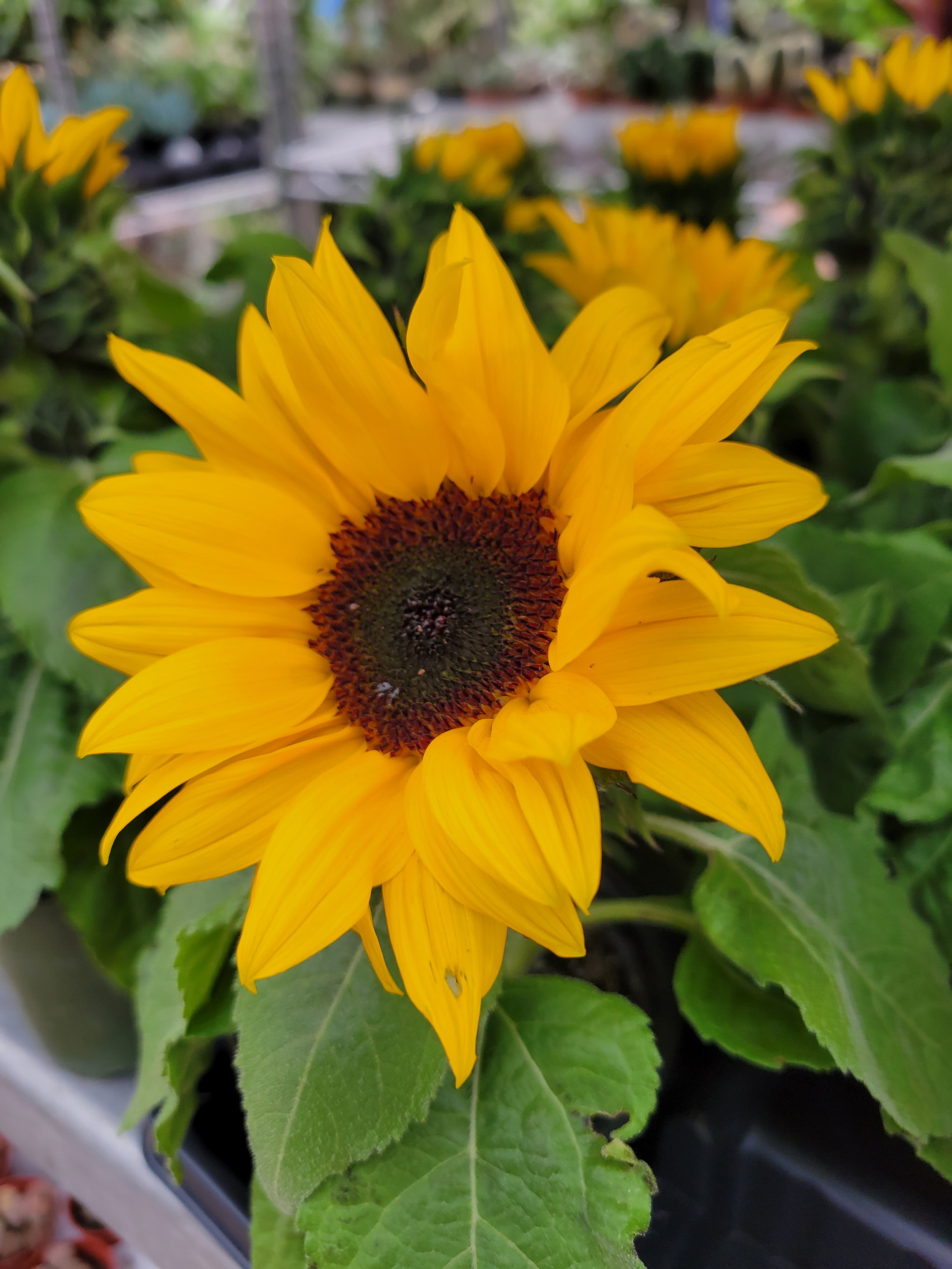
Sunflowers are the international symbol for scleroderma.

Here is where you can learn more about scleroderma, it’s symptoms, and treatment.

PS How was my blood work? Yay, doing okay!! Kidney function is up into normal ranges again!!! How old am I? I was born in 1951. 🙂


The Scleroderma Chronicles: A Decade on the Little Teal School Bus.

Here it is again: World Scleroderma Day.

June 29th is World Scleroderma Day. In Australia sunflowers are used as a symbol of scleroderma. Almost everyone uses the color teal for scleroderma.

I used to be a high school biology teacher before I became a scleroderma patient, and I took my students on field trips sometimes. We would all pile on the bus and off we went on one adventure or another: into the mountains for an ecological assessment, or to the Natural History Museum for an anatomy lesson, or a visit to a biotechnology center, or even off for the weekend to study for the Biology AP Exam. It was always exciting, exhausting, sometimes joyful, often a little overwhelming, and at the heart, an educational experience.

Lately I have been thinking about my illness as a ride on a little teal-colored school bus with a crazy rainbow striped zebra behind the wheel. That dang scleroderma zebra is careening down the road on its way to an unknown destination just over the horizon, and would you believe it, he keeps stopping to pick up more passengers along the way.

Don’t make fun of my bus! I changed the colors on some clip art that I found, and putting a zebra behind the wheel was beyond me!! Use your imagination… the zebra is braying hysterically while driving the bus!

When the bus stopped for me, and I stupidly jumped on board, I only had a few symptoms. I had some trouble swallowing sometimes. I had GERD. I suddenly lost circulation in my fingers if I got cold. Speaking of my fingers, they were pretty fat and puffy. I had lots of red blotches on my face, and the skin was pulling tight. It was hard to open my mouth wide…

Still, I was feeling pretty hopeful as I jumped onto the bus. “This will be fun!” chortled the scleroderma zebra. Bad zebra, bad!! Before I knew what was happening, that dang striped miscreant had pulled the bus over, opened the door, and couple of little demon passengers had hopped on board: kidney disease and gastric complications. What kind of an outing is this… have you ever heard a zebra laugh?

Bouncing down the road, suddenly screeching to a halt periodically to pick up a new passenger, the zebra continued the crazy outing in the little teal school bus. The little demon passengers kept piling into the bus, and those little monsters even started to sing “the wheels on the bus go round and round…” while laughing and clapping. What kind of a field trip is this, anyways?????

The demons all wore little nametags:

  • Gastroparesis
  • Pericardial effusion
  • Chronic respiratory failure
  • Diastolic dysfunction
  • Pulmonary Arterial Hypertension
  • Interstitial Lung Disease
  • Heart Failure with preserved ejection fraction

“STOP THE BUS!!!!” I shouted at the zebra! “I absolutely did not sign up for all of this sh*t!!!!” Nope. Evidently there is no stopping the bus. Ten years on the road, and we are still on our outing. Somehow some extra demons that don’t even wear nametags snuck onto the bus, but they are certainly annoying as they are making all my tendons hurt and what is up with all this edema!!!! Did I mention the fatigue? Always, always there is fatigue. That fatigue demon is sitting on top of the bus blowing raspberries at all the other people on the road…

It has now been a decade for me on the little teal school bus: always exciting, exhausting, sometimes joyful, often a little overwhelming, and at the heart, an educational experience.

I learned about prioritizing and not worrying about things that haven’t happened yet. I learned to advocate for myself, and I have maneuvered myself into the care of some great doctors. I have learned to build for myself a network of supporters. I pretty much have lost interest in making money, but I’m highly motivated to help others. I’m keeping notebooks and collecting souvenirs while on this field trip, and to be frank, it is the outing of a lifetime. Believe it or not, I’m now singing along with the little demons on the bus with me…

The wheels of the bus go round and round… and the zebra is still laughing its head off… and I’m okay.

Shine like a sunflower, everyone!

Happy World Scleroderma Day.

Note: Scleroderma (systemic sclerosis) is a rare autoimmune disease that is chronic, progressive, and often fatal. It has three main hallmarks: damage to blood vessels, the development of autoantibodies, and subsequent scarring of tissues and organs. Right now, while there are many excellent treatments emerging to handle the serious complications due to the underlying disease (like my pulmonary arterial hypertension and interstitial lung disease), there is no cure. You can learn more about scleroderma and systemic sclerosis in the links below.

The Scleroderma Chronicles: World Scleroderma Day, 2022

Wow, it is that day of the year again. The Niagara Falls will turn teal, Scleroderma organizations around the world are sending out messages and videos, and patients with scleroderma like me are wondering how best to showcase our conditions in a meaningful way. Here in the US the theme is Know Scleroderma. In Australia it is Shine Like a Sunflower.

The whole idea is to educate the public about this rare disease that pretty much flies under the radar to help secure support for patients, funding for research, and awareness of treatment options. Patients are encouraged to tell their stories and to do what they can to expand scleroderma awareness in the public eye.

Well, shoot. I do that all the time! I wrote about World Scleroderma Day last year and I kind of like what I wrote. I talked about what was going on in my illness and the progress that I was making in getting diagnosed and treated for the significant organ damage that was underway in my lungs and heart. I also mentioned the similarities between Covid-19 and systemic sclerosis (the type of scleroderma that I have), and the fact that people like me are still dealing with lockdown. You can read that post here.

So, what has changed in the last year and why am I typing away on my computer once again about World Scleroderma Day? Well… awareness and support are the messages that I’ve been urged to put out, but I’ve been reflecting on what I’ve learned this year and how it might be useful to others. This was a huge year for me… I was diagnosed with pulmonary arterial hypertension, a complication of systemic sclerosis that is developed by about 15% of patients, and I was also diagnosed with interstitial lung disease, another complication of systemic sclerosis that is also developed by about 15% of patients. These serious complications develop so routinely around the 15% mark that there is now a rule of thumb about it in treating patients with systemic sclerosis. There are other conditions that fall into the 15% rule, and I have two more of them: Sjogren’s Disease and diastolic dysfunction.

MacKenzie and I from a posting a few years ago.

So, I am getting a lot of experience in dealing with being sick in a way that is not visible to the public and is not the first thing considered when you head into a doctor’s office seeking help for debilitating symptoms that have no obvious cause. I have been successful this year in becoming an active participant in my own health care and I love my team! Here are my lessons learned:

  1. Physicians tend to diagnose with the most common condition that matches your symptoms. You know, if you are struggling with fatigue, it must be depression or sleep apnea…
  2. They also tell you to stay off the internet.
  3. That works great up to a point. Get onto the internet!!!! Look up the symptoms and treatment options for the condition/illness that your physician is talking about. Do they really fit? Go ahead with the testing that your doctor orders but continue to educate yourself. Get the full text of any testing reports (those are your tests on your body, so do insist… nicely…) Look up crazy words that you don’t understand.
  4. I should include here…DON’T PANIC… about any crazy-ass, scary condition that you run into on the internet that you think you might have. I mean, what could happen? You already are sick, and you won’t get magically worse overnight once you get a name for it. You might, however, get some really helpful treatment that could turn things around for you. That is, if you have that crazy-ass, scary condition that you really, probably, don’t have. DON’T PANIC!!
  5. What if you get test results that say “you are fine” and your doctor pretty much is ready to stop there? Um… go right back to specific test results and symptoms to reset the conversation. You know, “my face is still blue, and the latest CT scan showed that I was losing tissue in my lungs. What other testing can we do to figure out what is going on?” is exactly where you should redirect the conversation.
  6. Make a list of your symptoms and track them in a journal or on a calendar. Document stuff and then contact your health care provider (email works great!) with your concerns and the symptoms that you are noticing. Specific data helps a lot, and the written record makes you more credible and your health provider more accountable.
  7. Do not let a medical health professional dismiss or disparage you. Kick them to the curb and get another. On the other hand, don’t go doctor shopping to get the diagnosis that you want; that is not productive for you or anyone else involved in your daily struggles.
  8. Ask your physicians to communicate with each other and make sure that they include your primary care physician in any messaging.
  9. Remember to be kind to others: your doctors, the nurses, your family, your friends, and yourself.
  10. DON’T PANIC!!! at any time. Remember, feeling powerless and not knowing what is happening is stressful. Learn everything that you can, do everything that you can, and then sleep well at night. Hugs to anyone who finds this meaningful.
More lavender for my garden!

There. Those are the best, most excellent lessons that I learned this year. Today I am out of the serious flare of the winter and feeling pretty darn great. I am on steroids, and my immunosuppressant drug’s dose has been doubled; I feel more like myself than I have in a couple of years. I headed out on errands this afternoon, bought a Starbucks, and signed up for a Tour de Fleece team at my local yarn shop. I bought some new lavender plants that I am going to put into the ground this evening and I am cleaning up the spinning wheel to see if I can get some paco-vicuna spun next month before my steroids get stopped.

I have some really serious conditions that carry a significant risk of a poor outcome. And yet, I feel a little like an imposter as I laugh and interact with other people that I encounter. The man at the drive-through window at Starbucks traded cat photos with me. The lady at the yarn store and I laughed and talked about spinning wheel misbehaviors; are the wheels worse if you name them? Behind the mask, I am still me, the old me; I may have scleroderma, but it doesn’t have me. I am kind of the poster child for what an invisible illness looks like, and that’s why there is this campaign today to “Know Scleroderma.”

Those serious conditions that I mentioned… they are complications of scleroderma, but they happen for other reasons, too. Some are rare, but some are not. Knowing about scleroderma can help with research efforts into these other conditions (sadly, some are now more common because of Covid long haulers), and perhaps the lessons I have learned will help others in their efforts to secure empowerment and medical treatment.

This is World Scleroderma Day.

Shine Like a Sunflower!

The Scleroderma Chronicles: World Scleroderma Day, 2021

Here we are again… World Scleroderma Day.

I’ve written about scleroderma on this date for several years now. I just went back and read what I wrote last year and decided that I did a pretty good job. I talked about getting diagnosed, the complications that are being caused by my disease, and what that means in my life. Here’s that post if you would like to check out my take on things last year.

This is one crazy-ass disease and it certainly has complicated my life. In the year since I wrote that last post I have hung in there (hey, staying home for a year on oxygen slowly improving was actually good for me) and then emerged from strict lockdown to get lots of testing to try to sort out what is the cause of my blue-lipped status and the source of other little issues that I have going on. While thinking about what to write today I thought of a few things that I haven’t written about before and some things that are new since the last post.

The correct name for the type of scleroderma that I have is limited systemic sclerosis. Systemic means that every part of my body is being impacted by this disease, and the word sclerosis means that scarring is happening in tissues all over my body. What’s happening to me is not obvious to the outside viewer, but it is insidious and ongoing all the same. Somehow, by some mechanism that isn’t clear, my systemic sclerosis is being driven by antibodies that I’m producing that react with the centromeres of my cells.

What’s a centromere? I’m shocked, shocked I tell you, that you just don’t know that! Seriously, the centromere is that little place in the middle of a chromosome that can be seen when cells are getting ready to divide. This is a little tricky because the only time we can see chromosomes is when cells are getting ready to divide and they have already copied themselves: the little pinched waist in the middle of the chromosome where they are connected is where the centromere is located.

Got that?

This image belongs to the NIH; as a taxpaying citizen I hope that it is okay for me to use it here. 🙂

Somehow something happened to a protein located in the centromere area of the chromosomes in my body that made it look “different” and my immune system responded by making antibodies against that protein. The antibodies that are produced are called “anti-centromere antibodies” and their presence is highly suggestive of my form of systemic sclerosis. The alternative explanation is that my immune system just went berserk, decided to attack my own cells, and began making these antibodies on its own. I personally think that something changed and then the antibodies were made as a response. My money is on a virus.

It really doesn’t matter all that much since, once the immune system is triggered, the immune response can’t be turned off and one day you are sat down in some rheumatologist’s office and carefully told about what is happening to you and what to expect in the future. Your skin will get thick. Your blood vessels will be so damaged that they will thicken and spasm shutting off blood flow to parts of your body unexpectedly. The scarring tissue will build up in your digestive tract and damage the smooth muscles that you need to move food along. Your kidneys will lose function. Your nerves will be damaged. Your lungs need to protected since they are especially vulnerable to damage from accidently inhaled stomach acid. If your disease flares badly enough you can develop autoimmune pneumonia. Your tendons, muscles, and joints are all in trouble. You are in trouble. The damage will progress and there is no cure.

“This is really serious,” one of those early doctors told me. “This is like a diagnosis of cancer, but of course, some cancers can be cured…”

Well, shoot. Good thing there are drugs to help control symptoms and to slow the progression of the disease by dialing down the immune system.

Yay for drugs!! I am on drugs to shut down my stomach acid production (my lungs are doing pretty well) and on drugs to crush my immune system into submission. I’m on anti-inflammatories to control other cellular pathways activated by those ill-behaved antibodies. I get steroid injections to help my damaged joints and inflamed tendons. I have strict dietary limitations. I do lots of physical therapy. I’m on oxygen overnight to keep my red blood cell count in a normal range. I dress in layers to help control the spasms of my circulatory system, a phenomenon called Raynaud’s. I knit almost every day to keep my fingers from stiffening up and contracting. I now have a shiny purple cane to help me walk.

Every day is a challenge, but I am fine.

So what is new this year?

Scleroderma has damaged my heart. They are still testing to clarify exactly what is going on, but so far they have established that there is scarring in the heart muscle that is making my heart “stiff” and that somehow I developed a hole in my heart. There are suggestions of pulmonary hypertension, but I need more testing for a definitive diagnosis. No wonder I turn blue in the face and pant when I walk.

Oh, yeah, there is also a pandemic going on.

One of the greatest ironies of the last year is that serious cases of Covid-19 share similarities with the clinical symptoms of scleroderma crisis. Immune system-mediated pneumonia caused by an overreacting immune system is a hallmark of both conditions. Then there is this… Remember those drugs that I take to crush my immune system into submission? I take two drugs for that purpose. One of them, hydroxychloroquine, was (irresponsibly) politicized by influential individuals early in the pandemic and therefore became short in supply; my muscles and joints immediately rebelled when my supply lapsed early in the lockdown. The other drug that I take, mycophenolate mofetil, is linked to poor response to the Covid-19 vaccine. I am vaccinated and I am making anti-Covid antibodies, but since my total antibody count is very low my doctors aren’t sure I can fight off a Covid-19 infection fast enough to stay out of the hospital. I’m advised to continue to mask and isolate because… blue face, hole in heart, stuff like that…

For me, lockdown goes on.

So, here are the takeaway messages from this post. Be kind. There are illnesses that are really debilitating that you can’t see when you look at that person walking into a store from a handicapped parking spot. Don’t be dismissive of conditions with funny names that you’ve never heard of before. I know that it is hard to understand conditions that are beyond your experience and that you can’t really see, but take a moment to let someone tell you about their illness and the daily challenges that they embrace. If you meet a person with an autoimmune disease, they deserve a hug. If they have scleroderma you should give them two hugs! Be understanding of people who are still wearing a mask in public; perhaps they are braver than you can imagine.

Today is World Scleroderma Day.

Go Team Teal!!

Note: If you would like to know about different types of scleroderma you can learn about them here.

The Scleroderma Chronicles: World Scleroderma Day

Today is World Scleroderma Day. Tonight the Niagara Falls will be illuminated blue and white in recognition of the day. All this month (June) there have been walks and outreach to raise awareness of this disease and to raise money for scleroderma research, and scleroderma patients all over the world have been urged to post pictures of their faces (and smiles) to made this disease more real and relatable.

Rather than flash my smile I have chosen to show this picture of me and MacKenzie, wrapped in handknits, fighting my way through a flare one frozen January. Good times! See the light in the background? It reminds me that every flare comes to an end.

The purpose of this day is to try to raise awareness of an illness that is mostly invisible and relatively unknown.

So what is scleroderma? It is a rare autoimmune disease that is a member of the rheumatic diseases family. The name “scleroderma” means hard (sclero) skin (derma), which is the most visible symptom. Scleroderma is the general name that is applied to a group of connective tissue diseases that may target only the skin, or the skin plus internal organs, or just the internal organs themselves. The words that are used to describe my type of scleroderma (limited systemic sclerosis) are rare, chronic, progressive, disabling, and possibly life threatening. This is a lot to wrap one’s head around, so I’ve decided to break it down.

Rare: Here in the United States the CDC has defined a disease with fewer than 200,000 patients as “rare”. Systemic sclerosis, with about 1-2 diagnosed people for every 100,000 citizens fits the bill. To be rare means your illness struggles for research and treatment funding as the patient population is small and almost no one is personally impacted by the disease in the general population. Hence, Scleroderma Awareness Month and World Scleroderma Day. Thank you, Niagara Falls!!

Auto-Immune Disease: The immune system, designed to protect us from foreign invaders like pathogens,  is attacking some of the components of normal cells in scleroderma patients. The exact components can be identified using the antibodies of scleroderma patients and they are essential proteins found in the nucleus of the cell. My antibodies are attacking a protein found at the kinetochore of dividing chromosomes. I can’t help but wonder what the heck has happened here that I ended up with antibodies like these? I also eventually wondered if my cancer risk is increased since there is something off with this critical structure used in cell division (it is).

Connective Tissue: I used to try to explain this type of tissue to my AP Biology students. Connective tissue… well… it connects. It is what holds your bones together to form the skeleton. It gives support and stretchiness to your skin. It is involved in all the organs of your body, and holds the organs in systems together. It is essential to organize your muscles. In systemic sclerosis, all of this tissue can be involved in an inflammatory attack of the immune system and scarring occurs. Skin gets thick; hands curl, joints won’t bend, smiles  twist and faces harden. Muscles and joints hurt. The smooth muscle in the digestive tract can be so damaged that organs don’t work right. Blood vessels are damaged and spasm, cutting off circulation to extremities and organs. The heart can get scarred. Scarred lungs prevent oxygen passage. Scleroderma, invisible to the outside viewer, can be devastating to the patient.

Vascular tissue damage causes circulation loss to my fingers and toes (Raynaud’s Phenomenon) which I fight by wearing fingerless mitts and wool socks. Works great and the Zen of knitting brings its own benefits.

Chronic: There is no cure, and it never ends. There are, however, treatments for individual impacted organs that are really helpful.

Progessive: Damage accumulates over time and conditions worsen. My doctors are monitoring my kidneys, heart, lungs and GI system. So far I am doing pretty well, but my GI tract is taking the most damage.

Disabling: Yep. It is getting really hard to walk, and I just don’t fit all that well into the world anymore since my diet is very restrictive, air conditioning isn’t my friend, and sunshine makes me go into a flare. Right now I don’t need supplemental oxygen, but if that comes back it will further restrict my independence.

Life-threatening: It took me months to think this one through, but eventually I did google “life expectancy of systemic sclerosis” and discovered that for me, with my treatment plan and risk factors, survival rate is about 75% for 10 years after diagnosis. Overall the death rate of scleroderma is 50%. Oh. Now I know. Who wants to live forever?

This week I wrote a letter to my congressman asking him to sponsor a bill that would fund research into fibrotic diseases like scleroderma and cystic fibrosis. I haven’t heard back, but maybe if he has heard of one of these diseases or knows someone impacted by scleroderma he will do it.

That’s why we do World Scleroderma Day.

Science and the Scleroderma Girl: The AP Therapy Rant

Antibiotic Protocol is an alternative medicine therapy for autoimmune disease. It certainly has a following. Check this out.  There is more information on it at the Arthritis Foundation. It seems to be loosely associated with “Leaky Gut” as it links chronic autoimmune illness to microbial sources originating in our intestines. The shaky model and vague language involved in leaky gut has landed it on the pseudoscience list at Wikipedia.

This has been a really hard post to put together. I have all these little memories and reactions rolling around in my mind, and I struggle to link them together in a meaningful way. Here are some of the things that have happened and my gut reaction (did you see what I did there?) to them:

  • I have a friend with lupus. She has been struggling for years, is on disability, and is clearly in trouble. She is losing weight, her hair is falling out; she is in the care of a nutritionist who has her on severe dietary restrictions and antibiotics to treat her condition. She eats no dairy, gluten, meat, alcohol, or sugar, and continues to take her antibiotics without fail. She is not getting better. My heart breaks every time I see her.
  • My dermatologist placed me on doxycycline (one of the antibiotics used to treat scleroderma in AP Therapy) right after my diagnosis. A year later my lung disease was moving so quickly that I was actually referred to palliative care. I stopped the doxycycline, my rheumatologist boosted the immunosuppressive drug dose,  I was given a new drug for my vascular disease, these new drugs kicked in, and today my lungs look great. Good bye, palliative care!
  • I visit an online support group for scleroderma patients where some people are just devoted to antibiotic therapy. They can be very aggressive in promoting their message and have even private messaged me trying to convince me to switch treatment protocols. Huh? This is kind of extreme. I’m always wary of fanatics because it is more about “winning” and gaining converts…
  • Cat face.
    The Mother of Cats has an active early warning system for fanatics. There is no evidence on Earth that will change their minds…

    So, I already have my back up about AP Therapy. The diagnostic antibodies that I have are to a specific region on my chromosomes (centromeres and kinetochores) that is involved in cell division. Bacteria have their genetic machinery organized very differently from me; why would the defining antibody in my illness be towards an antigen not found in bacteria? (Goodbye leaky gut… it was nice to know you!) That doesn’t mean that I can’t have the medical condition of increased intestinal permeability; correlation doesn’t necessarily mean causation. It also doesn’t mean that antibiotic use doesn’t help some people as the drugs also have anti-inflammatory and cartilage protecting properties, and there is research that shows it helps some patients with rheumatoid arthritis.

Here’s the deal: there are better drugs and treatment options. If you have a mild form of the disease, maybe AP Therapy is what you need. On the other hand, systemic sclerosis is a potentially fatal disease and if it is advancing rapidly the correct response is to go big: use the drugs that have the highest success rate. I feel like I’m a walking poster child for the success of current treatment options. The three drug cocktail (Myfortic, Plaquenil, Losartan)that my doctors are maintaining me on has reversed my lung and heart damage.

Crap, do I sound like a fanatic? Darn. I was worried that this would happen.

I told you, this is a hard post to write. Let me just say I would never, never PM someone insisting that they need to change their treatment plan. Who am I to project my reality onto another person?

What I really mean to say is to think like a scientist: collect data, keep a symptom log, ask questions, assemble a team of doctors to help you, and pursue treatment options that have solid research-backed results that you are comfortable with. Keep collecting data, and don’t be afraid to change if things aren’t going well. There is no best one-size-fits-all treatment plan, but play the odds that are the highest until you get better information. If what you are doing is working, keep going!!

Tomorrow is World Scleroderma Day.

This is a hard, hard disease. All of us with this disease face hard choices.

Hugs to all.