Science and the Scleroderma Girl: Hard Choices (Part 2)

Last week I wrote a post about trying to make a good decision about what drug I should be treated with for my systemic sclerosis. My rheumatologist had offered me methotrexate and CellCept; after trying to gather info about the drugs and their symptoms I unhappily picked methotrexate.

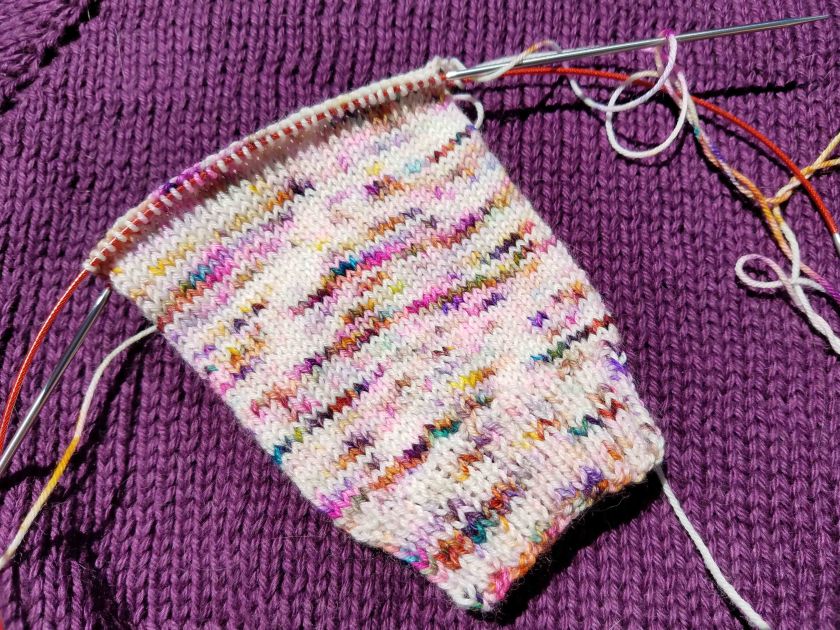
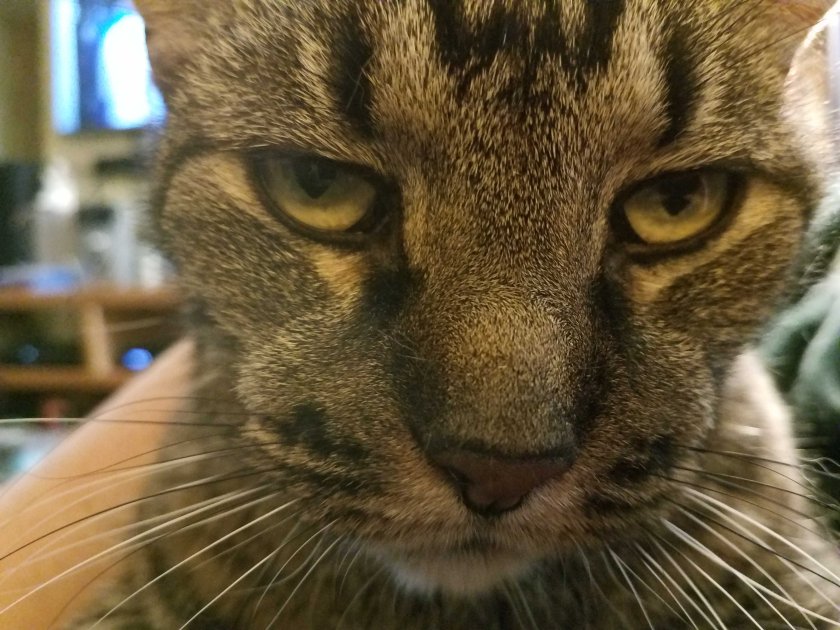
Cat
the Mother of Cats chose badly…

The first weeks of the drug seemed okay. I had a couple of hard days after taking my dose on Monday, but then I would feel much better for the rest of the week as the pain and brain fog receded for several days. The crazy thing was, my knees hurt REALLY badly during those two bad days. I checked online and other people had experience a similar phenomenon, so I soldiered on. Then one week the pain was pretty bad in my lower chest and right side and I was having trouble walking and breathing…

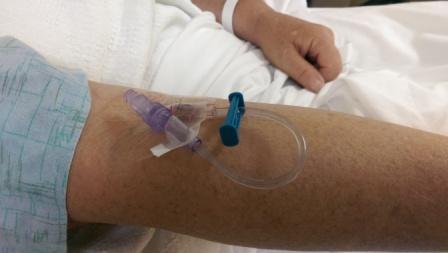
IV in arm.
Off to the ER I went where they hunted for lung damage and blood clots… 

It was an inflammation of the cartilage of my ribs, a condition called costochondritis. I called the rheumatologist’s office to see what I should do next, but didn’t hear back for a couple of days. I then emailed, and called again.

Finally the call came back; I was having a rare bone reaction and needed to stop the methotrexate. He was starting me on CellCept immediately.

Oh, that was an adventure. So much stomach pain… scratch that… stomach fire! Not just my stomach… my intestines were on fire too!! I gulped down spoonfuls of coconut oil trying to baby my stomach lining. I added food with the pills. I started vomiting in the middle of the night. It didn’t matter what I did, my stomach was going to be very upset. I stopped the drug and shot off an email to the rheumatologist again.

Hence began the two month battle to get me onto another form of drug in CellCept, which is mycophenolate mofetil. A stomach gentle version called Myfortic did exist, but it was not approved for systemic sclerosis, so the pharmacy refused to fill it. My rheumatologist filed an appeal. It was denied. My rheumatologist doubled down. Another rejection. Eventually I drove down to the Kaiser pharmacy and talked to the pharmacist as calmly as I could. I reminded him that Myfortic as just another salt of the approved drug, I had failed the approved form, my rheumatologist had appealed for this drug, and that I had a letter on file from another doctor in the Kaiser system stating that my gastritis prevented me from taking NSAIDS or anything else that would damage my stomach lining. I must have looked pathetic, because he gave me the pills.

Three years later I have greatly improved because of this drug that we had to fight for. In the meantime I have discovered (by hunting for info on PubMed Health) that while methotrexate helps with symptoms like inflammation and fatigue, the better choice in the long run is the drug that I am now receiving as it is associated with skin, lung, and heart improvements and better survival rates. I do have a higher lymphoma risk with this drug, and infections are a constant concern, but I think that I’m with the best drug available for me right now.

There is a take home lesson here. If you aren’t happy with your treatment, speak up! I should have contacted that doctor about those hurting knees long before I ended up in the ER. It’s easy to take a passive course when you are dealing with busy doctors and unhelpful pharmacists, especially when you aren’t sure if your symptoms are significant, but it is worth the time to shoot off a fast email anyway.

And let’s be honest. There are no easy choices, only hard ones. But even a bad choice can be corrected down the road with some luck,  persistence, and a dash of science.

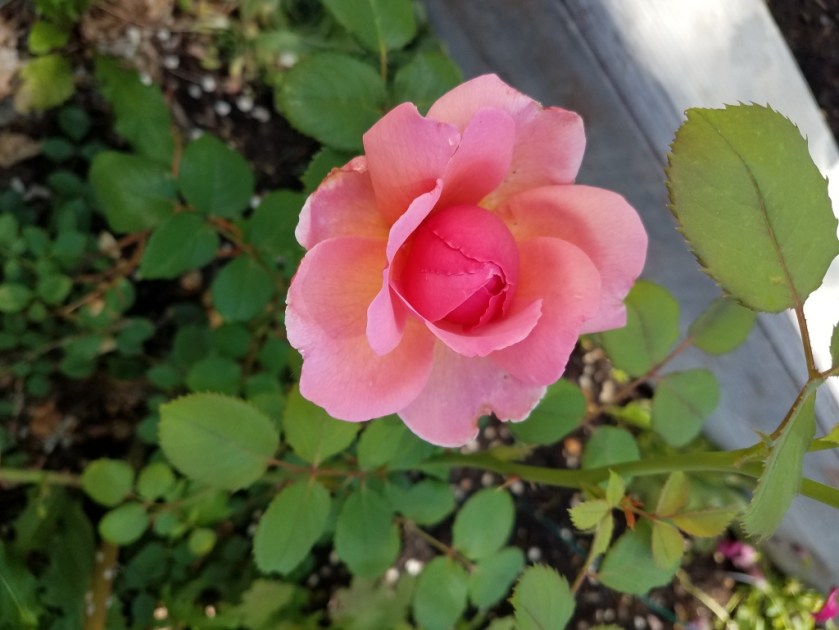
Rose
I bet you wondered where the rose was, didn’t you. Here it is, a little beat up by the hot weather, but still looking great!

Science and the Scleroderma Girl: Hard Choices

Everything happened really fast when I was first diagnosed with scleroderma  and Sjogren’s Syndrome. I had been referred to the rheumatologist after the results of bloodwork that my PCP ordered up. The rheumatologist did an exam and some tests, told me that I had the form of scleroderma called limited systemic sclerosis, and was evasive when I asked him what this would mean for me in the long term. What would my life be like in five years, I asked. He said he needed to run some more tests and would get back to me. He also told me to stay off the internet.

Well, that was kind of ominous, don’t you think? My first clue that this might be rather serious…

I was given a prescription for a disease modifying drug (DMARD) called Plaquenil, a handful of pamphlets, and referrals for additional testing. Lots of testing. Waiting for my prescriptions to be filled I went to the lab to get blood drawn and then sat down to call to make appointment for the additional testing I needed. It was hard to not feel like the sky was crashing down on me.

Cinco de Mayo rose.
Hey, time for a rose break. Look at what is blooming in my garden this morning! 

After 6 months of the drug Plaquenil I was feeling better, so I was a little shocked when the rheumatologist told me that it was time to add additional drugs and that he was going to give me the choice of methotrexate or CellCept. He handed me information on the drugs, ordered more blood tests to determine the state of my liver, and told me to call back in a week to let him know which drug I was comfortable with.

Of course I went straight to the internet. Hello. Science girl here. How should I make a decision without more information? Time to put all that chemistry and molecular biology to work!!

Ugh. After researching both of these drugs it didn’t look too good to me. Methotrexate is actually a chemo drug, given in a lower dose to rheumatology patients to suppress the immune response.  I would need folic acid to try to minimize hair loss and other side effects, and it would knock me on my butt for a day or two each week. CellCept also suppressed the immune system by another pathway, had fewer side effects, more risk of cancer, and was really hard on the stomach. Both drugs had definite downsides. I would need to stay out of the sun to prevent DNA damage. My risk of serious infections, including  PML, a fatal brain infection, would go up. The side effects of methotrexate seemed to be worse to me, but the CellCept would be awful on my gastritis…

If I chose to remain untreated with either of these drugs my chance of developing a fatal complication from scleroderma went up. I was already in the early stages of interstitial lung disease and pulmonary arterial hypertension, both of which could be fatal, so I really did need to try to slow things down with a drug…

Ugh! I was feeling pretty helpless about making the decision. What should I do when the future was unknown? Everything was a gamble and I didn’t have any really good choices.

I called my rheumatologist and told him I wanted to try methotrexate because I was pretty sure that I wouldn’t be able to handle CellCept. It was done.

Jacob sheep
Science and the Scleroderma Girl will be taking the weekend off because tomorrow I am going to the Estes Park Wool Market with my BKB Deb. Any day in the mountains is a good day, but it will be even better with yarn, peeps, and cute sheep. Woohoo! Fiber festival time!!

This whole process was kind of awful. Just knowing how these drugs worked and their side effects wasn’t enough. I needed more info. I needed to hunt down research studies.

Science time!!

Science and the Scleroderma Girl: The Patient Scientist

It is really annoying to have an illness that just keeps going on and on and on… think of the energizer bunny here. A really annoying scleroderma energizer bunny. I am so over it already. I love my doctors, but they are really focused on slowing down the progression of my bad boy illness, systemic sclerosis, and are kind of dismissive of the pain and dizziness that is coming my way courtesy of the fibromyalgia and Sjogren’s Syndrome.

It isn’t that they don’t care. They just have clearly defined priorities in mind as they treat me. It is kind of like when my mom was going through chemo for her cancer. The doctors were very sympathetic about her struggles with nausea and fatigue, and helped her the best they could, but they did not let up on the chemo schedule. My doctors are also sympathetic, but they still took my immunosuppressant dose up as high as they could when I got into trouble with my lungs two years ago. Oh, you are having trouble sleeping? So sorry. Hang in there. It will get better…

Cat and computer.
Do you see how much help MacKenzie is giving me while writing this? He too is sympathetic. Oh, your legs are hurting today? Here, I’ll sleep on top of them for you…

I had a surge of rebellion about the same time that this was going on and decided that I would consider myself a walking experiment of one and would try to get a better handle of my symptoms; surely there must be correlations between what I was doing in my day and how I felt. If I understood my test results better perhaps I could have better conversations with my doctors. Stop being a victim, I told myself, and become a patient scientist!

Food log.
Today’s entry into my little symptom journal. I started out tracking my daily food intake, and then added in entries about other symptoms.

The food log was perhaps the most important thing that I did. I began to figure out lots of things by focusing on what I was eating and what my symptoms were. I ignored the “universal truths” that I was being told to me by other people and focused on what was happening with me. Bam! Some of the things that I figured out actually changed the diagnosis list on my chart, and I certainly improved the quality of my life. Here is the short list of what I discovered about myself: absolutely NO SALT or other forms of sodium, gluten is fine, fiber is a problem, lactose free dairy with live cultures is a daily must, bananas are boss, and I should eat foods with a low glycemic index. Oh yeah: vitamin D and krill oil supplements are good, but tart cherry supplements will damage my kidneys. Good to know.

What happened when I changed my diet? Muscles pain went way down, I got more energy, my gastritis and other GI symptoms improved greatly, I slept better, and the quality of my life improved. For each of those food choices I used myself as an experimental animal. Just one change was made in my diet, and then I tracked symptoms for a week or two to see what happened. My latest experiment has involved bananas; a banana a day keeps my muscle pain way down. Who knew? Have a headache? Eat raisins!

I began to gather other types of data. I took my blood pressure during times when I was feeling poorly to see what it was doing. That’s how I figured out that my inhaler was making my blood pressure drop. Now that I’m off my blood pressure medicine, my pressure is back up, and I’m using my inhaler safely every day. Today I noticed that I was a little short of breath while doing laundry…

Oxygen monitor
Oh. That blood oxygen level is a little two low. It was in the high 80s when I first checked, and was up to 91% by the time I snapped the picture.
Oxygen monitor
Well look at that! This is what happened a couple of minutes later after using the inhaler. My oxygen level is up to 95% and my heart rate has dropped back down. I really need to use this inhaler every day as it is helping keep my small airway disease under control.

Now that I’m using the inhaler daily my energy level is up in my little notebook. Hmm… I’m not sure if this is completely due to the inhaler as I also added bananas to my diet, but as I keep logging observations I may figure it out.

I also have started collecting all the data that I can get from my routine heart and lung testing. I usually get a phone call from the doctor that tells me how I’m doing, but with the data in hand I can have more meaningful conversations with my doctors.

PFT results.
This is some data from pulmonary function tests that were done 2 years apart.

The data that I have circled in the upper table of data shows that my lung volume didn’t change very much when administered a dose of albuterol during my first pulmonary function test, which was done right after I was diagnosed. Two years later, when I was really struggling with shortness of breath, the data in the lower table showed that I improved 16% in my lung volume after that same drug. The technician told me that this was a big response and that he was sure I would be prescribed a drug to help me; that didn’t happen until I made an appointment with my internist weeks later, told her about my response on the drug, and showed her the specific data that I had picked up from the hospital where the test was done. Bam!! I got the inhaler that day.

By collecting data at home and paying attention to my symptoms I’ve been able to give better information to my doctors who have responded with changes in my drug protocol and treatment focus. Today all of my doctors shoot me a full copy of all of my testing data as soon as they get it. I also can access data through the patient portal at Kaiser. I follow changes in data over time, and then I can have a meaningful discussion with my physicians when I see them.

I’m just one data point out of all of the patients that my doctors treat, but by using myself as a walking experiment of one I’ve been able to figure out management strategies to help myself and how to better communicate with my medical team to work with them as a collaborative partner.

This is good. I will never be in control of my illnesses, but I sure am poking them with the pitchfork.

Err… knitting needles. They have definitely been poked.

It is good to be a science geek.

Science and the Scleroderma Girl: The Nature of Science

Logic clearly dictates…

Spock, Star Trek II: The Wrath of Kahn

Science. Everyone knows what science is, right? I mean, we have all been exposed to courses in science that involved learning lots of stuff about rocks, atoms, moving objects, plants, furry animals and stars. There are all of those books and all those facts, equations, and laws to learn. The vocabulary is ridiculous!

Science is also a way of thinking that allows us to learn new information about the world around us. It is a system of reason and logic that helps us understand what we know, and why we know it. Every year I started the biology course with a little unit called “The Nature of Science”, and this is what it covered:

  • Science is used to explore the natural, physical world around us. The magical and supernatural spheres are definitely off limits. The reason why is…
  • Science requires that we be able to collect data about a phenomenon we are studying: it must be observable with our senses or instruments. Something may be real, but if we can’t observe it we can’t study it using the rules of science.
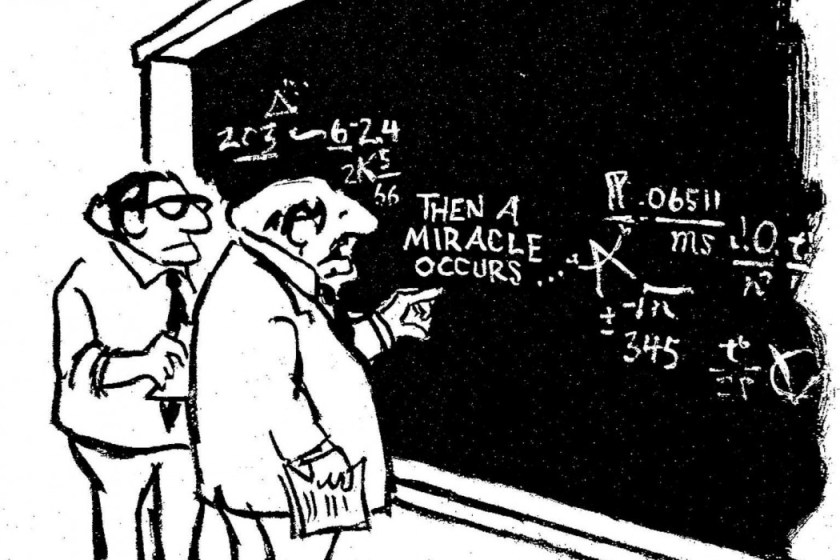
  •  In science you cannot whip out a miracle to make your model work…
  • The data that is collected should be consistent over time. Think about ghost research; instruments that show the presence of ghosts work on some occasions and not on others. That data isn’t reliable because it isn’t consistent. If I drop a glass it will fall to the floor every time, and it will accelerate towards the floor at the same rate every time I drop it. That data is reliable.
  • It should be possible to make predictions based on observations and prior understandings. We generally call these predictions hypothesis, and they get tested all the time in…
  • Experiments! The way we expand our understanding of the natural world is through experimentation that tests these predictive hypotheses. Observable data is collected during the experiment that allows us to draw some conclusions about whether the hypothesis was correct or false. Either way is fine. The point here is, we should be able to test the hypothesis to see if the prediction was accurate.
  • Here is the best part of science: based on what new understandings are generated our predictive models should be able to be adjusted. NOTHING is forever in science when you are dealing with the big predictive models that we call theories. For example, when I was a child I was told that mountains were formed as the earth cooled and wrinkles formed on the planet “like a raisin”. Ugh! Can you believe I was taught that?! Our current understanding of mountain formation involves the movement of large plates in the earth’s crust (plate tectonics), which actually makes more sense as it also explains earthquakes and volcanoes. Is my heart set on plate tectonics? Nope. If some new information emerges that supports an expanded or new model of mountain formation, I have to follow the data. That’s why theories are said to be “supported” by evidence, but never proven.

Science is about using logic and reason to learn new things about the world. Logical safeguards are in place to help make sure conclusions are valid (you know about some of these… I’m talking about controlled experiments, reproducible results, and peer review of published experimental results). Science is actually a form of applied philosophy; early scientists were called “natural philosophers” and today the degree is still called a Doctor of Philosophy. Yep. That’s what Ph.D. stands for.

Why is this stuff important to me and anyone else with an autoimmune disease? Unhappily, we are out there on the edge of the envelope, falling off the map, and beyond solid scientific understandings. We have diseases that developed via unknown pathways and causes, and they are not completely understood. There is no definitive treatment that will “cure” the disease. We are part of a continuing effort to expand scientific and medical knowledge as we progress through our illnesses using drugs and interventions that are the best predictions for good outcomes. We are all walking hypotheses, and what happens to us helps build the body of evidence on how effective our treatments were. As knowledge expands in labs about the biological pathways and the disease mechanisms, new treatments will be developed, they will also be subjected to this scientific process, and the total body of scientific understandings will grow. Someday it will all be “old stuff” and written in a dusty book.

But today, I’m rocking the edge of the envelope as a walking experiment of one.

I even keep a science notebook on myself.

That’s tomorrow’s post.

Science and the Scleroderma Girl: A Series of Serendipitous Events


Serendipity: the faculty or phenomenon of finding valuable or agreeable things not sought for.

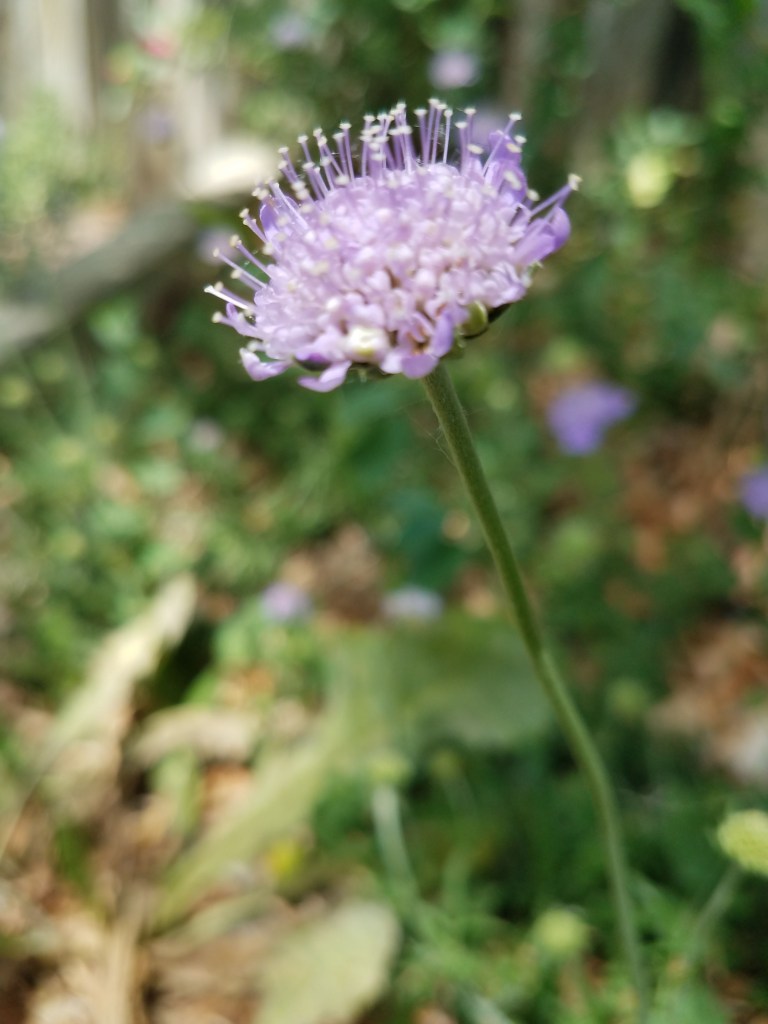
Pincushion Flower.
This morning, while weeding the back wilderness, I found this transplant. Serendipity in the garden.

I can clearly remember the first event of historical significance that invaded my simple world of early childhood. I had been snuck into the big kids playground at our school by my rule-breaking older sister. Swinging on a high bar way too high for my little First Grade body, I listened to my sister and her friends talk about Sputnik; a scary object launched by the Russians orbiting the earth above me. I couldn’t see it, but evidently it could be followed because it was talking to the ground with radio signals.

Just like that I was gone. The world was round, there were things that happened in the world that I couldn’t see, but evidence could be collected that betrayed their presence. I was a science geek in that instant, and it never ever stopped for me.

Sputnik, and the ensuing space race, made money available for science education in the public schools. I was exactly the right age to benefit from this new emphasis on understanding the world around us through scientific thought. I was a curious child: I questioned everything, collected bugs, nursed baby birds back to health, begged for a microscope for Christmas (which I got), and read endless books.

Years later, married to a young serviceman in the navy, I ended up applying to the university near where he was stationed to study biology. That is how I ended up working towards a degree in molecular biology at UCSD. My professors were famous scientists and I was so lucky to learn from them. Stanley Miller taught me physical chemistry, and I learned immunology from Seymour Jonathan Singer. Ok, I took that immunology class from Dr. Singer because he was my advisor, and I was kind of scared of him. I couldn’t say no when he pressed me to enroll.

Because I had immunology under my belt I was hired at the Scripps Clinic and Research Foundation to work in the lab of Dr. Eng Tan, who conducted research that focused on the molecules in a cell’s nucleus that were the targets of the antibodies found in patients with rheumatic conditions such as lupus and, wait for it, SCLERODERMA. Yep. My first job in that lab was doing the ANA tests. Later on I was part of the research team that identified SCL-70, one of the molecules involved in the diffuse form of systemic sclerosis. Here’s the paper if you want to torture yourself. 🙂

I have to say, I loved working in research, but it wasn’t as creative and social as I needed my work day to be. I went back to school, got a teaching certification, and began to teach biology and AP Biology. Whew. I had to take lots of classes to stay up on things, and along the way I learned lots about human anatomy and physiology. Just as I was working into my comfort zone education transformed and educational standards were instituted. Good grief. Why do I have to keep on stretching my wings like this?

I had to teach students how to think and plan experiments just as scientists did in my classroom.  I created lots of open-ended research problems that they could investigate, collect data on, and then draw conclusions that I could use to link to biological concepts that they were learning about. Wailing internally at the extra work, I began using science notebooks in my classrooms.

Students doing experiment.
In this lab the students grew yeast in different conditions and then collected the amount of CO2 gas that they produced as a measure of growth in the attached balloons. These students were varying the amount of sugar the yeast had.
Graph of experiment.
Here’s the graph from a student team that varied the growth temperature. Those yeast sure liked water that was 60 degrees Centigrade! 

The kids liked the experiments, their ability to think scientifically grew by leaps and bounds, and along the way I really learned a lot of things myself. I ended up training other teachers on how to do science notebooking in their own classrooms, and eventually I helped write the inquiry science standards for my state.

Four years ago symptoms that I had been dealing with for years (and decades) overwhelmed me and I was diagnosed with a couple of the autoimmune diseases that I had learned about early in my professional life. Unbelievably, through no real choices of my own, I had been prepared with the background knowledge, resources, and experience that I needed for the fight.

Serendipity.

This is Science and the Scleroderma Girl, the mini-series project of blog posts about the adventures of a science geek in the world of chronic illness. June is Scleroderma Awareness Month, so I hope to put up a new post each day. I hope you’ll join me.

It’s June! Introducing Science and the Scleroderma Girl.

Okay, this is it. I’ve been fussing for over a year about writing a series about science, biology, medical decisions, and navigating safely through a world of alternative medicine and treatments. I’ve come close to launching into a block of mini-rants before, but never went there because it would just take too much energy…

June is Scleroderma Awareness Month. As luck would have it, June has also arrived as I sail back into calm waters following a 6 week storm set off by worsening symptoms, medical testing, and finally a collaborative consensus between my doctors and myself based on data that informs a new course of treatment. In other words, science, biology, and data-driven medical decisions have saved the day. I have lived a life of science in my educational and professional life and this training and way of thinking continues to save the day for me. I do have other skills, of course, but the foundation is always based in science.

I guess I think that it is time for me to share in case it helps anyone else.

Hot Cocoa Rose.
June has brought me the first rose of summer, too. Look at this cutie!

This month I am better. This month my energy is coming back, ideas for topics are swirling in my head, and I think that the time has come. I’ve started a planning grid with all of my topics and resources, and things are starting to come together. Since June is Scleroderma Awareness Month, this is the month that I should do this. If I can put this all together, there will be a post each day this month. With Star Trek quotes, of course!

I did tell you I was a science geek, didn’t I?

The Scleroderma Chronicles: The lung results are in.

Spoiler Alert: More good news!!

Last week I drove across town to a hospital that is connected to my pulmonologist’s Kaiser office building for my pulmonary function test. If you’ve never had one of these, there is a machine that you breathe into, a computer that is calling the shots and a sealed glass booth that isolates you from the outer world. Into the booth I went. Time to get some answers!

As part of the test I used an inhaler to get a big slug of the drug albuterol. Wow. That really helped. I’ve been avoiding my inhaler for months as I would feel just HORRIBLE after using it due to dropping blood pressure.

But I just quit using my blood pressure medications two weeks ago and now it was really obvious that my breathing was much better after using the drug. “Here, you’d better take this diffuser”, said the technician giving me the tests. “You’re going to be using this!”

Wednesday my pulmonologist called me with the results. My lungs are better than they were two years ago! More to the point, my pulmonary arterial pressure is down into normal ranges and there is less leakage (okay, they call it regurgitation… what an ugly thing to say about my heart!) at that heart valve. Woohoo!! The fatal complication that we all thought I was going to have to face down is suddenly off the table. I’m not going onto oxygen. My doctor and I virtually hugged over the phone.

Here’s the deal. I have a second autoimmune disease called Sjogren’s Syndrome that can cause small airway disease in the lungs. My Sjogren’s has been pretty bad this year, and since I responded to the inhaler drug really well it looks like that is what is going on. My doctors focus on my bad boy systemic sclerosis so much that they tend to forget about this other life-altering, but not fatal, condition. This year Sjogren’s has been stabbing me in the back.

“Time to start giving your inhaler a workout!”, my pulmonologist told me. “Then try to get more exercise. Your lungs need to continue their recovery, and we are keeping you on the high dose of your immunosuppressant drug.”

Inhaler and fitbit.
I bought a fitbit yesterday and I plan to use the inhaler daily while I steadily increase my exercise. Next week I’m going gym shopping…

It’s the drug. It absolutely is the new drug that I’ve been taking for the last 2.5 years. It is a new drug for the systemic sclerosis community, one originally developed for organ transplant patients, that is now collecting a body of evidence that shows that it not only slows down the rate of disease, but also allows some reversal and healing to occur by impairing the immune system attack on the lungs.  My heart is better because my lungs are better. In a time when I have been experiencing chest pain and shortness of breath, it was because I was getting better and needed to come off some of my drugs, not because I was getting worse. I am completely blindsided and gob smacked by the unexpected turn of events.

Next week is the Estes Park Wool Market in Estes Park, Colorado. I’m off to the mountains and boy will I be running wild with my BKB Deb. I’m going to pet the alpacas, eat lamb kabobs, and then I am going to buy a boat load of yarn. My new fitbit will be getting a workout!

After that I’m going to see my internist so she can look at the big picture with me to see what else we’re missing. There’s another drug that I want to drop…

That will be another post.

Scleroderma Awareness Month: Hard Word. Harder Disease.

Every year I get a note from the Scleroderma Foundation about Scleroderma Awareness Month. Take the pledge! Tell at least one person about scleroderma! Coerce your friends into joining the walk for the cure later this month.

Piece of cake. I can do that. Hand on to your phones, because here we go.

Scleroderma is a crazy sounding word, isn’t it. It is actually descriptive of the most obvious symptom of the disease:  based on Greek words, “sclero” means hard and “derma” means skin. Hard skin. My skin is interesting to say the least. Hard, shiny, speckled with white patches of scaring, tight across my cheekbones and knuckles: kind of typical for the disease.

“It’s just your skin”, I was told by my ex not long after my diagnosis. “It’s not a big deal, right?”

As it turns out, this actually is a big deal. The tissue under attack by the immune system is the connective layer just under the skin. You know, the layer of the skin that produces the collagen that gives skin its stretchiness and cohesiveness. Imagine what would happen if this tissue grew really thick, stiff, and then tightened down so badly that blood circulation was cut off and it became impossible to move correctly at the joints. The skin around your mouth can be too tight for you to open wide at the dentist, you can’t bend over to tie your shoes, and forget turning your neck. If your skin won’t stretch, you are in a fix for sure! Finger tip ulcers are a constant worry, and physical therapy to maintain flexibility becomes part of the daily routine. Or you can knit. Knitting is good for blood circulation and flexibility. 🙂

Best advice ever for the scleroderma girl.

This same connective tissue is also found throughout the intestinal tract, and in many other organs of the body. The lining of blood vessels also is impacted, and there is a lot of smooth muscle (like the muscles that work in your stomach) damage.  Some people with scleroderma will only experience it in their skin, but others will have damage occurring in organ systems of their body. None of this is nice; some people will lose the function of their hands, while others suffer kidney, heart, and lung damage. Intestinal tract damage is almost universal, and some of these complications can be severe. Check out this neat interactive chart of symptoms.

So, what causes scleroderma? The actual answer is… nobody knows. It is an autoimmune disease that is triggered by unknown causes, has no cure, and if left untreated in the systemic form is fatal 50% of the time. Right now there is no drug to directly treat the disease, but there are treatments to help with symptoms and to modify the course of the disease by impairing the immune system. With these drugs survival rates are way up. Seriously, hug the next scientist you come across. I personally plan to throw a bar-b-que for the next one I get my hands on.

As it turns out, this year the month of June arrives at a pivotal time in my scleroderma life. There is so much going on, and so much that I’m thinking about, that I’m gearing up to post a whole series of articles about the complexities of navigating through the world as a chronically ill patient. Seriously. I could write a blog post for each day of the month. My little notebook that I jot ideas for posts in is filling up quickly.

I need a catchy title for the series. It will be about science, biology, medical decisions, and navigating through a world of alternative medicine and treatments. You know, like fake news, but instead we are dealing with fake medicine.

Whatever is a scleroderma girl to do?

Stay tuned. I’m seriously gearing up for this. June is going to be a great month.

Hey, if you want to walk with me for a scleroderma cure, just let me know. 🙂

The Scleroderma Chronicles: Year 3.6 There is a 911 call…

Yep. It finally happened.

Upset cat
These scary firemen came to the house and took mom away.

It has been kind of a hard six months. I’ve been dealing with a serious flare of my Sjogren’s Syndrome: dry mouth, eye problems (retinal detachments in BOTH eyes), brain fog, and horrible fatigue. Seriously, off the chart fatigue. Bad Sjogren’s, bad!!

But I think that my systemic sclerosis (scleroderma) has been chugging along as well. My chest feels tight, and when I do anything at all I start to breath hard as I catch my breath. Okay, there might be some panting… Sometimes I get dizzy and I have to put my head down. Vacuuming is suddenly a horrific task, but just coming up the stairs or washing out a pan at the sink can also set me off. Sometimes my lips are blue…

Arm with edema.
Check out my edema:  Can you see the details of the quilt that my arm was resting on?

One of the problems with being chronically ill is that you just keep taking things in stride. After all, it isn’t like this is the first time I’ve seen edema like this, or noticed that my lips were blue. I get out of breath all of the time, and I’ve been telling my doctors about all of this for the last 18 months. But somehow, things seem a little worse now. I have heart palpitations and there is a constant pressure in the middle of my chest. I have developed a headache that just refuses to go away, and my muscles and joints are behaving even worse than ever.

So, Friday while I was resting up in bed after the ordeal of making my morning coffee (yep. I go back to bed to recover from getting out of bed…) I decided that I would call the pulmonologist’s office to ask for an appointment. As usual, thinking that I would be on my feet for only a limited amount of time, I planned several little chores to do while I was going to be up.

Arm Warmers
I took this picture of my incredibly cute new arm warmers. This is the Armelitas pattern by knitcats Design, and here are my Ravelry project notes.

Aren’t those the cutest armwarmers? I put them on, and then started the dishwasher, got a load of laundry going, and then pulled on some more warm clothes (ahem… my Cactus Flower socks and Marfa is a Black Elephant shawl over some fleece pants and a denim shirt) so I could sit at the computer downstairs to make the phone calls.

So, I was out of breath when I made the call. I got ahold of the nurse at my pulmonologist’s office to ask her if I should came in for testing right away or if it would be best to make an appointment. As I talked to her my breathing got worse… I just couldn’t catch my breath and I was now outright panting. I began to feel faint.

The nurse called 911.

I ended up sitting on the floor by the front door with the phone on speaker in front of me waiting for the paramedics to arrive. In just a few minutes they had bundled me up and were whisking me out the door leaving a visibly upset MacKenzie watching from the top of the stairs. It was snowing outside; I didn’t have a coat, but I had managed to hang onto all of my knitted items. The paramedics attached me to all of their sensors and then rebundled me in blankets and knitted items afterwards (okay, my hands turned blue. They hadn’t ever heard of Raynaud’s, but they becaume instant fans of wooly warmth when presented with fingers that matched my denim shirt…) My armwarmers were popped back on over the IV line and the oxygen sensor on my finger. They used the shawl as an additional blanket. I never got my breathing back under control, and was still panting up a storm when I got to the hospital, but I was better equipped than most to cope with the cold. I like to think that I was pretty darn fashionable, too.

Into the MRI machine I went, rocking my armwarmers, as once again the doctors went on a blood clot hunt. Every one of my health emergencies has involved blood clot hunts; it’s a scleroderma thing. No blood clot. No pneumonia. No heart attack. After 2 hours sitting on the gurney in the ER my breathing was under control again and my O2 was fine. My best friend Deb arrived with knitting in hand to sit with me. My son arrived in time to take me home again with instructions to not let me drive or stay home alone.

“This is something that needs to be treated by a specialist”, the ER doc tells me. “You need to call your pulmonologist’s office first thing in the morning to get in to see her. You need additional tests that can’t be done here in the ER”.

You think?

It’s hard to not be stuck by the irony of this. I’m back right to where I started. It is kind of known in the scleroderma community that going to the ER is mostly useless because they don’t have the knowledge and experience to treat your condition. I’ll be calling my pulmonologist first thing Monday morning, but this time I will be calling from bed in a well rested condition.

Grooming cats.
with my latte and the cats!

For those of you who don’t know all of the details of my autoimmune bad-boys, here’s what is going on:

  • I have the limited form of systemic sclerosis, which is a subset condition of scleroderma. I have thick skin on my lower arms, legs, face and neck mostly, but the damage is also affecting several of my organ systems. I am considered a classic case with all of the CREST components.
  • I also have Sjogren’s Syndrome, which is fairly common as about 15% of systemic sclerosis patients also acquire this sidekick condition along with the scleroderma. It’s serious in its own right, but not usually life threatening.
  • Systemic sclerosis has a whole basketful of complications: Raynaud’s Disease, interstitial lung disease, pulmonary arterial hypertension, and kidney disease along with the almost universal digestive tract complications. I have all of these, but in my case the words that are used to describe how I’m doing are “mild, early, and moderate”, which are nice descriptors to have if they are being used in the context of lung,  heart, and kidney disease. I’m kind of guessing that one of the heart/lung conditions has taken it up a notch.

Today I’m camped out with my son waiting for Monday to arrive. I’m knitting.

Do you know the great Elizabeth Zimmerman? Her famous quote, one that I bear close to my heart on days like this, is: “Knit on, with confidence and hope, through all crisis.”

Knit on, my friends, knit on!

The Scleroderma Chronicles: Rare Disease Day 2018

It seems like I just wrote a “rare disease day” post just yesterday, but it has been a whole year already. Actually, I think that I was really lazy last year and just re-posted the previous year’s blog post. Anyway, tomorrow (February 28th) is World Rare Disease Day. This year the motto is “Show Your Rare”, which is a little scary as it sounds vaguely like how I might order my steak, but I’m game. I’m rare, and here is my story.

First things first. Let’s talk about rare diseases. Here in the United States, a rare disease (also known as an orphan disease) is one that affects fewer than 200,000 people in the US. The bad news is that there are a lot of rare diseases; over 6,000 different diseases that impact about 25 million people just here in the US. Many of these are genetic in nature, and they tend to be chronic (more about that later).

I joined the rare disease club the day that my systemic sclerosis (a form of scleroderma) was diagnosed. With only about 100,000 cases in the US, we are definitely rare. Here’s the scoop on my disease: it is progressive, disabling, chronic, and possibly fatal. It shares some characteristics with cancer cells. It is also mostly invisible to other people, and people have no frame of reference to understand an illness that they have never heard of before, so they tend to be dismissive.

Scleroderma hand
One of the most obvious features of my condition is my thick skin. My legs and lower arms are literally hard, and here on my hand you can see that the skin folds kind of strangely. My skin is thick with scar tissue that has built up in response to inflammation set off by my immune system’s attack on normally healthy tissue.
Finger
You can really see it on this finger. My finger looks pale since the scaring is so bad it cuts off circulation when I hold it out straight. There is a silver lining to this: I will never have “old lady” hands.

My hands look strange, but I am doing really well all things considered. I have good circulation and flexibility which my doctors think is due to knitting. “Knit as much as you can!” was the recommendation. See, every setback in life has a silver lining.

What can’t be seen is my astonishing fatigue, muscle/joint pain, and brain fog. So much brain fog. I’m also accumulating organ damage as the months pass by. Digestive system damage, kidney damage, lung damage, and blood vessel damage that is slowly increasing the pressure in my heart.

Scleroderma face
All that redness on my face is due to blood vessel damage, and you can see the thick skin around my eye. Collagen build-up has given me chipmunk cheeks. Special. Thank heavens for red-cancelling make-up.

It’s like a scene from the movie, The Terminator. You know… if you substitute this line about the Terminator from the movie with the word scleroderma it would be… [Scleroderma] can’t be bargained with. It can’t be reasoned with. It doesn’t feel pity, or remorse, or fear! And it absolutely will not stop, ever, until you are dead!

Mortality rates are down for my form of the disease due to new drug interventions. The other good news is that it is moving really slowly in my case. I think that I have had this disease for decades, and only now, in my 60s, is it catching up with me. I’m on the best drugs available, I love my doctors, and they have slowed the disease progression down tremendously over the last couple of years.

But I’m still dealing with a serious chronic illness, as are many other people with rare diseases. For me, when trying to explain my illness to others, it is the concept of “chronic” that causes the most trouble. People tell me to get more sunshine, more exercise, better food, use essential oils, whatever, so that I can get better. That’s the way it is for many health conditions, but not for a chronic illness.

There is no better, I tell them. Only this. Nope. They will insist that I can get better if I just try, and take it as defeatism when I calmly explain that some of this damage can’t be reversed. It is possible to get better without getting well, they will say. You look so great! It’s like it’s a personal affront that I can’t just be cured. If they haven’t seen me for a few months they will express surprise that “this is still going on”.

It is the concept of “chronic” that is the problem. To accept that you are sick is not weakness or “giving up”. It is coming to terms with the nature of your enemy.

So here is my Rare Disease Day request for anyone who has managed to read all of this. Accept chronic. Ask the person you are talking to about how they are doing. Ask what their doctors are telling them. Accept that they are in a situation that they can’t escape from. Don’t shy away from the fight if you care about that person.

If you know the movie “The Terminator“, you know that the heroine of the tale, Sarah Connor, was a hell of a fighter. She never, ever gave up, and in the end she got the best of the monster trying to do her in.

I’m channeling Sarah Connor.