Hannah and the CoalBear: Lazy Mother of Cats

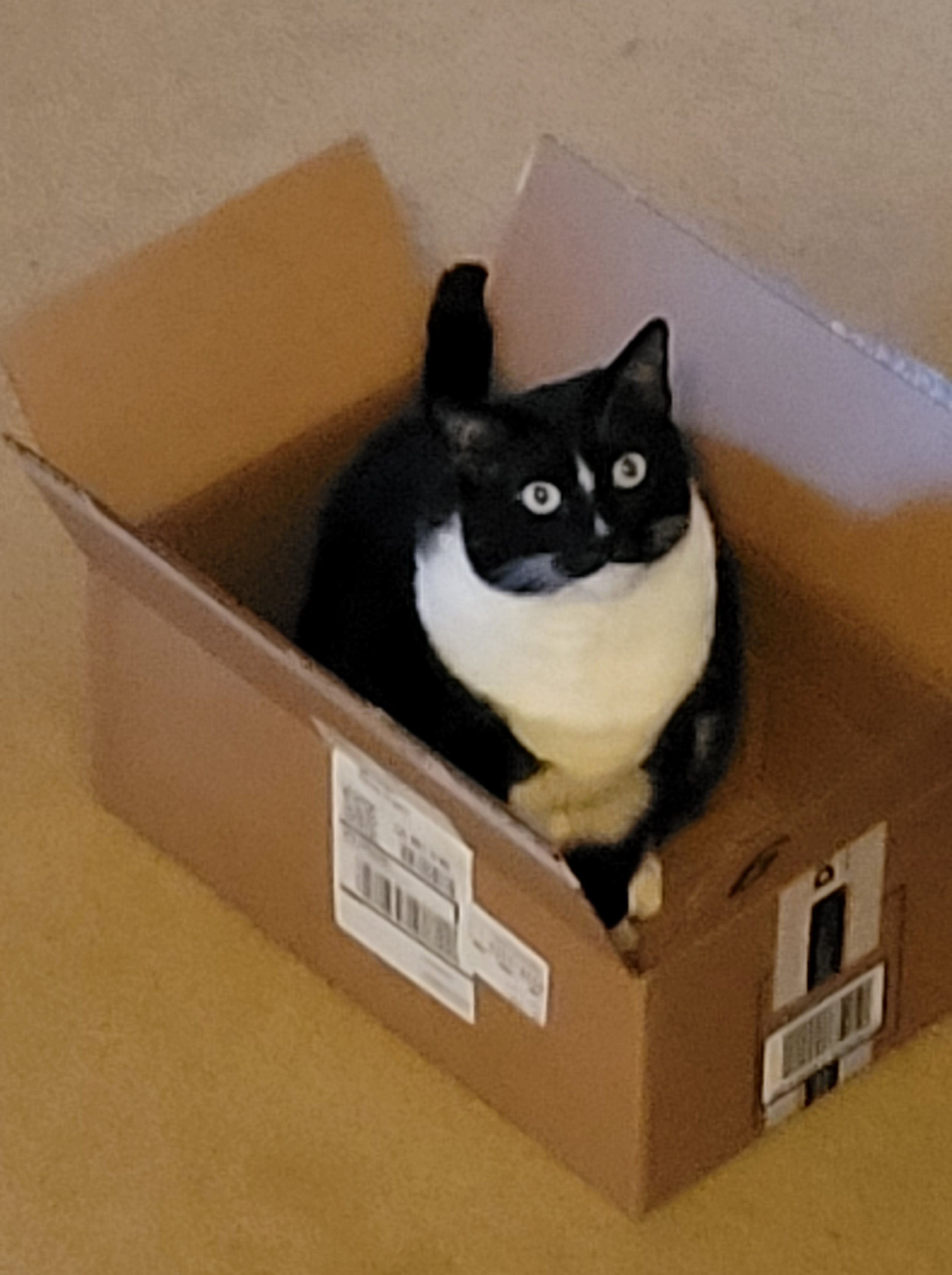
Hi. I’m Hannah.

I would like to lodge a complaint against the Mother of Cats!!

The world outside has changed over the last couple of weeks. The sunshine is bright and warm; I love to sleep in the sunshine, don’t you? There are more squirrels than usual chasing each other through the trees out front, and sometimes they even come right up to the windows. The bunnies are spending lots of time in the yard where the CoalBear and I can see them, and there are birds again. Lots of birds!! All of this change is really exciting, and the CoalBear and I just want to spend all of our time playing. So, is the Mother of Cats spending all of her time entertaining us? Giving us tuna? Letting us outside to play in the sunshine and delivering the kitty cookies right on time?

No. She is not!

The Mother of Cats has been sleeping more than usual (and I’m a cat, so believe me, that is a lot!), reading her books, and knitting. Knitting isn’t too bad if we get to play with the yarn, but nope, nope, nope… once again she is not sharing her toys with us like she should.

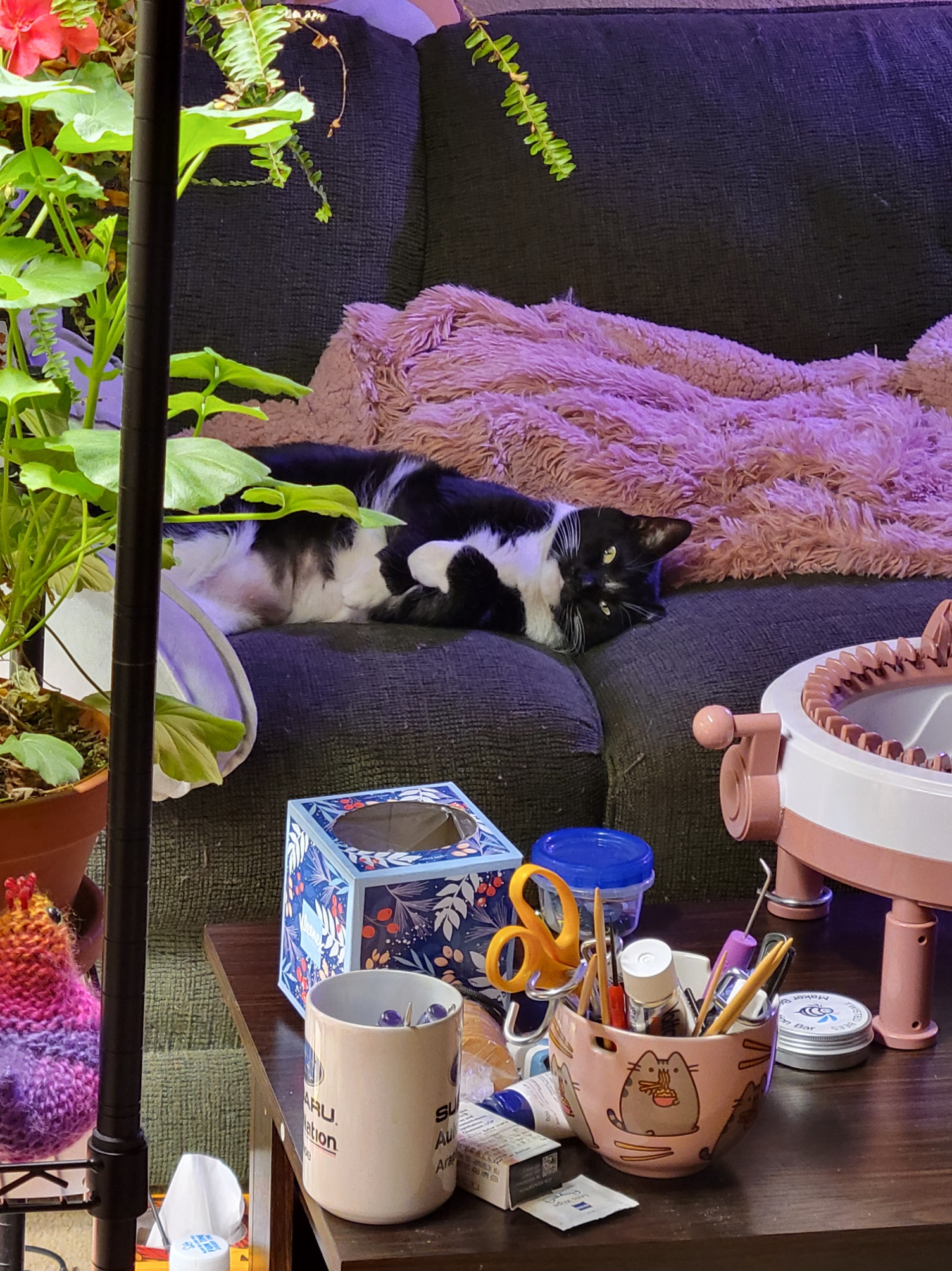
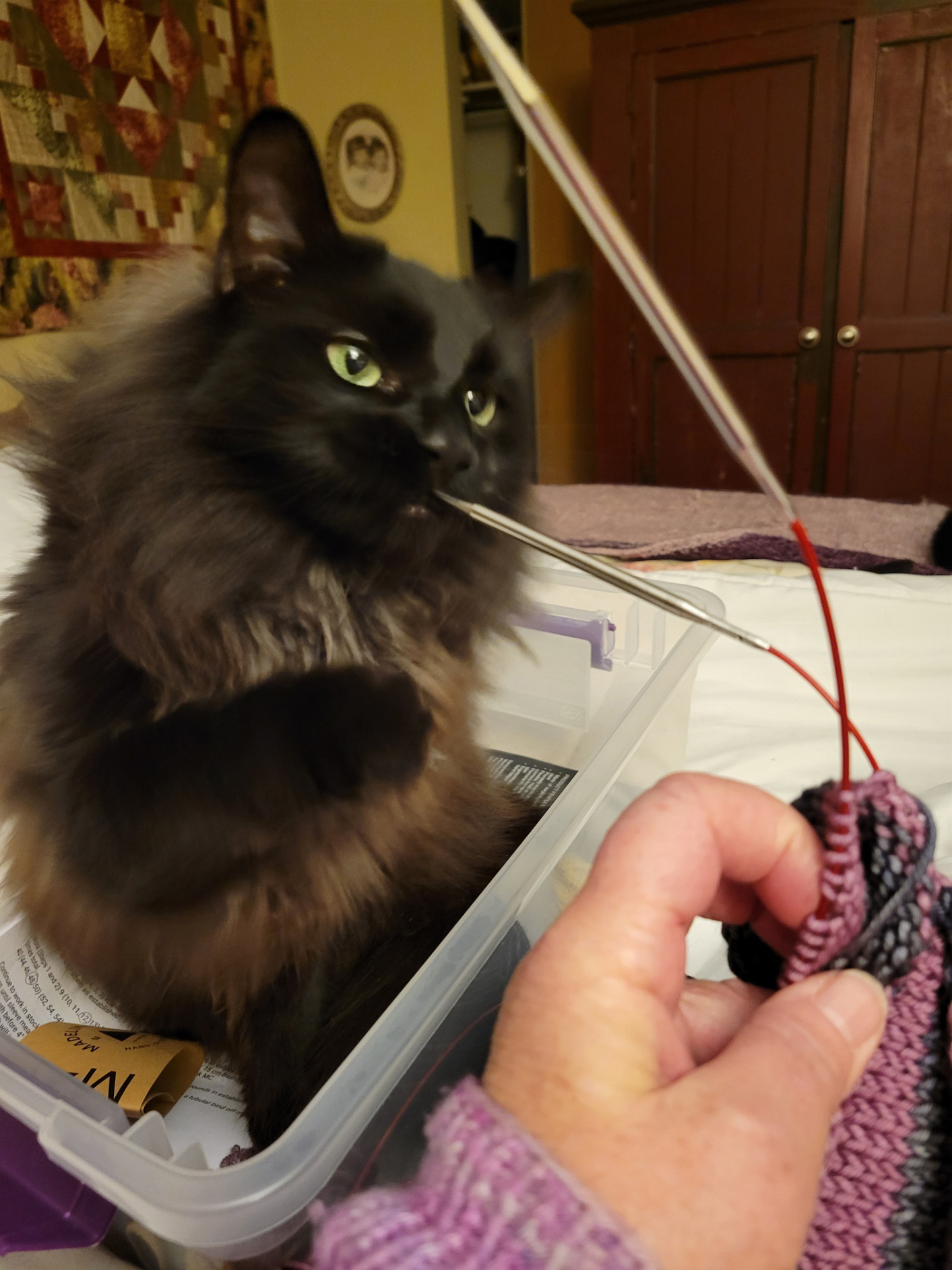
Mateo the CoalBear is doing his best to play anyway! He loves the needles, I perfer the yarn myself. He is kind of a weird kitty…

The Mother of Cats has been listening to an audiobook during some of her knitting, so I get to listen along with her while she knits and I help with the yarn management.

This is the book that we listened to last week.

Imagine a man who dreams of waves of energy zooming through the air from a spark of electricity to a device that can detect the waves; the device is like magic, letting messages travel from one place to another without wires. He dreams of all the changes that the wireless messages can make in the world, and also about how much money he can make from the business that installs and runs the devices that make this possible. His name is Guglielmo Marconi. Pretty cool, right. (Can I have some tuna now… all this typing is making me hungry…) At the same time in history, there is a man who works creating and selling “cures” for illnesses. He is married to a woman who is very bossy and demanding (CoalBear… I’m looking at you…) and one day he snaps, kills her, and tries to escape with his true love to America on a ship. His name is Hawley Harvey Crippen.

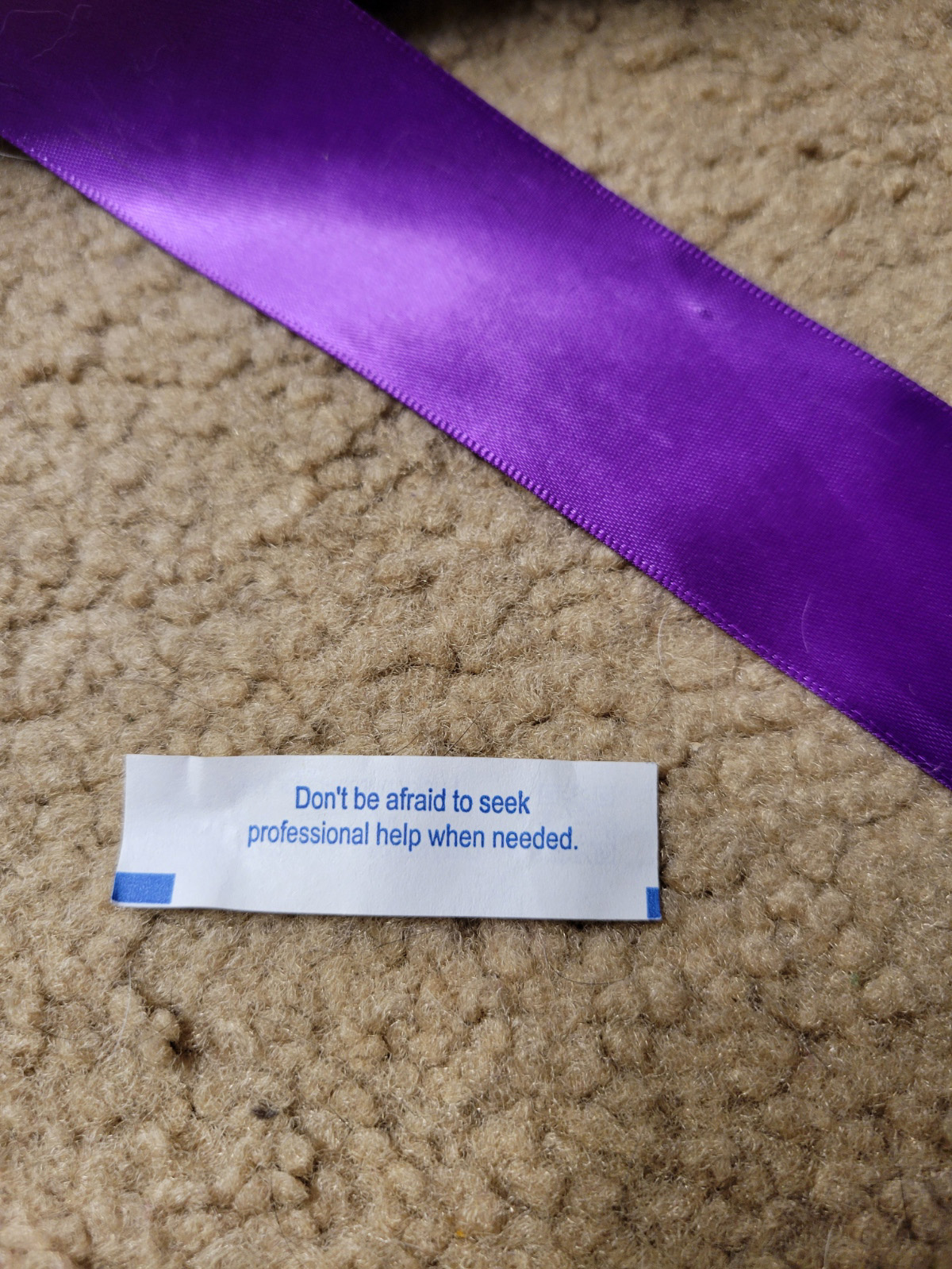
I have to be honest; I played a lot with toys and this fortune paper from a Chinese cookie while the whole book thing was going on…

Are you tired of the story yet? It gets really exciting now. Chief Inspector Walter Dew of Scotland yard finds the reminds of the murdered wife. The hunt for the escaped murdering husband with his girlfriend becomes a big deal in the newspapers, and the captain of the ship realizes that two of his passengers are the people being hunted by Scotland yard. The captain sends a message back to shore using (what else???) his Marconi wireless device. Chief Inspector Dew boards a fast boat and the chase across the Atlantic Ocean is on, with coordination between ships made possible because of … wireless messages using the Marconi system. Marconi messages keep the press updated, and suspense builds as the public hangs onto every new update and intercepted message reported in the news. Whew! My whiskers were just a tingle listening to all of this! Chief Inspecter Dew overtook the ship with the murderer, and he was apprehended before he could land in Canada. Because of the publicity, Marconi’s business was secured. What a story. What a book!! I absolutely need some tuna right this minute!!!!

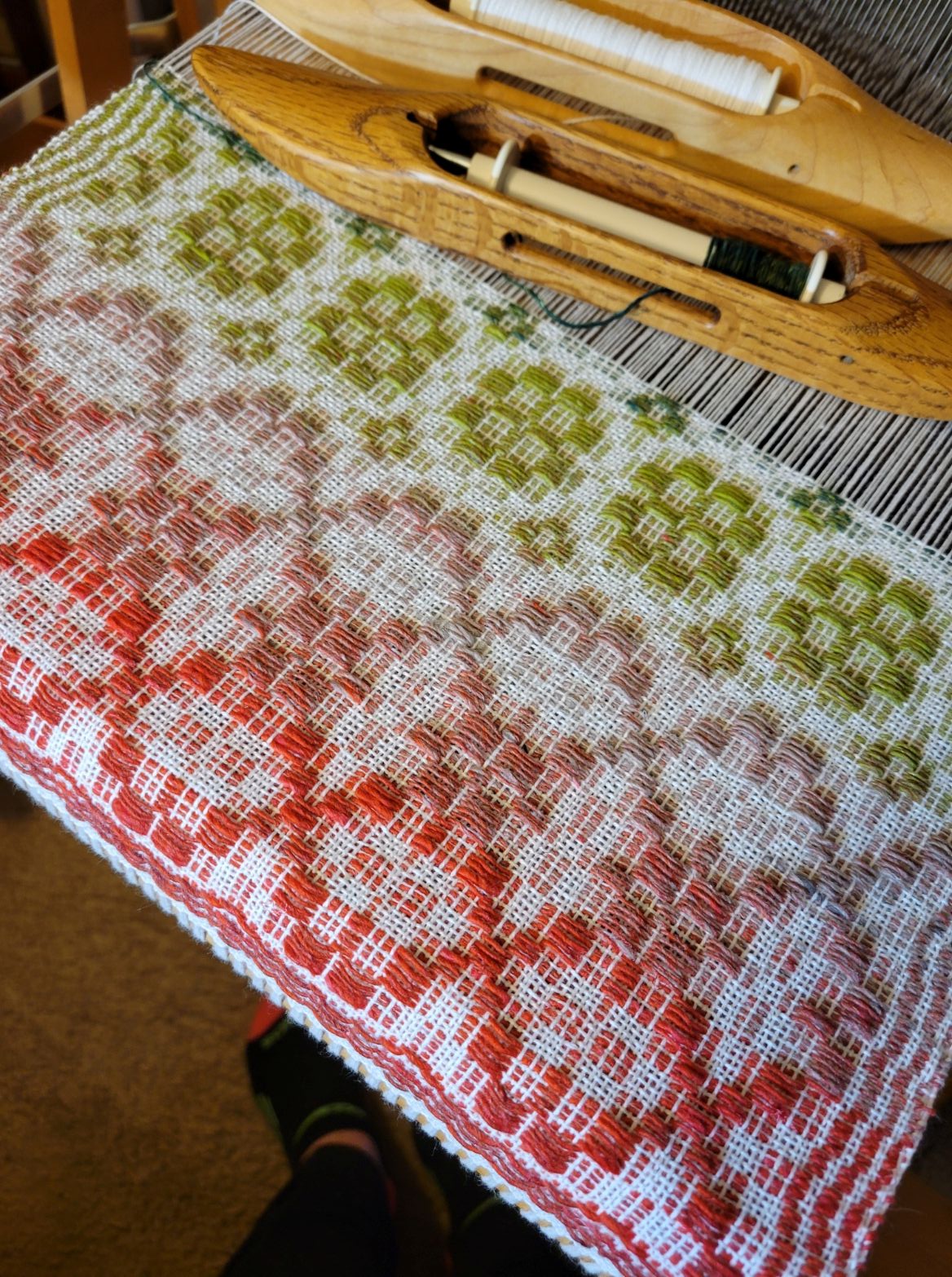
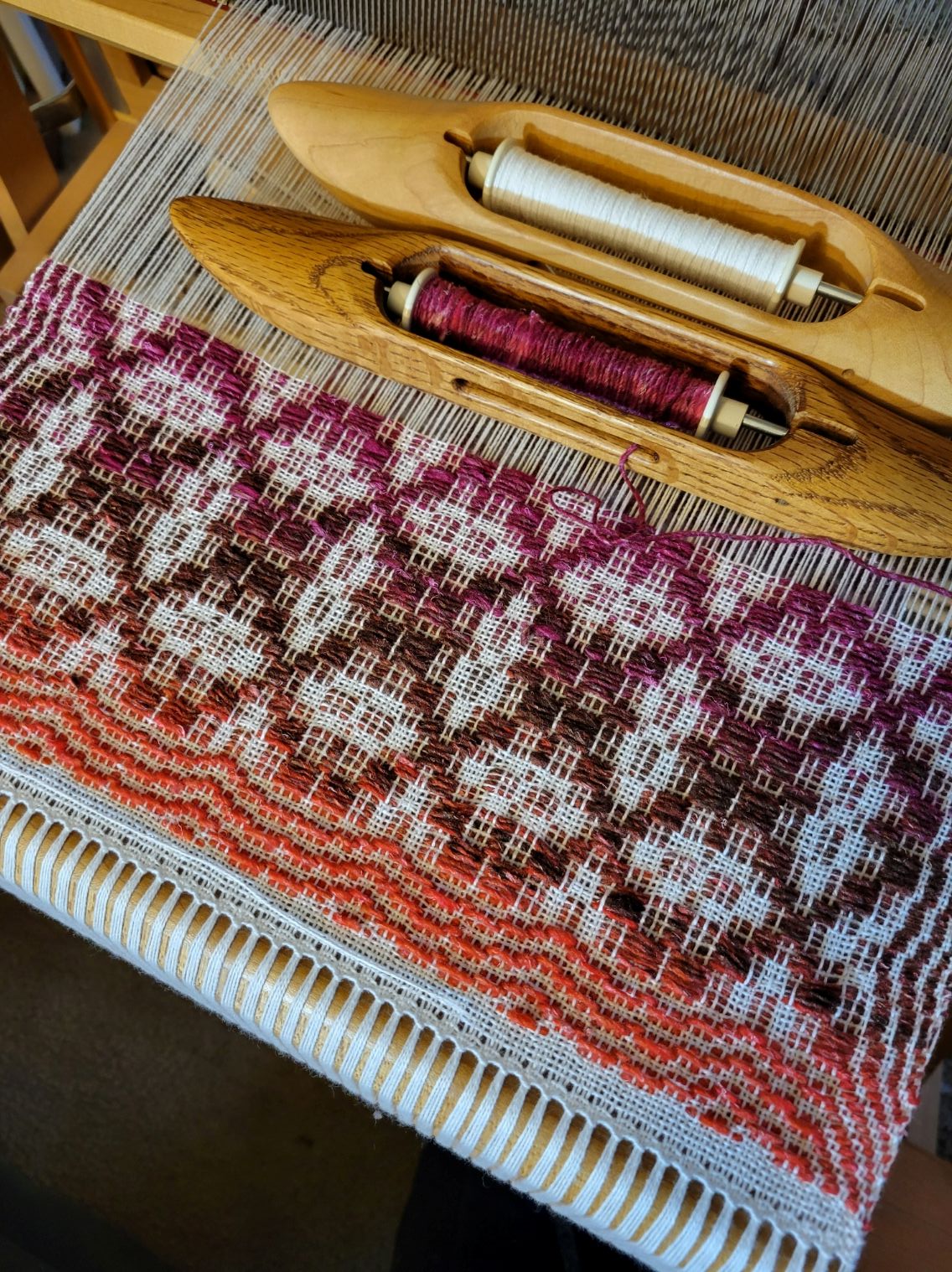
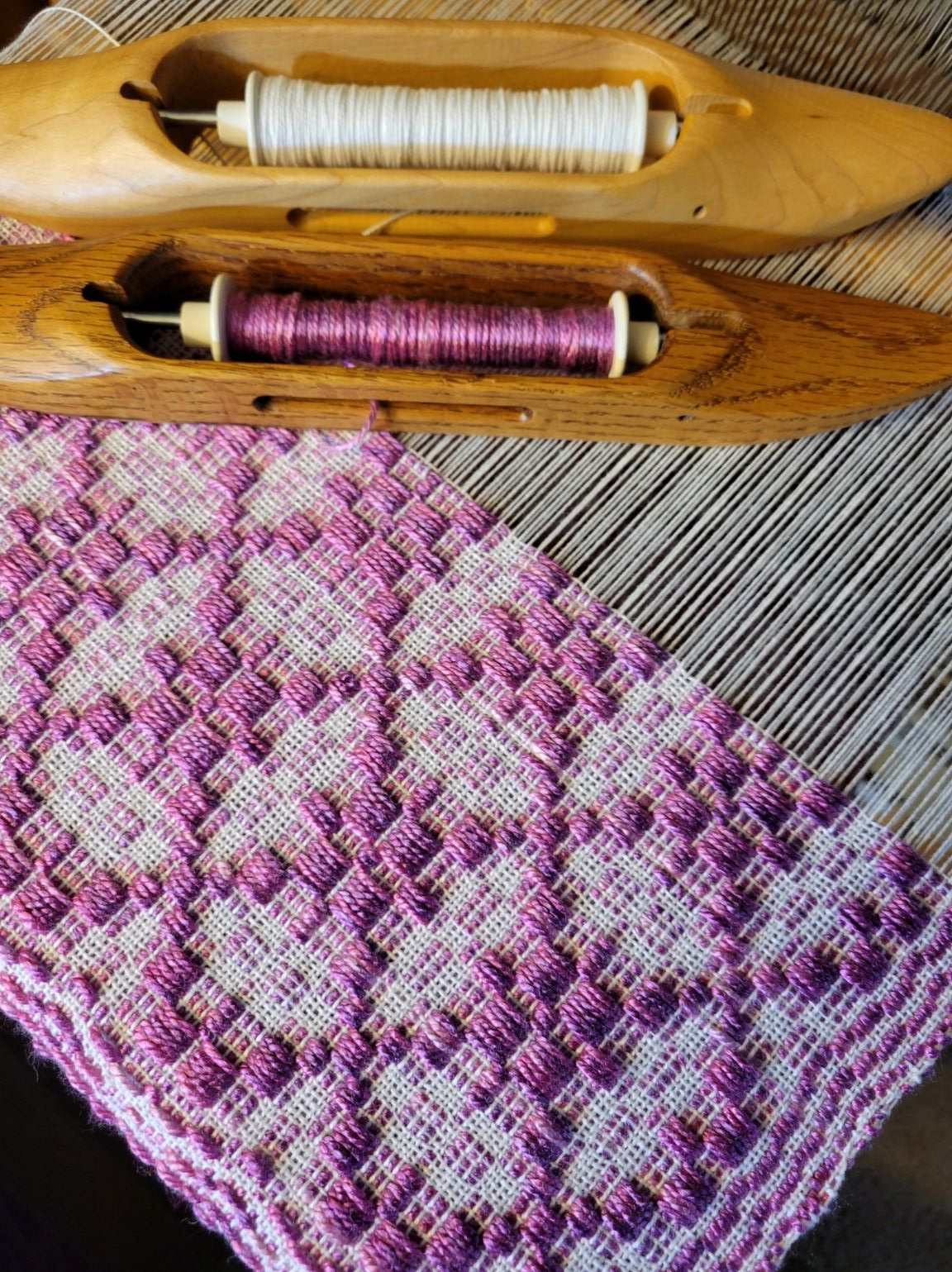
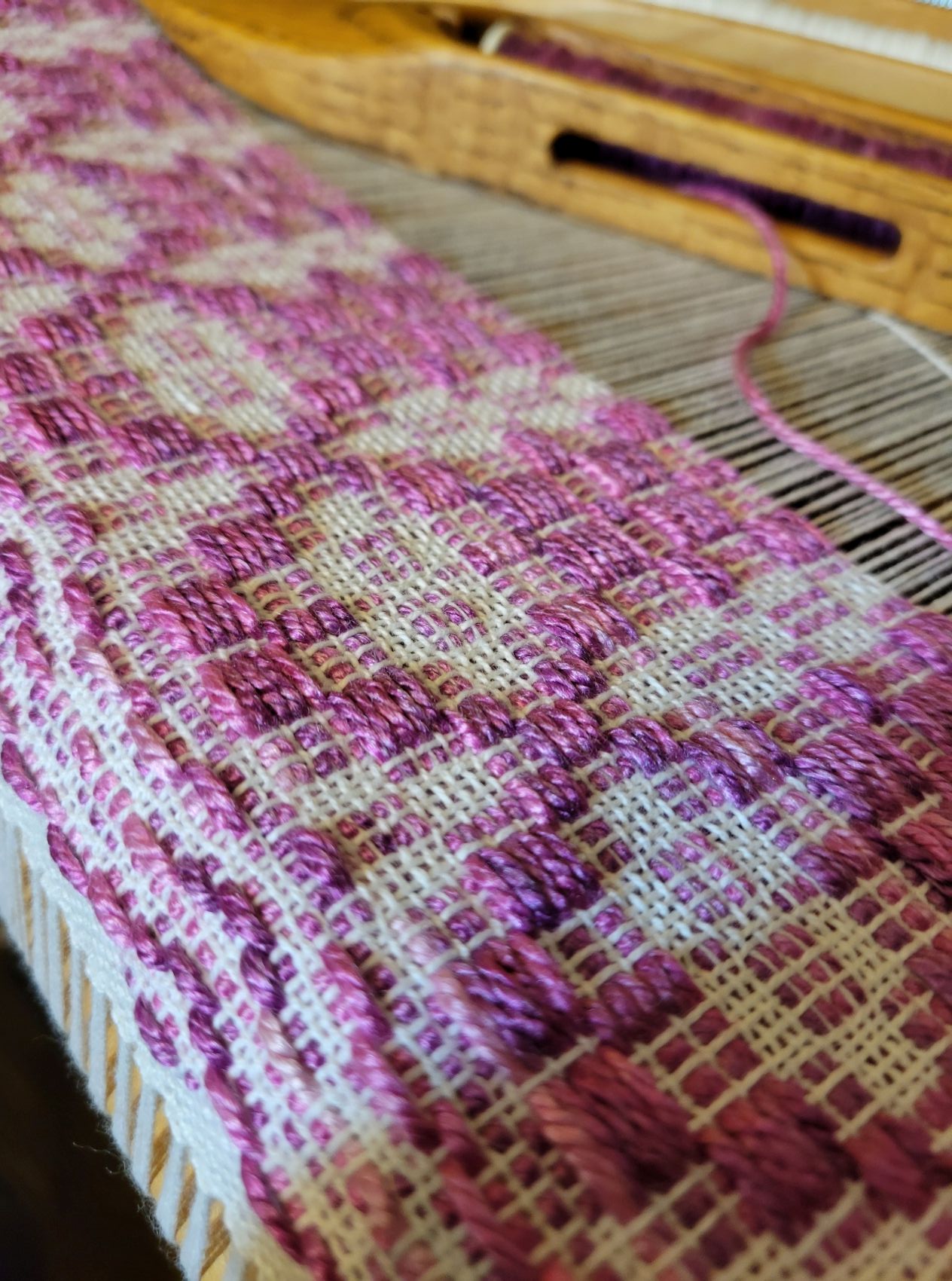
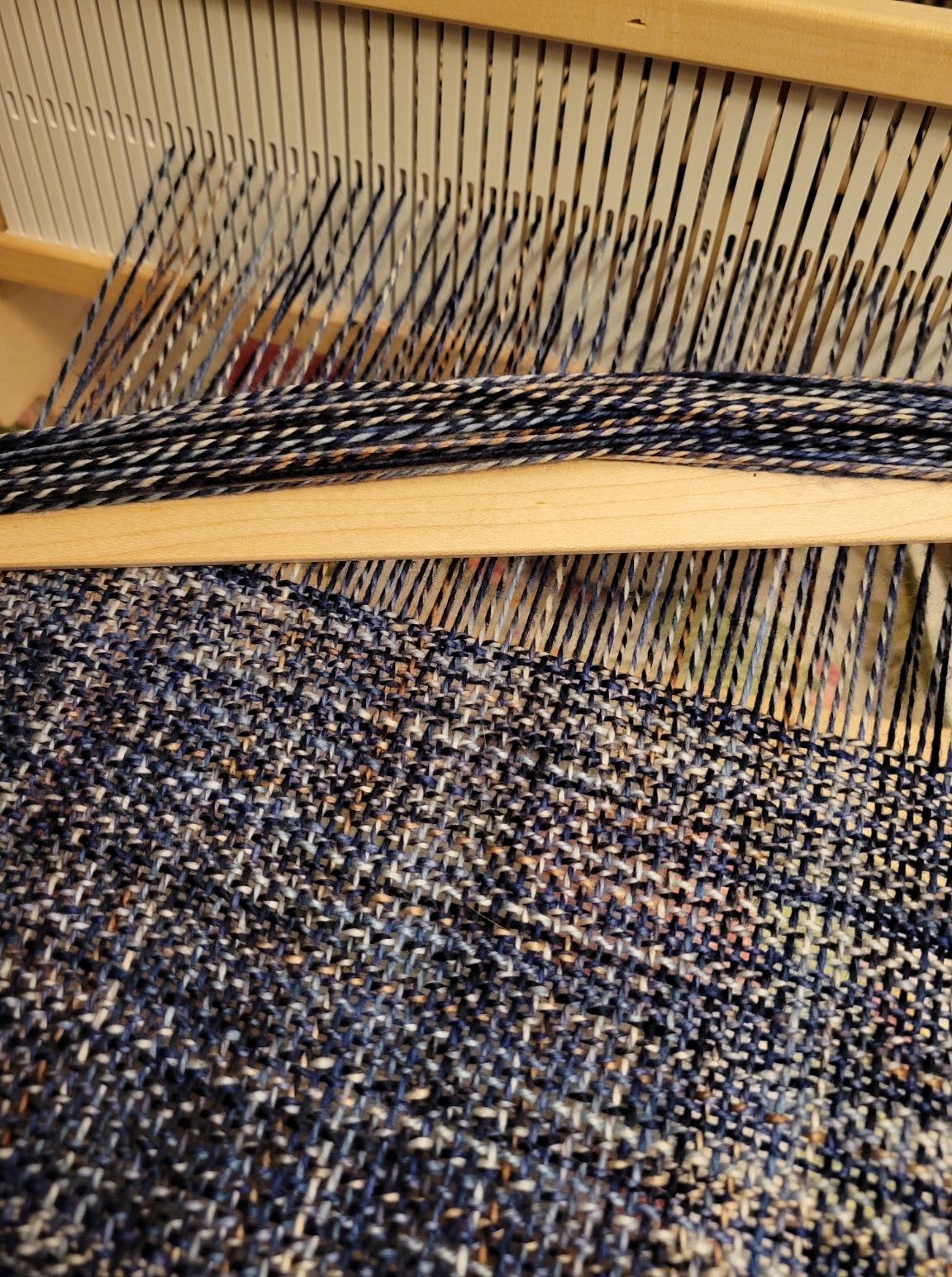
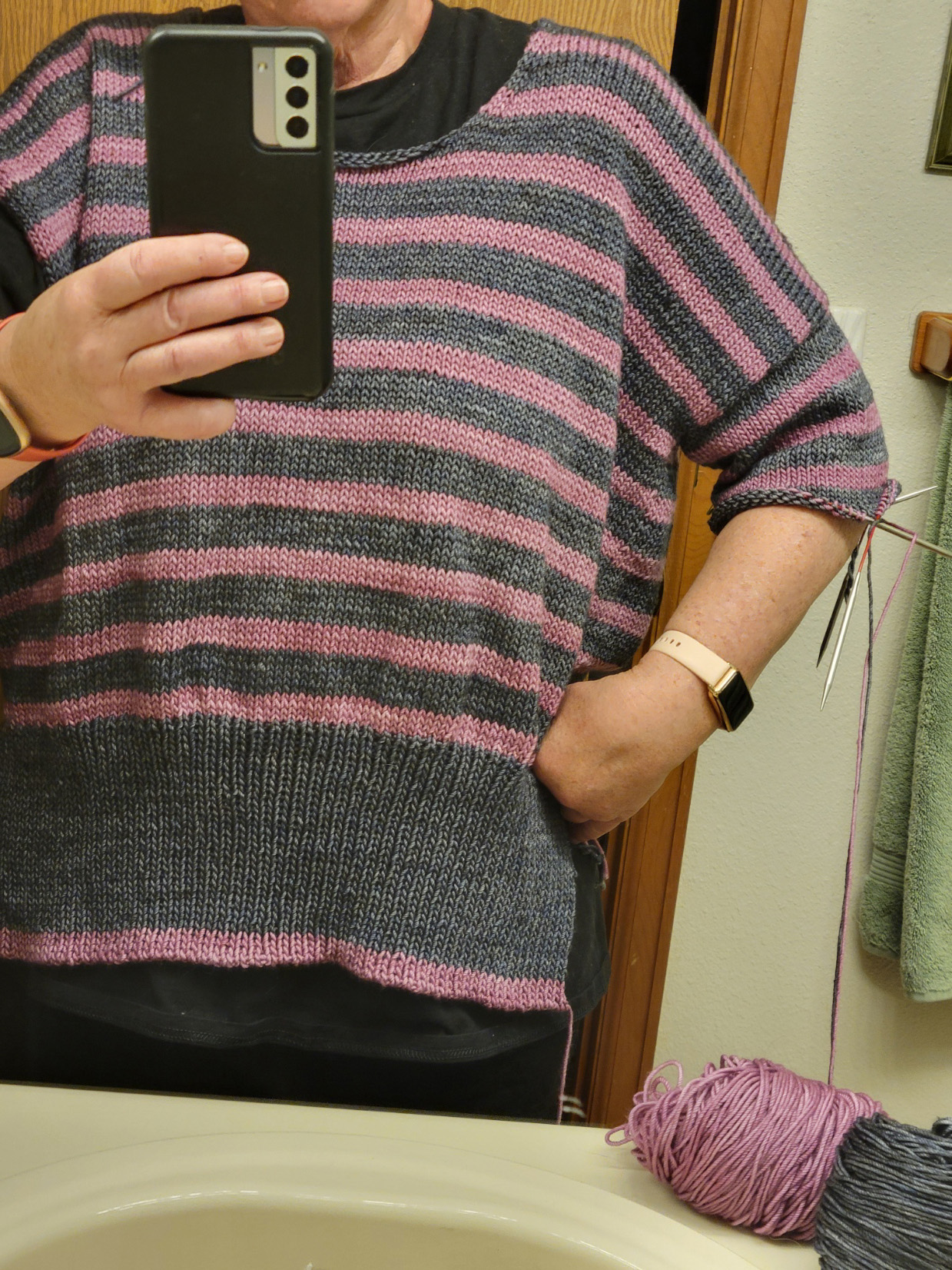
Look at how much the Mother of Cats got done while she was listening to the book and knitting.

So that has pretty much been the last two weeks. Sleeping, knitting, and listening to really interesting books. I like the yarn and the books, but I do hope that the Mother of Cats will stop being so lazy… Mateo and I have needs, right?

I’m not lazy… I’m a cat. I’m supposed to sleep all day.

This is Hannah, signing off.

>^..^<

Notes from the Mother of Cats:

  • The sweater that I’m knitting is the Winter Albina sweater by Caitlin Hunter. I’m really pleased with how it is working up.
  • I’ve already started another Eric Larson book: The Demon of Unrest.
  • I’m in another scleroderma flare, and I did go see my rheumatologist for help. I am now in possession of an emergency pack of steroids and narcotics. Whew. It’s good to have an emergency pack!
  • I’m doing better lately, but the cats are still kind of disgusted with me.
  • What was that Chinese cookie fortune that Hannah was playing with?

Friday, February 28th, was Rare Disease Day. I found that I was too lazy unable to write another post for the day, but here are some nice ones that I wrote in previous years.

The Scleroderma Chronicles: Rare Disease Day 2024

Rare Disease Day is tomorrow, but since I’m going in for a lung scan on the 29th, I thought I would post this now.

Well, here it is again. Rare Disease Day. This is my 9th year posting about rare diseases: on August 28, 2014, I was diagnosed with a form of scleroderma called limited systemic sclerosis. This condition, autoimmune in nature, is progressive as multiple organs, blood vessels, and the skin of the patient (that would be me) stiffen and harden due to scarring (fibrosis). It is also considered rare, since fewer than 200,000 people in the US are currently diagnosed with it.

So, what’s up with the zebra? Well… in the medical community doctors and other health professionals are trained to focus on the most common cause for the symptoms that they are seeing in their patient. The saying goes: when you hear hoofbeats, think of horses, not zebras. Certainly, that makes a lot of sense in terms of patient care and cost control. It works most of the time.

Unless, of course, you are a zebra.

Life is challenging if you are a zebra in a herd of horses. Doctors screen for the most likely cause of reported symptoms, and then when those tests are negative, you usually get told that you are fine, and then you are pawned off with some pablum like… do these exercises… try to reduce stress…would you like anti-depressants?… Seriously, it is pretty crushing as you start to wonder if you are just an attention-seeking hypochondriac since for the most part you look great. In my case, I didn’t even appear to be aging…

This can go on for years. And years. Autoimmune conditions like mine tend to send patients with vague complaints (I hurt all over…) to the doctor’s office looking for help. Some of the symptoms can be so subtle that you just don’t think to mention them to the doctor because you already feel pretty defensive about complaining after a few borderline disparaging interactions in the past. Why mention that you have trouble swallowing sometimes? Or that your arm is starting to look like Flipper the dolphin in appearance and texture? Some new red freckles have shown up on your face, but why mention them when you really want to get to the bottom of why you hurt all over and what is up with this fatigue????? Sure, there were those carpal tunnel surgeries 10 years ago, and the hospitalization for gastritis last year, but why would you mention them… When I was finally diagnosed, I discovered that I was absolutely classic and presented with all five of the CREST features of limited systemic sclerosis. Oh, one more thing: lack of wrinkles is a red flag for scleroderma…

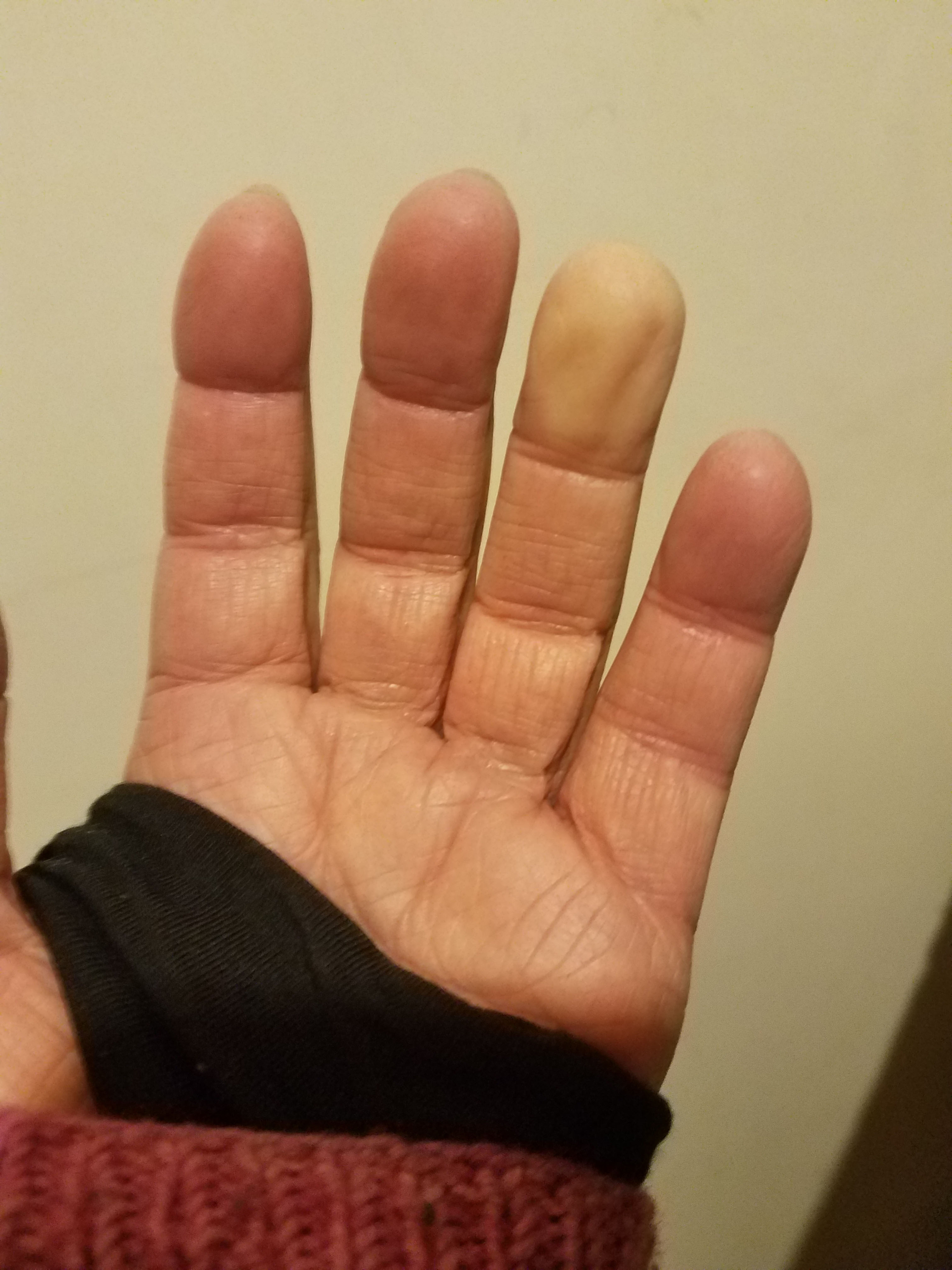
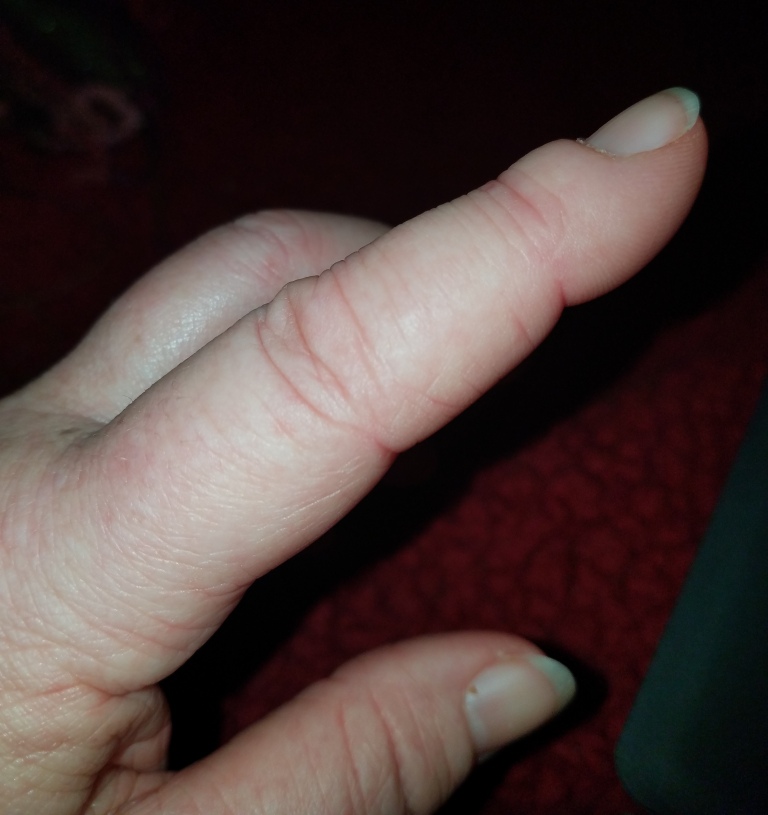
You can see two of the CREST characteristics here. I’ve lost circulation in my ring finger as a result of Raynaud’s, and the thick (sausage-like) fingers that are trying to contract are examples of sclerodactyly. The other distinguishing symptoms are trouble swallowing, lumps of calcium deposits on some of my bones, and those pesky red freckles that are now appearing everywhere. It was official: I was a zebra. There are a lot of us.

Rare diseases are also known as orphan diseases. They are poorly supported and most of the time there is no treatment. After failing a chemotherapy drug, I was moved to an off-label treatment using an immunosuppressant drug developed for kidney transplant patients. It was hard to get the drug as it was declined by my insurance, then the appeal failed, my doctor filed another appeal, and I went to see the pharmacist with a pathology report showing extreme gastritis. It was a fight, but I got the drug. This drug, Myfortic (mycophenolic acid), has proven to be so effective in slowing disease progression that it is now approved for systemic sclerosis and is a drug of choice along with its close relative CellCept. It has been doing a pretty good job at slowing things down; at the time of my diagnosis the 10-year survival rate was about 50%. Now that there are some better treatment options the survival numbers have improved: 10-year survival is up to 70%.

Two years ago, I developed two of the more serious complications of systemic sclerosis (SSc): pulmonary hypertension and interstitial lung disease: two more rare diseases. Not good news at all; my pulmonologist told me it would be okay to cry as he showed me my lung scans and gave me the bad news. Remember that little word “progressive” that I used to describe SSc? This is disease progression; the inflammation and formation of scar tissue (fibrosis) had hit my lungs and heart, and my have doctors responded with big time drugs. Yes. Big time and pretty expensive drugs. Over the last few years, literally in the time since I was first diagnosed, drugs have appeared that can greatly improve treatment and life expectancy in patients like me, and there are more drugs in the pipeline.

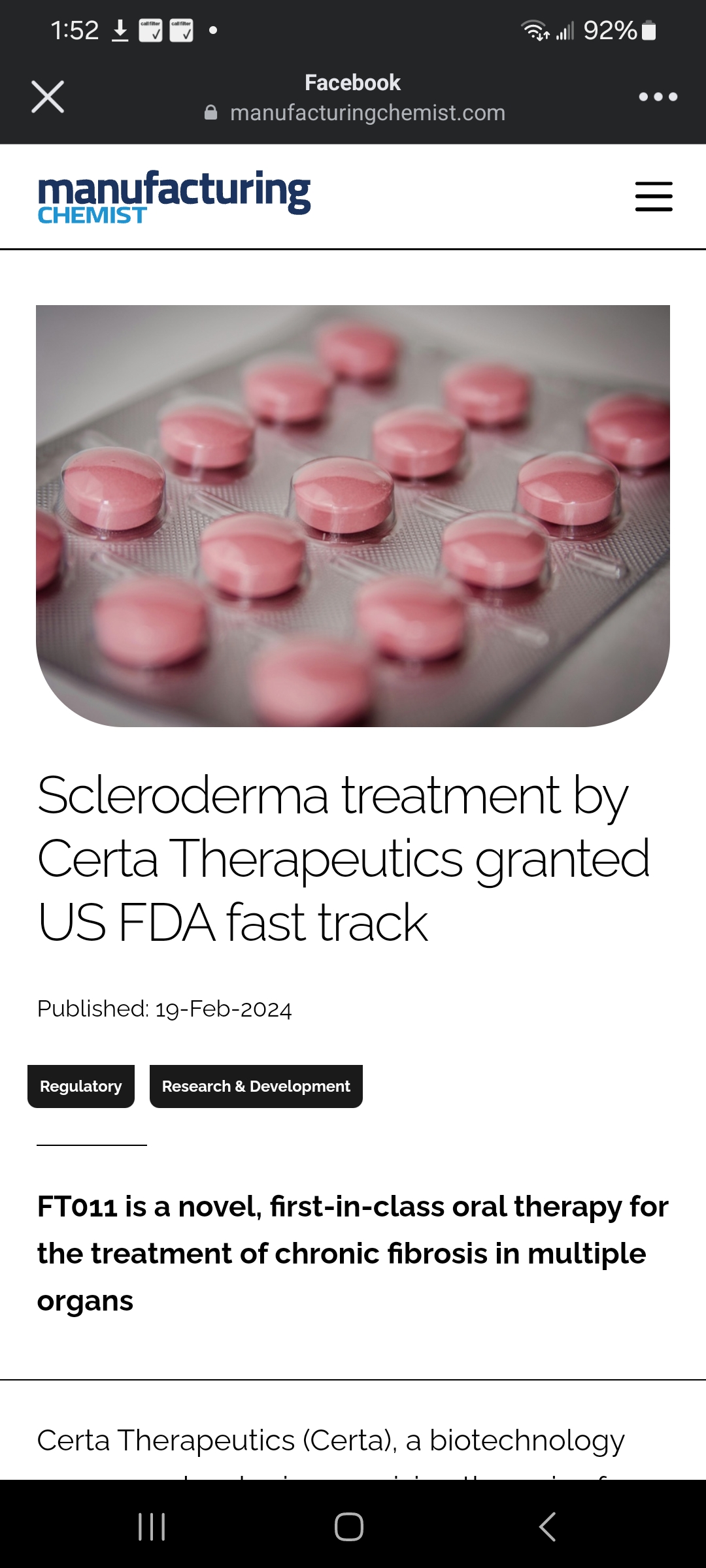
The first drug that can be used to directly treat SSc just moved from orphan drug status to the fast track. This is serious, serious good news. I looked into entering a clinical trial for this drug, but my doctors thought that I wasn’t a good candidate because I have too many complications right now. Seriously, I have been slotted into a diagnosis called SSc-ILD with PH which means that I am a SSc patient with interstitial lung disease and pulmonary hypertension. Good grief, I’m now a walking bundle of acronyms. That’s okay. I can hang on, help is on the way!! FT011, I am waiting for you!!!

So, what is up with all the colored stripes?

Serious medical conditions usually have an awareness ribbon color. It is a little cheesy, but if you are dealing with scary stuff, why not have some fun? Be a zebra, color your stripes in your awareness colors, and get yourself some fun t-shirts while you are at it. Eat Zebra Food (that would be black and white striped caramel popcorn to you non-zebras), get colored medical bracelets, and collect the stuffed animals. Zebras, of course!! My zebra has teal stripes (scleroderma), periwinkle stripes (PH) and purple for the ILD. Lung disease in general is green and blue. I also get purple for my Sjogren’s and fibromyalgia, and don’t forget the red for my heart failure. I’m a rainbow zebra!! Yay!

Okay, time to get serious. What is Rare Disease Day about? Raising awareness in the public about the challenges of living with a rare disease. There are a lot of people who have rare diseases, so by sharing our faces and voices the hope is that it will help make us more visible. We hope that a more educated public will aid in the diagnosis of others with rare conditions. (See above; diagnosis can take years. It would be wonderful if that could be sped up a little…) We hope it will help with funding for drugs, treatments, and maybe even cures. We hope that for those with invisible conditions, they will become more visible and supported. We hope.

MacKenzie and me from 2018.

To learn more about my rare conditions and others you can go to:

To everyone who battles on against scleroderma or any other serious medical condition, rare or not, I see you. Hugs! Shine on, my friends, shine on!

The Scleroderma Chronicles: Rare Disease Day, 2023

Well, here it is again. Rare Disease Day. I kind of was going to ignore it this year because I’m quite frankly worn out by my… wait for it… rare diseases, but I also feel like I should pull myself together and represent for the community again.

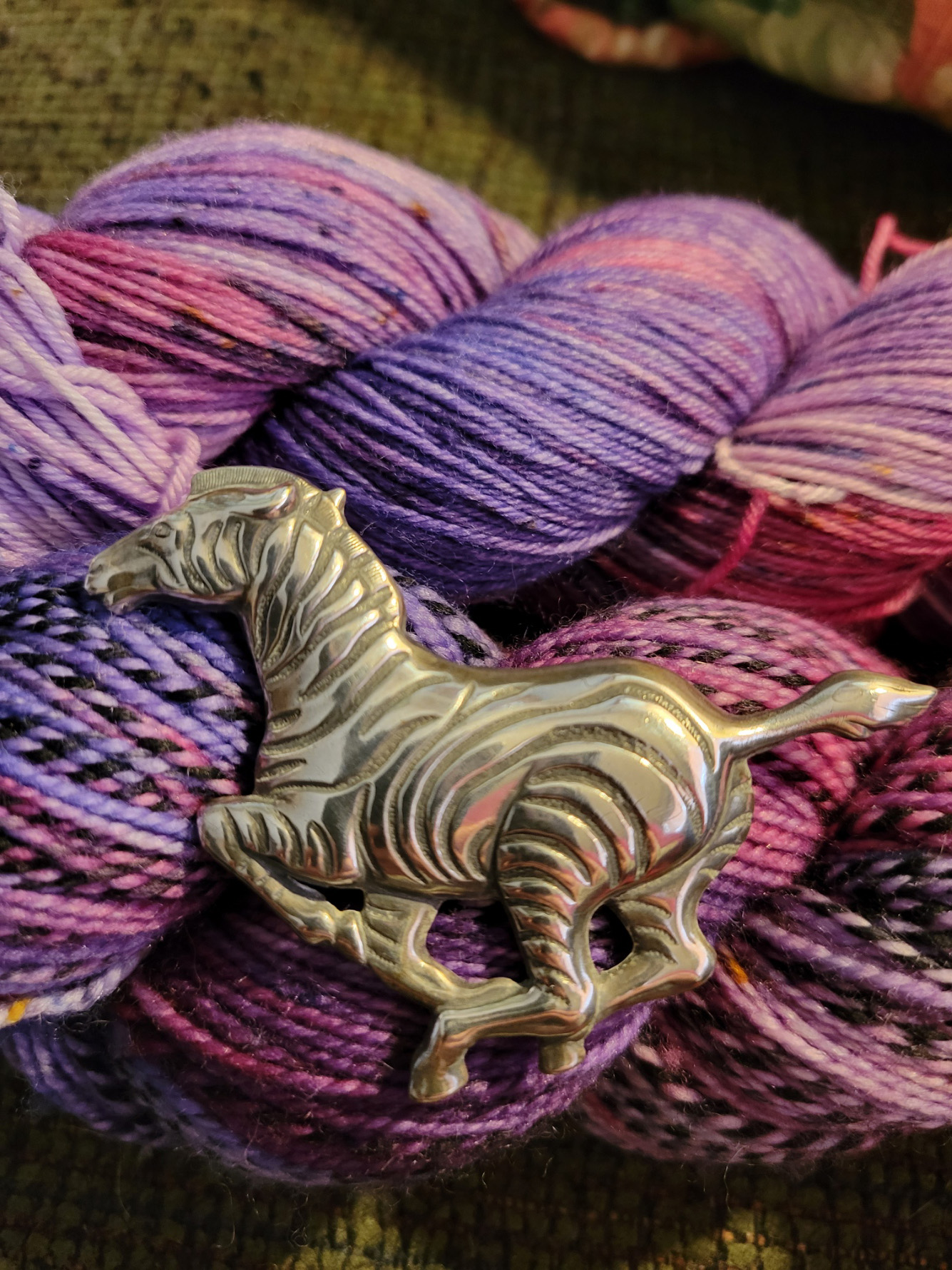
People with rare diseases are referred to as Zebras in the medical community. I obtained my zebra status when I was diagnosed with systemic sclerosis in 2014. This zebra was sent to me last week by my Most Knitworthy Niece Melissa.

I wrote a pretty darn good post last year about my journey with a rare disease which you can read here if you want. I talked about rare diseases in general, my specific conditions, and the many things that have been said to me by my doctors over the years. I thought about just reposting what I wrote last year, but I’ve been reflecting all morning on some recent events that kind of shine a light on my situation and that of other people who are coping with rare conditions.

  • I recently managed to go knit with my fellow members of Frayed Knots. This was a big social outing for me because it’s hard to get out of the house, and I have to be having a really good day to go to something like this. Knitting with friends is just “normal” for most people, and it would just be a little part of their day, but for me this was something that I had to prepare for a couple of days in advance, and then recover from in bed the next day. Many rare conditions are chronic, and chronic illnesses can be very isolating by their very nature.
  • A woman at the knitting group questioned my decision to wear a mask. I started to explain, but she cut me off to say that I was doing it so I could feel comfortable. It was a little condescending and suggested that I was being paranoid. Truthfully, my immune system, crushed by the drugs that I am taking right now, is compromised in its ability to make antibodies. If I catch a viral disease like the flu or Covid, there is a good chance that I won’t survive. My vaccinations have a low chance of protecting me for the same reason. For people with rare diseases, life is fraught and full of difficult decisions. For me, and for many other immunocompromised individuals, simple decisions involve life/death level risk analysis.
  • Another woman at the knitting table was struggling with long Covid and shared her difficulties with returning to work. She especially felt crushed by the attitudes of her coworkers who seemed to feel that she was “fine” and just trying to get attention. Yep. Been there, done that. Many rare diseases are genetic or largely invisible to others. Invisible illnesses are especially hard to cope with because others tend to question their validity.
  • I’m in several online support groups, and there are always discussions about what drugs to take, and whether the side effects are worth the risks. Yep. There are no specific drugs for systemic sclerosis, no cure, and treatment can involve a patchwork of risky off-label drugs. The drugs that are used are often non-specific carpet-bombing like approaches. Rare diseases have fewer treatment options because there are only a limited number of patients.

Over the last year my wonderful team of physicians have been suggesting that I am really unusual and have been extremely responsive to my emails. They clear an hour for appointments with me. I’m one of the very lucky zebras who has managed to get diagnoses, secured treatment, and am benefiting from a team of collaborative, interdisciplinary physicians who actively communicate with each other and with me; just last week my rheumatologist told me that for a patient with my status this is the only way to deliver care. I’m so grateful to have secured this level of medical attention, but I also feel a little nervous about it. I spent some time this morning trying to work out the probability of one person having the several medical diagnoses that I’ve racked up since 2014. Like, just how rare am I?

The National Organization for Rare Disorders estimates that there are 100,000 patients with systemic sclerosis in the United States. That’s rare, but still, a big club, right?

The 15% Rule is a general measurement of the risk of severe organ involvement in systemic sclerosis. As it turns out, quite a few of the major lung, heart, and kidney complications associated with systemic sclerosis happen about 15% of the time. I have Sjogren’s Disease overlap with my systemic sclerosis, which happens in about 13% of patients. Suddenly, I’m in a much smaller group of about 13,000 patients.

My most worrisome complicating conditions are diastolic dysfunction (a type of heart failure), pulmonary arterial hypertension (PAH) and interstitial lung disease (SSc-ILD). I looked up the risk of having each of these conditions using the 15% rule data, and it turns out the risks are 16% (diastolic dysfunction), 15% (PAH) and 35% for the SSc-ILD. Did you notice the the ILD doesn’t fit the 15% rule? Yep. It’s much more common and is the leading cause of death in systemic sclerosis patients. I found that risk factor here.

I brushed up on my probability math (you multiply the probabilities of independent events…), and after running the numbers:

100,000(13/100 x 16/100 x 15/100 x 35/100)

I came to a grand total of 116 other patients in the US who share my set of diagnosed conditions.

Oh.

See, I have lots and lots of stripes. Stripes in purple, teal, periwinkle, red, green, and blue: these are the awareness colors for my conditions.

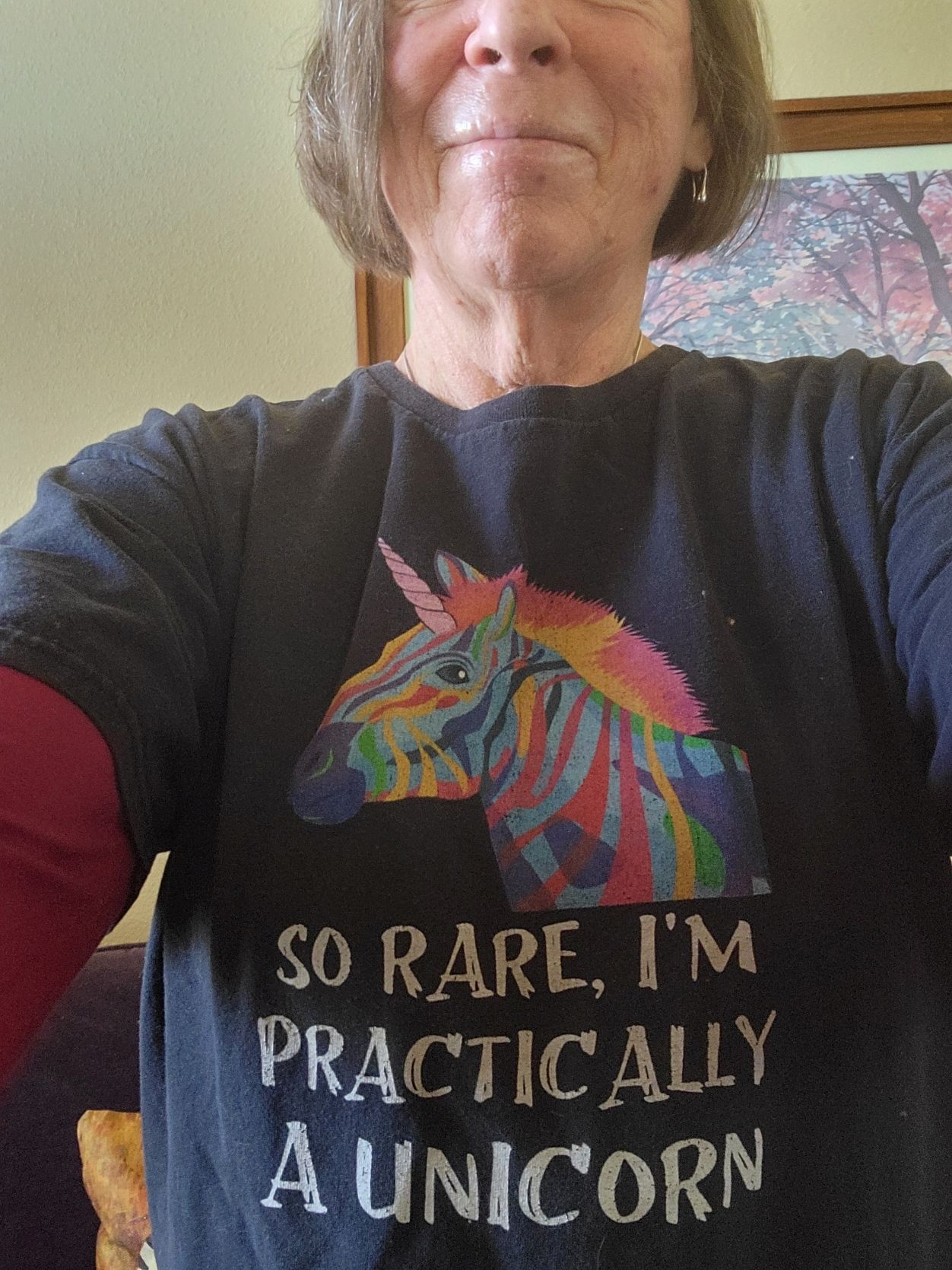
I just ordered that rainbow zebra unicorn shirt! I plan to wear it with my mask on my next social outing…

You can learn more about Rare Disease Day or my conditions at the links below.

The Scleroderma Chronicles: Rare Disease Day, 2022

Well, this is a hard topic to write about. Quite frankly, I have been getting my butt kicked lately by my (wait for it) rare diseases. Still, I am trying to respond to the calls for publicity about rare diseases along with other members of the scleroderma and pulmonary hypertension communities.

You know, I feel like I should represent.

People with rare diseases are referred to as “zebras” in the medical community.

So, what’s a rare disease? A rare disease is classified as one that impacts a small percentage of the total population. Here in the United States that means fewer than 200,000 people diagnosed with the condition/disease. Perversely, there are a lot of people with rare diseases as there are almost 7,000 different rare diseases!  Some of these diseases are common enough that you may be familiar with them: albinism, achondroplasia (a type of dwarfism), and autoimmune hepatitis are examples. Others are very rare. Most are genetic in origin, and half of them impact children. More than 90% of rare conditions have no drug treatment.

The type of scleroderma that I have, limited systemic sclerosis, is considered rare as there are about 100,000 people in the US with this diagnosis. The latest diagnosis added to my medical history is of pulmonary arterial hypertension, another rare disease, and one that is a consequence of my scleroderma. Well, I am really rare now! I have struggled to explain my scleroderma to people when they ask; how can I explain in just a few sentences something that is just frankly causing horrific damage to my body and generating an ever-growing list of diagnosed conditions. Here’s my best answer at the moment:

Scleroderma is a chronic, progressive, uncurable, and often fatal autoimmune disease that causes scaring and damage to blood vessels, skin, internal organs, and muscles/joints. It is controlled and treated through the use of immunosuppressants and drugs that address symptoms. It is a life-altering diagnosis. It is my life.

So, I have blogged about Rare Disease Day several times in the past. Here’s what I wrote a couple of years ago, and what I wrote in 2018. In the past I have written about my symptoms and the struggle of living with a rare disease. It is pretty isolating. It is hard to get diagnosed and treated. I have also written about the difficulties to get funding for research for rare diseases and conditions, and the lack of treatments and cures because the patient population is so small.

This year I thought I would share some of the things that doctors have said to me since my scleroderma diagnosis. I’ve tried to organize these into chronological order to better reflect my journey.

  • My internist: It’s good to have a diagnosis, even if it is a shame.
  • My rheumatologist when I asked him what my life would be like in 5 years: Let me run some more tests, and then we can talk.
  • My ophthalmologist: Do you have a will?
  • The physician at the regional acute diagnostic center: This is a diagnosis like cancer. Of course, some cancers can be cured.
  • A physician speaker at a scleroderma support group presentation: this drug [the immunosuppressant that I take] can really give you a chance, as long as you don’t contract an infection.
  • My old rheumatologist: All you do is complain. Maybe I should order a sleep apnea test or prescribe antidepressants.
  • My internist, as I begged for an anti-inflammatory drug: I’m sorry. There isn’t anything that I can give you that won’t hurt your kidneys.
  • My dermatologist, as she prescribed an anti-inflammatory topical gel: This is unacceptable, and I am putting a stop to it now.
  • My new rheumatologist as she orders more testing on my painful joints: Why has no one followed up on this?
  • My rheumatologist two days later: You need to get a steroid injection in your hip joint as soon as possible.
  • The hip specialist: There is nothing more that I can do for you because your scleroderma is attacking all of your tendons and ligaments. You need a hip replacement, but it will fail.
  • The physician at urgent care: I don’t think they understood how complicated your medical status is when you were referred here. You need to be hospitalized because we can’t do the testing that you need here.
  • My pulmonologist as he walked me back to the waiting room: I really admire your attitude.
  • My cardiologist as I was being sedated for a right heart cath: Don’t worry. I’ll take good care of you.
  • My cardiologist as he started me on medication for pulmonary arterial hypertension: This is challenging, and we will need to be comfortable with “out of the box” thinking.
  • My rheumatologist last week, referring to herself, the cardiologist and the pulmonologist: We are your team!
  • My rheumatologist, also last week: We need to add a gastroenterologist to the team.

You can see how rocky the start was. There is a lesson here, I think. To be rare, to be a zebra in a medical community that is designed to identify the most likely cause of symptoms in a herd of horses, is hard. It is really challenging to secure the care that you need when, no matter how hard doctors try, you do not respond to the usual treatments, and you never fit the usual profile. It is easy to be seen as a problem. It is hard to keep insisting that there is something wrong when all the test results say you are okay.

Even when you are blue-lipped and panting it can be hard to convince doctors that there is a problem.

And yet, it is possible to get there. Over time, with great determination and persistence, I have A TEAM of doctors who view themselves as active collaborators in my care. They message each other to discuss test results and possible drug interactions, and they loop me into their discussions. It is only now, newly diagnosed with a terminal condition, that I feel confident and hopeful about my care.

Today I went in for a blood draw and a little jaunt through the local bookstore. The sun was shining, I bought a Starbucks coffee, and it was a good day.

****************************************

My scleroderma-related diagnoses:

  • GI tract: difficulty swallowing, hiatal hernia, GERD, gastroparesis, chronic gastritis.
  • Kidney: stage 3 chronic kidney disease.
  • Lungs: pulmonary arterial hypertension, interstitial lung disease, asthma, partial lung collapse.
  • Heart and circulatory system: grade 2 diastolic dysfunction (a type of heart failure), Raynaud’s phenomenon, telangiectasia.
  • Muscle/Skeletal: fibromyalgia and severe joint damage.

This is scleroderma. I’m a zebra, and these are my stripes.

Happy Rare Disease Day, everyone!

The colors associated with my diseases are teal (scleroderma), purple (Sjogren’s), and periwinkle (PAH). It sounds like the start of a great sweater, huh. 🙂

The Scleroderma Chronicles: Rare Disease Day 2020

I’m an orphan. I’m a zebra. I am rare. This is a club that is hard to get into because it has really specific criteria, but it also has lots and lots of members.

What, you say? Whatever is she talking about?

I’m talking about rare diseases! A rare disease is classified as one that impacts a small percentage of the total population. Here in the United States that means fewer than 200,000 people diagnosed with the condition/disease. Perversely, there are a lot of people with rare diseases as there are almost 7,000 different rare diseases!  Some of these diseases are common enough that you may be familiar with them: albinism, achondroplasia (a type of dwarfism), and autoimmune hepatitis are examples. Others are very rare. Most are genetic in origin, and half of them impact children. More than 90% of rare conditions have no drug treatment. You can learn more  about rare diseases in general and search for specific conditions/diseases in the links at the end of this post.

So, what is Rare Disease Day? The purpose of this day is to raise awareness of the many, many diseases that are classified as “rare” around the world. The hope is that by shining a light on these diseases, and to put a face on the people who struggle with the many rare conditions that are out there, there will be improvements in how these people are handled in the health care system, drug companies, funding agencies, and by the public.

I joined the rare disease club 5 years ago when I was diagnosed with systemic sclerosis, a serious form of scleroderma that has no cure, can be disabling, progressive, and often fatal. These last 5 years have certainly been eye-opening for me, and I believe that my experiences are shared by many others who struggle with rare diseases. Let me list some of my epiphanies during this journey:

    • People in general are dismissive of illnesses that they have never heard of before. If you are a person with a rare disease, it is almost a certainty that no one has heard of your disease. Oops. You just got written off as an attention-seeking hypochondriac by a person who hardly knows you because they never heard of your disease…
    • The health care industry is designed to treat people with common diseases, and often ignores, dismisses, or denigrates patients who don’t fit the normal profile: the zebras. It is really, really hard to get a diagnosis for some rare conditions (autoimmune diseases like mine are famous for this). If you have a rare disease, you are trying to make your way through a system that wasn’t designed to identify and treat you.
    • There is little incentive for drug companies to develop treatments that can only be used for a small patient population. That’s why there rarely is an effective treatment or cure. That’s also why drugs for rare diseases are called orphan drugs; another name for a rare disease is an orphan disease. Yep, I’m an orphan, but there are several drugs with orphan status in the development pipeline right now. I’m lucky that way; most orphan diseases have no drugs for treatment under development.
    • To be rare means you may be too risky to treat. Once you are diagnosed with an unusual health condition it actually interferes with your medical care; because you are complicated physicians are likely to dismiss or “just monitor” symptoms that would receive immediate attention in another patient. Without more experience they can’t be sure what is “normal” for you and/or if the treatment usually used for other patients might make things worse for you. There’s another whole blog post about this on the way!
    • It is really, really hard for people to wrap their heads around “chronic.” We almost all universally believe that people can get better if they just try. Attitude is everything, right? If you just took this supplement, started eating keto, got more exercise and sunshine, tried essential oils…
    • Closely associated to this belief in the general public is one that assigns blame to the ill for their disease. If you are sick it must be because you ate too much red meat, or are obese, or failed to exercise enough. You should have eaten organic!! I know that people do this because they want to believe that they are safe from a similar diagnosis, but it still adds to the burden of those dealing with a life off the mainstream, caused, not by their choices, but by an inherited flaw in their genes.
    • If all of this wasn’t enough, or maybe because of all of this, rare diseases are expensive and isolating. Resources are few. Support is hard to find. You feel alone. An orphan.

So, this is Rare Disease Day. Some people with rare diseases must share experiences like mine; many are far, far worse than my own. If you would like to learn more about rare diseases here are some resources:

The Scleroderma Chronicles: Rare Disease Day 2018

It seems like I just wrote a “rare disease day” post just yesterday, but it has been a whole year already. Actually, I think that I was really lazy last year and just re-posted the previous year’s blog post. Anyway, tomorrow (February 28th) is World Rare Disease Day. This year the motto is “Show Your Rare”, which is a little scary as it sounds vaguely like how I might order my steak, but I’m game. I’m rare, and here is my story.

First things first. Let’s talk about rare diseases. Here in the United States, a rare disease (also known as an orphan disease) is one that affects fewer than 200,000 people in the US. The bad news is that there are a lot of rare diseases; over 6,000 different diseases that impact about 25 million people just here in the US. Many of these are genetic in nature, and they tend to be chronic (more about that later).
I joined the rare disease club the day that my systemic sclerosis (a form of scleroderma) was diagnosed. With only about 100,000 cases in the US, we are definitely rare. Here’s the scoop on my disease: it is progressive, disabling, chronic, and possibly fatal. It shares some characteristics with cancer cells. It is also mostly invisible to other people, and people have no frame of reference to understand an illness that they have never heard of before, so they tend to be dismissive.

Scleroderma hand
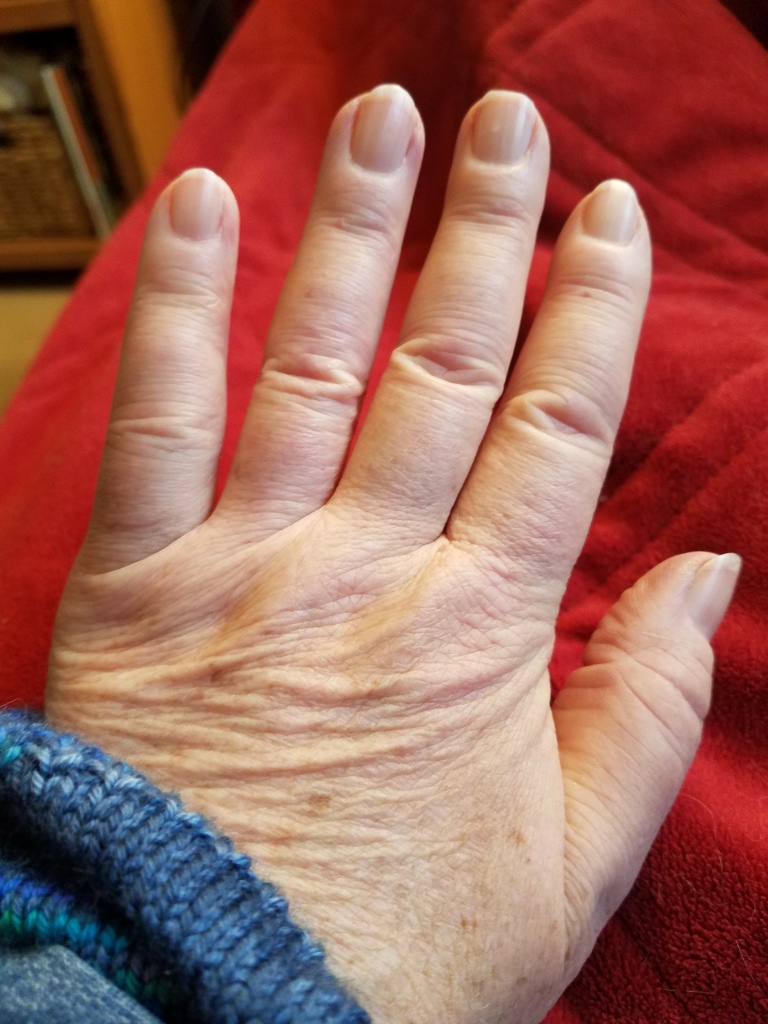
One of the most obvious features of my condition is my thick skin. My legs and lower arms are literally hard, and here on my hand you can see that the skin folds kind of strangely. My skin is thick with scar tissue that has built up in response to inflammation set off by my immune system’s attack on normally healthy tissue.

Finger
You can really see it on this finger. My finger looks pale since the scaring is so bad it cuts off circulation when I hold it out straight. There is a silver lining to this: I will never have “old lady” hands.

My hands look strange, but I am doing really well all things considered. I have good circulation and flexibility which my doctors think is due to knitting. “Knit as much as you can!” was the recommendation. See, every setback in life has a silver lining.

What can’t be seen is my astonishing fatigue, muscle/joint pain, and brain fog. So much brain fog. I’m also accumulating organ damage as the months pass by. Digestive system damage, kidney damage, lung damage, and blood vessel damage that is slowly increasing the pressure in my heart.

Scleroderma face
All that redness on my face is due to blood vessel damage, and you can see the thick skin around my eye. Collagen build-up has given me chipmunk cheeks. Special. Thank heavens for red-cancelling make-up.

It’s like a scene from the movie, The Terminator. You know… if you substitute this line about the Terminator from the movie with the word scleroderma it would be… [Scleroderma] can’t be bargained with. It can’t be reasoned with. It doesn’t feel pity, or remorse, or fear! And it absolutely will not stop, ever, until you are dead!

Mortality rates are down for my form of the disease due to new drug interventions. The other good news is that it is moving really slowly in my case. I think that I have had this disease for decades, and only now, in my 60s, is it catching up with me. I’m on the best drugs available, I love my doctors, and they have slowed the disease progression down tremendously over the last couple of years.

But I’m still dealing with a serious chronic illness, as are many other people with rare diseases. For me, when trying to explain my illness to others, it is the concept of “chronic” that causes the most trouble. People tell me to get more sunshine, more exercise, better food, use essential oils, whatever, so that I can get better. That’s the way it is for many health conditions, but not for a chronic illness.

There is no better, I tell them. Only this. Nope. They will insist that I can get better if I just try, and take it as defeatism when I calmly explain that some of this damage can’t be reversed. It is possible to get better without getting well, they will say. You look so great! It’s like it’s a personal affront that I can’t just be cured. If they haven’t seen me for a few months they will express surprise that “this is still going on”.

It is the concept of “chronic” that is the problem. To accept that you are sick is not weakness or “giving up”. It is coming to terms with the nature of your enemy.

So here is my Rare Disease Day request for anyone who has managed to read all of this. Accept chronic. Ask the person you are talking to about how they are doing. Ask what their doctors are telling them. Accept that they are in a situation that they can’t escape from. Don’t shy away from the fight if you care about that person.

If you know the movie “The Terminator“, you know that the heroine of the tale, Sarah Connor, was a hell of a fighter. She never, ever gave up, and in the end she got the best of the monster trying to do her in.

I’m channeling Sarah Connor.

Rare Disease Day

Today was Rare Disease Day. I woke up with notes in my email box reminding me that this was the big day. Oh, yeah. I guess I should say something about it on the blog, but what? I mean, I do have a rare disease, but why should anyone else care about it?

rare disease dayI spent most of the day thinking about that. I worked on the loom (weaving is right around the corner!), cleaned the house, cooked a yummy dinner, and pondered the relevance of rare diseases throughout the day. For a while in the late afternoon I almost started writing, but ended up knitting instead. Now it is evening and I think that I might be there.
You see, anyone dealing with a chronic condition eventually comes to terms with their altered life. Grace under fire becomes the status quo. We deal. We lean in. Maybe the big success of the day was taking a shower or getting dinner cooked, but by golly we did it!!

If you have a rare disease, it is a little harder yet. People have never heard of your condition. Your doctor may have never treated another person with your disease before. Your friends and family sometimes suspect that you might be an attention-seeking hypochondriac. You wander the internet looking for answers. There is little research being done for your disease because so few people are impacted by new drugs or treatments. In a world with finite funding for medical research it makes better sense to put the money where the most patients are: cancer, diabetes, heart disease, asthma. I get it.

The purpose of Rare Disease Day is to shine a little light on the many, many conditions that are classified as “rare”. It is also a campaign to raise some awareness about the human impact of being a patient with one of these conditions. To be frank, it kind of sucks!

stuff
Fat swollen fingers with thick stiff skin are part of my condition. On this day I accidentally triggered a Raynaud’s attack that cut off the circulation to one of my fingers. 

You see, rare diseases are also referred to as “orphan diseases”. You do feel like an orphan. Alone, alone, all alone. I’m lucky to be hooked up with other people who share my condition, but that is because I live in a large metropolitan area. I have systemic sclerosis*, which is considered the most severe of the diseases in rheumatology. There are only 100,000 of us in the United States (which, if my math is right, is 1 in 50,000 Americans), so if you live in a small town chances are you will never find another person who has the same illness that you do. I am lucky.  I belong to a support group and have found online resources, the most important of these being you people who take the time to read my blog.

Here is what I decided is the most important message that I should put out on this day set aside for me and all the many, many other people who deal with a condition/illness that no one has ever heard of before. If someone says, “I have (crazy-ass disease you’ve never heard of before)”, don’t say, “I’ve never heard of that!” in a dismissive manner as you turn away. Say instead, “What is that?”  Invite the person that you are talking with to teach you about their unusual condition. Really, it will mean the world to them.

They will feel less like an orphan if you do.

*Systemic sclerosis, which is serious form of scleroderma, is an incurable, disabling, and progressive autoimmune disease that causes inflammation and scarring of the connective tissue of the skin, blood vessels and internal organs. It is often fatal, but in recent years the survival numbers have improved due to new therapies (I love my immunosuppressants!). Currently there is no drug to directly treat systemic sclerosis but there are drugs and treatment strategies on the way. Right now there is a bill in Congress to fund scleroderma research called the Scleroderma and Fibrosis Research Enhancement Act, H.R. 3666.

February 28: Rare Disease Day

rare disease day
Logo courtesy of Rare Disease Day. To find out more information about this event visit http://www.rarediseaseday.org/

I got a newsletter in my email box yesterday that let me know that this special day was upon us. Wow. A day just for me and the other people who have to explain their medical status to friends, family, and medical providers such as the dentist. Wait, it isn’t for me? It’s for my disease? Since systemic sclerosis is an orphan disease that no one has heard about this day is set aside to introduce it to everyone. Isn’t that special! Ta-da! Everyone, please meet scleroderma!

What is a rare disease you ask? Well, that is a good question, isn’t it? Off to the internet I went to find the answer.

In a nutshell a rare disease is one that affects very few people. Most of these are genetic, or at least have a genetic component, but there are some others such as the autoimmune disease that I have that also fall into the category. According to the Rare Diseases Act of 2002 a rare disease is defined as one that affects less than 200,000 people in the United States. Since the Scleroderma Foundation estimates that 100,000 people in the US have systemic sclerosis it meets that criteria. Oh, I guess that’s why they sent me that information in the email.

I’ve been kind of thinking about what this means in practical terms. If I tell someone that I have scleroderma (thinking that I have a better chance that they might know something about it since the systemic sclerosis that I have is a subtype of scleroderma), they get a blank look on their face and say that they’ve never heard of it. The next thing that happens is understandable, and very human, but also unfortunate: they immediately assume that the illness isn’t very important since they never heard of it. The conversation moves right on to something more understandable.

My hairdresser told me a story last month that haunted me for days. Her step-daughter had a number of autoimmune conditions that included fibromyalgia, IBD, and something that affected her joints. She had extreme fatigue. She kept trying to talk to her father about what was happening to her, and how fearful she was, but he discouraged conversation as he thought she was “milking the situation for attention.” She died at Thanksgiving, and he is being eaten with remorse. What a mess. Her condition was mostly invisible to an outside viewer, and since he didn’t know anyone else with it, he incorrectly disregarded the impact it was having on her.

Depression and a feeling of isolation is a big issue with rare diseases. Most of them are chronic, they can be progressive, and there is no cure. Once the diagnosis is made the patient begins living an unpredictable life with an uncertain future. Without a strong support system it is hard to deal with this stuff on a day-to-day basis.

There are a lot of rare diseases, (this site has a database if you are interested), so no one can be expected to know a great deal about any one of them in particular. If you should encounter someone who has one, however, it would be nice to ask them some questions and then to really, really listen to their responses. What is it? How are they coping? And if this is a good friend or a family member, what can I do to help?

To all my peeps with chronic conditions (hey, lupus girls, I am talking to you!!), knitting friends and those of you afflicted happily with bibliophilia, I have one thing to say:

Happy Rare Disease Day everyone!