The BioGeek Memoirs: Snapdragon

I just love snapdragons! I mean, they have those cute little faces; they do look a little like dragon faces if you use some imagination.

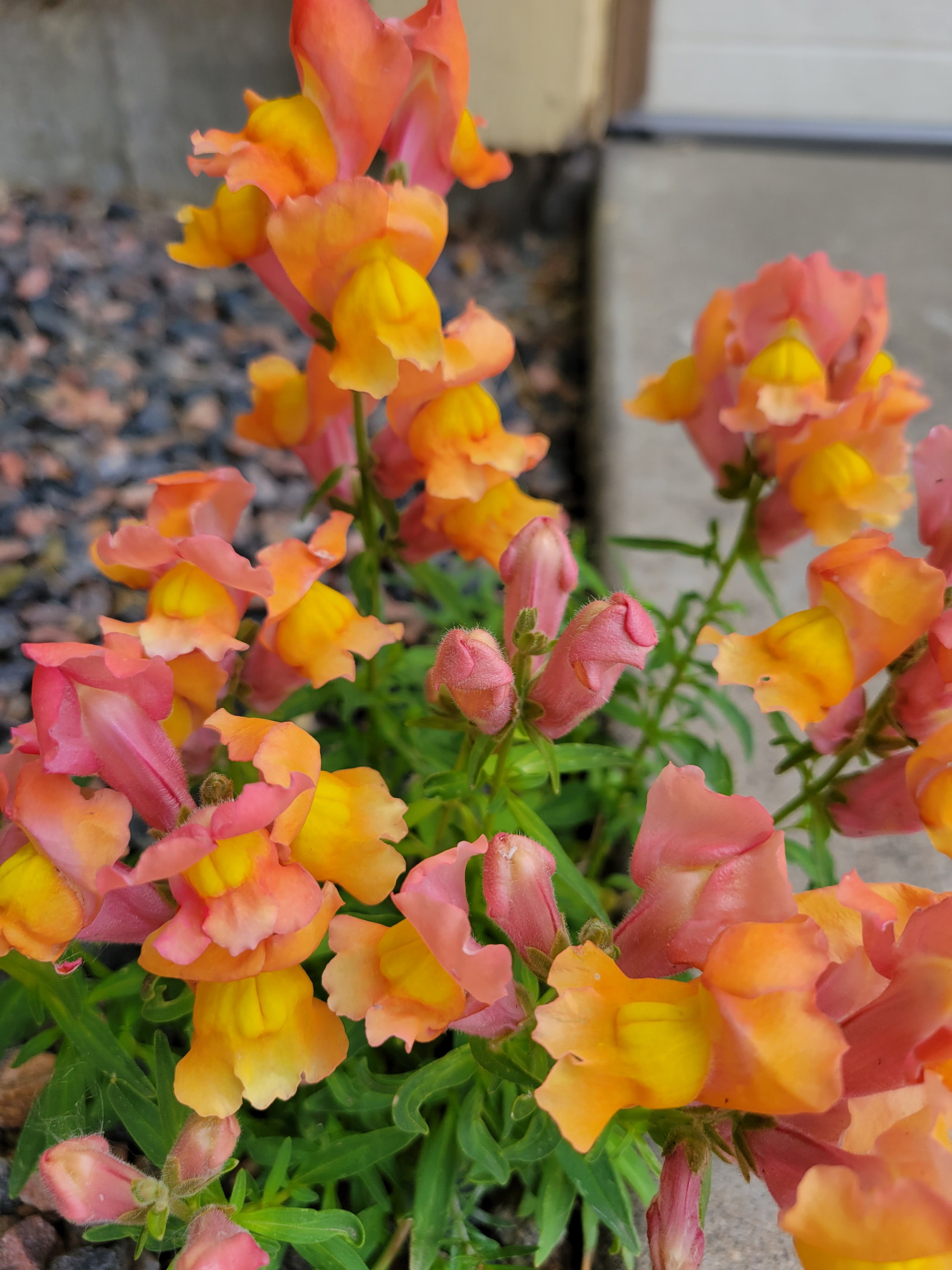
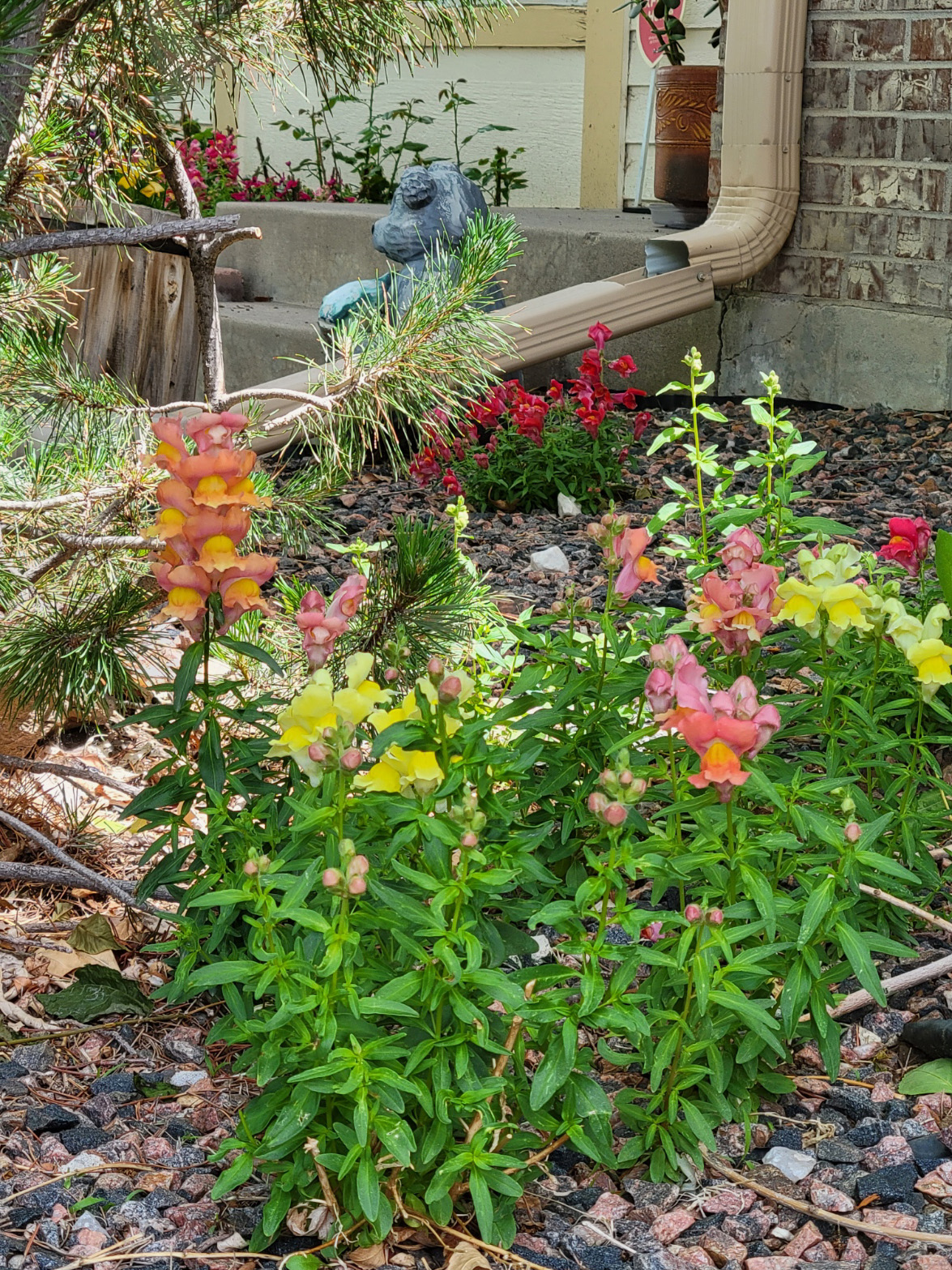
Snapdragon plant in my front yard.

Snapdragons are great plants for me in my gardening efforts. They are really hardy, tolerate dry conditions, and there are new varieties that are small and easy to grow in containers and along the edge of your driveway or garden. The picture above is one that is growing in the margin between my rocked-in area and the driveway; I didn’t plant this guy; it is a volunteer that sprang up from a previous year’s plantings. The original plant was something like this one… a mixture of orange, yellow and pink that changes in the flowers as they age. Pretty cool, huh. I look at the plant and wonder how/why the pigment in the flower is changing over time. BioGeek, right?! It gets even better…

All of these plants are also volunteers from the original parent plant from a couple of years ago.

Do you see all of those colors? They are the result of genetic recombination that happened in the original plant’s flowers when the plant reproduced and created the seeds that rose up to produce this array of colors. Some of the offspring have clear-colored flowers (the yellow and the red), while other have the mixed hues and color-changing characteristics of the parent plant.

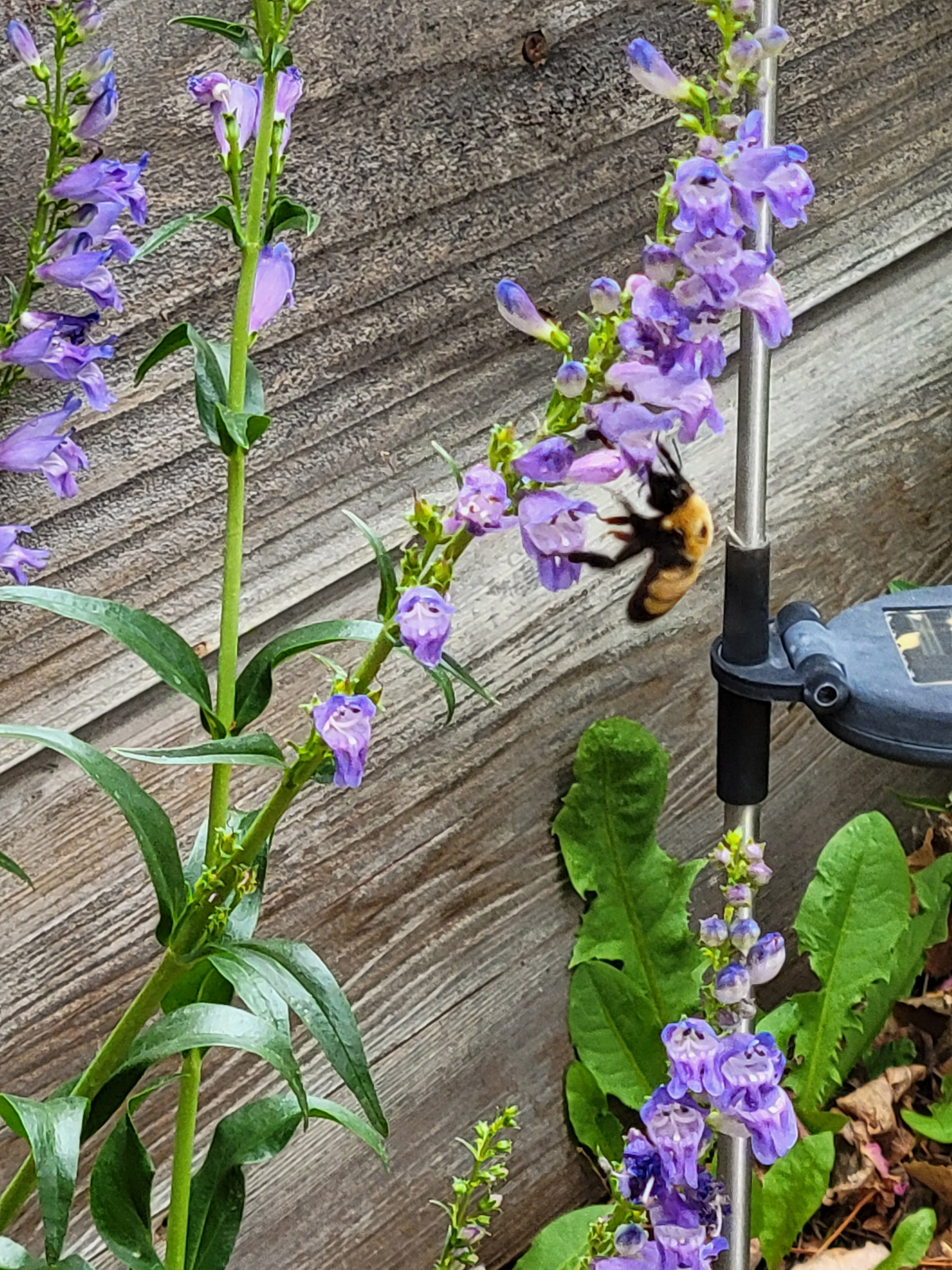
Notice, I said parent plant. The funky thing about snapdragons is that they self-pollinate and reproduce on their own with the pollen getting to the stamens within the closed flower without any intervention by outside helpers like wind or insects. In fact, they are so hard to open that only a really heavy insect like a bumblebee can open the flower to get to the nectar inside. As the (big old fat) bumblebee climbs into the flower the little hairs on its body pick up pollen. When the bumblebee flies on to another snapdragon and then climbs into that flower it can carry the pollen in with it to cross-pollinate the new plant with the previous one’s pollen.

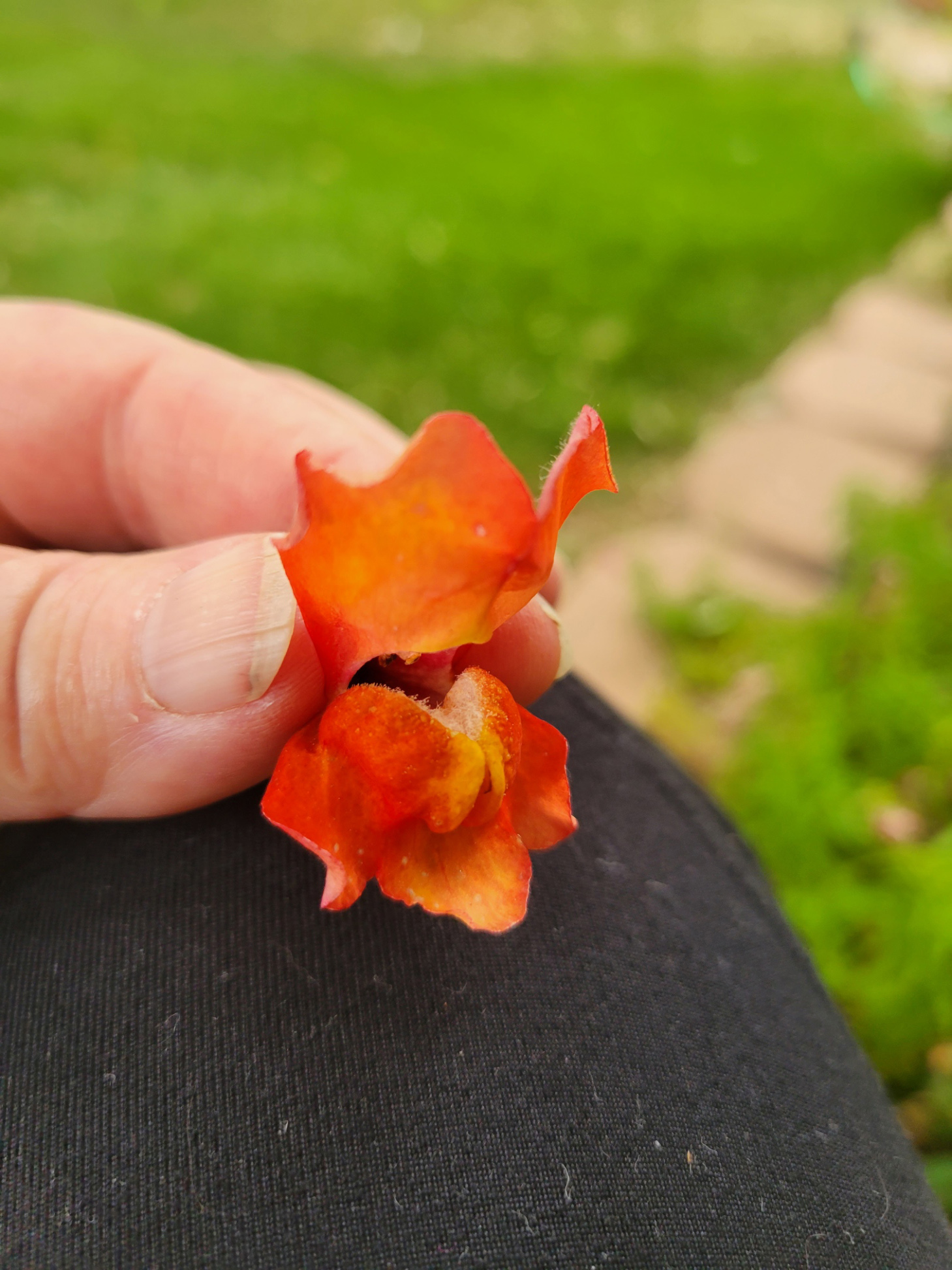
Bumblebees started showing up in my garden last week, and I would like to believe that they have been busy with the snapdragons too. If you snap open one of the flowers like I did in the picture above, you can see the pollen-carrying anthers above the opening and then waaaay down at the bottom of the flower is the nectar with the ovary. An industrious bumblebee can push open the flower and then muscle its way in to the bottom. Yay! More flower colors are on the way when there is crossbreeding among my plants. Here’s a great blog posting (Ray Cannon’s Nature Notes) showing a bumblebee taking on a snapdragon.

All this brings me to Mendel and classic genetics. Gregor Mendel (1822-1884) was a monk who had a deep interest in the science. He lived in a time when genetics was very poorly understood, and the basic question was “how are traits transmitted to new generations?” Mendel chose a plant that self-pollinated like a snapdragon (pea plants) and controlled the cross-pollination between parent plants with distinctive characteristics like the color of the flower, the height of the plant, or the color of the pea. He cut away the pollen producing structures in the flowers, used little brushes to carry pollen from one plant to another (taking on the role of the bumblebee in snapdragons), and then put little fabric hats over the flowers to prevent any other pollination from occurring. Tedious, right? Anyway, this work led to the essential understanding in basic genetics that we all now know. Some genes are dominant, and others are recessive. You have two copies of each gene (one from your mom, one from your dad), and the inheritance of which copy you got from each parent is random. Here’s an online tutorial of classic genetics maintained by the Cold Spring Harbor Laboratory.

Good thing that Mendel didn’t choose snapdragons. Snapdragons are a problem for classic genetics because their genes don’t always follow the dominant/recessive inheritance pattern. Instead, some of the colors in snapdragons are both expressed at the same time, and we call that codominant. So…. a red snapdragon crossed with a white snapdragon will produce plants with pink flowers. We now understand how and why that happens, and there are lots of other examples of non-Mendelian genetics like blood type inheritance and tortoiseshell cats. If Mendel had chosen snapdragons to study, he would have floundered around forever, but thanks to him (and pea plants) the first understandings were worked out. Think of how hard that was… no one knew what the genetic material was or had glimpsed a chromosome, but he figured out the process using his pea plant data and some truly exhausting math. Way to go, Mendel!!
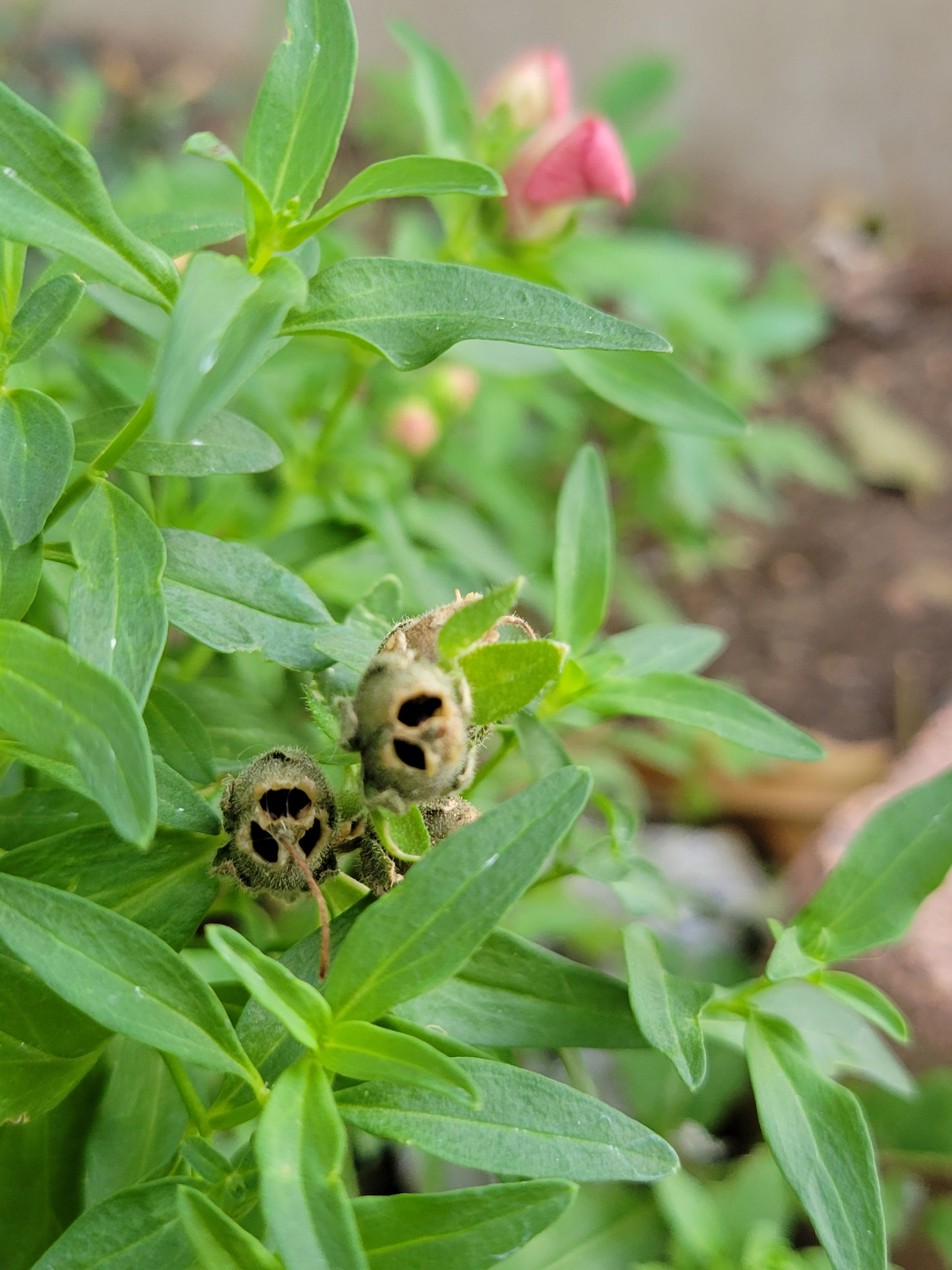
Seed pods on my snapdragon plants. Those seeds carry the next generation of snapdragons waiting to grow up next year.

So, when I see my snapdragons, I am transported once again to my biology classroom and those early genetics lessons with students. I am connected to the world of science and the legacy given to me by Mendel and others. Why are my flowers a mixture of pink, yellow, and orange? Hmmm…. maybe there is more than one pigment gene at work at the same time, and the amount of pigment being produced is changed as the plant ages? Is this some funky combination of red and yellow genes? I kind of think so, since I now have plants with clear red and yellow flowers: they must have two copies of either the red or yellow gene. Is there another gene kicking in to modulate the amount of pigment produced as the flower ages? What about the pigments that I can’t see, but are there for the bees to see? This is so cool, and I just love snapdragons!!!!
This isn’t just a garden, but a genetics experiment that I’ve been running for a few years now.

Yay, science!

Thoughts on “Lessons in Chemistry” while sitting in my Garden

The monsoon has arrived in Colorado! This monsoon is not bringing any rain my way, but it is carrying in cooler air and gentle breezes through the day. Suddenly I am spending lots of time outside. I’ve worked in the gardens every single evening for a couple of hours and the gardens are actually starting to look like… gardens! Okay, I have to admit, there is still lots of work to get done, but I’m so happy to see tidy weeded gardens with lovely rose bushes without a throng of weeds around them.

In the late afternoons, when it is still a little too sunny to work in the gardens, but nice for sitting outside because my swinging garden seat is in the shade, I move out to read with the wildlife. Look at the great pictures I got this week!

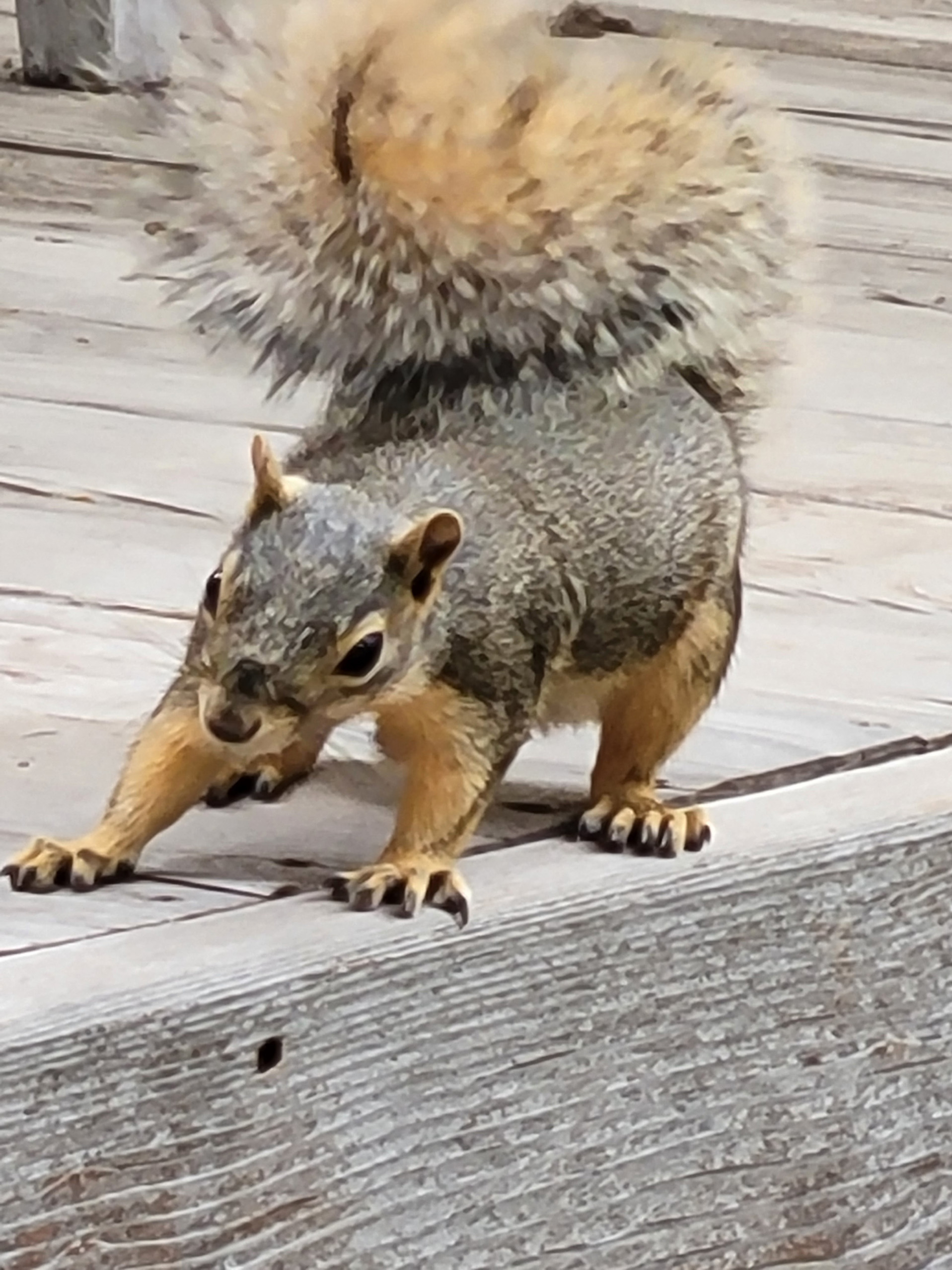
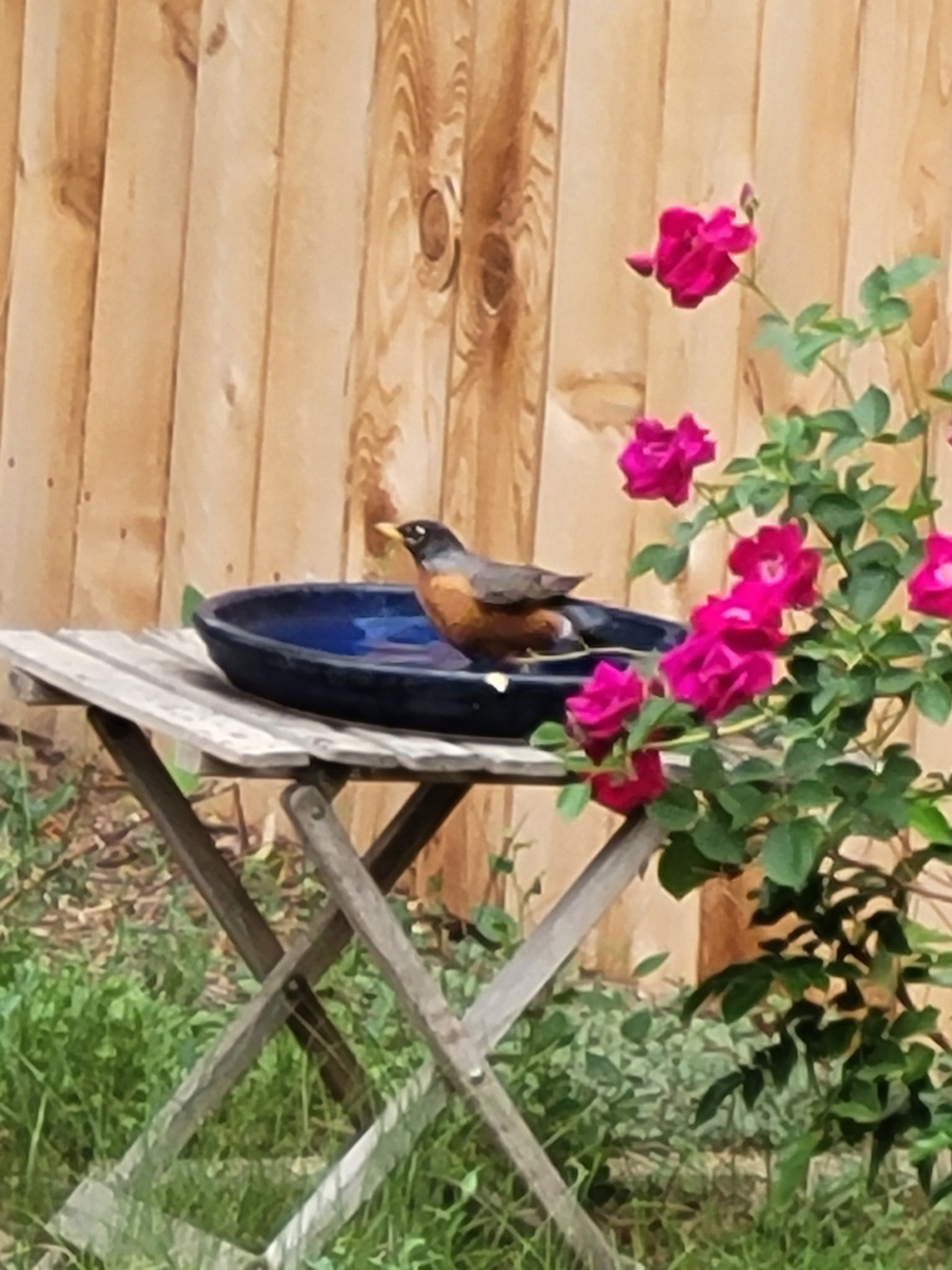
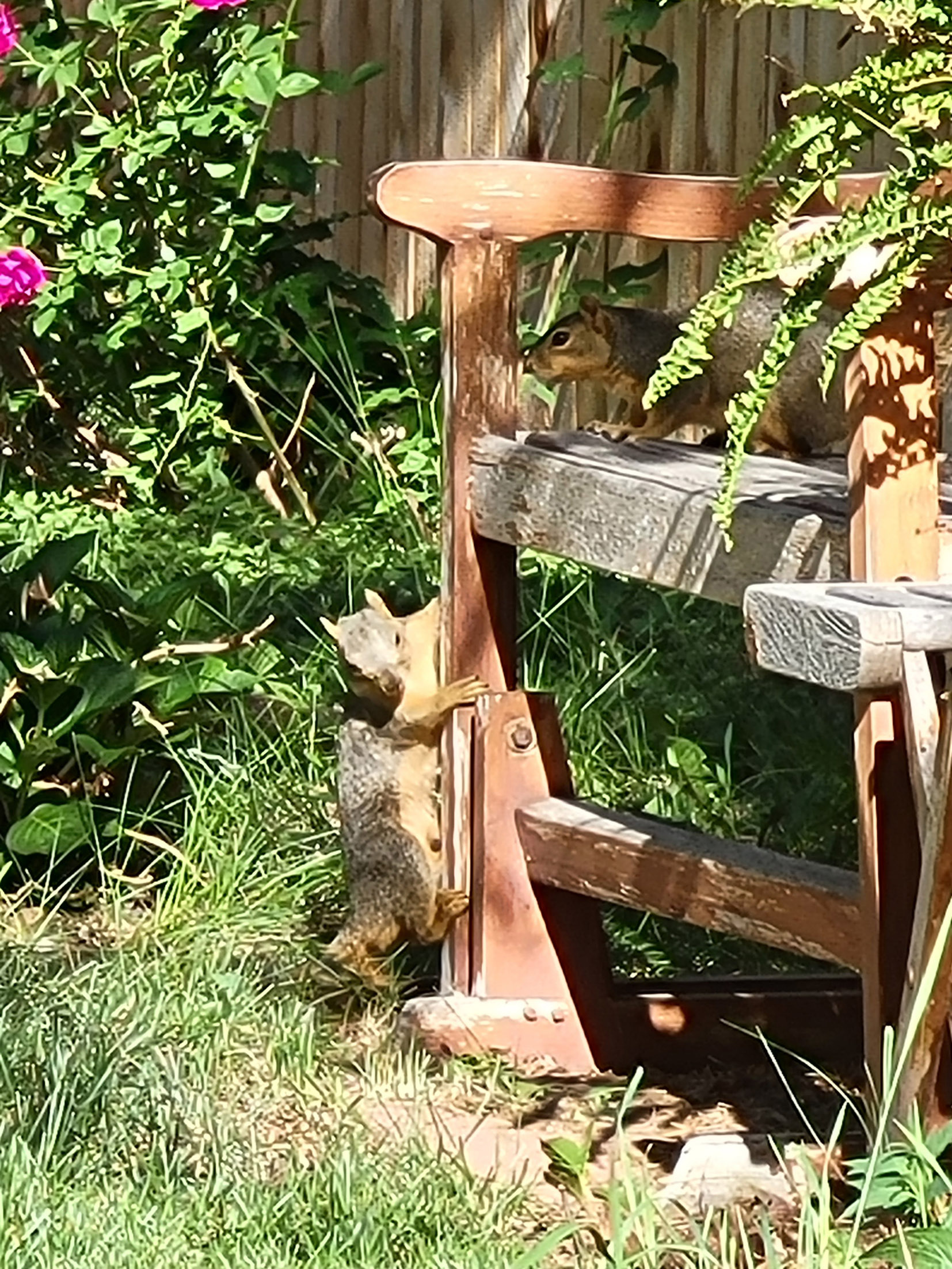
My yard is a playground for a group of juvenile squirrels who are always entertaining. There are huge swallowtail butterflies and tiny birds in the yard, but those guys haven’t stopped long enough for me to get a photo yet. The robin is a regular at my little birdbath, and the first bumblebees of the year showed up to sample some of my flowers. My favorite rose bush, the Princess Alexandra of Kent, now has 15 blooms going. My back gardens are filled with new plantings, and the lavender and yarrow are just a few days away from the first blooms. I’m really enjoying my time outside reading, and then I think about the book while I pull weeds and put the gardens into order.

Lessons in Chemistry: A Novel by Bonnie Garmus has been on my mind a lot this last week. The story is of Elizabeth Zott, an intrepid individualist woman who is a scientist by nature and calling, challenged by her gender and the time in which she lived.

I just love the Elizabeth Zott character. I understand and identify with her so much. Elizabeth is a chemist/scientist trying to do research into an original area of chemistry that intersects with biology. Did I mention that it is the 50s? Oh. Elizabeth has a lot of obstacles to overcome: women are expected to be homemakers, and misogyny and gender stereotypes are everywhere. Other women gossip about her and sabotage her. Men steal her work and take credit for it. She loses her job and ends up doing a cooking show on television.

Where she teaches cooking as lessons in chemistry to produce the best, most wonderful dishes ever. Women love her show, take lecture notes through the programs, cook the meals, and learn to think differently about their abilities, their role in society, and their individual worth. The book is wonderful. The book is about keeping an open mind, questioning everything, collecting data, and thinking for oneself. Also, there is a dog who is a major character in the story and who has a wonderful voice and viewpoint of his own.

So why does this book connect so much to me? Well… I grew up in the 50s and 60s. I entered college as a chemistry major (but once I discovered molecular biology, which is kind of biological chemistry, I was gone…). We kind of forget how things used to be for women, but I do remember how things were.

A small list of events from that time:

  • The men talking out front after church each Sunday sure were critical of women drivers. Like, women shouldn’t be allowed to drive. They were serious!
  • A woman at my church had cancer. Her husband, who was in charge of her health care, had that information concealed from her.
  • My high school counselor told me that I would make a great nurse because I was so smart, I could support doctors in making their diagnoses, helping them with their careers. I decided that maybe I should be a doctor…
  • My chemistry advisor in college told me that women were just taking away a slot from a man and that the education was wasted on them because they would just become housewives. Umm… I had just made the Dean’s List…
  • I interviewed for my first research lab job after college. I had to answer a lot of questions about my husband, his career plans, and whether we would be having another child. I think that I got the job because my husband needed me to support the family while he finished college.
  • Working at my lab bench late one afternoon I overheard the head of the lab discussing the research of one of the postdoctoral fellows, a woman. They were denigrating her work while, at the same time, talking about how they could clean it up for publishing. They published her research under their own names later that year.

Well, that’s enough to give you a glimpse of what it was like for women as they struggled for equal opportunities, standards, and pay. We’ve come a long way, but the fight goes on. What I especially loved about science is that it helped level the playing field and encouraged independent, out-of-the box thinking.

Which brings me back to the book. Elizabeth reads to the dog and teaches him hundreds of words. Elizabeth allows her daughter to read just about anything that she can get her hands on (a reading philosophy that I also benefited from), and teaches her cooking show viewers to take a few minutes to savor their accomplishments. Elizabeth rows with men. Elizabeth moves through the world, astonishingly self-confident, striving always to extend the envelope of her knowledge, fearlessly challenging the status quo, viewing everything through the lens of science.

I kind of think that Elizabeth Zott is my hero!

And science. Always, science.

Cooking may be chemistry, but biology is life.

This is me, sitting in my garden, thinking about life.

The BioGeek Memoirs: Sunflower

Okay, I need to be complete upfront about this: this is a crossover post. It is going to be a total amalgamation of the Scleroderma Chronicles and The BioGeek Memoirs because I just couldn’t come up with anyway to make them separate posts. Hey, I’m a biogeek with scleroderma. It was bound to happen eventually…

So, let’s get this ball rolling by talking about bean plants. That makes a lot of sense, right? When I was a biology teacher struggling to make plants interesting and to help students understand experimental design, I came up with the genius idea of letting the students design an experiment looking at the effect of fertilizer concentration on the growth of bean plants. The students had solutions with different concentrations of Miracle Gro fertilizer available to them, and then they had to struggle with planting and growing 6 bean plants while holding all the other variables constant. The plants grew, the students measured their growth, and then they charted the growth to make decisions about the best fertilizer amount.

I had the hot idea of using an Excel spreadsheet to display the student data to the whole class. That worked great! I then combined the data from all 5 classes together and… it was a huge mess. The plants were all different heights depending on which class was collecting the data. The students weren’t making any errors; the bean plants were raising and lowering their leaves each day in circadian rhythm. Depending on the time of day, the plants were a different height. Oh. Plants can move!

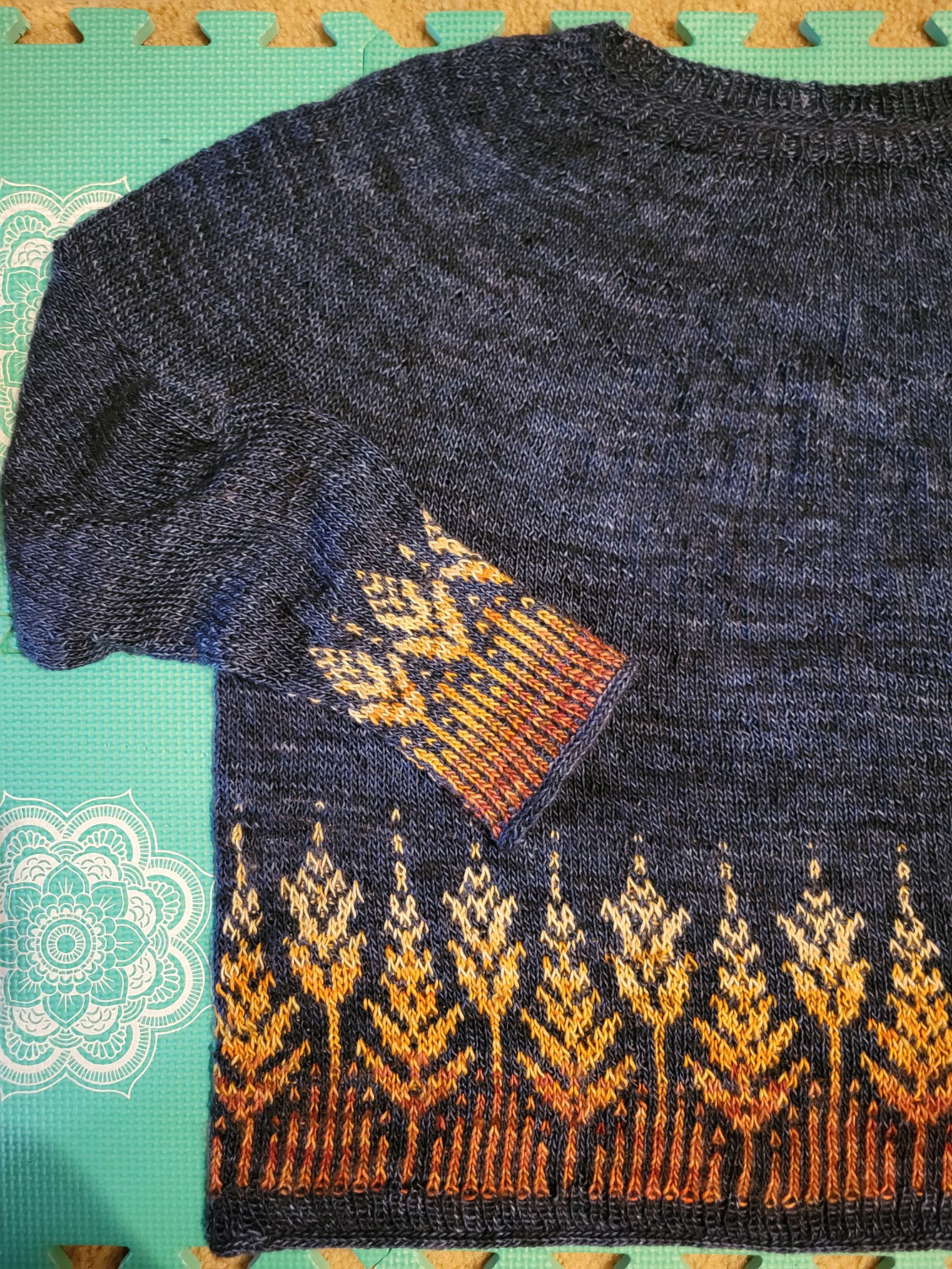
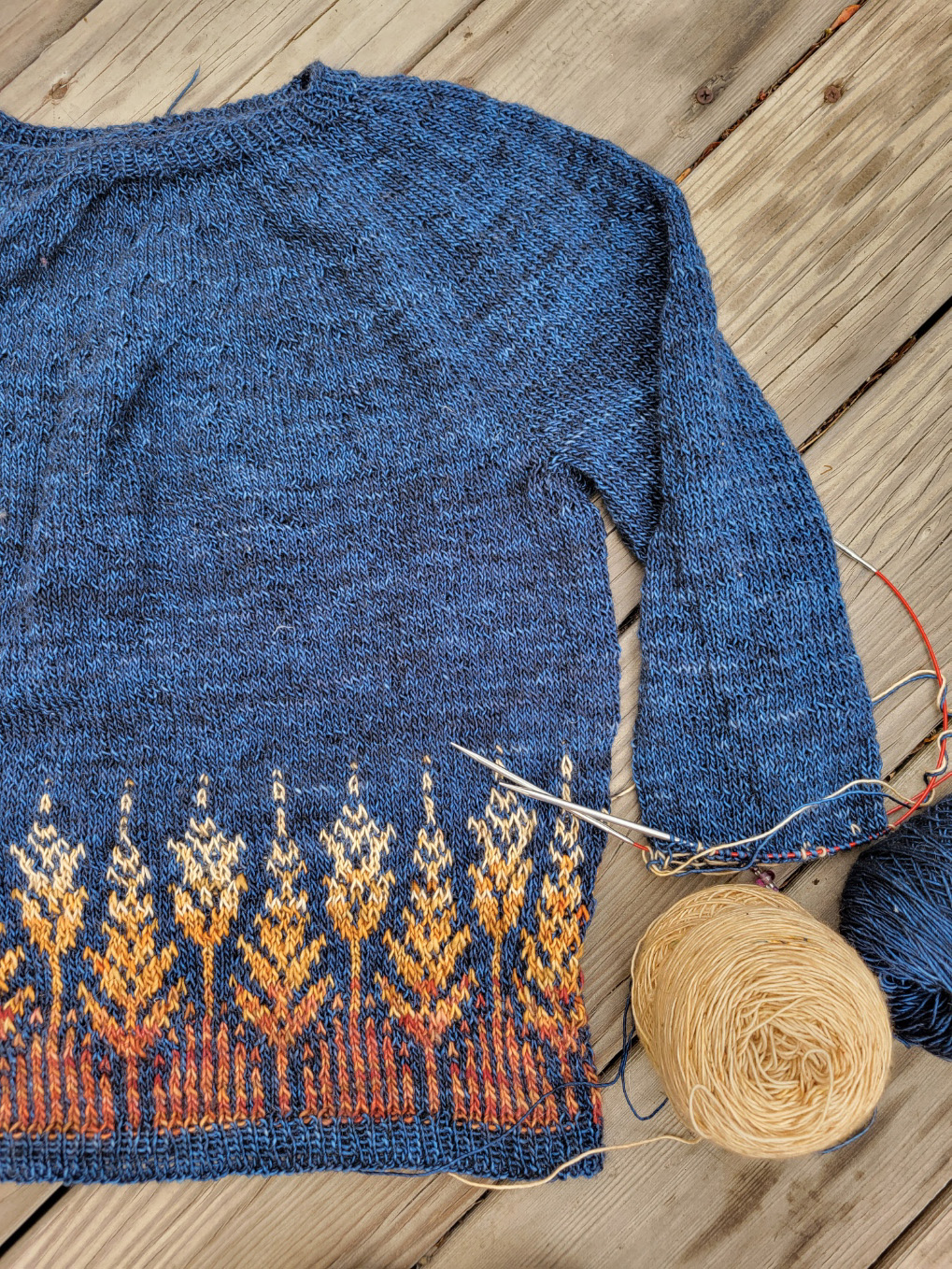
Sunflowers have been on my mind a lot recently. Beautiful sunflowers, whose faces turn throughout the day to follow the sun. My cousin grew enormous sunflowers one year that towered over the other plants in the garden. Sunflowers are the symbol of Ukraine. The sweater that I am knitting right now is in the colors of a field of sunflowers with their faces in the sun.

Those aren’t sunflowers, but the colors remind me of all the “Support Ukraine” knitting that is going on right now.

There are enormous fields of sunflowers near the airport in Denver that are just spectacular in the late summer. Early one morning in late August,2014, I drove past them on my way to my first appointment with a rheumatologist; my primary care physician had referred me to a specialist after some concerning bloodwork results. I was pretty sure that this morning was going to be a turning point in my life, and I was nervous and kind of fighting off tears. Behind me the rising sun poured light onto the glowing faces of sunflowers ahead of me as far as I could see; the sight was just thrilling, and I settled right down. An hour later the rheumatologist explained that I had limited systemic sclerosis (a form of scleroderma) and Sjogren’s disease. I was prescribed medication, sent for more testing, and told to stay off the internet. I looked for the sunflowers as I drove home that afternoon, but I couldn’t see them; the fields were too far from me as I drove east. Still, just knowing they were there sort of helped. Sunflowers. They were kind of a symbol of hope and the promise that I could handle anything.

Are you ready for this? The sunflower has been chosen as a symbol for scleroderma by Scleroderma Australia. Shine like a Sunflower is their campaign this June to bring scleroderma into the light of awareness.

Just like that the sunflower became an international symbol for scleroderma. I swiped this shirt image off of Amazon.

Why a sunflower? Well, like sunflowers, we scleroderma people follow the sun. Strong sunlight is actually a problem, but the warmth… bring on the warmth! For the last few weeks, I have been recovering from surgery and waiting for my biopsy results. I have been sitting outside on my deck out of the direct sun, soaking up the heat and light. Day by day, I have been improving and no longer need daytime oxygen support. My cardiologist has restarted the medication that was halted while I was in the hospital, and it hasn’t even caused a bump in my recovery. Heat and sunlight are really making a difference.

My biopsy results arrived on the first day of June. I have developed a type of interstitial lung disease that presents as hypersensitivity pneumonia. I also have the characteristics of what the report called a vascular/collagen autoimmune disease, which is pretty much a descriptor for scleroderma. Yep. What my pulmonologist prepared me for. This is interstitial lung disease associated with system sclerosis (SSc-ILD) and I am going to get started on an increased dosage of immunosuppressants and a new drug to prevent scarring in my lungs called OFEV. This drug is really new; it has been developed in the years since my diagnosis, and now it is here just when I need it.

June is Scleroderma Awareness Month. Here in the US the theme of the campaign is Know Scleroderma. Oh, I know scleroderma, and so do some of you through my blog. Let’s put scleroderma aside for the time being and go back to sunflowers. And science. Remember that this post started with a little story about doing a science experiment with bean plants and my students? As simple as that was in my classroom, the heart of that process, curiosity, scientific experimentation, and data manipulation, is serving me well now. Ironically, new therapies and treatment approaches are being developed because of the lung scarring caused by Covid-19. Science. It rocks!

Today I planted these sunflowers along my side fence.

This afternoon I am once again outside in the warmth and light, knitting on my new sweater in the colors of sunflowers against the sky, admiring my beautiful newly planted sunflowers. They have their little faces angled to the southwest, following the sun as it starts to dip towards the Rocky Mountains.

Beautiful, tough, follow-the-sun sunflowers, reminding me to also follow the sun and to shine when I can. They remain a symbol of hope and a promise that I can handle anything.

Shine like a Sunflower.

June is Scleroderma Awareness Month. You can learn more about scleroderma at these links.

Month’s End Report: May 2022

This month passed in a hurry. I spent most of a week in the hospital, and then the rest of the month recovering from the surgery. I haven’t been exactly frisky for the whole month, but I have been making some progress on several projects.

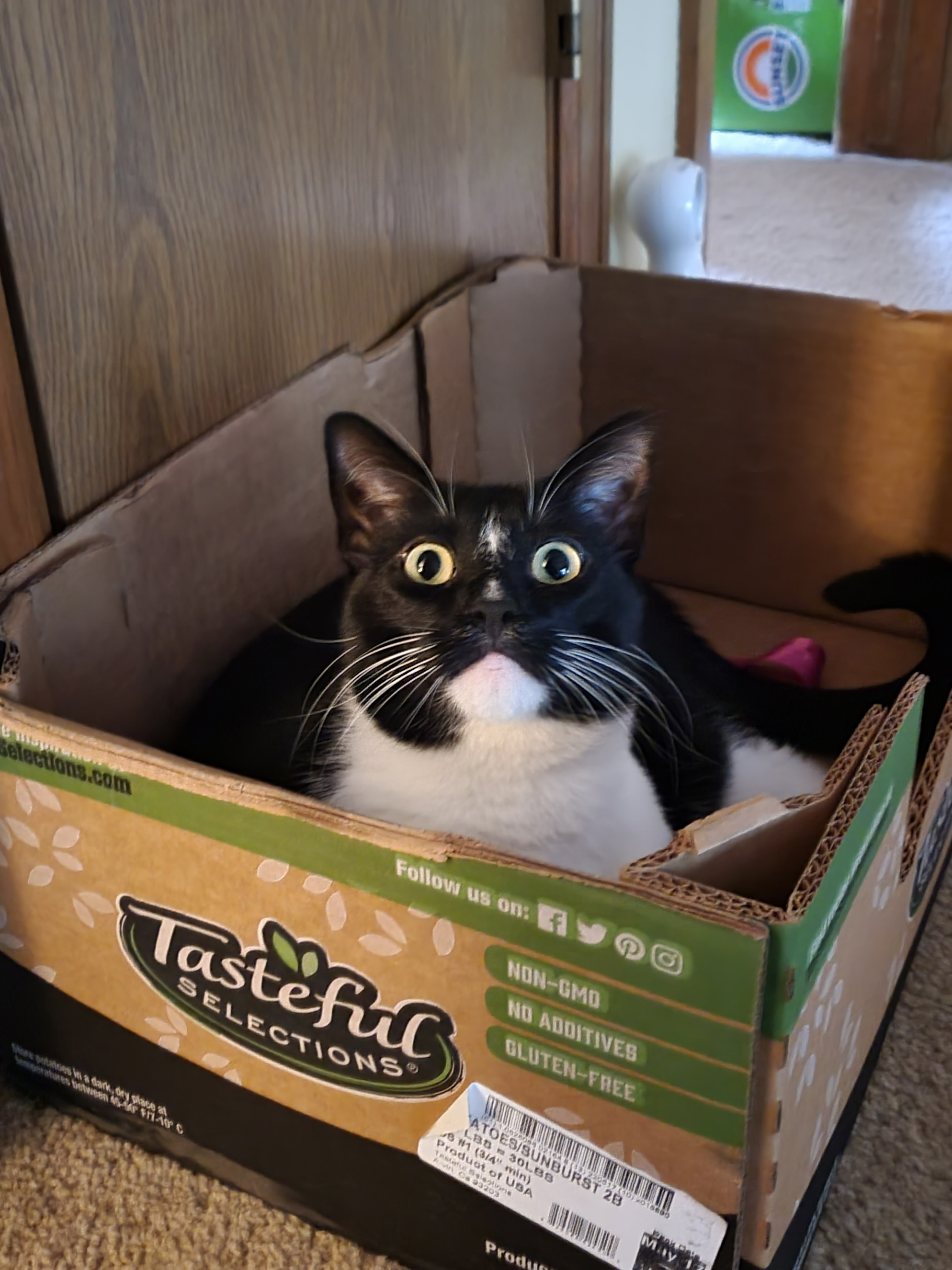
Hannah: The Mother of Cats has been spending lots of quality time with us!

Doesn’t Hannah look pleased with her box? The house is pretty much full of boxes at the moment as I have been making use of all the shopping services that cropped up during the height of the pandemic. I’m getting everything that I need with little effort and Hannah and Mateo are having the best time ever. From their prospective it has been a really great month!

Knitting

I worked on a sweater and community knitting this month. I really pushed and got the body of my Goldenfern sweater done early in the month and then immediately lost it on sleeve island. Poor sweater. It languished for the rest of the month in its knitting tub while I knitted chemo hat after chemo hat with a few PICC line covers thrown in for variety.

I have lots of brightly colored yarn so that’s what’s getting knitted right now!

I know that this is the end of month report for May, but I want to acknowledge that now that we are in a new month, I have pulled myself together and taken that sweater off of sleeve island. I made some good progress over the last couple of days, and I finally got to the colorwork section of the sleeve today.

I’m knitting the ferns onto the bottom of the first sleeve now.

I also made a couple of more passes through the yarn stash culling out yarn that I will never use and throwing out scraps. (So hard to do; I deserve a gold star!!) Altogether, I knit 6 chemo hats this month (Barley Light by Tin Can Knits), 5 PICC line covers, and used up or removed 38 skeins of yarn from the stash. I think that I deserve more than one gold star for the destash efforts this month… I am kind of thinking that I will get more than 100 skeins out of the stash, and to be truthful, things are looking a lot more tidy in the stash room.

Garden

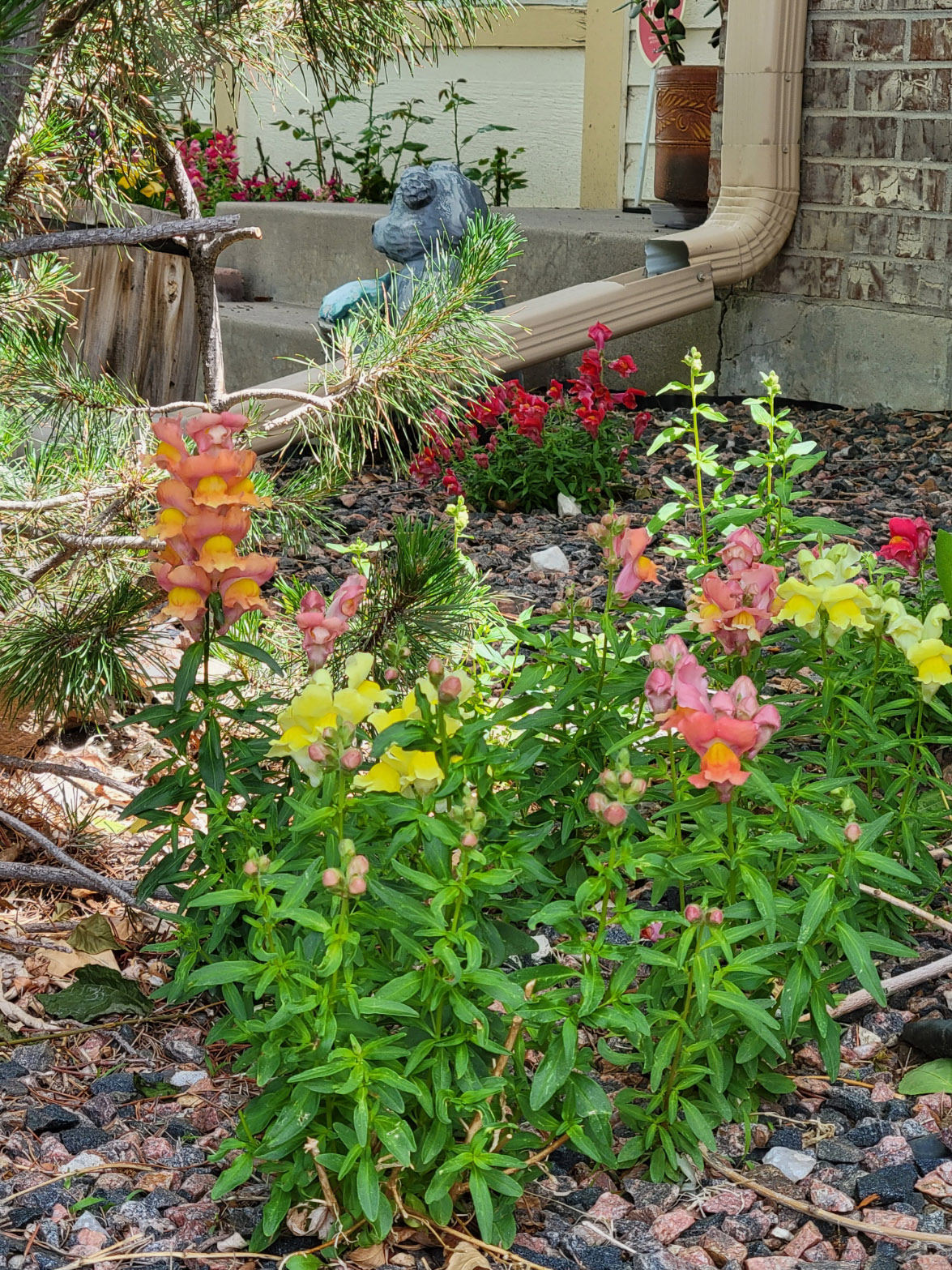
Everything is growing like crazy now. The roses all made it through the late season snowstorm and there are buds everywhere but very few blooms. The snapdragons, however, are blooming their little flower hearts out.

All of these snapdragons are volunteers growing from last year’s plants. Look at all of those colors; they are the descendants of pink snapdragons that were originally planted a couple of years ago. Also, those flowers are NOT in a flowerbed where they belong!
This plant is my favorite in the bunch. It is growing with reckless abandon in the rocks along the driveway.

With absolutely no effort on my part these snapdragons have spread through the front gardens (and rocked landscaping…) and have brought lots of early color in reds, oranges, pinks and yellows. There is a BioGeek story here, but I will save it for another day. 🙂

Books

I managed to read 5 books in May. Not great, considering that I was a slug for most of the month, but I’m still on track to make my Goodreads challenge goal of 50 books this year.

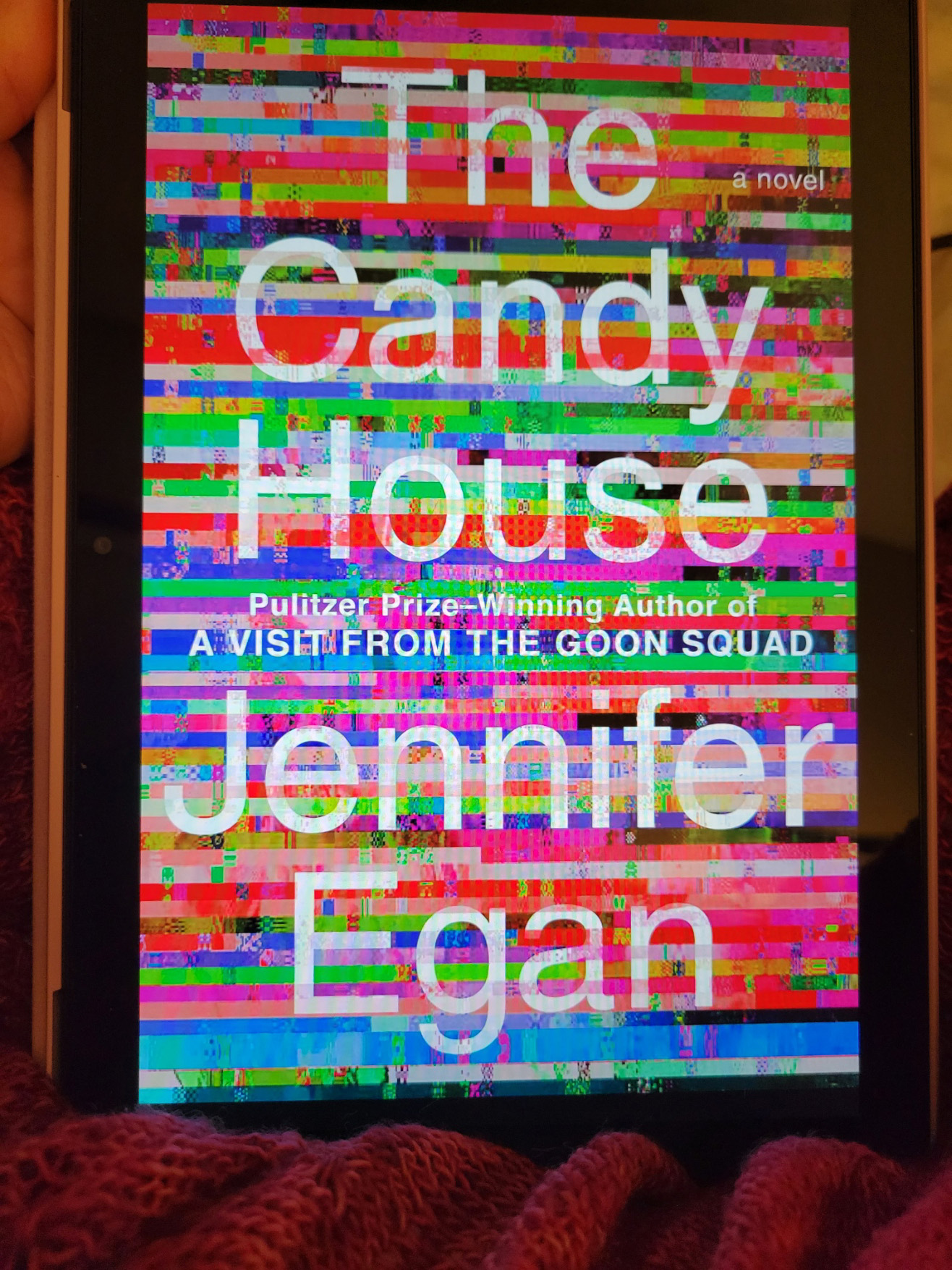
I’m reading the most amazing book right now.

I can’t read this book fast enough!

I read A Visit from the Goon Squad, so I had some idea of what I was getting into with this book. The book is organized like a series of short stories about people who are connected to each other. There are a lot of names flying past, and there are also embedded themes within the stories, so there is a lot to keep track of. I am creating a flow chart showing the linkages and themes as I read which is helping me immensely. How I long for a book group!

So, here’s the simple backbone of the book: what if there was an electronic, open forum vehicle that let you store all of your memories? Think of this like Facebook on steroids where it is open to the world and people can access and search other people and memories. What would such a thing do to us; what would we lose, and what would we gain?

The people and themes that I am meeting as I read the book are engaging and I’m really enjoying myself. Also, I am going to need some really big chart paper to map out all of the interconnections the way things are going as I read.

Have a good weekend, everyone!

The BioGeek Memoirs: Rose

My mother was a great lover of roses. One of my earliest memories was of an ongoing battle she had with the family dog and a newly planted rose bush. My mom planted the rose bush in a garden along one side of the house. The dog dug it up. My mom replanted the rose bush, and the dog, a boxer mix, dug it up again.

My mother, not one to give up easily, spanked the dog with the rose bush and replanted it.

Not my mom’s roses, but they were bright red like these.

That bush did really well and was covered with blooms every year. I can’t remember the color for sure, but I think that they were red. Our dog was so well behaved in the garden for the rest of her life that the story of the rose bush battle took on the stuff of legend. Look at that rose bush, my sister would say. Mom once spanked the dog with that bush!!

Later in her life my mom grew tea roses in her garden that were also the stuff of legend. These shrubs were huge; at least 4 feet high and the producers of really showy blooms; people occasionally knocked on my mom’s door to ask what type of rose they were. I once asked my mom what she did to get her roses to grow and bloom so well. I expected to hear some complicated formula to produce fabulous blooms that featured bone meal, wood ashes, and who knows what else… Nope. It was a really, really easy routine. Feed the roses Miracle Gro fertilizer every week, prune them once a month, and if they didn’t respond satisfactorily rip the shrub out and go buy another one. My mom, an agent of evolution in her rose garden. Who knew her success was partly due to ruthless natural selection? That earlier incident with the dog should have tipped us off!

Now I grow roses. I feed them Miracle Gro, prune them after each blooming, protect them from early frosts, mulch them with care. They are doing well, but not as well as my mom’s did. I tell myself that is because I live in a different climate from the one where she grew her show-stopping roses, but the truth is she had quite a gift for rose growing. Anyway, here are my favorites.

The pink rose on the left is Princess Alexandra of Kent, the yellow rose is Charles Darwin, and the one on the right is Hot Cocoa. I just love the English roses for their shape and scent, but they don’t do that well in my climate. The Hot Cocoa rose is hardier and handles the heat and low humidity better. Anyway, don’t they look nice?

Wait. I have more roses!

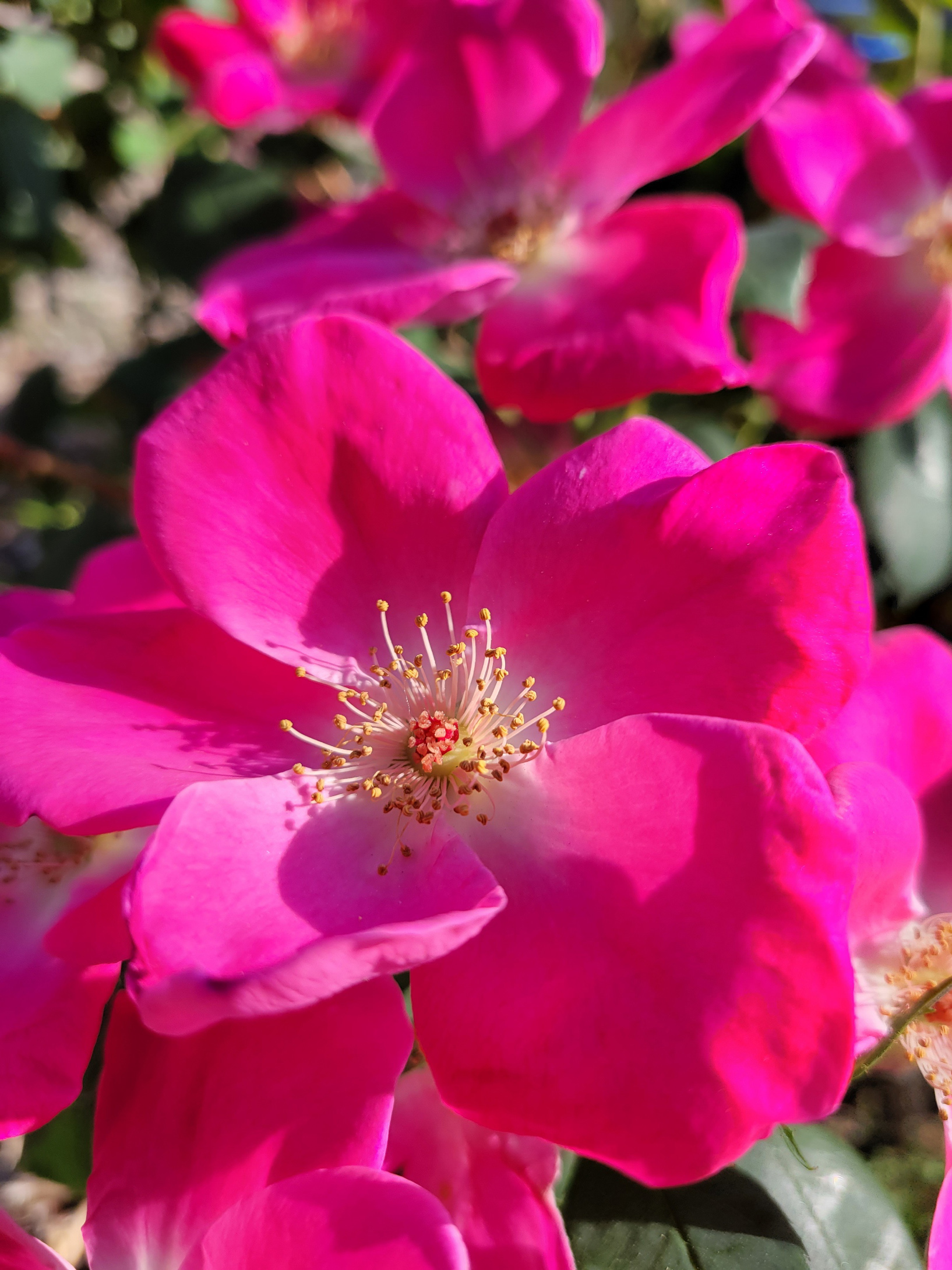
These roses are more like the wild ones that grow in our mountains. The one on the left is a Home Run, and the one on the right is a Cinco de Mayo rose. I love these guys; simple, hard-working and favorites with the bees. They handle the climate here well and flourish in the long dry summers.

I do have more roses, but you get the idea. There are rose bushes along the driveway, at the front of the house, in all the flower beds in the back yard, and even in pots in the house. You can never have too many roses is kind of a motto of mine.

I grow the roses for myself, but I also grow them for my mom and the other rose growers in my family. My aunt grew roses too and had a huge climber that I envy to this day. For all I know rose growing has been going on for generations in my family. Every single rose shrub, each rose bloom, is a link to the past and a promise of beauty in the future. You can never go wrong with a rose.

My mom died one year early in May after a long battle with cancer. A few days after the funeral was Mother’s Day, and in her memory I planted six red floribunda roses in my front flower bed. Those roses, bright red Showbiz roses, bloomed like my mom herself was taking care of them.

One day someone knocked on my door to ask what they were.

My mom would have been so proud!!

The BioGeek Memoirs: June Bug

In 2010 my school district sent me to Baltimore, Maryland for a couple of weeks to get the training for an upcoming course that the district was offering. It was great! I met a lot of new friends, got the training that I needed, ate yummy food, and went to Washington, D.C. for the weekend. Okay, the National Mall is a little overwhelming. I only had the one day to visit as many sites as I could. The Vietnam Memorial. The World War II Memorial. The Lincoln Memorial. The Washington Monument (hey… the White House is right over to the right…). The National Archives. The Smithsonian Museum. THE SMITHSONIAN MUSEUM!!!

You know that I had to go into the Smithsonian.

I didn’t have a lot of time once I got into the museum, but they had an exhibit about Charles Darwin and the Evolution of Evolution. Wow. There was no way this little BioGeek and teacher of biology was going to miss that! We only had an hour but of course I raced through the exhibit getting what I could out of it and then into the giftshop for a couple of mementos.

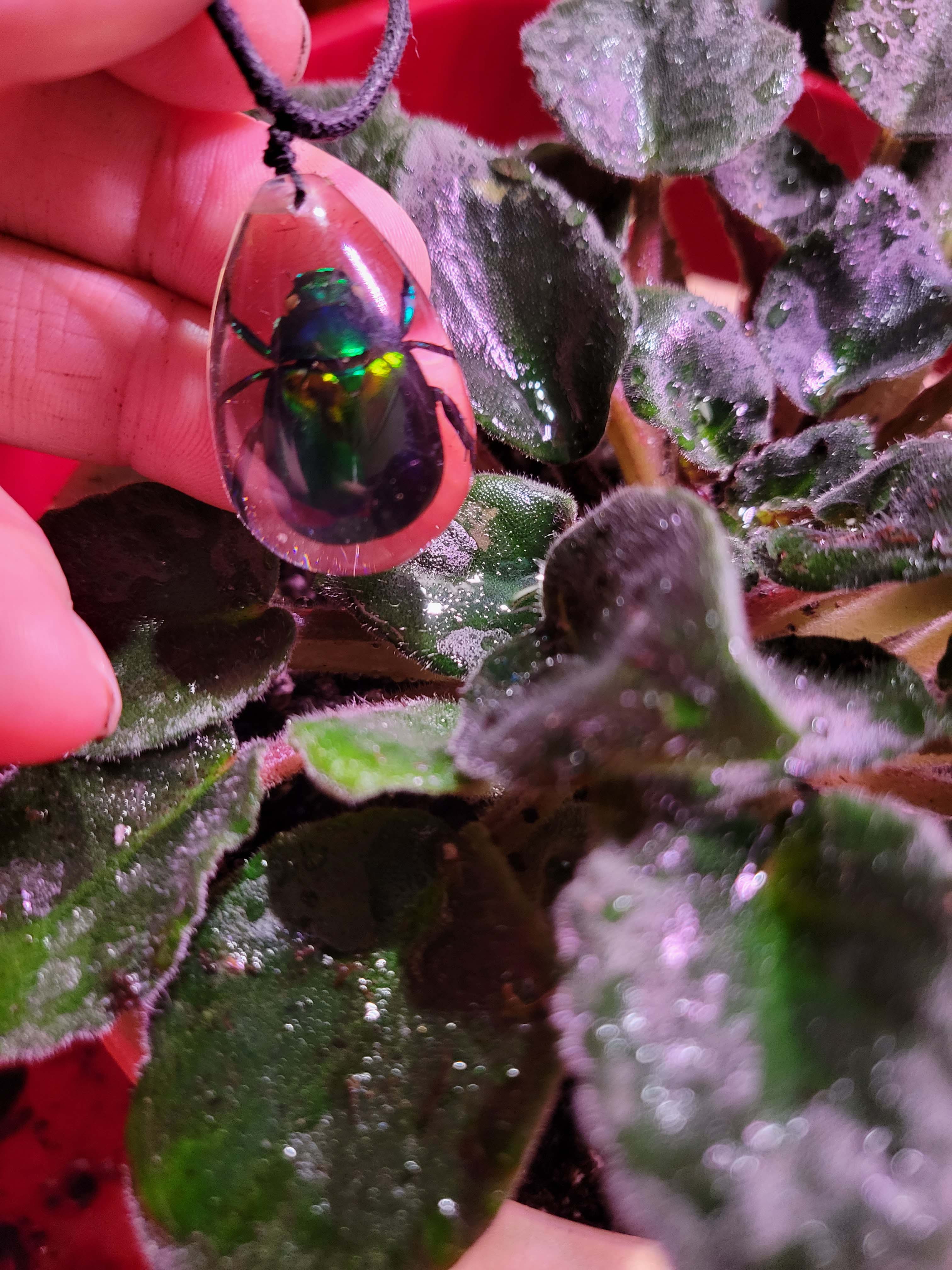
I bought a fossil, this book, and the funny little necklace that you see on the book. The dark blob at the top of the photo is Mateo (AKA the CoalBear) coming in to grab the necklace.

Let’s take a closer look at the necklace that I had to buy as soon as I saw it.

It was a June bug!!

Oh, my goodness. I just loved June bugs when I was a kid. We would find them clinging to the side of the big elm tree in the backyard. Bright, iridescent green, big and slow moving, they were easy for us to catch and haul around. We used to tie a thread around their bodies and let them fly in a circle around us. You could sport them on your shirt as shiny and unique jewelry. They were quite the find when I was a little kid.

I don’t think that my parents were as excited about the June bugs as we were. The larvae are major pests as they mature in the ground, chomping down on any roots or organic materials that they can get their little mouthparts onto and damaging the lawn. Then there were the adult beetles. Um… my mother grew this big patch of boysenberry bushes that we harvested fruit from all summer. She would send us out with little pails to pick (and eat) the berries that she turned into endless jars of jam and countless cobblers. She loved her berries. So did the June bugs. I kind of think that’s why we could always find one in our yard on hot June days.

Mateo: June bugs are good for kitties to play with, too!

In her later years my mom grew a big patch of berries along the fence of her yard. Instead of June beetles she battled gophers in her yard; the gophers tunneled through the yard and build a minor mountain under the spreading canes of the berry plants. My eldest son became a berry picker himself and took glee in chasing the gophers with my mom, wielding a garden hose in battle as the gophers practically laughed at them. She still managed to produce several cases of berry jam each summer, but I’m pretty sure that she would have swapped the gophers for June bugs in a heartbeat.

Today I live in Colorado and there isn’t a June bug in sight. It gets too cold here in the winter to grow boysenberries and I have to resort to buying blackberries at the summer fruit stands. I still have that cobbler recipe that my mom used (it came from a flour bag in the 50’s), and every year I make blackberry cobbler and think that maybe I should make some jam, too.

Why did I have to buy the June bug necklace? After all, it has been never worn, but is still treasured.

Because the second I saw it that hot June day in Washington, D.C. I was instantly transported back to my childhood, picking boysenberries, covered in scratches and berry juice, playing with June bugs in the summer heat of a Southern California day.

Good times!

p.s. Do you feel the urge to make your own berry cobbler? I blogged about it here.

The BioGeek Memoirs: Yarrow

Hi. I bet you were looking for another animal, weren’t you? Plants need some love too, you know.

Yarrow from my garden.

Yarrow is a plant that does really well in the climate where I live; actually, it is a plant that is native to Colorado and can be found in many other biomes. It has kind of lacy leaves and produces large flat blooming clusters filled with tiny white (or colored) flowers. The plants that I have in my garden have been produced for the popular market and are nice and showy. The flowers are large, last most of the summer, and draw a lot of pollinators like bees, moths and butterflies. They mostly play nice with the other plants (okay, they have a habit over overgrowing the smaller perennials, so I have to ruthlessly weed out the plants that are out of bounds), and I like the lacy green plant as much as the flowers.

The first yarrow I ever noticed was a bunch that was planted along the curb in a busy intersection. This plant received no care, didn’t seem to get additional water beyond precipitation and splashes from the street, and looks fantastic. It was covered in huge yellow blooms that kept their color for most of the summer. Every single summer the plant put out more blooms and got bigger over the years: a perennial for sure. Hmm… what a great plant, I thought. Of course, I put some yellow yarrow in the garden.

Then I bought a spinning wheel. Then I found someone who had a flock of sheep and beautiful fleeces for sale. In just a few months I had spun my way through that first white fleece (a sheep named Bob) and had all of that yarn to dye. I took a natural dye workshop from Maggie Casey at Shuttles, Spindles & Skeins in Boulder, Colorado. What a fun (but smelly) day that was!

We made several dyes and learned how to get them to “bite” onto the yarn with mordants (think of mordants as linking chemicals that attach the dye molecule to the protein of the wool) like alum and iron. I loved the indigo dye vat that I made that day and got lots of blue yarns from it. There was a nice golden yellow from onion skins, a raspberry from brazilwood, and a sage green dye extracted from yarrow using iron nails for the mordant.

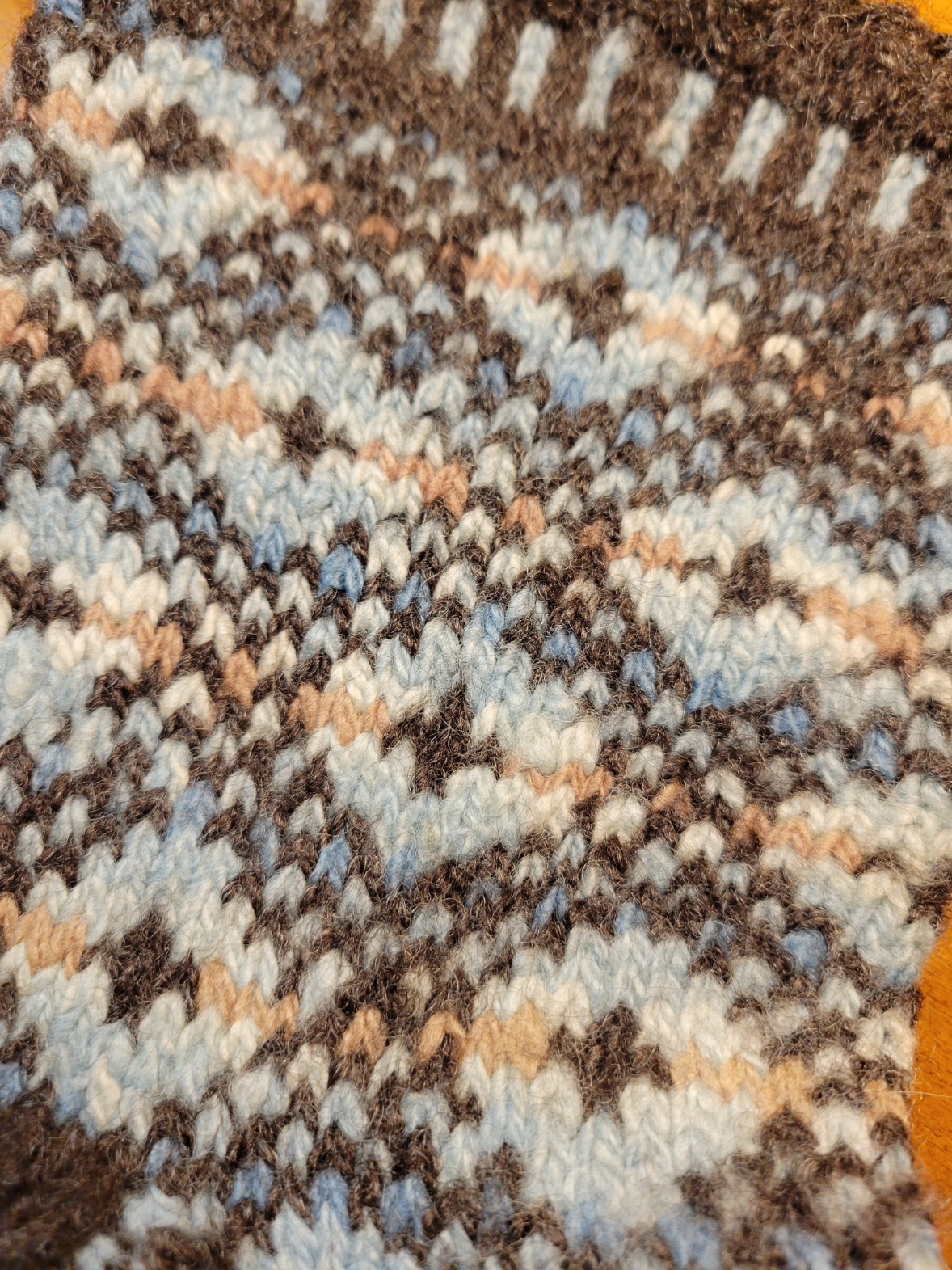
Close-up of the sock I knitted from the indigo and brazilwood dyed yarn. This sock, now more than 20 years old, was made using three shades of indigo, the raspberry (now kind of clay colored) contrast stripe is the brazilwood, and the dark grey is the natural color of another sheep named Silverheels, because of course he was. Everything is now faded, but you get the idea.

That sock, a genuine homespun, naturally dyed, hand knit item, has been my go-to boot sock for a couple of decades and was for a time my “interview” sock when asked to show a sample of my work to clients that I knitted for. Faded, but still going, it has been living in my car as part of the winter travel kit.

Back to the dyeing! Oh, boy. That yarrow was a smelly mess as we boiled the stems, leaves and flowers on the stove out on the porch. Seriously, this stuff could be medicine. Oh, wait. It can be medicine! Yarrow was known by early healers as a plant that could be used to stop bleeding and has lots of different names, some of which refer to this ability to staunch blood like nosebleed plant or woundwort. Luckily none of us were bleeding that day; we strained the vegetable matter (and nails) out of the boiled yarrow mess pot, added back in our skeins of yarn, and simmered gently until we had a nice sage green color.

That yarn became socks that I gave away to a coworker. The love for yarrow remained and I added white yarrow to my garden years later, and a couple of summers after that a wonderful purplish-pink yarrow joined the party.

This plant hangs out with my lavender.

The pink is my favorite. The plant is spreading out and taking over the whole garden that I planted it in (hang in there, lavender, you can stand up for yourself!). It blooms like crazy all summer and I keep thinking that I should cut the flowers to preserve them. I never have used the plants for dye, but I still have a lot of white yarn that would love to get some color going.

Lavender holding its own with the yarrow.

Beautiful yarrow, evoking forever the memory of that great Saturday dyeing yarn from a sheep named Bob in Maggie’s driveway. What could be better?

The Saturday Update: Week 51, 2021

Whew. I made it through the holidays okay and now I am on the downslide to the end of the year. The world is still brown out front; there was a tumbleweed on my front doorstep this morning (blown in from who-knows-where overnight), and the squirrels continue to run like crazed maniacs through the trees, over the roof, and through the leaves in the back yard. I never rake the leaves in the back as they are good mulch for the lawn over the winter… who knew that they also served as squirrel entertainment? The snapdragons are still blooming out front! It sure doesn’t seem like winter, but the days are short now and the Canada geese are here in their winter thousands with noisy flocks crossing the sky over my house late each afternoon, winging their way through the growing dusk towards the evening star and the lakes to the southwest.

Knitting

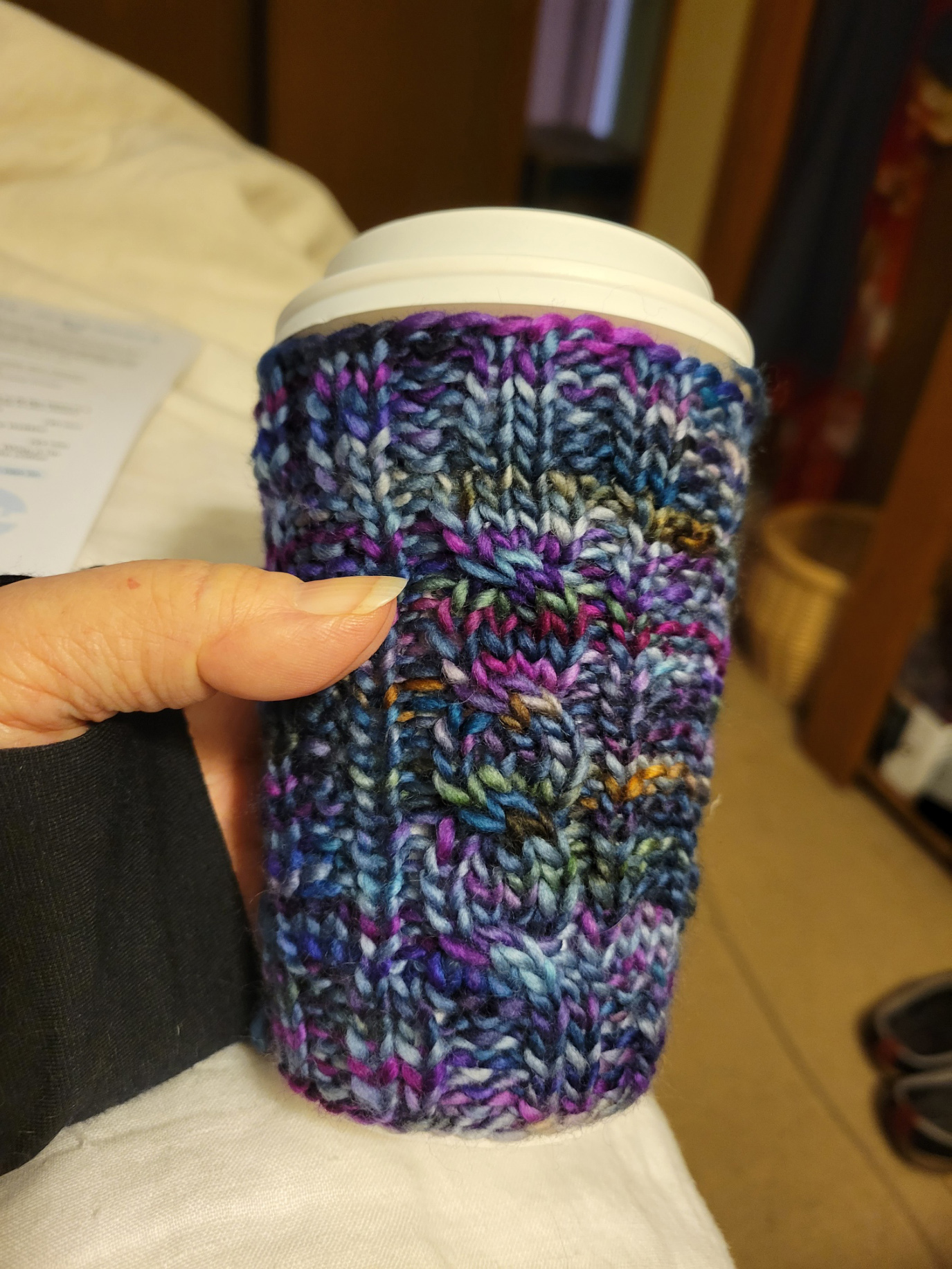
There was a whole lot of community knitting going on this year, and very little Christmas knitting. I did make several of these excessively cute coffee cup cozies that are designed to snazz up your morning Starbucks drink. I gifted them with a Starbucks card and a Snow Man cookie to some family and friends this year. Fast, easy, simple, and I hope they are the perfect thing on an outing this winter. I’m keeping my cozy in the car for my trips through the drive thru!

Pretty darn cute, right?

I also paused the community kitting for a couple of weeks to work on my new Kevat sweater (Caitlin Hunter) which is going to be a great addition to my winter wardrobe because… winter is awfully warm this year.

It is going to fit!!

I am pretty sure that I mentioned before that I am absolutely reckless with my swatches before I cast on sweaters. Like… what swatch? It isn’t like I haven’t knit this particular yarn on these size needles before, right? Still, there is that moment of anxiety when I take the stitches off the needles and try on the WIP to check for fit and length. Yay! Huge sigh of relief! I’m going to add a few more inches to the body and then I will make decisions about the bottom ribbing. I am so very happy with the knitted texture of the body since I used another stitch instead of the lace pattern in the sweater design. This is a win!!

Garden

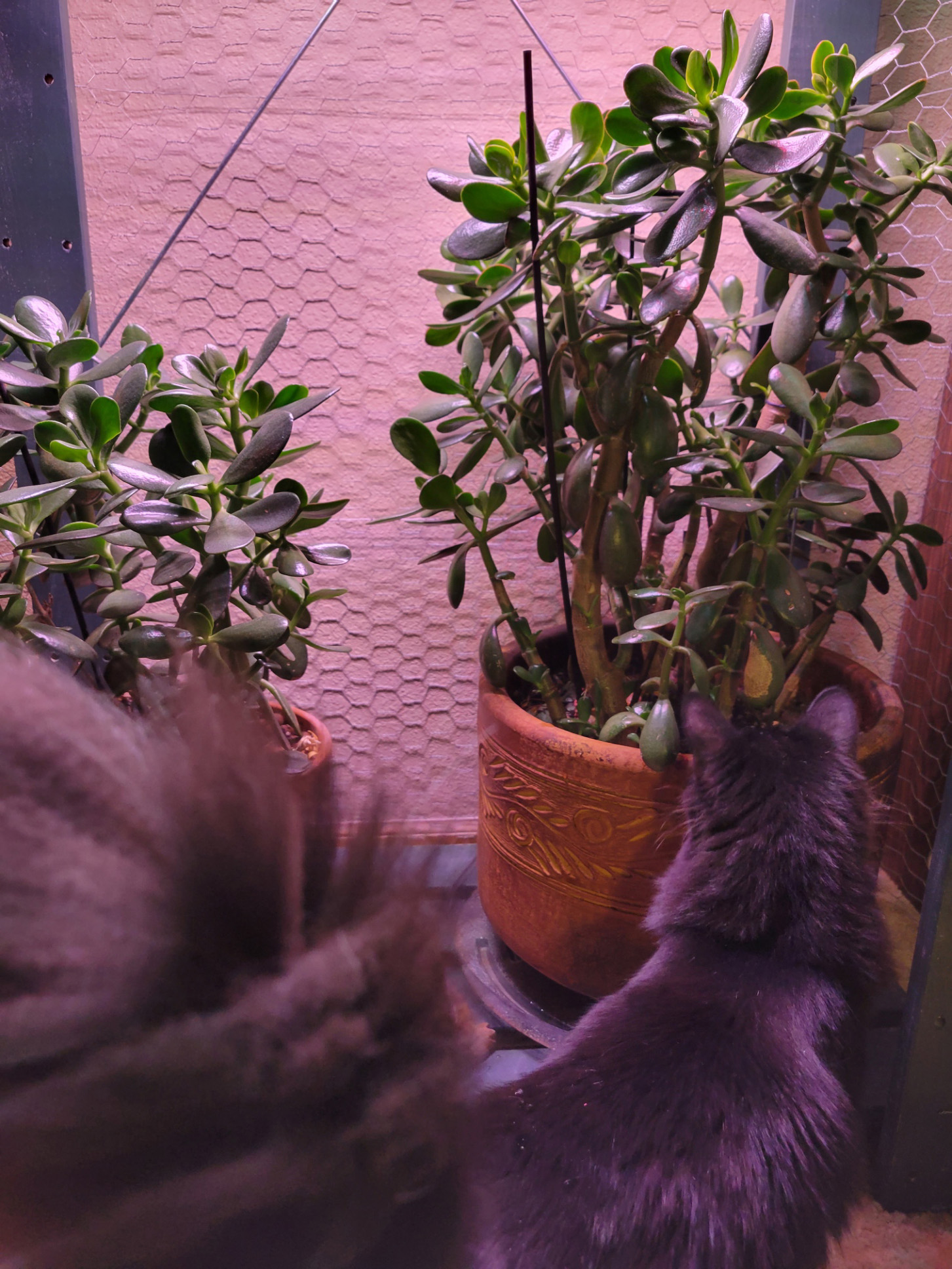
Since it is the end of the year I’ve been kind of thinking over how things have been going. You know, kind of like that “How it started; How it’s going.” meme that seems to be popping up everywhere. Let me present to you now my jade plants.

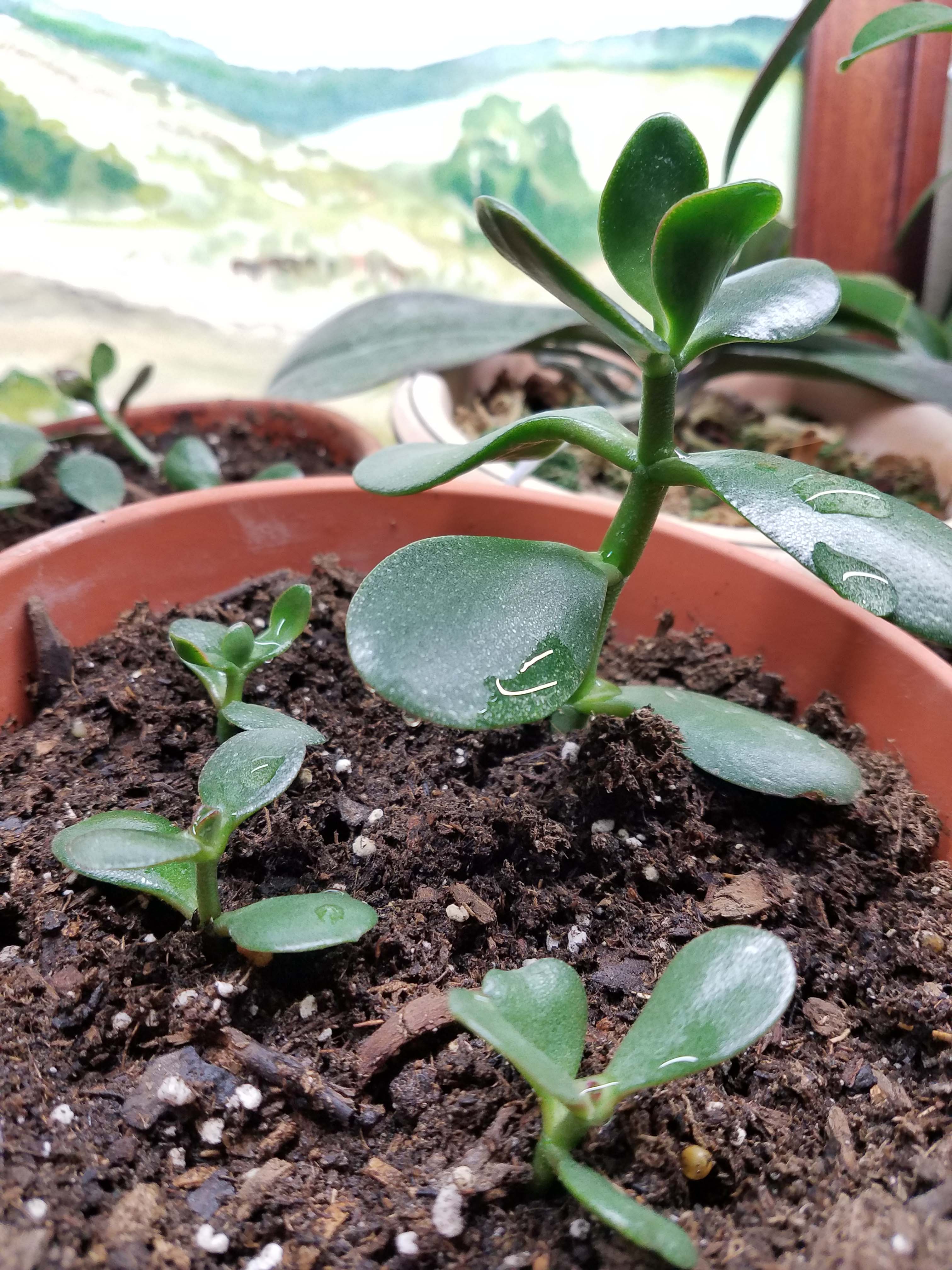
That’s three years of growth on those jade plants and I do hope that someday they will bloom for me. Look at how well cared for they are!! Everything a jade needs plus the attention of cats.

Cats

It’s been a big year for the two cats. Little 3 months old Mateo (AKA the CoalBear) arrived in June to a desperately in-need-of-a-playmate Hannah.

Watching these two over the last 7 months has been a riot. At times I think it was a little much for Hannah (Mateo would not leave her tail alone!) but now, at the end of the year, they have finally settled down and are sleeping together: best buds and playmates.

That’s it. Have a great week everyone!

Read a little, knit a little, and garden like your heart can’t live without it.

The Saturday Update: Weeks 49 and 50, 2021

December. I can hardly believe that we are at the tail end of the year already. The weather has been engaging in sneaky trickery for the last two weeks; crisp blue days with wind, wind, wind and almost no moisture. This week was so crazy that the weather warnings for the state were for hurricane force winds, fire, snow, avalanches, and good lord, who is in charge here? We have had serious weather fronts passing through leaving damage in their wake and very little moisture on my side of the mountains.

We finally got some measurable snow which brought an end to the long streak without snow in our part of the country.

The snow that arrived a week ago was only a flash in the pan: by noon it was gone and there hasn’t been anything since. Looks like we are in for a brownish holiday season. I am grateful, however, that we have been spared the horrible tornados, heartbreaking damage and loss of life brought by these systems in other parts of the nation.

Inside the house, however, it is starting to look like Christmas!!

Last year I put up very few decorations at Christmas time because… kitten. This year I have decided to surrender to foolishness and put up most of the decorations in a careful, kitten-proofed manner. I only put plastic ornaments on the tree. The tree, usually on a little table to give it height, is on the floor. Banners and wreaths that go on the walls are far from kitten claws. The usual poinsettia and paperwhite narcissus are nowhere in sight. Wrapped presents? Don’t make me laugh… kittens love paper.

They are having a great time with the stuff that is out!

Knitting

There has been some holiday knitting going on, so it has to remain secret until after gifts are opened on the big day. I have been making a few more hats for the patients at Kaiser infusion centers in my area, but who wants to look at those guys again? Let me please show off all of the progress that has been going on with my Kevat sweater (designed by Caitlin Hunter) over the last two weeks.

Ta-daa! Isn’t it looking good?!

They are hard to see, but there are bands of lace between and below the Fair Isle colorwork on the yoke of the sweater. That’s what’s going on between the ridges of garter stitch on the yoke… it is kind of cool and I like it. Once the stitches for the arms were separated the entire body of the sweater was designed to be knit in lace. I decided that I wanted a little sturdier and warmer sweater and knit a purl dot pattern that I like from previously knit Caitlin Hunter design (Misurina) and I’m pretty happy with the slight texture it brings to the body of the sweater and how it helps break up the color in the variegated yarn. Win, total win!!

Okay, now for the ugly parts of this sweater story. I made a mistake following the charts for the lace and colorwork parts of the yoke and ended up with almost 50 TOO MANY STITCHES on the needle. This is what happens when you are too stubborn to move the stitches onto a longer needle when things get kind of cramped (it was only a few rounds before the sleeves were separated from the body of the sweater) and you are struggling with a small chart (which I could have easily enlarged…) and it is late at night. I had to put the sweater into time out for the entire weekend and then moved stitches to a longer needle to facilitate tinking back almost 6 rounds of work. I also had to recover some dropped stitches… did I mention that I had already separated the sleeves from the body when the ugly reality of my stitch count hit me…

Doesn’t it all look great now?!

This sweater is supposed to be cropped. I need to put the stitches onto a holder soon so I can try it on for fit and to decide how much longer to knit the body. Did I mention that I never do a swatch? Reckless is my middle name… Anyway, that moment when I try on the sweater is a huge milestone for me. 🙂

Should I add a bit of lace to the bottom of the sweater after the ribbing? I’m thinking of doing the ribbing, binding off in I-cord, and then picking up the stitches to knit the lace bottom to mirror the lace in the yoke.

Garden

It is a boring time in the garden. I hate to even talk about it. The snapdragons and some of the other bedding plants are still hanging on in the front gardens where they are peeking out in the gaps between the dried leaves that I heaped on them to bed them down for winter. This is kind of crazy. I don’t know if I should water them or encourage them to go to sleep by heaping on more leaves and mulch.

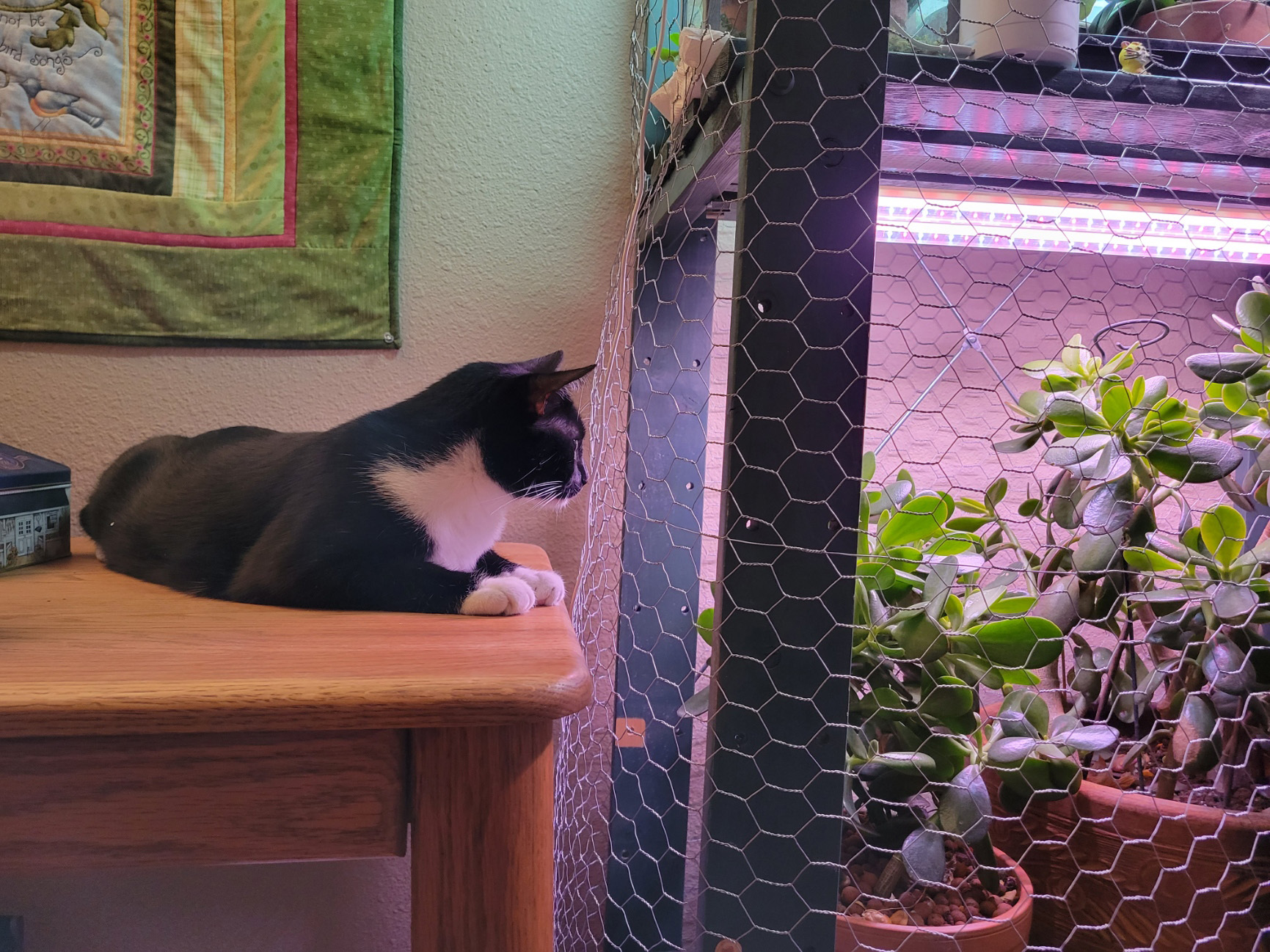
Inside the house the indoor garden is also a little boring. My jade plants are… huge, green and boring. They are still caged in with chicken wire to protect them from the kittens (and vice versa) and so far the kittens are leaving them alone. The orchids are also green and kind of boring. The plants are all sporting new roots and three of my 5 plants from last year are putting out shoots to bloom. That’s pretty good, but still a little boring as I am weeks and months away from blooms.

In the kitchen my hanging bougainvillea is blooming again and covered in new growth.

I wasn’t sure if the bougainvillea would survive over the winter in the house but it is doing much better than I expected. Yay!

Books

Yep. I’m reading another science fiction book that matches my knitting. Space opera is just what a frustrated knitter needs while recovering from a knitting disaster.

That’s it. Have a great week everyone!

Read a little, knit a little, and garden like your heart can’t live without it.

May you all have a wonderful holiday season.

The Saturday Update: Weeks 45 and 46, 2021

It is finally getting cold, but there still haven’t been any official snowfall in our area. As of today we have set the record for the longest recorded gap in snowfall in modern recorded weather history for the state of Colorado. I have moved all the potted plants outside again and all indications are they will still be healthy and blooming on Thanksgiving. Okay, there was a little issue with the potted geraniums that I brought into the house a couple of weeks ago… I found a caterpillar on a geranium cutting in the indoor garden!

That dang caterpillar appeared on a shoot I was rooting… it had already finished off the African violets in the garden.

The cutting had rooted successfully, but with that caterpillar it was immediately tossed outside with the remains of the violets and all of the other geraniums that had come indoors for the winter. Poor geraniums. In a few days they should succumb to an overnight freeze. Life is cruel, little guys.

Yarn

I am still knitting like crazy for Frayed Knots, the community knitting group comprised mostly of Kaiser employees in my area. Last week one of the infusion centers that we knit for requested that we supply them with some PICC line covers, so I did a little search on Ravelry, found a pattern, and started knitting some of the covers along with the hats.

This week I produced 6 hats and 3 of the PICC line covers.

I have settled on a few hat patterns that are easy and should be comfortable for chemo patients. They are Barley Light, Barley, and the Sockhead patterns. The pattern for the PICC line cover, designed for one in the upper arm, is here. I am so happy to be putting the leftover and unused yarn in my stash to a good use.

Garden

Well, the garden sure took a hit this week. The African violets are toast and you already know about the geraniums. I am happy to report that the orchids, however, evidently weren’t all that tasty for the caterpillar as they seem to be unharmed.

These gorgeous bloomers are the plants that I bought this fall. Inside the garden, under the grow lights, the plants that bloomed last year are flourishing with lots of new growth, an explosion of air roots, and new stems for blooms are emerging!

The green shoot pointing upwards is a new stem for blooms. Yay!! The silvery new growths on the leaves below are a couple of new air roots. Yay! Happy plant.

A couple of other orchids are also putting out stems; one plant has three new stems on it. What is that liquid on the orchid, you ask? I sprayed Neem oil on all the plants left in the garden after the caterpillar was escorted out the door…

Books

I’m back to reading science fiction. The main character in the book I’m reading right now is a sentient space ship called Trouble Dog and of course the captain of this ship is a woman facing down the monsters in the dark of space. I just finished the first book in the series called Embers of War and I’m hooked. Luckily I get the audiobook for no additional cost so I can listen to the books at times while I’m knitting away on the hats and PICC line covers. I have to laugh a little as I knit and listen to Trouble Dog’s tale as I manage my yarn around my own little Trouble Cat…

Who, me?

That’s it. Have a great week everyone!

Read a little, knit a little, and garden like your heart can’t live without it.