

It’s been a kind of slow summer because… tendonitis… but I am getting a lot of reading done. I had moved some books into the craft room with the intention of reading them *someday soon*, and then just like that, this became the summer of nonfiction, disease book reading. Hey, I’m a BioGeek, and these books are actually pretty interesting. I had some idea of organizing the books into an order that made sense, but the topics kept overlapping so much I am just going to dive in and start talking about what I’ve been reading about and how it connects to me. Should I talk about the books from my days in the classroom? The book that made me start hoarding essentials in case of a pandemic? The book that made me aware of ebola? Hmmm… Let’s start out with the one that has a lot of personal connections to me and my family…
It’s August 14th, 1945. My mom had just arrived in New York City from Argentina, returning to the United States to visit her sister, a member of the Women’s Army Corps in Washington, D.C. I’m guessing that NYC was in an uproar that day, as it was the exact date of the end of World War Two here in the US, being Victory over Japan Day. For my mother, however, it was also the start of her involvement in another type of war.
Halfway across the nation, an epidemic of polio had broken out in the state of Illinois. There was a national call for nurses, and the American Red Cross contacted my mom, asking her if she could go. Here is the chart showing the dates of newly diagnosed cases in city of Rockford and Winnebago County, Illinois that year.


It was a big outbreak, and mom was one of many, many nurses and other health professionals who answered the call. Just like that, polio became part of the story of my family. My mother met my father when she was sent by the Red Cross to another potential polio outbreak in Albuquerque, New Mexico; he was a patient recovering from his service in North Africa when she met him there. The polio outbreak didn’t amount to much, but the romance did. 🙂 One of my first memories was getting a polio vaccine. I remember collecting dimes in a cardboard folder as a participant in the March of Dimes. I once was smuggled into the hospital by my mom, clutching an ornry yellow cat named Henry, to show him off to a woman in an iron lung; she had been in that iron lung for years and my mom had been sharing tales of Henry’s misadventures with her. Some of my classmates had had polio, and I knew people who wore leg braces. Much of my childhood was colored by polio. In my mind, polio was a terrifying, ever present disease that had gripped the USA.

I read Polio: An American Story a few weeks ago, thinking that it would enrich my understandings of the polio time that I had lived through. Boy, did it ever! There was so much that I didn’t understand about polio. It was an illness that emerged as outbreaks in communities with modern plumbing and higher levels of sanitation. The common understanding came to be that polio was a virus that was common in poor sanitary conditions, and most people exposed early developed immunity without significant illness. I did not see that coming! It was also not the most dangerous or significant disease in the US at that time, but it was one that felt terrifying. The president, Franklin D. Roosevelt, was a polio survivor. The fundraising campaign to find a cure for polio, a vaccine to prevent illness, was boosted by this president and the national spotlight that he brought to these efforts. A private organization, the National Foundation for Infantile Paralysis, provided for the care and rehab of polios and funded the development of the polio vaccines. The organization later became known as the March of Dimes: the very entity that I once collected dimes for. The vaccine trials used children, 2 million of them, as guinea pigs (!), and there was significant conflict between the two major researchers who used different approaches: Jonas Salk and Albert Sabin, and the battle became political. As vaccine production ramped up, lessons were learned about product control. In many ways, the national drive that existed during WWII was continued in the drive to conquer polio. The first vaccine, developed by Salk, was announced in March of 1953 to national celebration.
This book was really engaging, and I leaned so much. Imagine a private organization that takes over to provide for your care when you are diagnosed with a disabling disease! Who knew that the battle of the vaccines was so intense, and the process to verify efficacy so convoluted. Some of this applies to our situation today as people here in the US are questioning the efficacy of vaccines and the validity of the development process. Some of that is grounded in the long, checked history of polio vaccines. That first vaccine I remember was the Salk vaccine developed from inactivated viruses. Years later a live virus version of the vaccine, the Sabin vaccine, became more widely used, but today the Salk vaccine is once again used. Here in the USA, it is easy to think that polio is a disease of the past, but it lives on in other areas in the world.
So, what was next on my BioGeek reading list? Tuberculosis!!! Stay tuned…
Notes:
- It was hugely ironic that my mom arrived back in the US on the very day the war with Japan ended. Years before, while her parents were attempting to enroll her in nursing school, her sister, waiting in the car, heard the first report of the bombing of Pearl Harbor on the radio; America’s entry into WWII was immediately afterwards.
- The fundraising and research drives of many organizations connected to disease prevention, treatments, and cures are modeled on the success of the polio campaign. I hear the echos over the decades now with every email from the National Scleroderma Foundation.
- Oh, how is my scleroderma doing these days? Tendonitis continues, but my latest visit with my cardiologist went well: my pulmonary arterial hypertension is stable, and my heart is doing okay. The EKG isn’t completely normal, but I’ll take it, right?!! He wants to add another drug or two, but we are delaying for now as I’m already taking a LOT of medications.
- Last week was the anniversary of day my doctor ordered the blood tests that led to my diagnosis of Sjogren’s Disease and Limited Systemic Sclerosis.
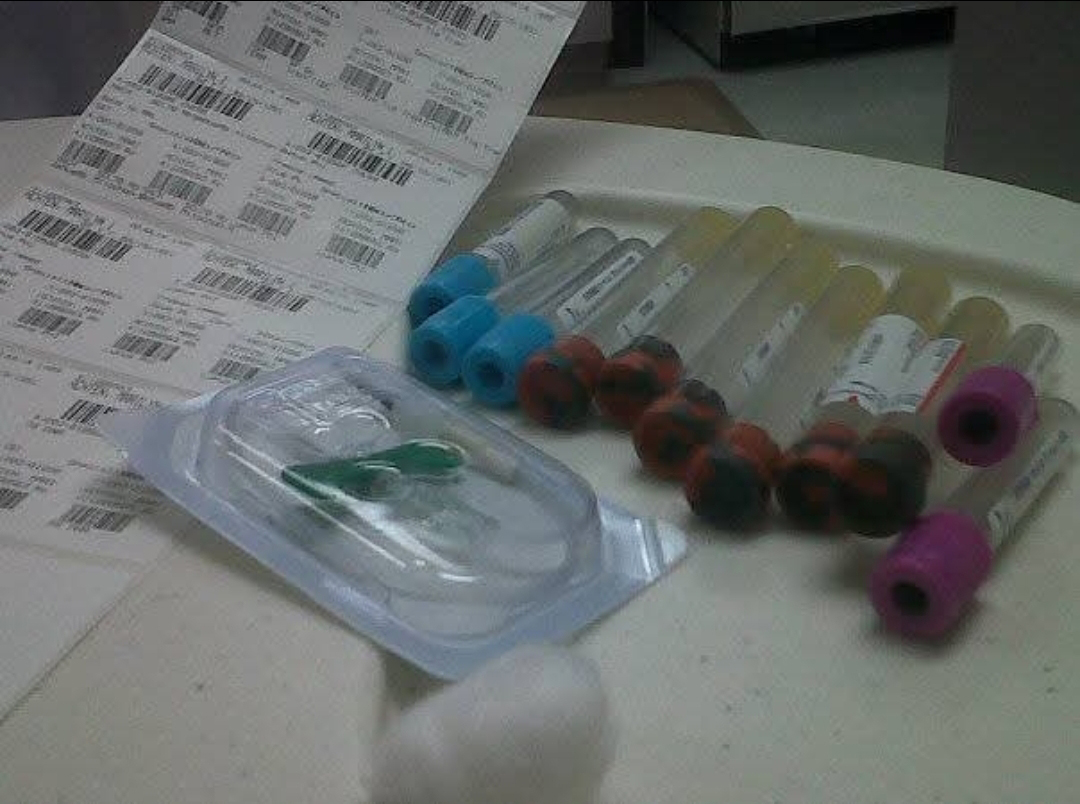

That was 22 tests in 14 vials of blood. Today I take 22 pills a day. Kind of ironic, right? Do I consider yarn to be part of my essential treatment? Why yes, yes I do!

 Yarn, Books & Roses
Of course you do – you’re the Midnight Knitter !!!! 😀
Had no idea of your family medical background, Marilyn – fascinating stuff. No wonder your brain functions as it does (and always has).
I’m so glad you posted another blog. Very interesting info about your family. I’m glad your medical report was encouraging. Do you have any interesting tales to tell about your childhood cat, Henry? How did the lady in the iron lung like the visit from him? I hope she wasn’t allergic to cat dander. As for yarn being part of your medical treatment, please bear in mind that it’s a Schedule I drug, known to be habit-forming to the point of addiction (said with a straight face). So far, the cartels haven’t cashed in on this….yet.
Henry beat up the dog and peed in the laundry basket! He really was a handful, and we loved him tremendously. I’m amazed now that I was able to carry him in my arms into the hospital and escaped with my life.
I quite frankly was so rattled by the lady in the iron lung that I can’t remember what we talked about. The cat was squirming in my arms, and I could only see the lady by looking at her in the mirror placed above her head at the top of the iron lung. It was pretty horrifying, and I will never forget the experience.
A Schedule I drug! That explains a lot!!
I have vague memories of those early polio days (I was born 1943). Pictures of people in iron lungs, the fear. My napping on a cot in the backyard, out in the fresh air and sunshine. My dad was a doctor (ob-gyn) and I’m sure he kept up with all the latest medical news. I don’t recall getting that early vaccine, but I’m sure my dad saw to it that all of us did (I have 4 siblings).
Sounds like your doctors were trying to bleed you dry before they ever got to a diagnosis!
I clearly remember getting that vaccine on a sugar cube! It was dispensed at the high school, and the line wound around the building. Just amazing.
All those tests were the complete rheumatology panel. I’m so grateful that my doctor went whole hog on the order. Out of all of that, only three tests came back positive, but it was pretty shocking since I was expecting lupus.
A fascinating and highly original approach to book reviews. Thanks very much, Marilyn. I am also encouraged by your medical news
I’m was a science major and a biologist; I pretty much ignored most of the things that I learned in English class. 🙂
I knew the first part of this comment, but can’t recognise the second
My hometown of Cincinnati is highly linked to polio due to Sabin’s polio research here. Did you know the Mary Poppins song “a spoonful of sugar helps the medicine go down” is due to Sabin’s oral polio vaccine was dispensed on a sugar cube?
You are right!! Sabin put Cincinnati on the map in the science world with his research there. I didn’t know that about the Mary Poppins song, but I do remember the sugar cube vaccine.
That sounds like a really interesting book! I am adding it to my TBR list. And how interesting that your family’s story is intwined in the story of polio in America! So glad your health is holding somewhat steady and you have such a good care team now 🙂
Have you put out another blog and I missed it? I hope you and the kitties are maintaining well.
I have been struggling and I’m not sure if I will be able to return to the blog anytime soon. I tried to contact some people privately to let them know what happened: my son died, I had a bad accident, and then I caught covid. Eventually I will get through this, but it is going to take me a while.
Oh, Marilyn. How bitterly awful to have to deal with a whole plateful of loss and pain, PLUS covid! That virus seems to be the gift that keeps on giving, but not in a good way.
Although I do live with the ache of a child who decided to erase me from her life nearly twenty years ago, she’s still alive. I can’t even begin to fathom what you’re going through with the abrupt loss of your son.
How can we who appreciate you for your perseverance and all your other wonderful qualities help to support you?
Thank you, Bea. I have been getting lots of support from the other members of my scleroderma support group, my community knitting group, and of course, my family. I literally don’t know how to go about blogging about such a horrific loss, and I feel like I can’t blog until I acknowledge the hole in my life. He died exactly 6 weeks after my sister’s death, and the absence of both of them is kind of overwhelming.
What an interesting family history! How cool that your mom was on the front lines helping in the polio fight! You are definitely steeped in science.
I was raised on it!!