
I’ve been thinking about resilience today after this graphic showed up on my Facebook feed.
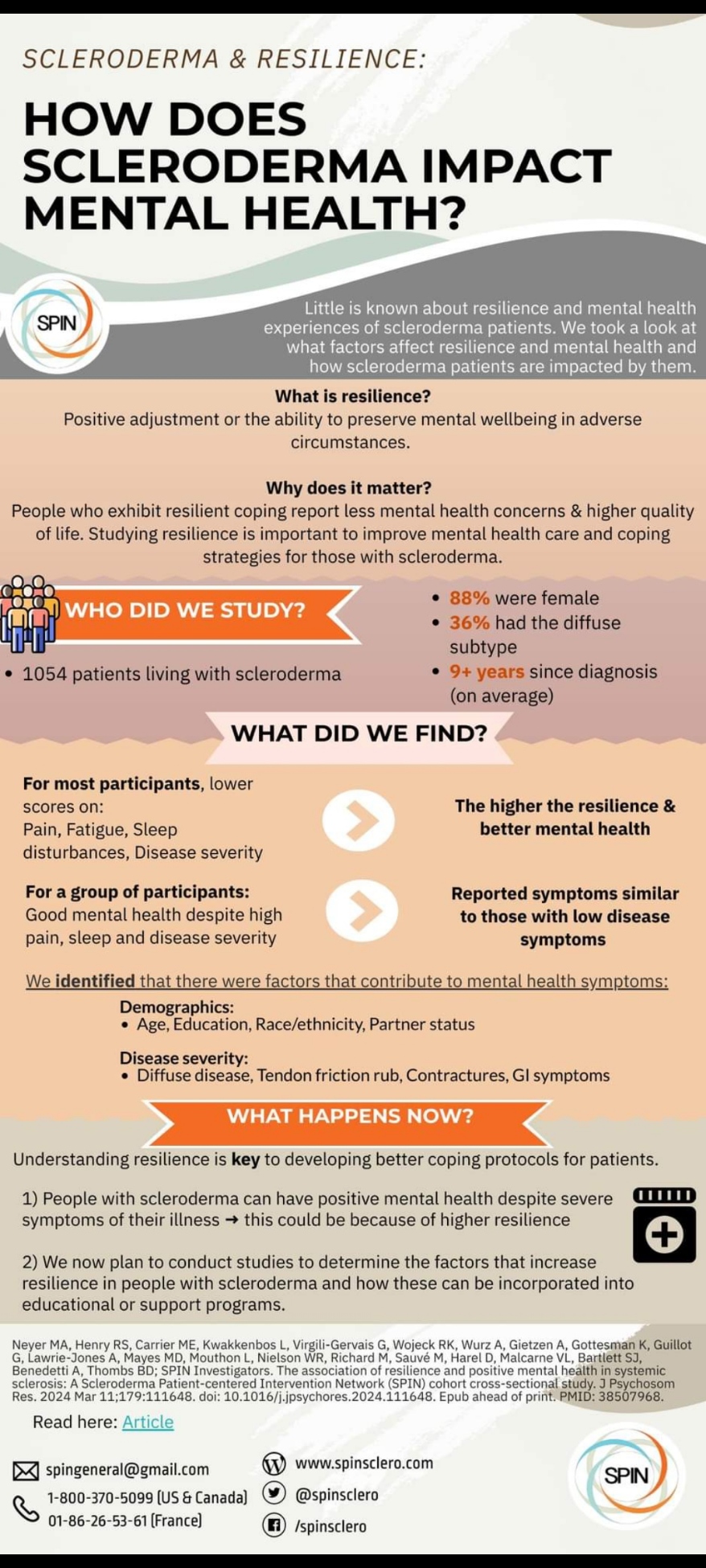
I’m pretty sure that I was one of the patients in this study. Certainly, I was a participant in a SPIN clinical research study during which I filled out lots of questionnaires about my illness. The focus of the project that I was enrolled in was to see if online educational videos about scleroderma, possible interventions to help with the progression of symptoms, and information about resources could help patients in how they coped. I was tracked for over a year to see how I was doing. How was my pain? How was my sleep? Was I depressed? How severe was my disease, and how did I feel about that? Did I have issues with anxiety? What were my scleroderma-associated complications?
Not surprisingly, the study referenced in the graphic found that they could break patients into 4 groups based on the severity of their disease (Low -> Very High). They found, for the most part, as patients dealt with an increasing disease burden, they coped less well and struggled with depression and anxiety more.
Except for one group of outliers. They had a pretty significant disease burden, but they were not depressed and didn’t struggle with anxiety. They kept rolling with the punches and finding ways to flourish even within the eye of the storm, securing for themselves a better quality of life than others facing the same challenges. I’m pretty sure that I am one of the people in this group of outliers. I remember that I reported that I was having lots of trouble with pain and sleep disruption, but no depression; my current battery of scleroderma-associated complications should put me into the High disease group. Here is a paper where the researchers further investigated the association between disease burden and mental health and resiliency.

So, the big question that the researchers are now pursuing is what determines resiliency, and how can these essential coping skills be conferred to other systemic sclerosis patients through training and support.
So, what is resiliency? That was the big question of the day for me as I worked out front weeding a garden. Working outside is now hard for me, but I dragged out a little chair to sit on, put my tools into a crate that was easy to push, and I slowly worked my way along the front walk cleaning up my garden and pulling out weeds. I had to take breaks to pant from time to time, but by the time I was done the gardens looked great! The weather was perfect, there were lots of birds, and one of my neighbors had music playing while he worked in his garage. After a little break on the catio with the cats (coffee and a lemon bar time!!), I strapped on my portable oxygen concentrator and mowed the front lawn. I’ve had a hard week, and I struggled to get myself outside to work in the yard, but by the end of all of this I felt much better. You might even say I felt happy.

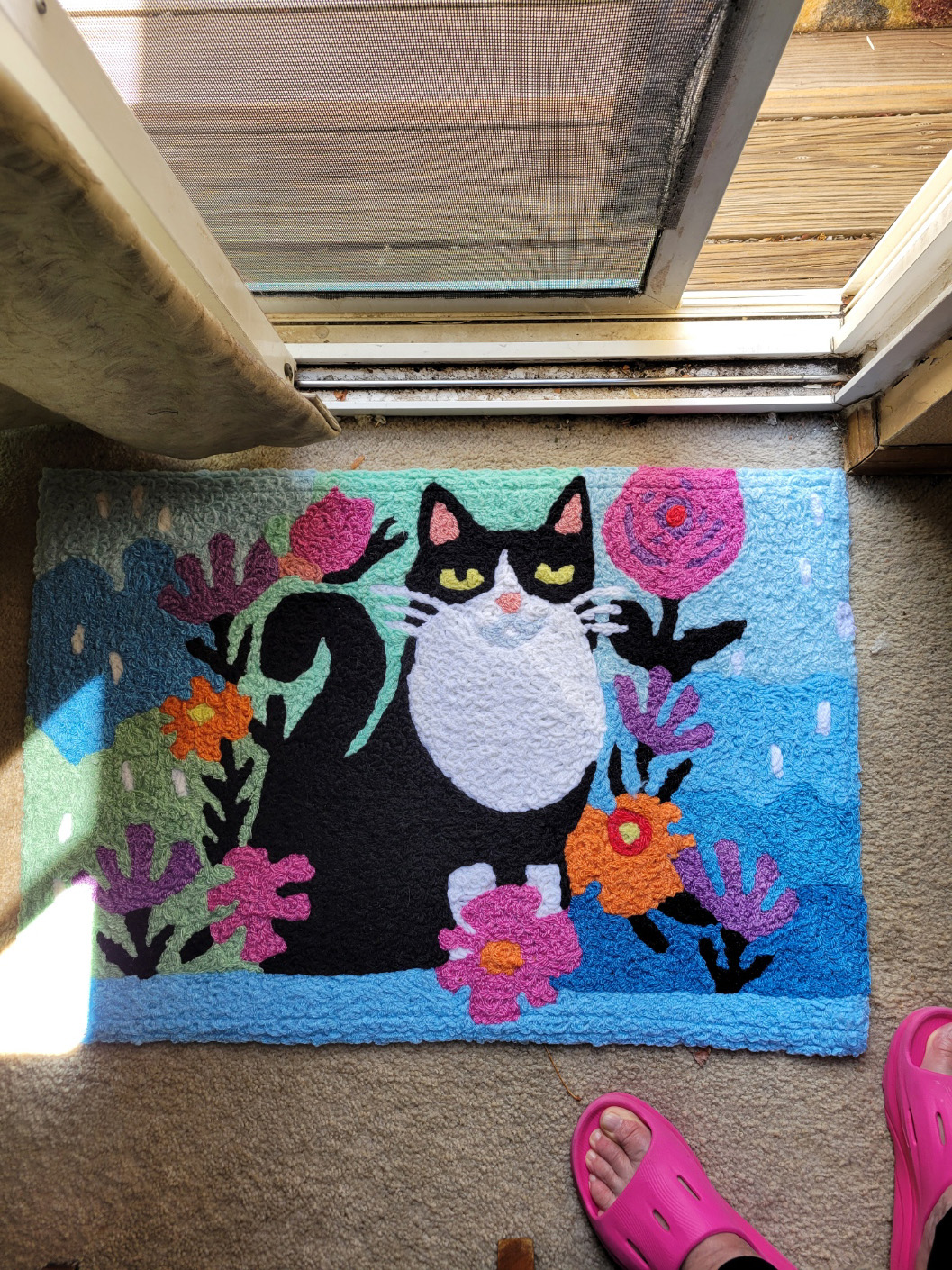
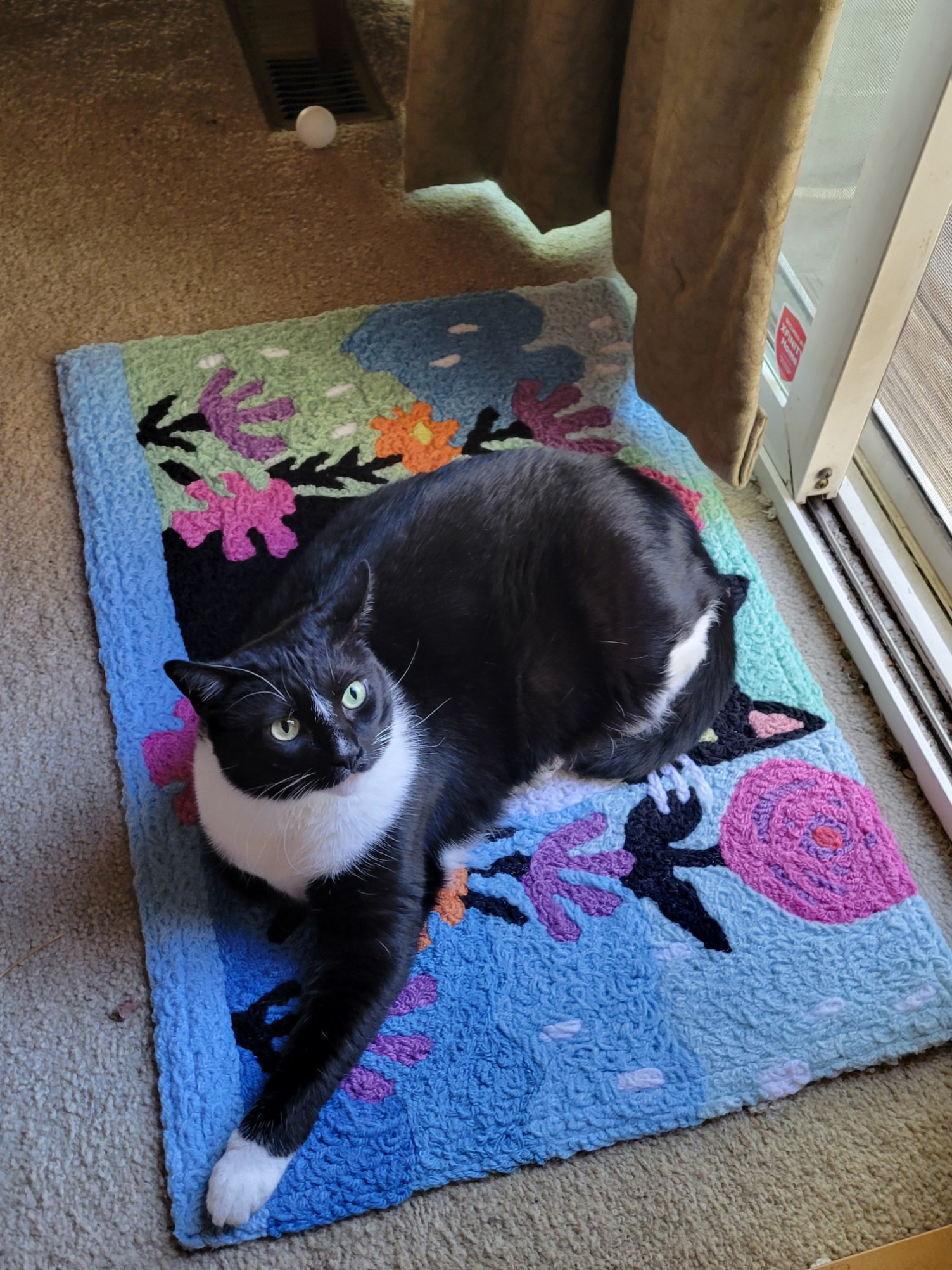
Look at how nice the front pot of flowers is looking! I bought a new rug to put by the door onto the catio, Amazon delivered it today, and Hannah moved right in. Yay! Take that scleroderma!! I win the day!! I am happy!!!!
So, what is resiliency? I’m still stuck on that question. I’m pretty sure that it is a state of mind that allows people to focus on what can be done instead of what has been lost. Resiliency allows people to embrace their changing circumstances and effortlessly employ life hacks to get things done while acknowledging that other things are now too much. It must have to do with an ability to name the monsters, stuff them into a box, and put them on a shelf (in the back of the yarn stash) while activating self-advocacy. It must require faith that you will be able to cope with scary things when they come, while still recognizing that you are in a difficult situation. It must require support and resources. I think it has to be an internalized quality: resiliency gives you the self-confidence and self-worth that’s necessary to face down medical authorities and to ask for demand help and answers.
I look forward to what these researchers find as they continue looking at the phenomenon of the outliers: patients dealing with a severely debilitating and isolating rare disease with grace.
I kind of think that they will discover that these people have engaging interests that allow them to have a sense of accomplishment and purpose. I bet that they find that they have pets and people that they love. I bet that they produce something of beauty in their lives. I am almost certain that they will find that the outliers have found ways to communicate in a positive manner with others about the challenges of life with a progressive, and often fatal disease.

Why am I resilient? I have cats. I have yarn. I have curiosity and lots of resources to chase it. I have purpose as I produce donated items for others in difficult situations. I have roses. I have people who love me, and I have people who read my little posts about coping with life on the down slope of systemic sclerosis.
Thank you for being part of my resiliency system.
 Yarn, Books & Roses