
Last summer my son and I made several trips to our favorite cat rescue shelter hunting for the right kitten. His wonderful Maine Coon cat had died and his remaining cat, the MONSTER of Hannah’s nightmares, was sad. Obviously, he needed a kitten!
One Caturday in July, we pulled up to discover that the butterfly garden planted in front of the rescue shelter was in full bloom. The most stunning flowers on display were the milkweed.

Wow, I thought, milkweed! I almost never see it blooming like this; I’m always late to the party and come across it once it has gone to seed. This was pretty amazing, and there was a lot of it. I stayed outside to take pictures while my son went into the shelter to hunt for a kitten. No kitten this day, but I did get great pictures.
Over the years I’ve been steadily adding flowers to my yard that are good for butterflies.


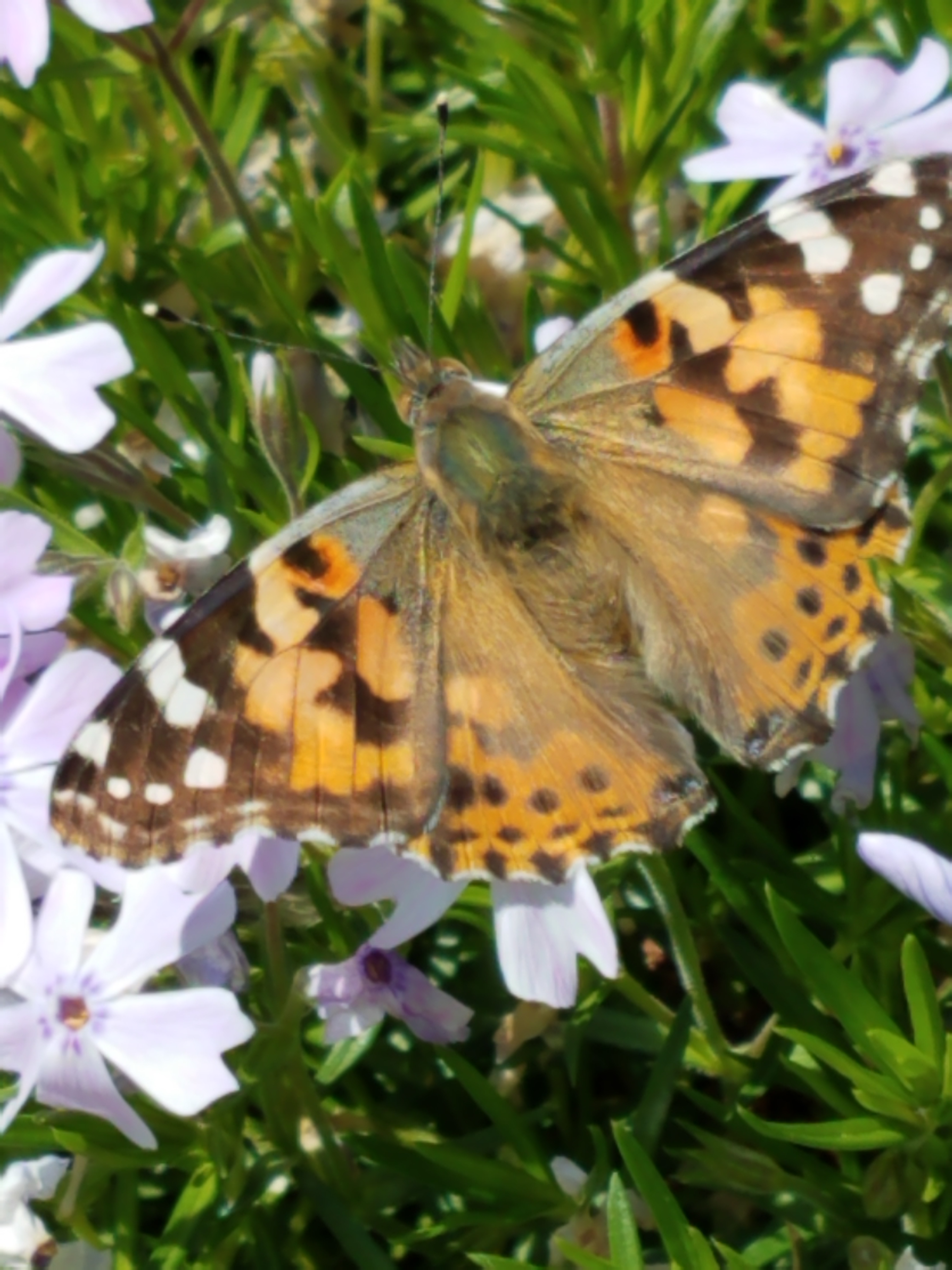


The butterflies in the pictures above are painted ladies and a swallowtail. Butterflies need flowers that are large enough to support their weight and have nectar conveniently available. Milkweed certainly fits that bill, and it is especially important since it is the major food source for the monarch butterfly. Monarchs are the butterflies of my childhood in Southern California, and they have recently been placed on the endangered list. Why are they struggling? Habitat loss, insecticides, a dwindling food supply…
Food supply! Milkweeds are food for monarch butterflies. I was pretty excited to see some more milkweed growing along the road in a field near my house. (Yes, I look for stuff like that. I am a BioGeek. I’m still on the lookout for some nice teasel, but that is another post…)

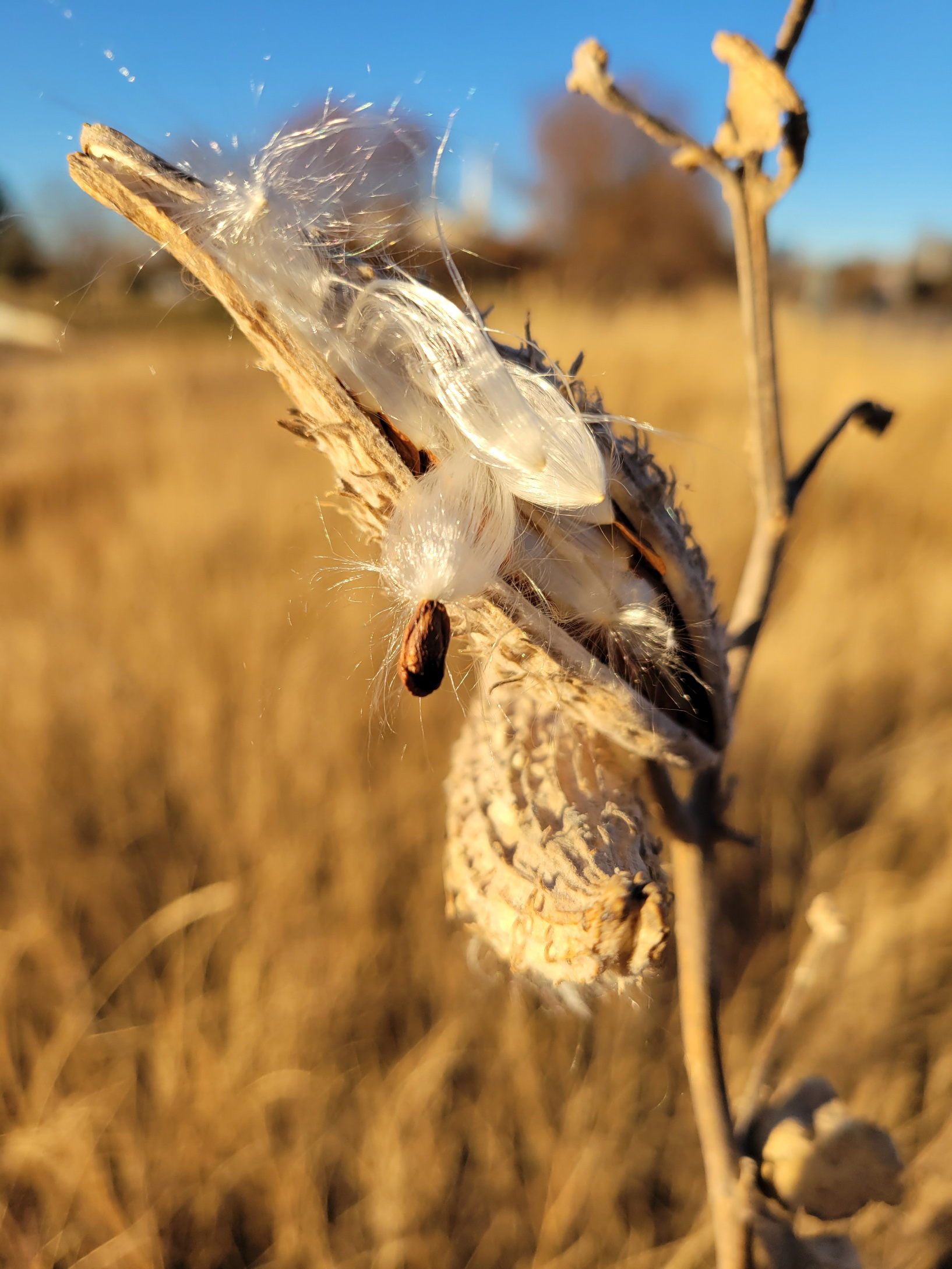
The picture on the left is of the remaining pods after the flowers were done blooming, and the one on the right is a few weeks later, the pods burst open and the seeds getting ready to fly on the wind like a dandelion to a new location. Cool, right. With luck some of these seeds will find a great place to live and more milkweed will appear in this field over the next few years.
Do monarch butterflies come through Colorado where I live? Why yes, yes they do!! They migrate right through the state in early fall and evidently you can see them in the Denver area. In my yard? Not so much right now. To the east of where I live, Monarch Watch tags and tracks monarch butterflies through their migration and has implemented programs to provide food for the monarchs along the way. Imagine thousands of plots of planted milkweed and other nectar plants put out just for these butterflies and you get the picture. Eventually this field near my house could be one of the stops along the way for these migrating butterflies.
Rosalynn Carter, the former first lady of the United States, died two weeks ago and her memorial service was last Wednesday. It was hard to keep the tears out of my eyes as the people who knew and loved her shared their memories. Recipes that featured mayonnaise. Twenty-dollar bills included in birthday cards. Her strawberry cake recipe. Her love for monarch butterflies. Monarch butterflies!
That’s right. Rosalynn Carter was a driving force for the establishment of butterfly gardens. She made saving the monarch butterfly her personal mission towards the end of her life. There is a Rosalynn Carter Butterfly Trail, and here is where you can register your own butterfly garden. You should have milkweed in that garden, by the way!
Someday I will perhaps find a monarch butterfly in my own yard, because you know some of those milkweed seeds found their way home with me this fall. I’m planting them in the sun where they can hang out with the yarrow, the coneflowers, and the butterfly bush.
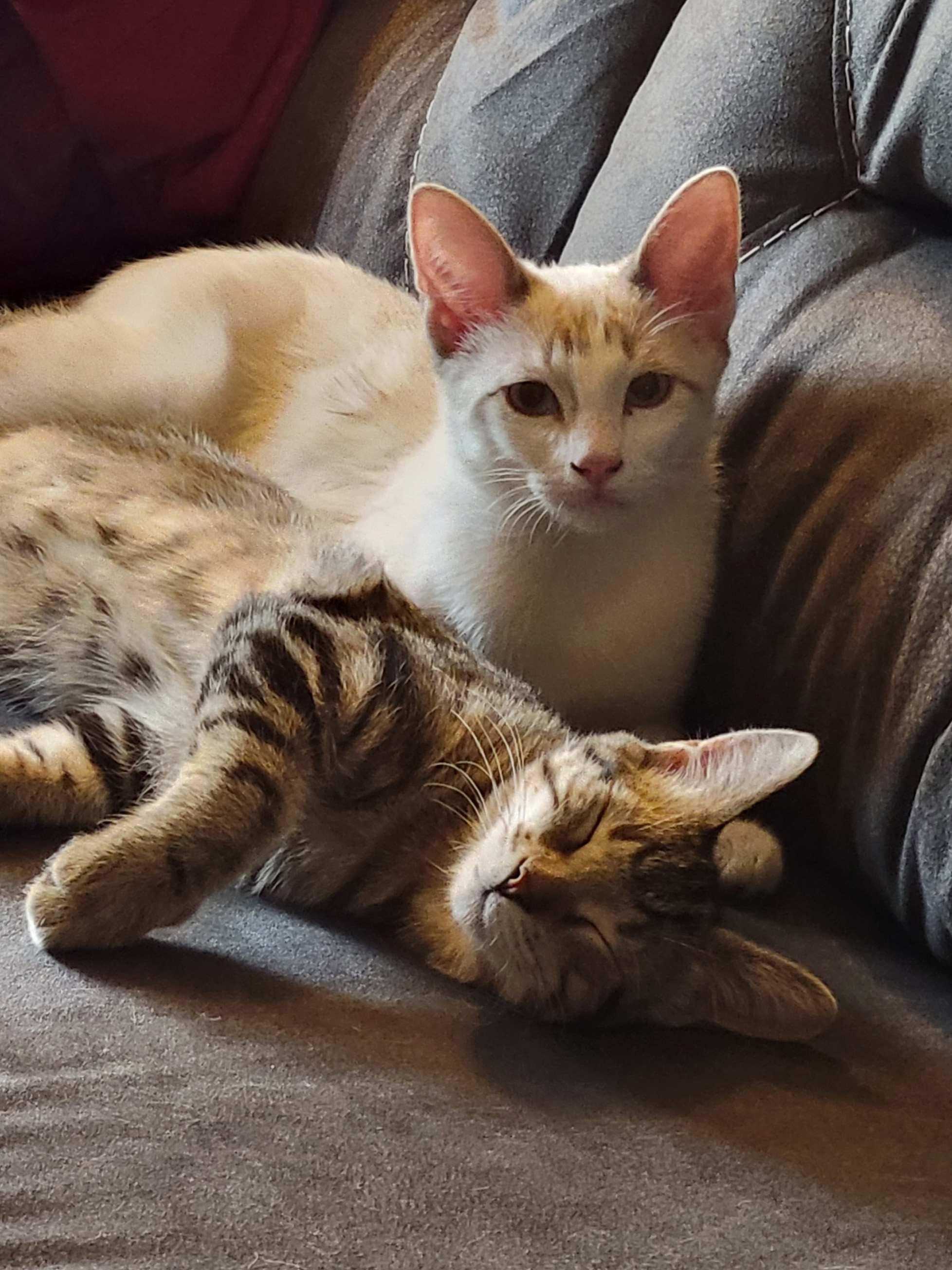
Oh, did you forget about the kittens? My son eventually found the two most perfect kittens in the world and his cat Jonesy MONSTER is a very happy boy again.
Update: Knit One, Spin Too just let me know about a new book about milkweed that came out in September called The Milkweed Lands. Who knew there was so much to milkweeds? I just ordered a copy. 🙂


 Yarn, Books & Roses
A good, informative, post. We have had far fewer butterflies in our garden this year. Our small whites were the most prolific. I don’t know if you have verbena bonariensis, but the butterflies like those, I’m pleased he kittens were so good.
I’ve never seen it before, but I’ll get some if it ever hits my local garden center.
Butterfly gardens are wonderful !! – best of luck with all your butterfly-attracting flowers – especially the milkweed, of course, Marilyn ! 🙂 I didn’t know about Rosalyn Carter’s involvement; what a super thing for her to have promoted.
The kittens are simply GORGEOUS ! Jonesy will be one happy big moggy. 🙂
She was just amazing; they both promoted meaningful causes. Jonesy is so happy now the change is kind of amazing. They sleep with him and he actually smiles in his sleep!
That is so very sweet. 🙂
I never thought about a flower having to be large enough to support a butterfly! The world will be a sadder place if we lose butterflies, and I really miss the monarchs that were so common in my childhood.
They were always my favorite butterfly when I was little, too. Now that I’m aware of the need for larger flowers I’m doing the best I can in my garden.
One of the quilt blogs I follow, Susan Carlson from Maine, has left lots of milkweed in her garden for the purpose of attracting the Monarchs! I didn’t know about Rosalyn Carter’s devotion – totally cool!
It isn’t the nicest plant in the garden, but the blooms are certainly showy and BUTTERFLIES! The Carters certainly chose wonderful causes. The other huge Carter endeavor is the eradication of the guinea worm, and evidently that may happen.
What’s a guinea worm? Never heard of it! Maybe that’s a future BioGeek blog?
It’s a horrible parasitic worm in Africa. Not something that I (the BioGeek) have any personal contact with, but Jimmy Carter hopes to outlive the last guinea worm, and he might make it!
I always enjoy Hannah’s Caturday musings and absolutely delighted your son found TWO new companions. You might enjoy Eric Lee-Mader’s book The Milkweed Lands. It’s an in-depth dive into milkweed and beautifully illustrated with watercolor drawings. I reviewed it in September as an advance copy but I believe it’s out now in print and electronic form. When we lived in Vermont, we had oodles of it along our driveway but it doesn’t grow very well out here in NM as it’s pretty dry.
I will absolutely check that book out! I don’t think that it grows all that well in Colorado, either. I think that it needs the water in ditches and wetlands to make it. I was shocked to see a plant so close to my house.
I just found the book at Amazon. It looks great! I just ordered a copy, and I’ll put a link onto the post. Thanks!
We have a lot of milkweed in the yard and the butterflies go crazy!
The kittens are precious.
Wow. I hope my little seeds get going and bring me more butterflies! The kitties are just the best ever and my son is glad that he got both of them to be companions to Jonesy.
If your plants act like mine, the moment the pods burst the seeds go everywhere!!
I know. I was amazed that I was able to get a picture of a seed!
What a happy ending to your kitty story. Lovely pictures, too. As for growing milkweed, no MONSTER in my butterfly garden. For me, breathing milkweed pollen from flowers = asthma. Because I can’t be sure generic honey wasn’t derived from milkweed flowers, I don’t eat it. All it took was one anaphylactic event from honey on pancakes. I hope your seeds come up next spring. Fortunately, those plants aren’t endemic to the little area where I live and breathe. Speaking of wildlife, have your neighborhood bunnies burrowed for the winter yet, as opposed to hibernating? The weather here went from a week of a few hours a day of sub-freezing to 65 degrees and balmy. Even the confused little apple tree on the lush sidewalk verge across the street is still loaded with green leaves, except for a dozen yellow ones shed during the cold snap…kinda like a woman in perimenopause gradually going a little gray and strands of hair falling out. Sheesh. This is TMI. I’m outta here.
Oh, no! What a terrible allergy to have! I think that the bunnies here stay prett,y active for most of the winter as I see their little tracks in the snow, but in extreme cold they must be sheltering in burrows. I’m pretty sure that is what’s going on under my deck. Our weather can be just crazy with extreme changes in temperatures, and almost all of the leaves are long gone. I laughed at your perimenopausal apple tree. My front roses were taken out in a hard freeze and they are covered in freeze-dried green leaves. What are they, do you think?
Goodluck with your freeze-dried roses. I’m not good at growing them, unless they’re hardy and don’t mind lack of attention. When living in Wisconsin, we always cut back each rose bush at the first freeze and covered the base with a small mountain of mulch. We then placed a thick, insulated cover over the skeletal rose branches, secured it in the mulch, and hoped the dog didn’t decide to dig around the roses and topple the covering before the ground completely froze it in place. Let us know next spring if your rose bushes made it through the winter.
My roses are also well mulched and should come back okay from the roots. So far I’ve only lost a few shrubs, and one of those was from bunny action…
Good that your roses should come back from the roots next spring. Can’t do anything about bunny action except hope that they prefer to eat their own excrement during the winter in lieu of woody bits, like your rose bushes. Kinda disgusting, but I’ve read that their poop is supposedly high in vitamin B, but don’t ask me which one.
Now I will never forget that..
Your butterfly plants are beautiful! I’m planning on adding pollinator and butterfly-friendly plants to my garden this coming year. I totally forgot about milkweed – it grew wild near the house I grew up in, and we had monarchs come through every year 🙂
I just looked up how to plant my seeds. They need to spend some time in the cold, so I am pulling them out in a moist covered pots now and plan to transplant them in the spring to the bed where I want them. I guess they need a fairly wet location to grow, which explains why they grow in ditches, I guess.
That is good to know!