
It has been months since I got sick with the Wannabe Covid and I’m still flirting with long-hauling. Ugh. My fibromyalgia symptoms seem to be better right now, but I’ve become anemic. Fabulous. No wonder I’m so exhausted! The BLZ (blue-lipped zebra) is running wild lately. I spend my nights listening to Murderbot audio books as I try to fall asleep, and lately I’ve been reading books in the daytime that feature… octopuses. Last week the two things, Murderbot and octopuses, began to overlap in my mind.
I guess I need to set the stage a little here. I’ve been interested in octopuses for some time now, and I’ve been reading science fiction books for most of my life. I’ve heard of octopuses who engaged in antics at the aquarium as they snuck out of their aquarium to catch (and eat) the fish in other tanks. There was a news story about a jail aquarium break by an octopus who returned to the ocean via a floor drain. I loved the octopuses in these books when I read them.
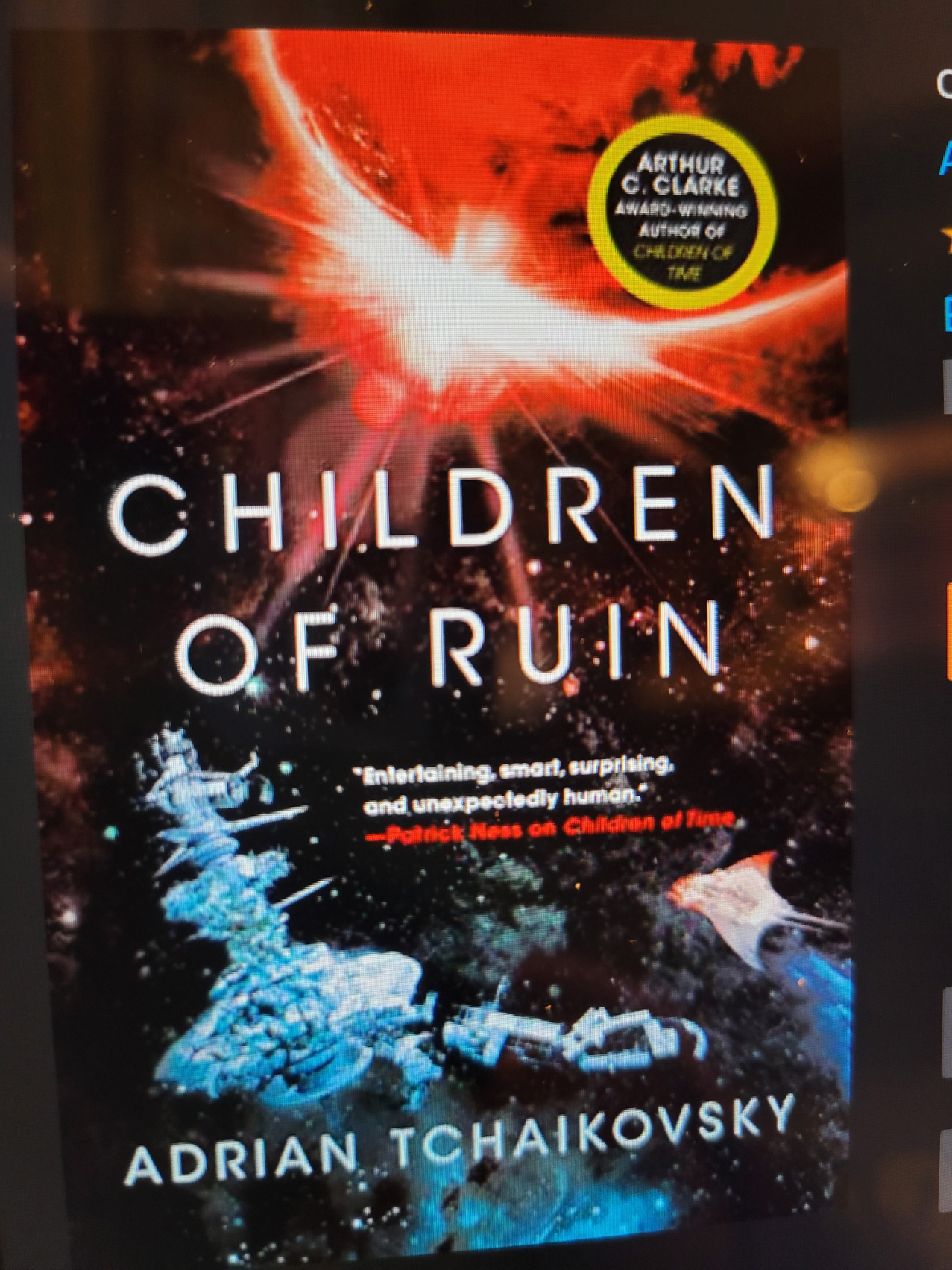

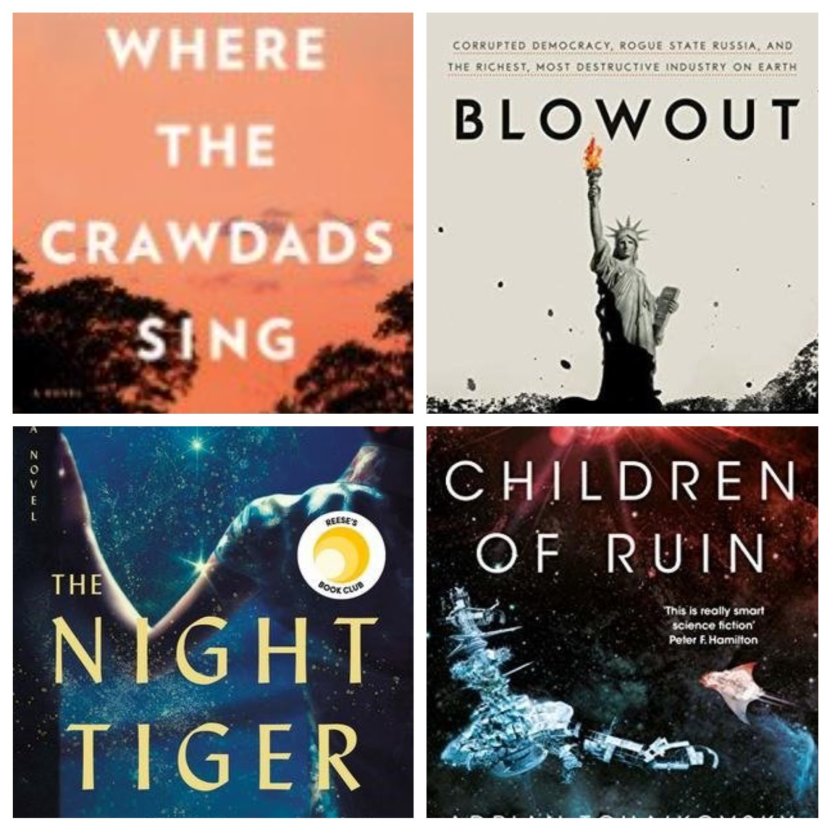
Children of Ruin was especially interesting to me because it raised an interesting question: what is intelligent life, and what would it look like. Can it evolve in species already on Earth, and would we recognize it when we saw it? One of the things that always makes me cranky when reading science fiction is… the aliens always share a lot of attributes with humans, and it is a given that intelligent life would evolve specific cultural and technological attributes that mirror our own. Why. Why would that be? Why do we assume that the only yardstick for self-awareness, communication, and cognitive function has to be exactly what we are? Perhaps that is human-centric hubris, and we should look at the world (and space) with better eyes.
Do you know Murderbot? Murderbot is a robot/human cloned-tissue construct (corporate owned, of course) that was designed to serve humans as a security/defense tool. It has a failsafe device installed in its brain to control its behavior called the governor module: Murderbot hacked its governor module and is now a free agent trying to figure out what it wants while consuming massive amounts of media. Murderbot is a person, but it doesn’t want to be human. It is its own self, struggling to find its way and purpose (while killing/maiming the occasional bad human along the way) in a universe of heartless megacorporations who abuse human rights and use constructs as disposable tools.
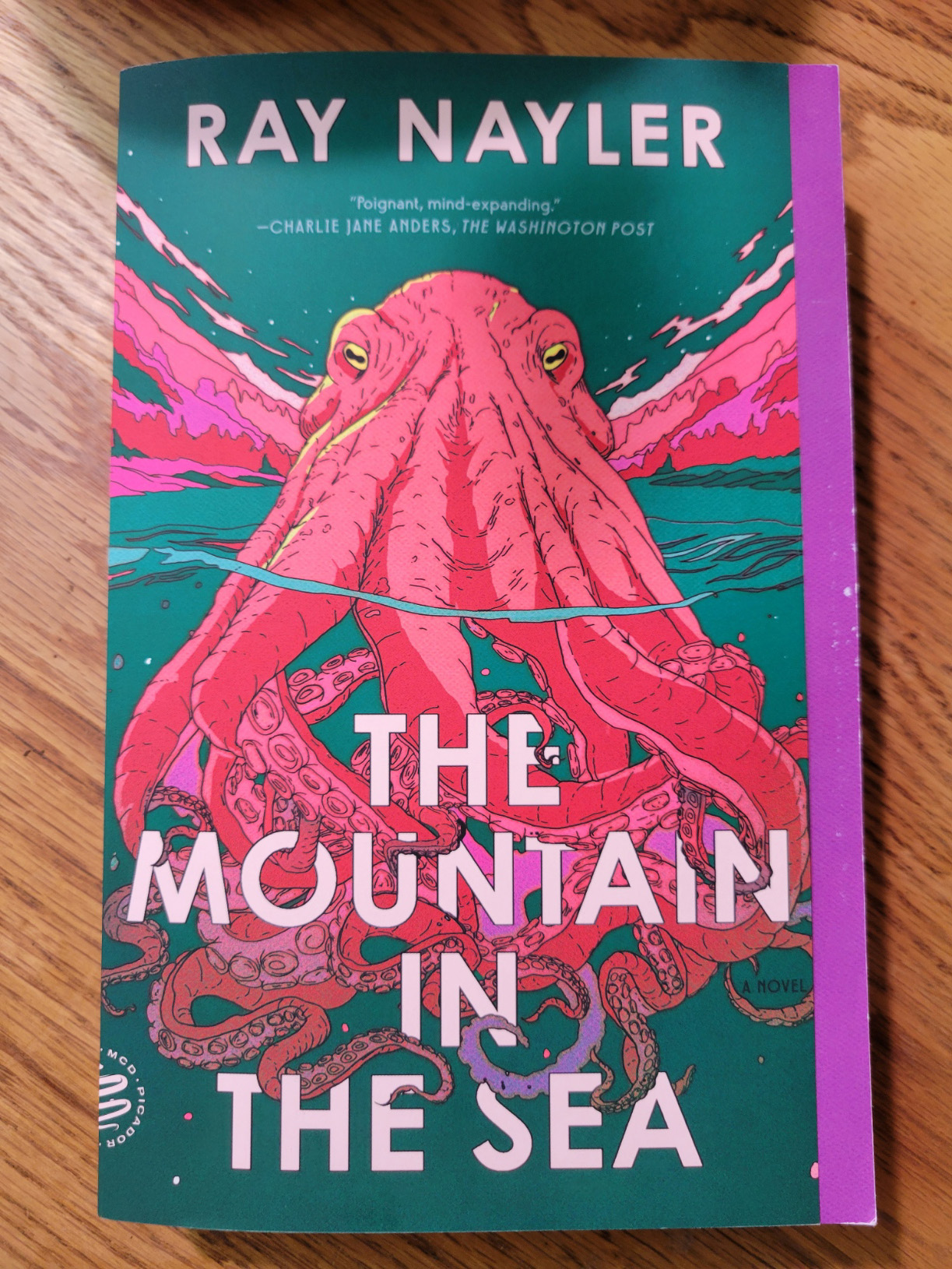
The Mountain in the Sea explores some of these same issues. The book askes the question: What is a person? There are evil megacorporations who abuse the environment and employ human trafficking in their quest to turn a profit: Murderbot would completely understand this world. Even more, the book askes other important questions: What is required to be considered an intelligent species? Language? Tool use? Community and culture? Self-awareness and obvious problem solving? How do we identify and evaluate these?
The Mountain in the Sea has a robot with a brain that passes the Turing Test. Is it a person? What rights should it have? There is an octopus that probably could also pass the Turing Test if there was an octopus version. There is a soldier who provides security for the scientific research facility who utilizes octopus-like technical interfaces in her work. She also hides behind a robot-like translator so she can avoid interacting with the other humans… if she was Murderbot she’d be watching media. There is a scientist who is driven to build a perfect human-like brain, and a scientist who is driven to understand other brains. There are victims of human trafficking, and it is hard to not ask the question, what are the rights that all persons are entitled to? The Mountain in the Sea kind of had it all (if you are a BioGeek struggling with Wannabe-Covid long haul symptoms), and it was the perfect companion to my nocturnal Murderbot audiobooks.
I engaged in a lot of googling to check out information while reading the book. Yes, octopuses really can change their skin color and texture to immediately blend into the background. They really do build cities. They really do have brains that are completely different from our own, and those arms are somewhat autonomous as they interact with the environment. They use tools. You can check out these sources to learn more about octopuses. Octopus 101 and Octopuses Keep Surprising Us.
Late last week I went on an outing and headed into the book store.
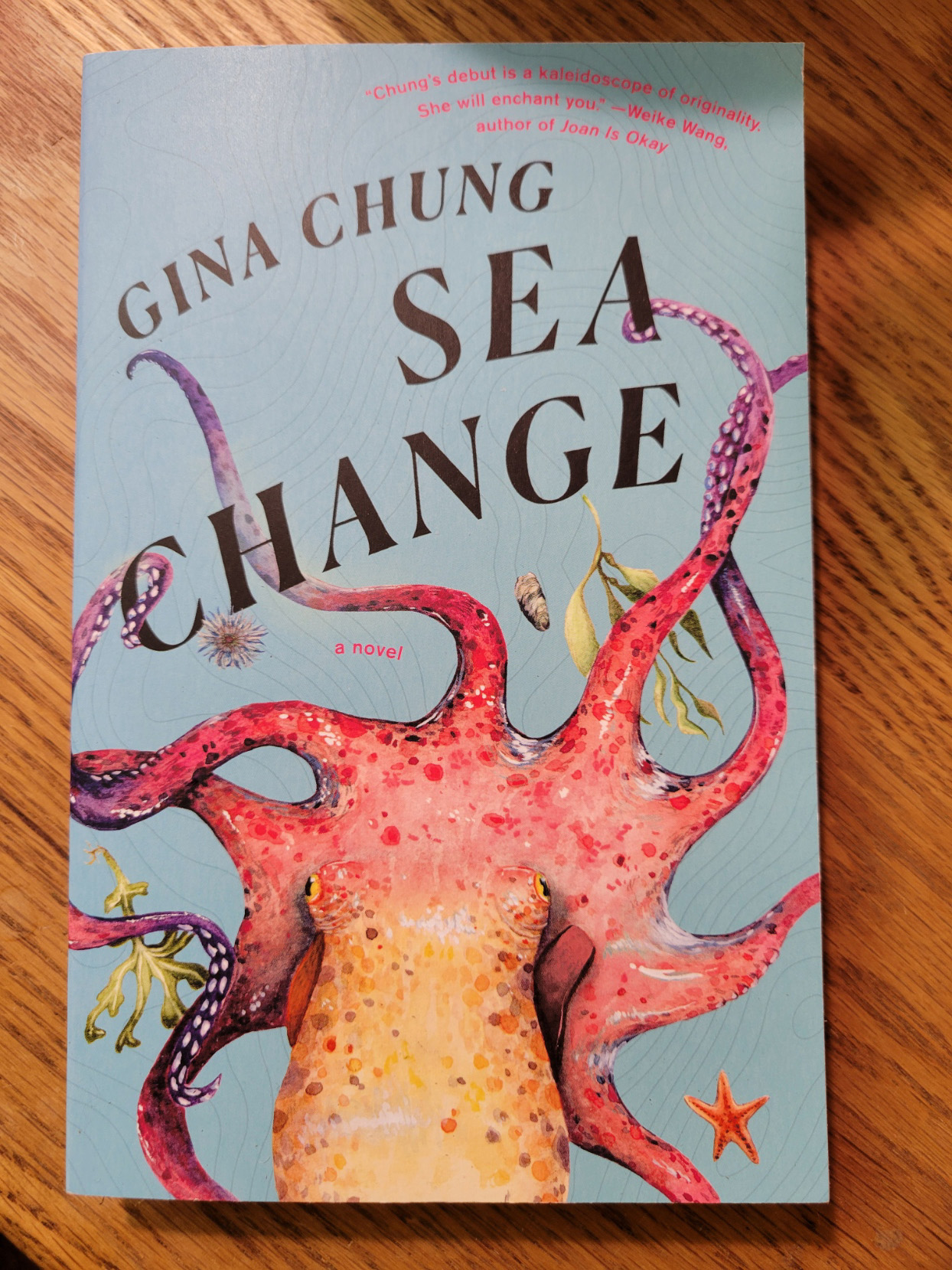

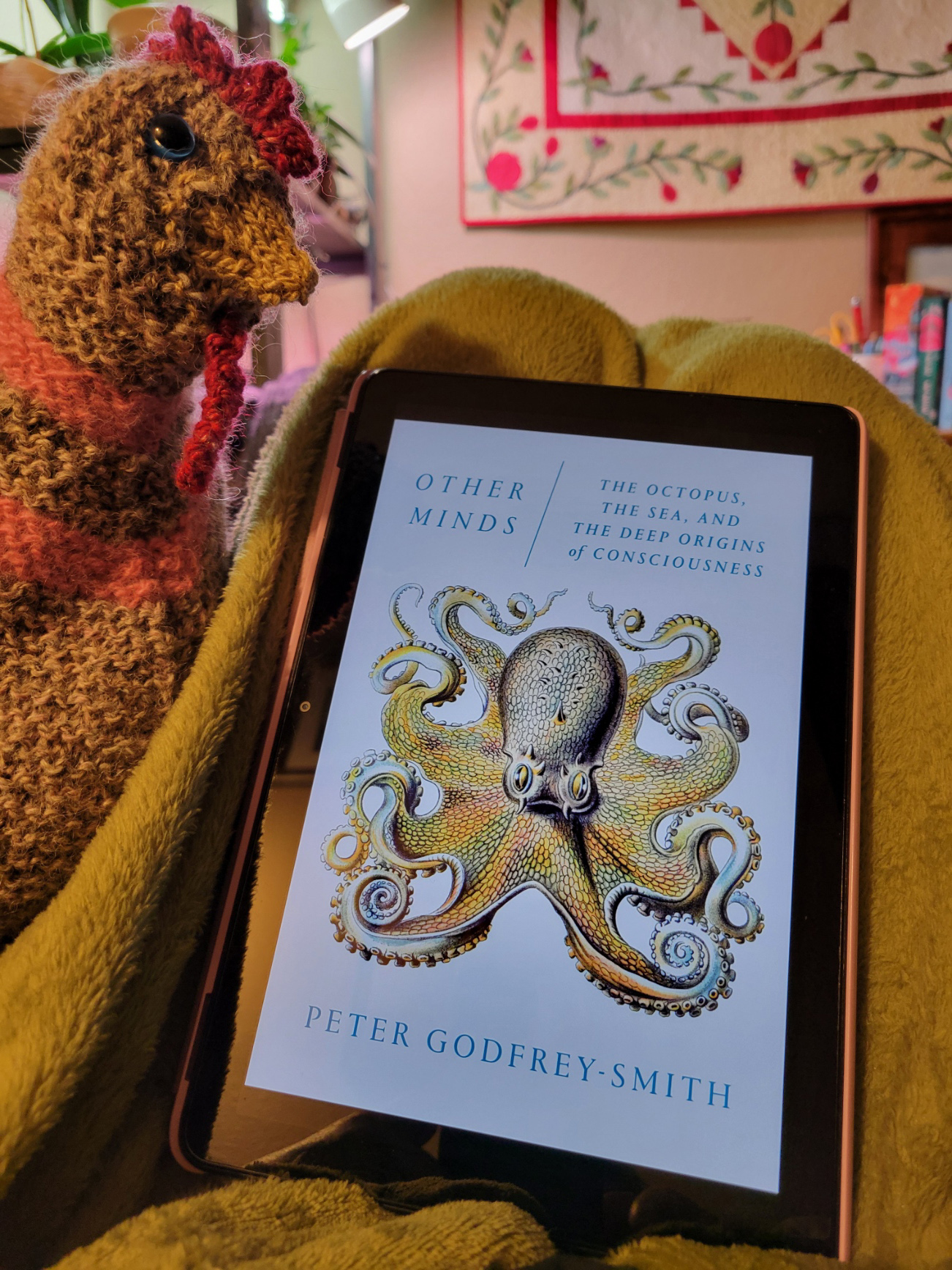

If it had an octopus on the cover it pretty much jumped off the shelf and landed into my basket. The dragon got in there too, somehow, but it lives in water too, right? It probably is self-aware and intelligent, right? It’s the Year of the Dragon, right?
But first, I’m reading all the octopus books.
p.s. The Murderbot Diaries is being adapted by Apple TV+ into a series. Yay! Murderbot would be thrilled to know it is becoming streamable media.
p.p.s. Anemia can be a symptom of Covid long-hauling. Seriously, I just wanted to pull my hair out when I saw this article. I was at the low end of normal when I got sick in October, and now my iron (ferritin) level is half of what it was. Wannabe Covid, I hate your guts!



 Yarn, Books & Roses