
I grew up in Southern California in the US not too far from beach towns. My parents would rent a cabin each summer and we spent weeks playing on the beach and in the surf. I spent many a morning playing with small animals along the beach like crabs and sea anemones and had a pretty good shell collection by the end of each summer. One of my very favorite early morning gleanings was the rare, perfect sand dollar.

What I didn’t know as a child is that the sand dollars that I collected during early morning walks on the beach were just the skeletons of what was once a living animal that looked like this:
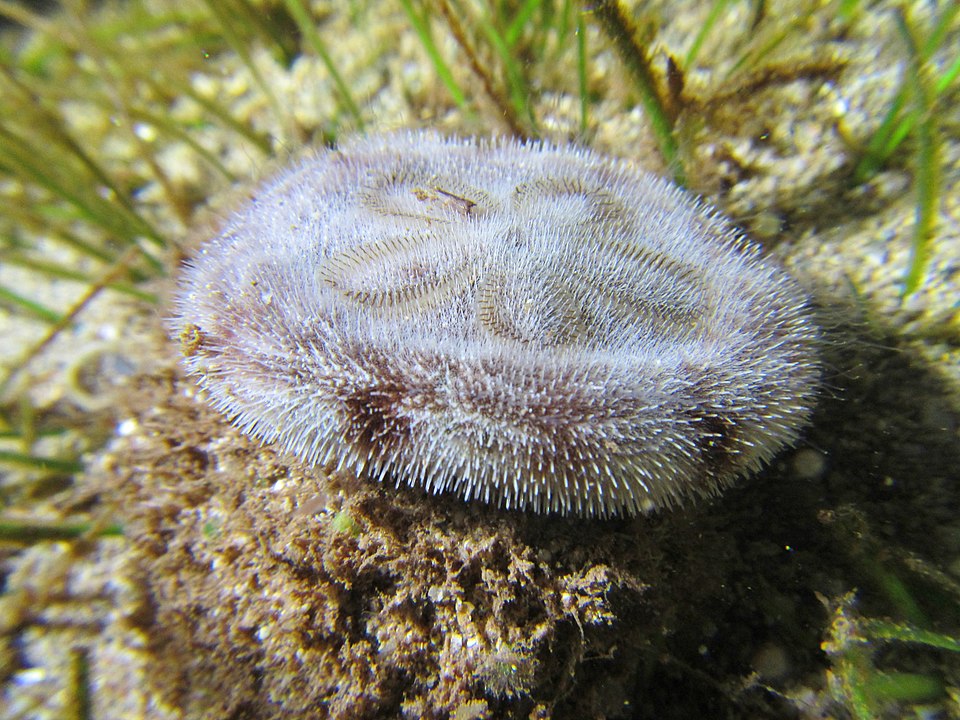
I collected many, many seashells each summer; these shells were created by the animals that lived in them when they secreted and deposited calcium carbonate outside their bodies. In the case of sand dollars, the animal deposits little calcium carbonate plates internally to create the inside skeleton made of the same material as shells are. Cool, right? I never suspected that the living sand dollar was covered with all of those short fuzzy spines that helped it bury itself in the sand where it can move around. Those little guys used to live off the shore of Southern California where I lived, moving though the sand, eating little bits of algae and whatever else they could find in the sand of the ocean bottom. Preyed upon by fish, the skeletons of the dead animals washed up on the shore where I found them.
In my high school years my family moved to a beach town. Woohoo! Beachcombing for sand dollars continued year-round! I dated (and later married) a guy who loved to surf; I poked around in tide pools while he was out catching waves. My love affair with all the living things in the shoreline ecosystem continued during those years; my collection of shells and sand dollars grew.

I continued to love sand dollars when I grew up. I learned in college that they, like all echinoderms, have bodies that are organized in a 5-part radial symmetry. Strange, right?! But true. All sea urchins, sand dollars (AKA sea biscuits), sea stars, and sea cucumbers have a clear 5-part body organized around a central point (that gives them their radial designation).
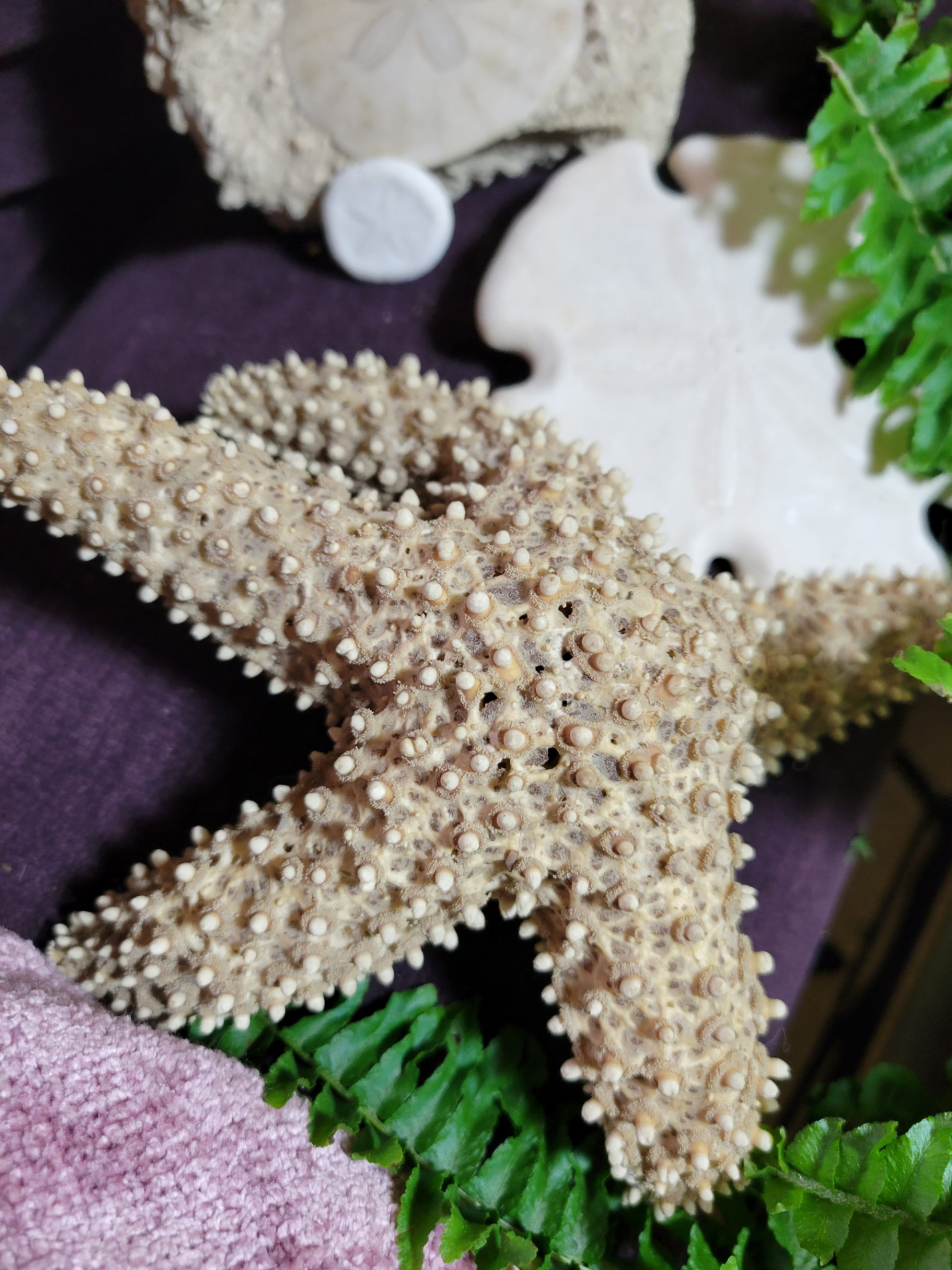
I have continued to accumulate sand dollars as an adult. One day I discovered 3 wonderful sand dollars in my mailbox at work: an anonymous gift from a student, I think. There was a silver and gold sand dollar necklace at a store I passed one day on a trip to San Fransisco: of course I bought it!! Then there was my trip to the Smithsonian in Washington, D.C. I saw a sand dollar fossil for sale in the gift shop.

I am often struck with amazement at how this simple, simple creature has so successfully survived in its little niche over the millennia. Mostly defenseless, relying on guile, concealment, and luck, the species continues to this day.

 Yarn, Books & Roses