The BioGeek Memoirs: Cottontail Rabbit

My neighborhood is just awash with cottontail rabbits. They are just dang cute and hang around houses and gardens where they snack with absolutely no remorse on lawns, gardens and weeds alike. Okay, they can be pests, too. I used to live on a street where you had to stop the car, get out, and chase the bunnies out of the street before you could drive through. It isn’t that these bunnies have a death wish; they sense danger in the movement of the car, freeze, and do their best to look like rocks. That’s the life of a bunny: everyone wants to eat you for lunch. Your best bet is to hope to look like a rock.

Cottontail rabbits at the edge of my driveway.

Where I live there are three distinct species of cottontail rabbits: the mountain cottontail, the desert cottontail, and the eastern cottontail. Since I live on the plains of my state (Colorado) and not in the mountain or desert portions, I’m thinking that the bunnies that I know and love are the eastern cottontail. These little guys (about 2 pounds) hang out in shrubs and under decks living their best little bunny lives while raising youngsters all summer long. Yep. Things can certainly get out of hand quickly as they can have more than one litter a year.

I had a beloved cat who caught an even dozen baby bunnies in one year. We don’t talk about that in my house. We still had to chase bunnies out of the street when we wanted to drive to the grocery store.
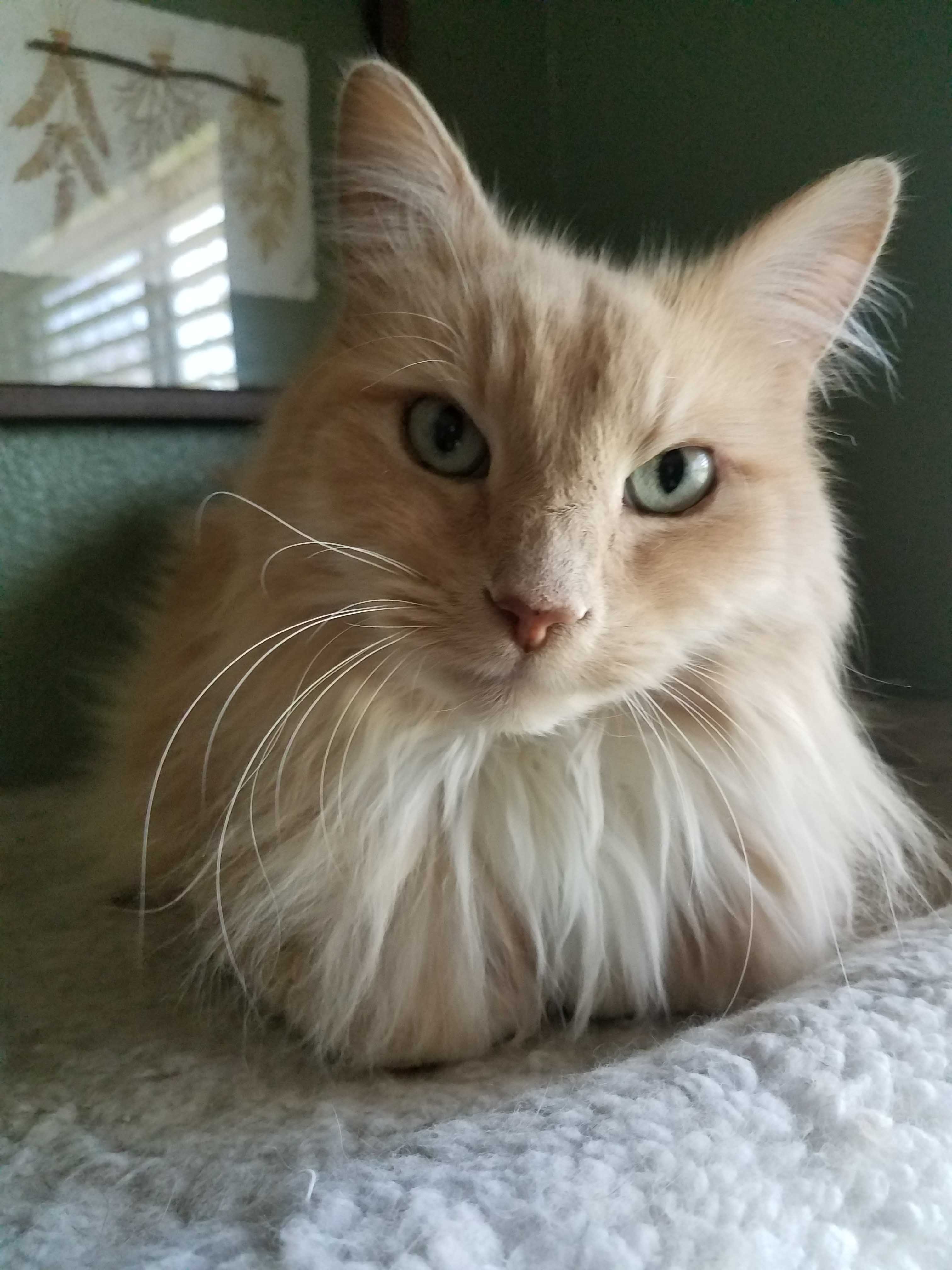
Does this look like the face of a bunny murderer?

I became enamored with cottontail rabbits when I was working on my master’s degree as a biology teacher. I had just received a digital camera as a gift and was walking the circuit around a local pond taking pictures for a project that I was working on. I got shots of plants, birds, a muskrat swimming, an extremely cute prairie dog, and this cottontail rabbit.

Cottontail eating alfalfa.

I loved this shot of the rabbit. It quickly became a focal point of the master’s project for my degree program.

Here’s the deal: you have to have some animal (or plant) to use to anchor your biology program. All the major biology books these days carry with them a plethora of support materials (paper and online) and in the field we all refer to individual programs by the animal/plant featured on the books. When I was in the classroom the programs were referred to as the “owl”, “elephant” or “killer whale” books.  It looks like the current editions of the books I taught from are now “honeybee” and “lotus” books. Cool, huh. Anyway, I created as my master’s project an online platform to anchor my biology class. Students (and parents) could see what we were covering each week, get copies of all the worksheets, pick up their make-up work from me online, and get explanations/links to all of the standards and grading rubrics used in the course. I even had some videos and pdf documents of the lecture notes when possible. I handed out little business cards with the bunny’s photo on it to parents at teachers’ conferences. I won some grants to expand the website and eventually created online-only biology courses for my district.

Everything I did featured that wild bunny. I branded the whole thing Wild Bunny Biology. That wild bunny took me to a national conference where I presented my online website and shared tips/info/strategies on how other teachers could make their own. Eventually I began to sell some of my work products online to other biology teachers. The name of my little biology shop was called, of course, Wild Bunny Biology. Oh, yeah. I also got that master’s degree.

Dang, that cottontail rabbit was good to me!!

Today I am retired and those wild bunny teaching moments are long gone, but the wild bunnies are with me still. They cavort in the shrubs and lawn beside my favorite (outdoor) restaurant. They hang out in the landscaping of the Kaiser clinic where I go to appointments with my doctors. They are all over my neighborhood and this summer a baby bunny grew up, all alone, in my back yard where it provided daily entertainment for Hannah and the CoalBear.
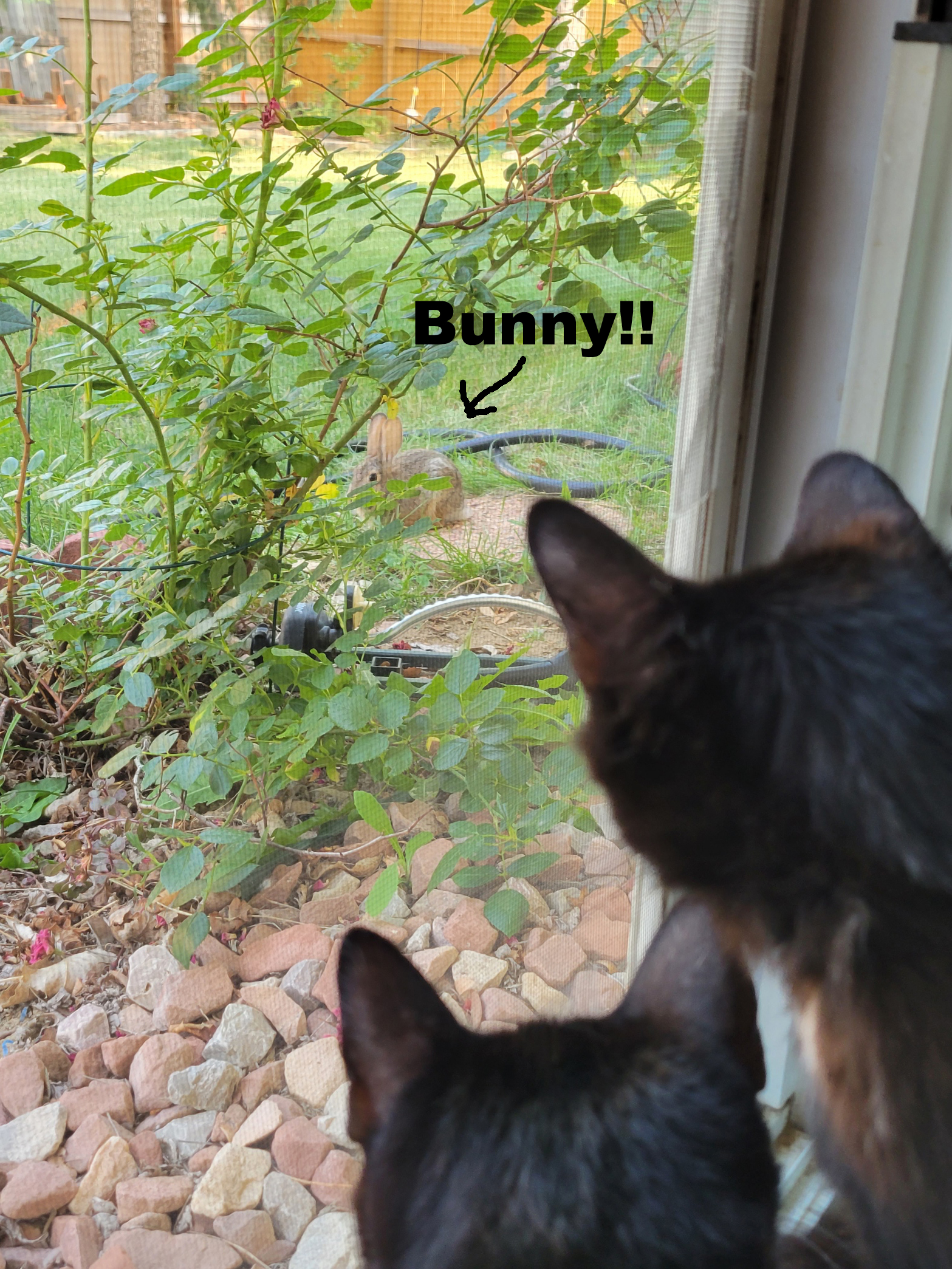
Bunny watching!

And every evening it was bunny o’clock.

I never pull the dandelions because they are good for bees and bunnies! See my bunny munching on the dandelion and ignoring the rose bush?!

My summer bunny is gone now. It met up with another rabbit late in the summer and hit the road for better parts. I’m kind of hoping that it will return or drop off some offspring next summer, but only time will tell.

It’s always bunny o’clock in my yard. 🙂
The BioGeek Memoirs: Canada Goose

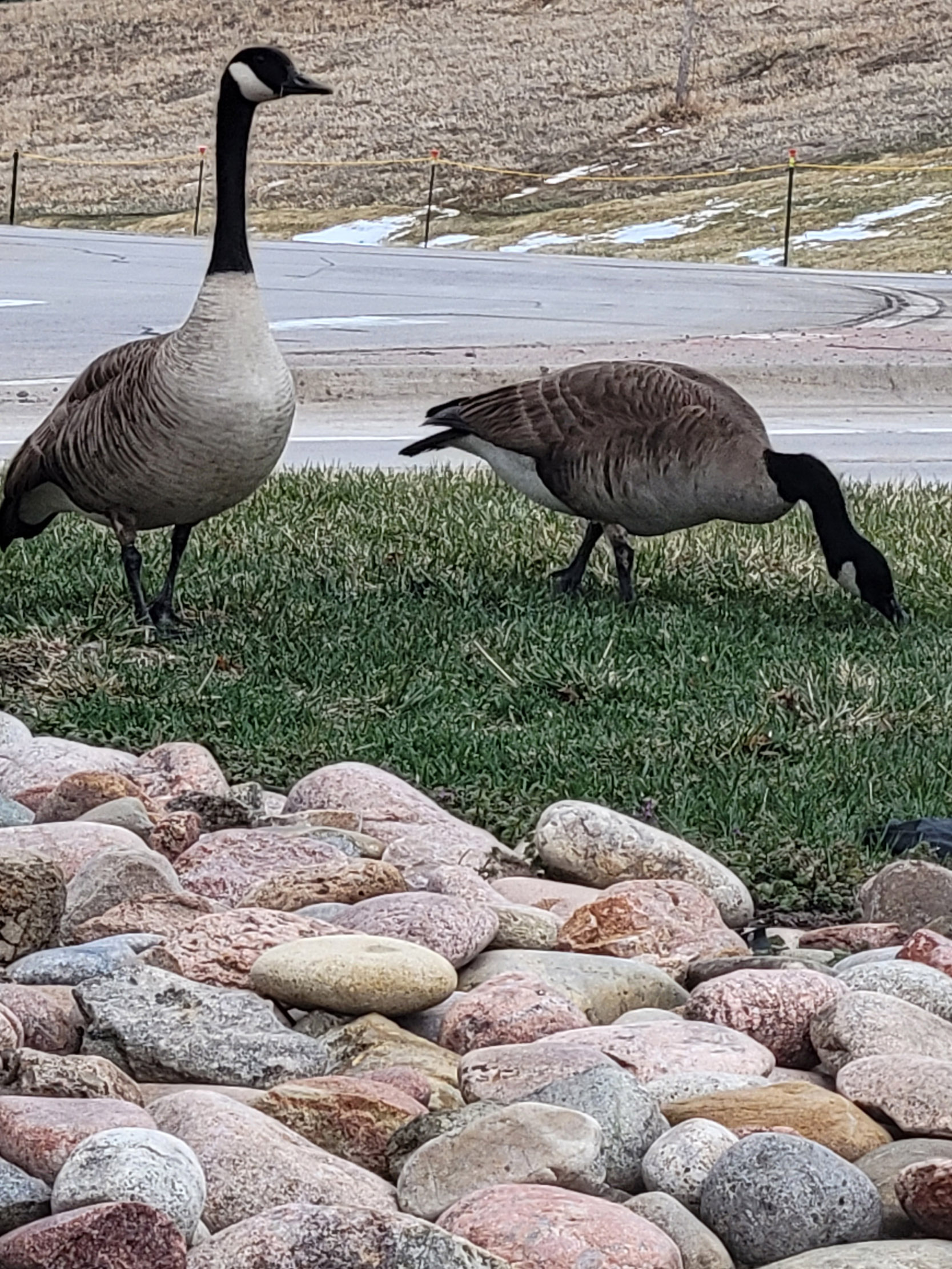
Canada geese hanging out in the median of a roadway.

I first fell in love with Canada geese not long after we moved to Colorado. My husband was a student at the University of Colorado, I was a employed in a research lab, and we were pretty darn short on cash. Our little boy loved to be outdoors and it was easy for me to save stale pieces of bread for him to feed to the geese at local ponds. We fed a lot of geese those first years in Colorado; I still feel a little guilty when I throw out old ends of bread even though I now know that peas, and not bread, are better food for geese. (Actually, the geese can be pests and it’s best to not feed them at all. But it is so much fun…) Over the years the kids and I interacted with geese on a regular basis. They were there at the swimming beach in the summer. There was a nesting pair at the local library. The goslings quickly learned to run to visitors for treats, and just as quickly the kids learned to never, ever, chase the goslings unless you wanted a close encounter with an angry mother goose.

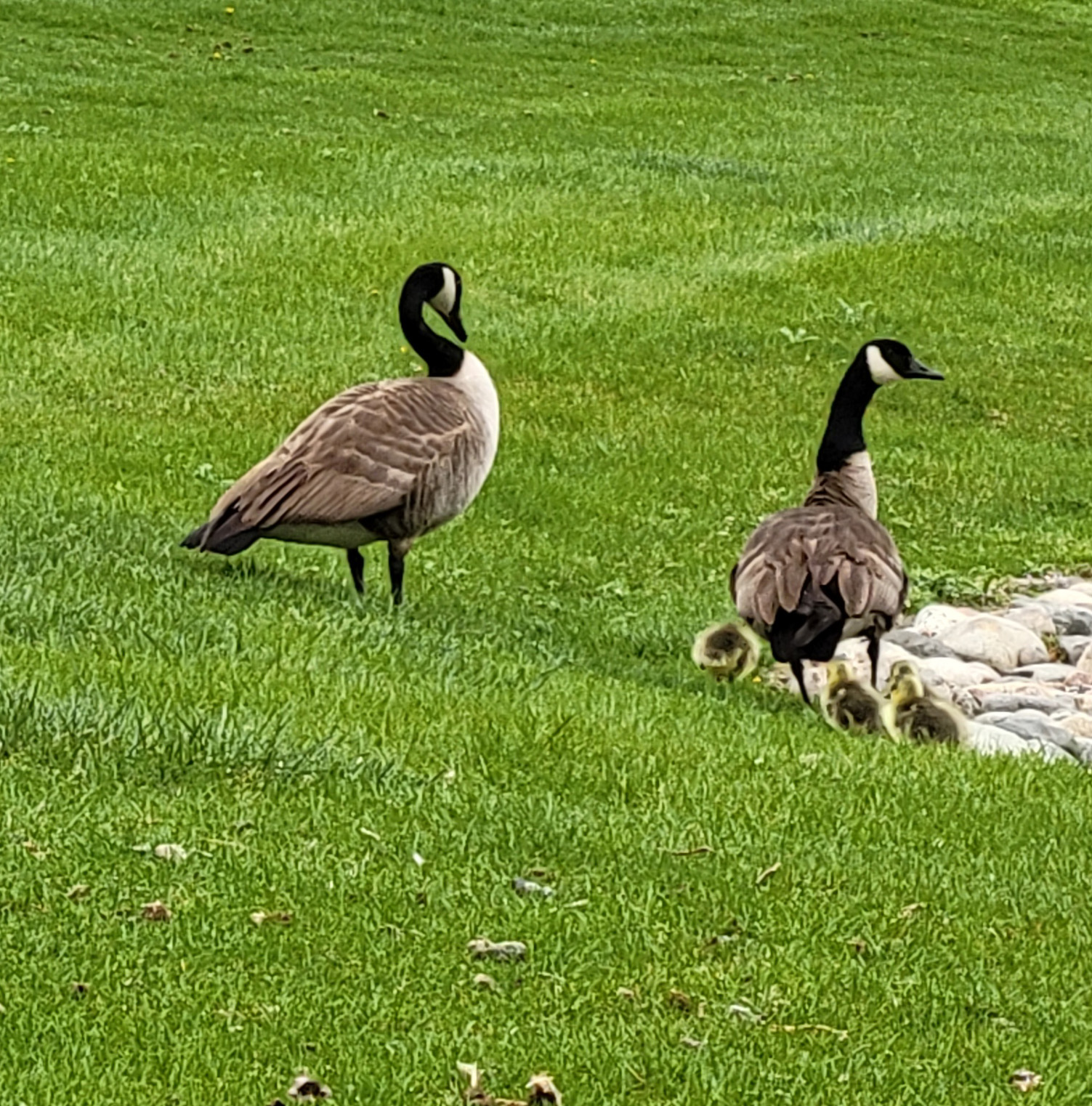
These goose parents were raising their offspring in the green area of a business park near me. There is a small pond with a fountain there… prime goose habitat!

Canada geese (AKA Honkers in my household) are big water birds. Like, maybe 10 pounds or more; if one rushes at you it is an experience to remember! There is a resident population of Canada geese in Colorado where they raise their young and live their best goose life, but every fall huge numbers of new arrivals show up for the winter. Once the migrating flocks of geese arrive you see them everywhere: parks, fields, open spaces, and anywhere else they can find a good-looking patch of yummy plants. All day they graze on what they can pull up with their beaks and then, as dusk begins to fall and the afterglow of the setting sun fills the western sky, the flocks take to the air in V-shaped formations and fly to ponds and lakes for the night, honking all the way. At dawn next day the geese will once again take to the air as they move out to their grazing areas. My home is in the flight path of huge numbers of wintering geese that move between bodies of water on the west and fields to the east of me; the geese formations fill the sky like a scene from an old WWII movie and the honks call to me as they pass. I can’t help it; every time I hear the call of the Honkers and see the flights my heart lightens and I feel a surge of joy.

There’s a story about the winter geese that can explain to you why I feel like that. Here it comes.

One December long ago, in his last year of high school, one of my sons became seriously ill. We rushed him to an emergency room around midnight where he was diagnosed with pneumonia and started on antibiotics; failing to improve, he was transferred to a Kaiser hospital near dawn that morning. In stunned disbelief, we sat there as the staff at the new hospital explained to us that our son was seriously ill; he was septicemic, entering organ failure, and they were starting another antibiotic to try to stop the infection. He continued to decline throughout the day and that evening a third antibiotic was started. The CDC was called as the bacterium was antibiotic resistant and a potential superbug. We asked if he would recover. The doctor carefully told us that he was young; he still had a chance if he made it through the night.

During the night he began vomiting blood and the antibiotics were stopped.

Dawn the next morning arrived as I was standing in his room, looking out the window, watching the huge flocks of geese travel across the city of Denver on their way to their grazing areas. So many geese; they filled the sky. Proof of life on a morning when I was facing down the possibility of death.

Behind me I heard my son get up, unplug his IV pole from the wall, and turned in amazement to watch him wheel away with it towards the bathroom.  Under his own power. He had made it through the night and clearly the tide had turned.

To this day, each time a low flying flock of geese passes over my house, my heart fills with joy. At dawn on cold mornings, going into the building for work, I would stop in the parking lot and let the rush of launching flocks pass over me, breathing in deep the start of a good day. I feel unbelievably lucky each time a flock paces along the freeway beside me, and the best, most wonderful moment ever was that time a windfall of landing geese came down around my car as I drove to Starbucks.

The Honkers and me. We have a contract between us.

Proof of life.

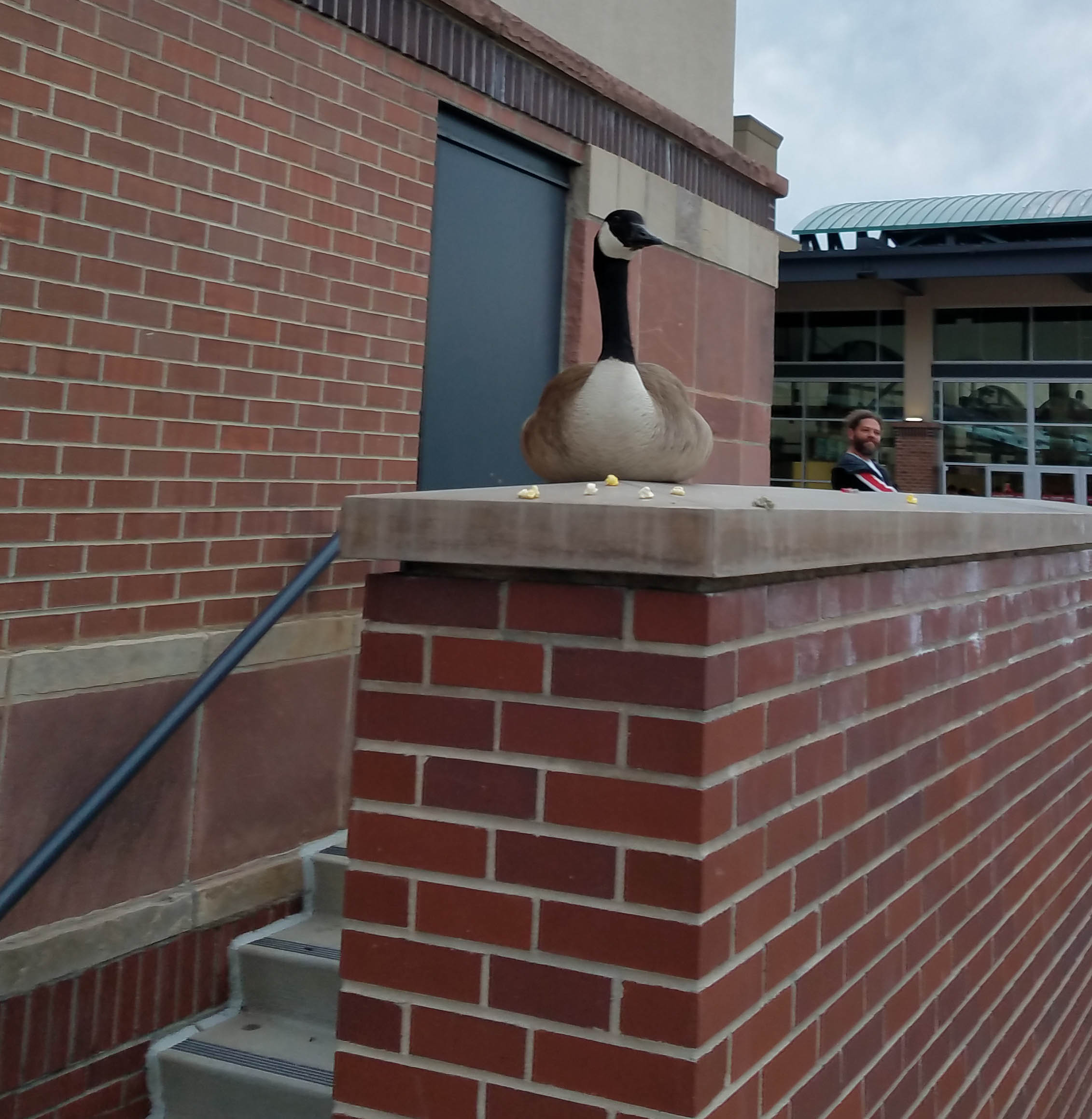
This goose was standing watch over its mate and the nest located in shrubbery just out of the shot to the left. That man in the background is my son.

Postscripts: I wasn’t sure if I should mention this, but the goose population has grown so large that some are being harvested to feed the hungry in the Denver area. You can learn more about it here.

Introducing the BioGeek Memoirs

How many magical moments can one person have with another species? Only a few, right?

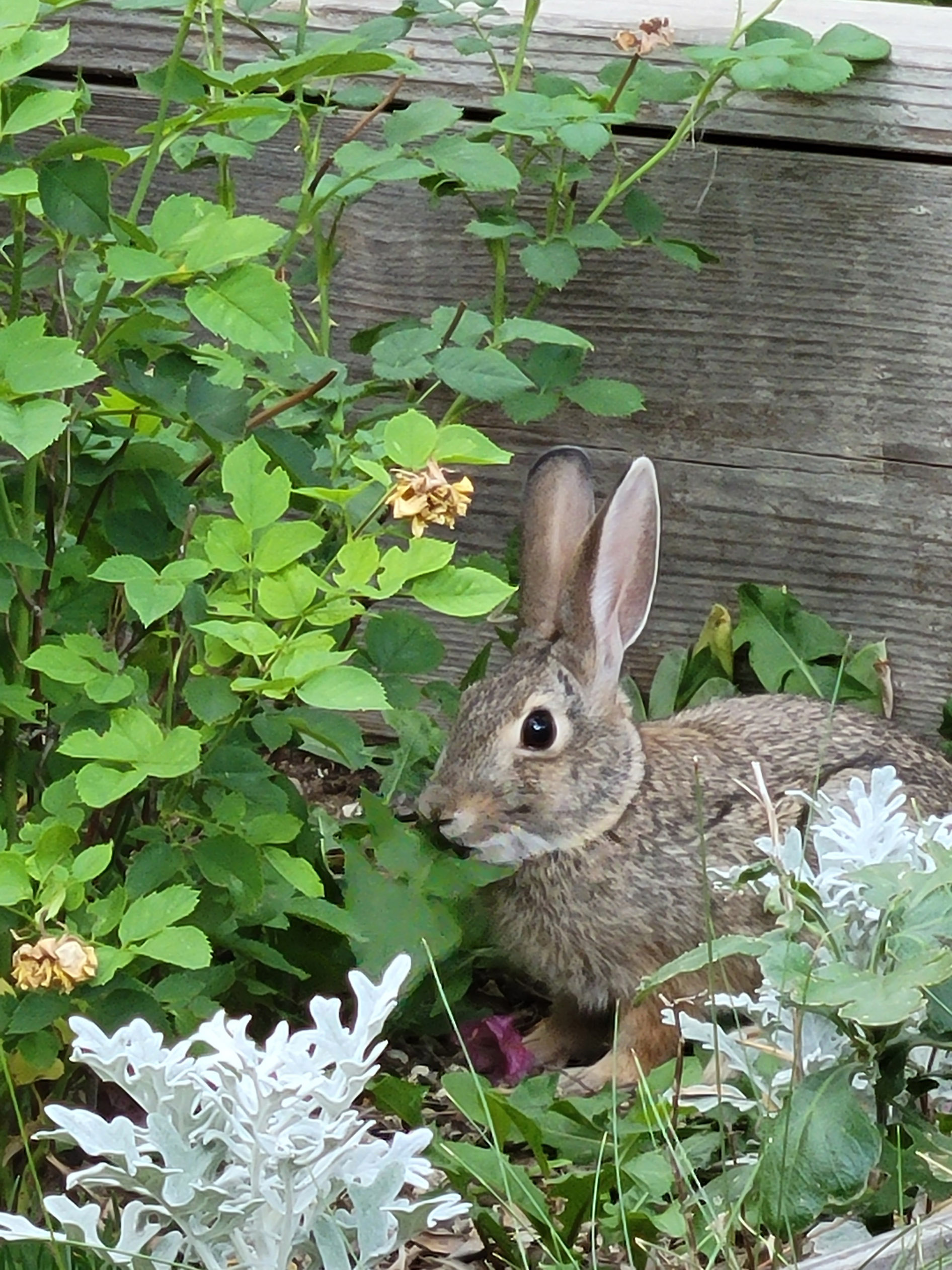
I had a baby Cottontail rabbit in my yard all summer. How magical is that?

I mean, there was that time you fed a cute chipmunk some chips at a rest stop, or the day you encountered an owl in the limbs of a tree right over your head. The squirrels that frolicked through the branches and around the trunk of that huge maple as you walked out of your doctor’s office after getting some good news. The squad of squid that left you trapped on an offshore rock in La Jolla when they positioned themselves between you and the beach, flashing rainbow color changes in unison. The time when a whole herd of deer ghosted out from the early morning mist and silently moved past the deck of your rental cabin while you were out there drinking coffee, wrapped in a blanket, waiting for your students to wake up. The day a fox trotted down the sidewalk in front of you while you were loading the car for work and vanished into the falling snow, leaving only its footprints behind. The flight of geese that swirled around your car and landed, feet extended and wings furiously back-flapping, unexpectantly dropping from the sky while you slammed on your brakes, stunned by the joy of the moment. The day a huge beaver swam across the pond while you and your children silently watched from the bank in the shadow of some shrubs, amazed by the size.

All that stuff didn’t happen to you?

Oh, yeah. Those are my memories.

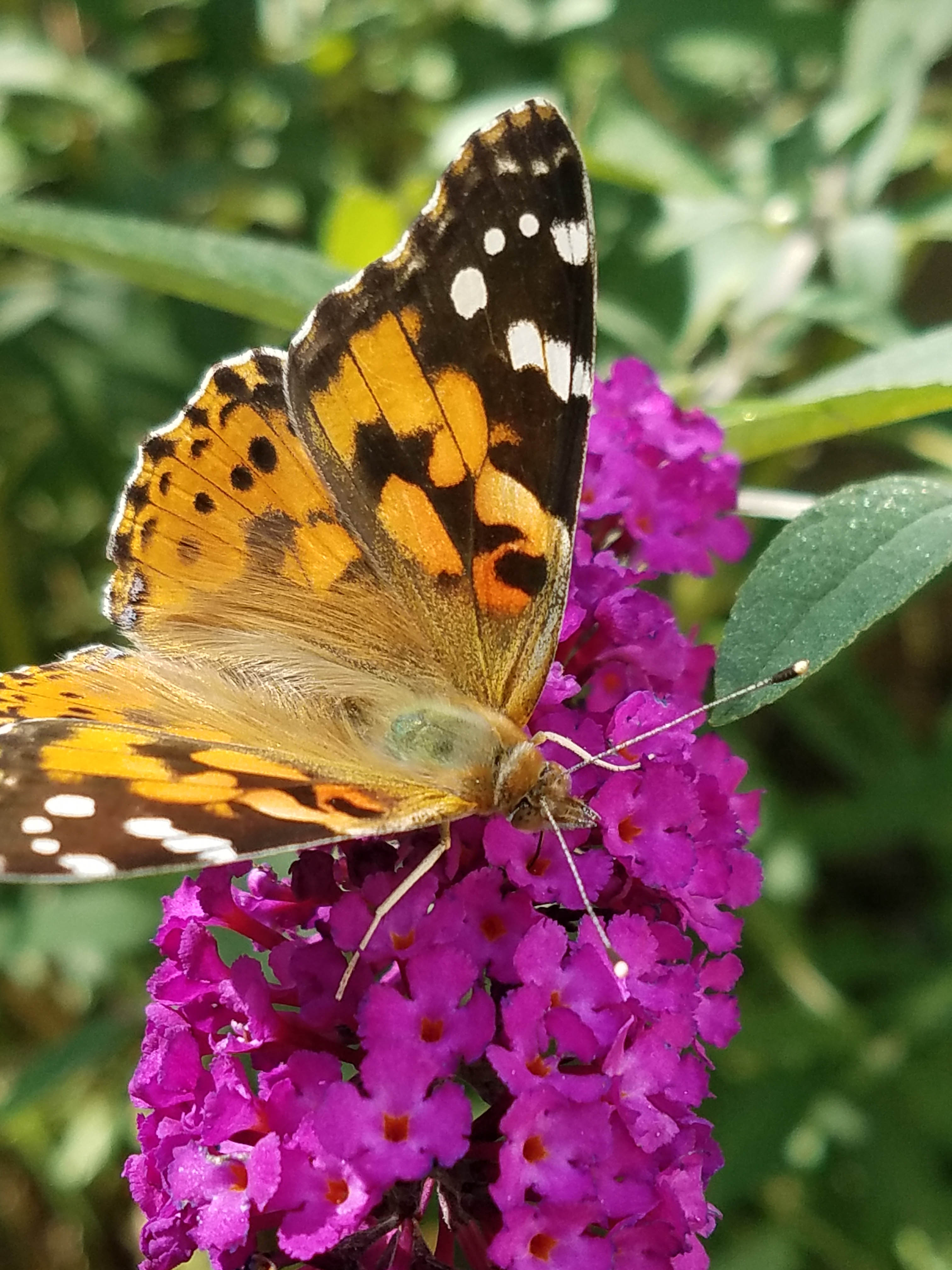
A Painted Lady butterfly on a butterfly bush in my garden.

I have had a lifelong love affair with nature. I started young with bug collections and jars full of creatures that I dug up from the sands during family beach outings. As I got older I branched out and collected every pet my mother would let me keep and looked at things from the garden with my little Christmas microscope. I learned about cells, genes and DNA in college, and then became a biomedical researcher in an immunology lab. I moved on after a few years to become a biology teacher and took every opportunity that came my way to continue my interactions with wildlife and nature. Workshops in the mountains, trips to the desert, classes with wildlife specialists, and days in museum workshops. It has all been great; a life in biology, rich with meaning and wonderment.

I loved these coneflowers in my backyard so much I use this photo for my phone screen.

But the best, the very best, have been the magical, serendipitous moments that have come to me on my own, interlaced with memories and fraught with personal meaning.

Welcome to The BioGeek Memoirs.  

Hopefully I will be posting every Friday.

I have a lot of memories.